
 en
 русский
 Español
 Deutsch

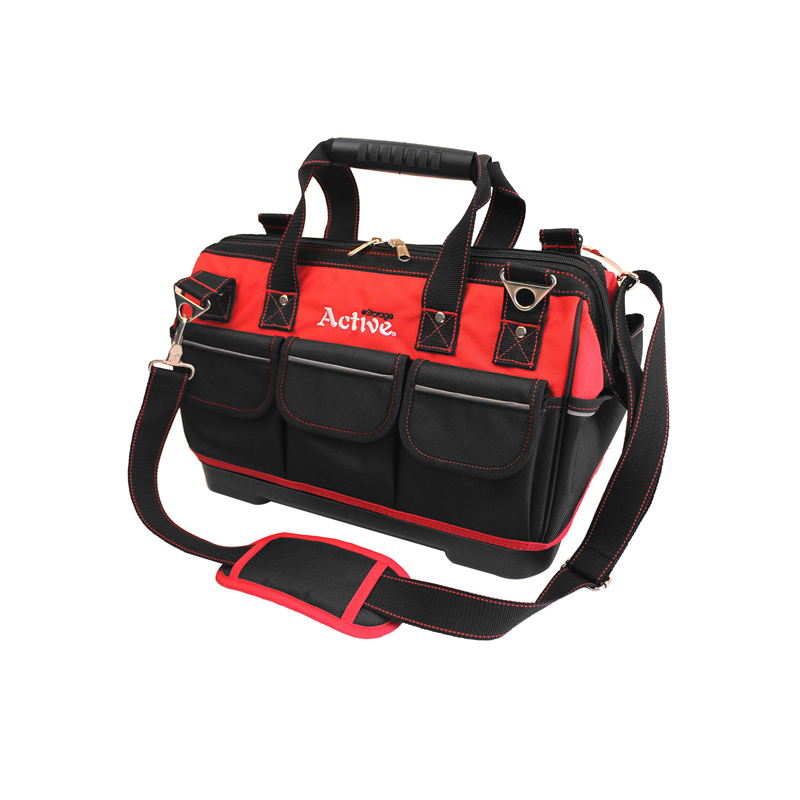
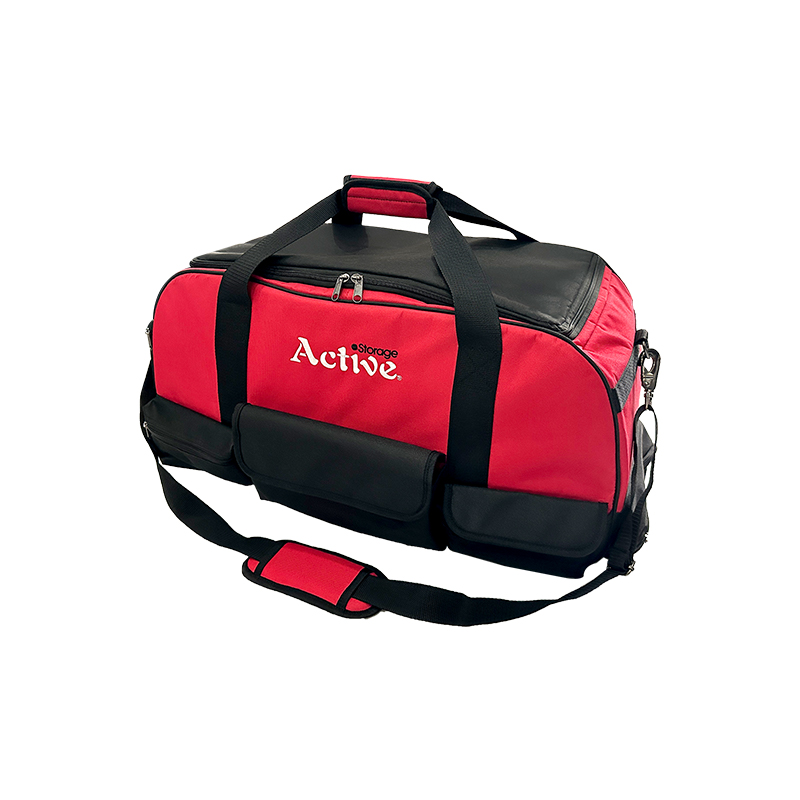
Large-Capacity Hard-Bottomed Padded Handle Professional Organizer Bag
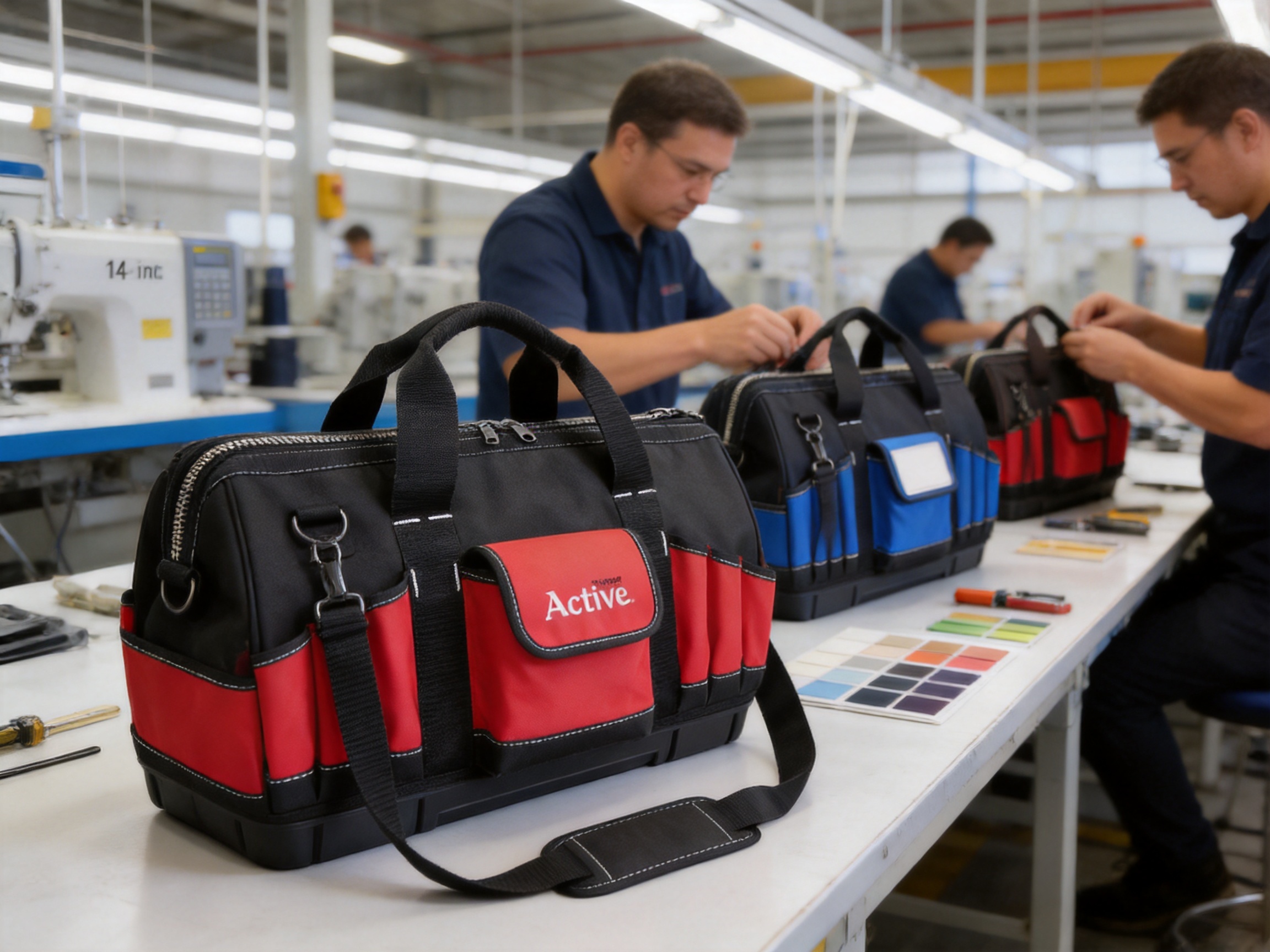
Professional tradespeople, maintenance teams, contractors, installers, and serious do-it-yourself users need more than a simple container for carrying tools. A dependable tool bag must organize equipment, protect valuable hand tools, remain stable when placed on the ground, withstand daily abrasion, and stay comfortable when heavily loaded. The Large-Capacity Hard-Bottomed Padded Handle Professional Organizer Bag is designed to address these demands through a combination of generous storage, reinforced construction, ergonomic carrying features, and practical access.
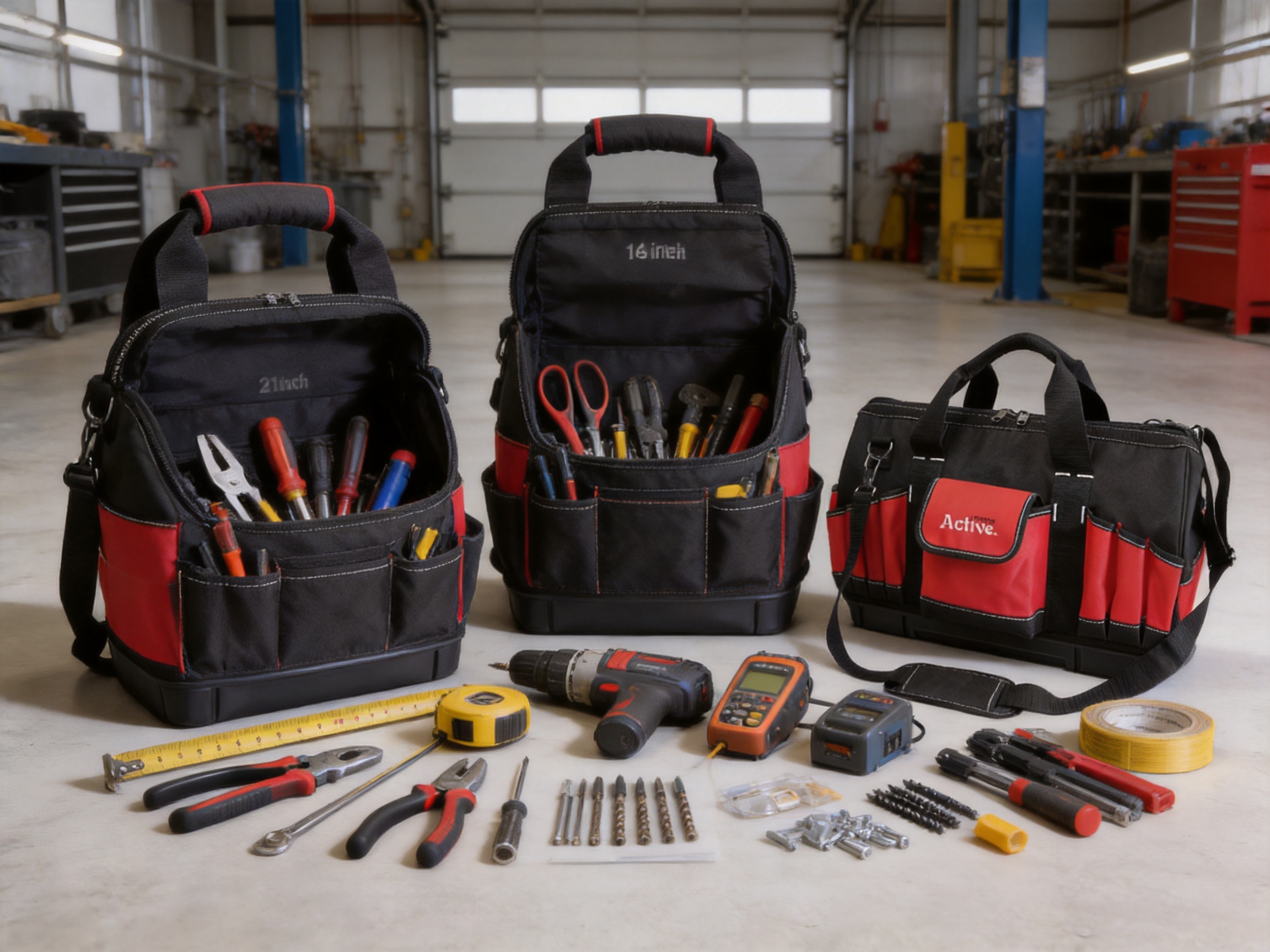
Available in 14-inch, 16-inch, and 21-inch sizes, the S010 series supports a wide range of applications. The smaller versions are suitable for routine maintenance, service calls, and compact repair kits, while the 21-inch model is designed for users who need to transport a broad selection of tools and accessories to a larger project site. Across the series, the design emphasizes visibility, organization, durability, and carrying comfort.
Manufactured by Zhangjiagang Seaark Tools Industrial Co., Ltd., the product reflects more than two decades of experience in professional tool bag production. The company combines in-house product development, multiple manufacturing locations, customization capabilities, and standardized quality-management practices to serve global brands and professional buyers. This makes the bag suitable not only as a stock product, but also as a foundation for private-label, promotional, and customized tool storage programs.
Content
- 1 A Professional Tool Bag Built Around Real Job-Site Requirements
- 2 Three Sizes for Different Working Styles
- 3 Hard Bottom Protection for Stability and Longevity
- 4 Padded Handle Technology for Heavy Loads
- 5 Steel Wire Reinforcement and Improved Visibility
- 6 Durable Polyester Construction for Professional Use
- 7 Reliable Zippered Closure
- 8 Advantages Over Conventional Tool Bags
- 9 Suitable Applications Across Multiple Trades
- 10 Manufacturing Experience and Product Development Capability
- 11 Quality and Compliance-Oriented Production
- 12 Customization Opportunities for Global Buyers
- 13 How to Select the Correct Size
- 14 Organization Strategies for Maximum Efficiency
- 15 Care and Maintenance Recommendations
- 16 Why the Product Is Suitable for B2B Procurement
- 17 Frequently Asked Questions
- 17.1 What type of product is this?
- 17.2 What sizes are available?
- 17.3 How many pockets does the 21-inch model have?
- 17.4 What is the load capacity?
- 17.5 Does the bag have a rigid base?
- 17.6 Why is the handle padded?
- 17.7 Does the opening remain open while organizing tools?
- 17.8 What material is used?
- 17.9 Can the color be customized?
- 17.10 Is this bag suitable for electricians?
- 17.11 How does it compare with a tool backpack?
- 17.12 How does it compare with tool luggage?
- 17.13 Can the product be customized for a private label?
- 17.14 Where is the product manufactured?
- 17.15 What industries can use this product?
- 18 Conclusion
- 19 References
- 20 Product: Large-Capacity Hard-Bottomed Padded Handle Professional Organizer Bag
A Professional Tool Bag Built Around Real Job-Site Requirements
Many tool bags appear spacious when empty but become difficult to use once filled. Tools are often mixed together, smaller accessories disappear beneath larger equipment, and the bag may lose its shape when opened. The S010 series takes a different approach by treating the bag as a portable organization system rather than an ordinary soft container.
Its external and internal pockets create dedicated storage zones for frequently used tools, measuring instruments, fasteners, accessories, and personal protective equipment. The 21-inch version provides up to 25 exterior pockets and 9 interior pockets. The 16-inch version offers 24 exterior pockets and 8 interior pockets, while the 14-inch version includes 20 exterior pockets and 6 interior pockets.
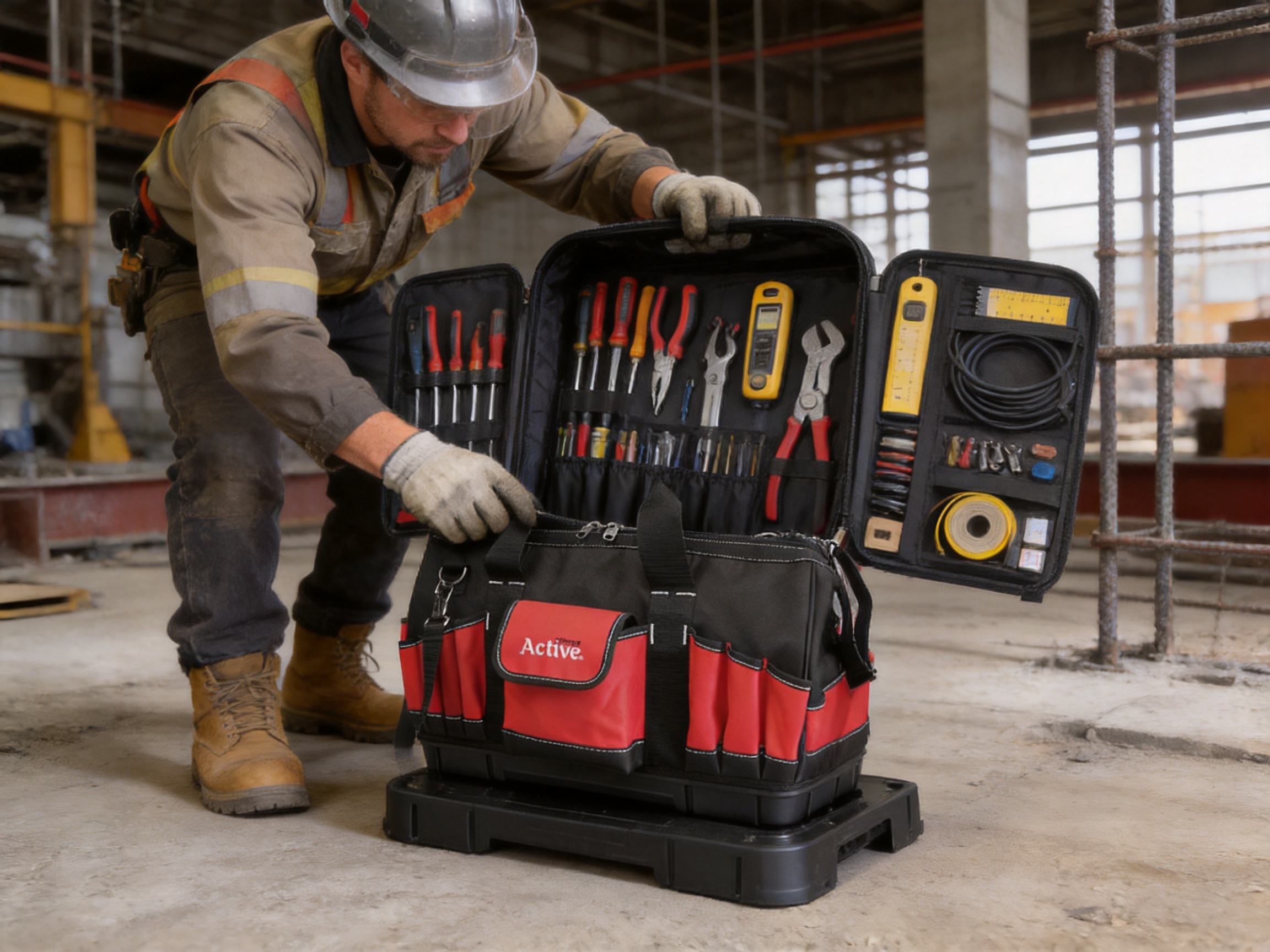
This pocket structure helps users arrange equipment according to workflow. A technician may keep screwdrivers and pliers in exterior slots for immediate access, place power-tool accessories in interior compartments, and reserve the main cavity for larger tools. An electrician can separate testing instruments, cable accessories, insulated hand tools, and replacement components. A construction professional can use the larger model for a mixed repair kit containing fastening tools, measuring equipment, cutting tools, and installation accessories.
The result is faster tool identification and less unnecessary unpacking. When a job requires several tools in sequence, a well-arranged bag can reduce the time spent searching through a disorganized main compartment. This is especially valuable on construction sites, service routes, production floors, and facilities where efficiency affects both productivity and safety.
Three Sizes for Different Working Styles
The S010 series is offered in three practical sizes, allowing buyers to select capacity without being forced into a one-size-fits-all solution. The available dimensions are designed to cover everyday maintenance through demanding project work.
| Size | Dimensions | Exterior Pockets | Interior Pockets | Recommended Use |
| 14-inch | 37 × 21 × 27 cm | 20 | 6 | Routine repairs, compact service kits, household maintenance |
| 16-inch | 43 × 21 × 28 cm | 24 | 8 | General trade work, installation, electrical and mechanical maintenance |
| 21-inch | 54 × 28 × 32 cm | 25 | 9 | Large project work, extensive tool kits, construction-site support |
The 14-inch version is an efficient choice for workers who want a portable bag without carrying unnecessary bulk. It can hold a carefully selected set of hand tools while remaining manageable for short service calls and mobile repair work. Its compact footprint also makes it easier to store in a vehicle, workshop cabinet, or equipment room.
The 16-inch model provides an intermediate solution. It offers more organization than a compact tool pouch while remaining easier to carry than a large project bag. This makes it suitable for electricians, installers, maintenance technicians, HVAC professionals, carpenters, and general contractors who require a versatile daily-use organizer.
The 21-inch version is the largest option and is designed for users who need substantial carrying capacity. Its 54 × 28 × 32 centimeter format creates space for a broad assortment of tools and supplies. With 25 external pockets and 9 internal pockets, it functions as a mobile tool station for larger assignments. The stated load capacity is up to 33.07 pounds, giving users the ability to transport a heavy working kit when the bag is properly packed and handled.
Offering multiple sizes also benefits purchasing departments and distributors. A single series can cover several customer groups, simplifying product selection, merchandising, and private-label development. Buyers can create a coordinated product family rather than sourcing unrelated bags from multiple suppliers.
Hard Bottom Protection for Stability and Longevity
One of the most important differences between a basic fabric tool bag and a professional organizer bag is the quality of its base. A soft or poorly supported bottom can sag under weight, tip over when placed on an uneven surface, and absorb dirt or moisture from the floor. It may also wear quickly when dragged across concrete, workshop flooring, or vehicle compartments.
The S010 series uses a rigid base design to provide structural support beneath the tool load. The hard bottom helps the bag remain upright and gives the user a more stable platform when setting it down. This is useful when tools must remain accessible during a task, because the bag is less likely to collapse inward or spill its contents.
A rigid base also helps distribute the weight of tools across the bottom rather than concentrating pressure in a few areas of fabric. Combined with durable polyester fiber construction, this design supports repeated use in demanding environments. The base is especially beneficial for professionals who move between vehicles, workshops, rooftops, construction areas, and industrial facilities throughout the day.
Compared with lightweight bags that prioritize low purchase cost over service life, a hard-bottomed design offers a more professional ownership experience. Users are less likely to deal with a distorted bag that no longer stands correctly or a base that wears through after frequent contact with rough surfaces.
The rigid structure does not turn the product into a rigid case. Instead, it provides reinforcement where support is most needed while retaining the practical flexibility associated with a fabric organizer bag. This balance allows the bag to carry bulky tools while remaining easier to handle and store than many hard-shell alternatives.
Padded Handle Technology for Heavy Loads
Carrying comfort becomes increasingly important as a tool bag is filled with metal hand tools, testing devices, accessories, and equipment. A narrow or unpadded handle can concentrate pressure against the palm, create discomfort during transport, and discourage users from taking all the equipment they need to a work area.
The S010 series uses a padded handle filled with high-density foam. This construction is intended to reduce pressure on the palm when the bag is fully loaded. The padding creates a broader and softer contact area than a simple webbing handle, helping make the bag more comfortable to carry between a vehicle and a work site.
The padded handle is particularly valuable for the 21-inch version, which can carry a substantially larger tool collection. A large-capacity bag should not merely hold more tools; it should also provide a practical way to move that weight. By addressing the contact point between the user and the bag, the handle design contributes to a better experience during repeated transport.
Comfort also supports productivity. When a bag is easier to carry, workers are more likely to keep essential equipment together instead of making multiple trips or leaving tools scattered across a job site. This can improve organization and reduce the possibility of misplacing small but important components.
Steel Wire Reinforcement and Improved Visibility
The opening of a tool bag has a major effect on its usability. A narrow, collapsing opening can make it difficult to see or retrieve tools, especially when the bag contains many items. Users may need to hold the sides apart with one hand while searching with the other, creating an inefficient and frustrating process.
The S010 series retains steel wire reinforcement around the large opening. This reinforcement helps the mouth remain open and maintain its shape during loading and organization. The user can see deeper into the main compartment, place tools more accurately, and retrieve equipment without fighting a collapsing fabric edge.
Improved visibility is more than a convenience. It supports faster inventory checks and helps users notice missing tools before leaving a work site. It also improves collaboration when more than one person is using the same bag. A colleague can quickly identify the location of a tool without emptying the entire compartment.
The reinforced opening is especially useful for large-scale construction and maintenance work. These environments often require a mixed collection of tools, and the bag may be opened repeatedly throughout the day. A stable opening helps the product remain functional even when it is being loaded, unloaded, and reorganized under time pressure.
Compared with soft bags that fold closed as soon as the handle is released, this design offers a more controlled working interface. The user receives the flexibility of textile construction with some of the organizational advantages normally associated with a structured case.
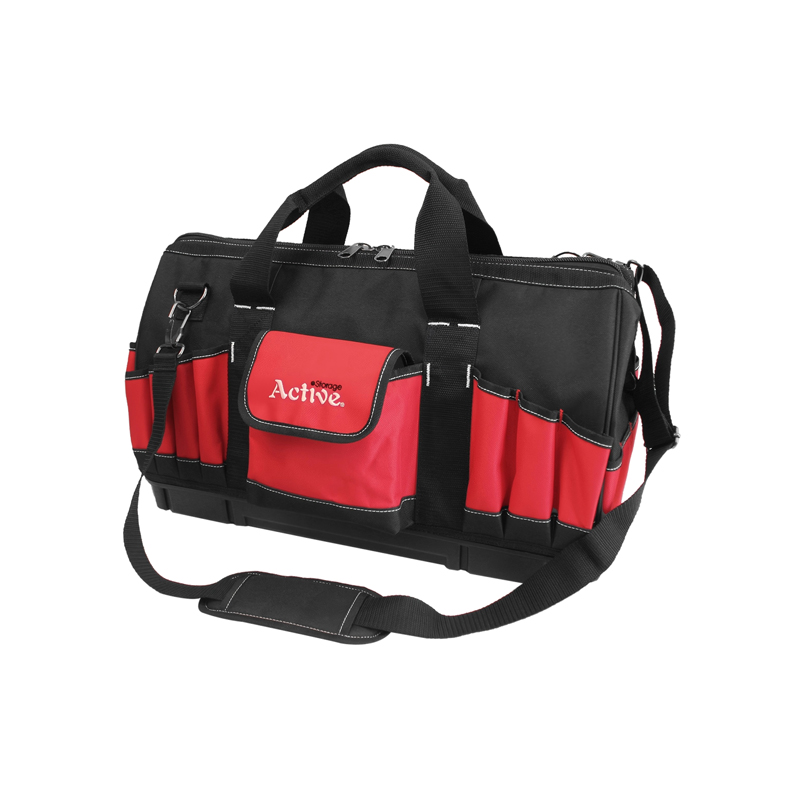
Large-Capacity Hard-Bottomed Padded Handle Professional Organizer Bag
Durable Polyester Construction for Professional Use
The exterior material of the bag is polyester, a widely used technical textile for carrying products that must balance strength, weight, flexibility, and cost. In a professional tool bag, fabric selection affects resistance to abrasion, stitching performance, visual appearance, and long-term usability.
The S010 series combines polyester fiber fabric with a rigid base and reinforced structural elements. This combination is intended to withstand frequent friction and the everyday impact associated with tool transport. A tool bag may be placed on rough flooring, pushed against vehicle walls, carried through narrow spaces, or exposed to repeated contact with tools. The construction is designed with these practical conditions in mind.
Durability does not depend on fabric alone. The performance of a finished tool bag also depends on panel construction, reinforcement placement, handle attachment, zipper integration, pocket stitching, edge treatment, and inspection standards. As an experienced professional bag manufacturer, Zhangjiagang Seaark Tools Industrial Co., Ltd. can coordinate these elements within an integrated production process.
The use of polyester also supports customization. Different colors, labels, trims, webbing, zipper pulls, and logo treatments can be developed according to customer requirements. This is important for brands that want to match a corporate identity or create a coordinated range of tool storage products.
The product information lists the color as customizable. This allows distributors, equipment brands, contractors, and promotional-product buyers to request a visual specification suited to their market. Custom color development may also help differentiate a private-label product from competing bags that use standard black or gray color schemes.
Reliable Zippered Closure
The bag uses a zipper closure to protect the main compartment and help keep tools contained during transport. A zipper is a practical choice for a professional organizer because it allows the user to open the bag widely when access is needed and close it securely when the bag is being moved or stored.
Unlike an open tote, a zippered bag offers better control over loose accessories. Small items such as adapters, fasteners, drill bits, electrical connectors, and measuring accessories are less likely to fall out when the bag is lifted or placed in a vehicle. The closed main compartment also helps prevent tools from shifting excessively during transportation.
The zipper works together with the reinforced opening. When open, the structured mouth improves access and visibility. When closed, the zipper helps secure the contents. This combination gives the bag two useful operating modes: an open workstation during a repair task and a contained carrying case during movement.
For buyers comparing professional bags, closure quality should be considered alongside capacity. A large bag without a dependable closure may be inconvenient in transit, while a small bag with a smooth and well-integrated zipper can remain useful for years. The S010 design places the zipper within a broader system of organization and structural support.
Advantages Over Conventional Tool Bags
Conventional tool bags often fall into one of two categories. Some are lightweight and inexpensive but have limited structure, few pockets, and minimal support for heavy loads. Others offer strong rigid construction but are bulky, expensive, and less adaptable to different tools. The S010 series seeks to occupy the practical middle ground between these options.
Its rigid base provides stability without requiring a fully hard-shell body. Its polyester construction preserves flexibility while supporting abrasion resistance. Its padded handle improves comfort without adding the complexity of a wheeled trolley system. Its reinforced opening provides visibility without turning the bag into a rigid toolbox.
Compared with a basic open tote, the product provides more controlled storage through its zipper closure and multiple pockets. Compared with a single-compartment duffel, it offers much better separation and faster tool access. Compared with a small waist tool bag or tool pouch, it provides substantially greater capacity for users who need to transport a complete kit.
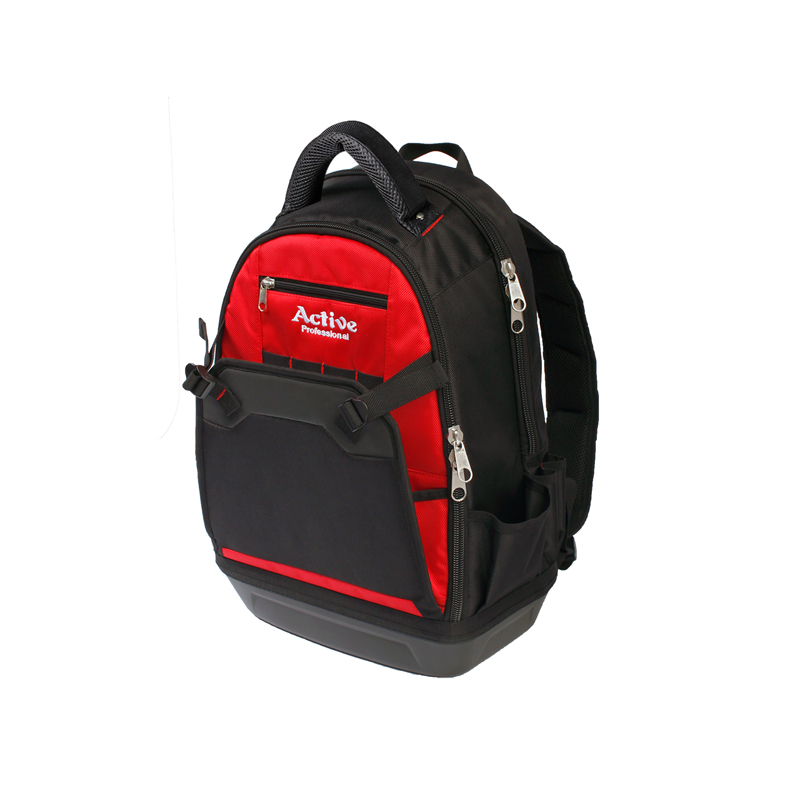
Compared with a tool backpack, the S010 series offers a wide opening and a traditional hand-carry format. This can be preferable when users frequently set the bag down and access tools from above. A backpack may be ideal for hands-free movement, but a structured hand-carry bag can provide faster visibility during bench work, installation, and vehicle-based service.
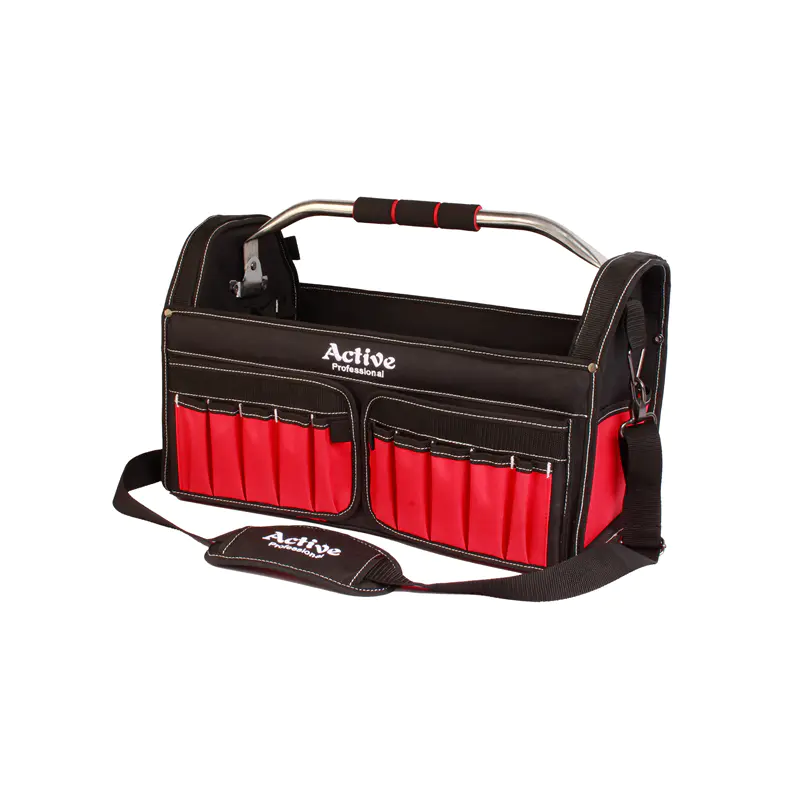
Compared with tool luggage or a trolley tool bag, the S010 bag is simpler and generally easier to position in confined spaces. It does not depend on wheels or a telescopic handle, which can be advantageous on stairs, uneven construction surfaces, and indoor areas where a rolling case is inconvenient.
The product therefore appeals to professionals who want high capacity and organization without committing to a specialized carrying format. It can operate as a primary daily bag, a supplementary project bag, or part of a larger storage system.
Suitable Applications Across Multiple Trades
The broad pocket layout and range of sizes make the S010 series suitable for a variety of professional applications. Its configuration can support tools used in electrical work, mechanical maintenance, carpentry, installation, construction, facility management, telecommunications, plumbing support, and general repair.
Electrical and Electronic Service
Electricians and electrical technicians often carry a mixture of insulated hand tools, voltage testers, wire preparation tools, connectors, measuring instruments, and small replacement parts. The exterior pockets can be used for frequently accessed tools, while the main compartment can hold meters, cable accessories, and protective equipment.
The organized layout is useful when a technician works in multiple rooms or visits several service locations in one day. A consistent storage arrangement helps the user confirm that essential tools are present before leaving one site and arriving at another.
Mechanical Maintenance
Maintenance personnel may need to carry screwdrivers, pliers, wrenches, sockets, inspection devices, lubricants, fasteners, and specialized accessories. The larger 21-inch model provides the capacity needed for a more comprehensive maintenance kit, while the 16-inch size can serve as a practical daily bag for lighter assignments.
The hard bottom is useful in workshops and industrial areas where bags are frequently placed on concrete or metal surfaces. The reinforced opening can also help workers maintain visibility when selecting tools from a crowded maintenance kit.
Construction and Installation
Construction professionals often work in changing environments where tools must be transported over unfinished floors, stairs, vehicle loading areas, and outdoor surfaces. A durable textile body and supported base help the bag withstand this type of movement.
The 21-inch model is particularly suitable for installation teams that need to bring a broad selection of tools to a project area. Its large capacity can reduce the number of separate containers required for a task, while the pocket system helps keep critical hand tools accessible.
Facilities and General Repair
Facility technicians are frequently responsible for varied tasks rather than one narrow specialty. Their tool collection may include general hand tools, measuring equipment, replacement hardware, cutting tools, and inspection accessories. A multi-purpose organizer bag allows them to carry a balanced selection without relying on several small pouches.
The 14-inch and 16-inch versions can be particularly useful for routine inspections and smaller service calls. Their smaller dimensions make them easier to store in service vehicles, maintenance rooms, and equipment cabinets.
Manufacturing Experience and Product Development Capability
The performance of a professional tool bag depends not only on its visible design but also on the manufacturing system behind it. Zhangjiagang Seaark Tools Industrial Co., Ltd. was founded in 2004 and specializes in exporting professional tool bags and providing customization solutions. The company has developed long-term relationships with international customers by focusing on product quality, service, and supply capability.
In 2012, the company established Zhangjiagang Haiyi Tool Bags Co., Ltd. as a core manufacturing base in China. It also operates a production facility in Cambodia. The combination of manufacturing locations provides additional flexibility for international supply planning and can help customers manage production requirements and tariff-related considerations.
With more than 20 years of tool bag manufacturing experience, the company has developed knowledge across design, material selection, cutting, sewing, assembly, inspection, packing, and export coordination. Its reported workforce exceeds 200 employees, and its production operations cover approximately 11,000 square meters of floor space.
This scale can be advantageous to buyers seeking consistency across repeat orders. Professional procurement programs often require stable materials, repeatable dimensions, consistent logo placement, predictable color matching, and dependable delivery coordination. An experienced factory structure is better positioned to manage these requirements than a small workshop focused only on individual orders.
The company maintains an independent research and development team that creates more than 10 new designs each year. This ongoing development supports product improvements and gives customers access to current design concepts. The company also holds multiple design patents, indicating an emphasis on original product development rather than relying exclusively on generic market formats.
Quality and Compliance-Oriented Production
Quality in a tool bag is created through many production decisions. Fabric must be checked for consistency, panels must be cut accurately, seams must be aligned, reinforcement must be placed correctly, and handles must be securely attached. Zippers, webbing, piping, labels, and base components must work together as a finished product.
Seaark’s facilities undergo annual third-party audits, including BSCI, SEDEX, FCCA, and SCS audits. These programs and assessments support standardized and compliant production practices. For international buyers, third-party auditing can provide additional confidence regarding factory procedures, workplace systems, and supply-chain expectations.
Audit participation does not replace product inspection, but it complements technical quality control. Buyers can still define their own specifications for material weight, stitching density, load testing, zipper performance, color tolerance, packaging, labeling, and sampling. The factory’s experience with global customers supports the communication and documentation required for these programs.
For the S010 series, quality considerations are particularly important because the bag is intended for heavy and repeated use. The 33.07-pound load capacity listed for the product creates a need for appropriate handle reinforcement, base support, seam strength, and balanced construction. The manufacturer’s expertise in professional tool bags provides a foundation for addressing these requirements during development and production.
Customers seeking customized versions can work with the manufacturer to discuss materials, color, logo application, pocket configurations, size adjustments, packaging, and other product details. The ability to coordinate these elements through an experienced factory can shorten the path from concept to finished product.
Customization Opportunities for Global Buyers
The product is suitable for customers who require more than an off-the-shelf bag. Customization may be valuable for tool brands, distributors, industrial suppliers, promotional programs, rental companies, training organizations, and large contractors that want a consistent equipment identity.
Color customization is one of the most visible options. A buyer may request a color aligned with an existing product line, corporate identity, or market preference. Contrasting colors can also be used inside the bag to improve visibility, while darker exterior panels may be selected for environments where surface dirt is common.
Branding can be applied through labels, embroidery, printed marks, rubber patches, zipper pulls, or other approved methods. The best approach depends on the fabric, order quantity, visual objective, and expected use conditions. A professional manufacturer can help determine a suitable branding technique that balances appearance, durability, and cost.
Pocket layout is another potential customization area. Different trades have different storage priorities. An electrical brand may request dedicated slots for insulated tools and meters. A plumbing supplier may want space for fittings and compact installation tools. A construction customer may prefer deeper exterior pockets for larger hand tools and reinforced compartments for accessories.
Packaging and documentation can also be adapted for international distribution. Buyers may request retail packaging, master-carton specifications, barcode labels, instruction cards, hangtags, or private-label documentation. Coordinating these details early helps ensure that the finished product is ready for the customer’s intended sales channel.
Because the manufacturer produces multiple categories, customers may also develop a complete family of coordinated products. These can include trolley tool bags, tool backpacks, zippered tool bags, tubular-handle tool bags, waist tool bags, tool pouches, tool vests, bucket bags, folding-seat tool bags, handy tool bags, garden bags, and other multifunctional storage products.
How to Select the Correct Size
The best size depends on the tools carried, the distance of transport, and the amount of organization required. Buyers should consider both current needs and likely future use rather than choosing solely by external dimensions.
The 14-inch version is appropriate when portability is the priority. It works well for a limited hand-tool kit, routine household work, quick inspections, and technicians who prefer to carry only essential equipment. It may also serve as a secondary bag for specialized accessories.
The 16-inch version is a balanced choice for many professional users. It provides more pockets and storage than the compact model without the full bulk of the largest version. For general maintenance, installation, electrical service, and trade work, it can offer a practical combination of capacity and portability.
The 21-inch version is the preferred choice when a project requires a broad selection of tools. It is suitable for larger service kits, construction support, team use, and assignments where returning to a vehicle for additional equipment would be inefficient. Because it can carry up to 33.07 pounds, users should consider the total weight of the intended contents and distribute tools evenly.
Buyers should also evaluate storage conditions. A larger bag may be appropriate for a service vehicle but too large for a narrow equipment cabinet. Conversely, a compact bag may be easy to store but require users to leave essential tools behind. The three-size range allows organizations to match the bag to specific work roles instead of issuing the same model to every employee.
Organization Strategies for Maximum Efficiency
The product’s pocket system delivers the greatest benefit when it is used deliberately. Users should place the most frequently accessed tools in external pockets and reserve the main compartment for larger or less frequently used items. This reduces repeated searching and helps preserve a consistent arrangement.
Heavy tools should be positioned low and near the center of the bag where possible. This can improve balance and reduce unnecessary strain on the handle. Smaller accessories should be grouped by function, such as electrical connectors, fastening hardware, measuring items, or cutting accessories.
A simple inventory routine can further improve performance. At the start of the day, the user can confirm that essential tools are present. At the end of the day, tools can be returned to their assigned pockets. This practice reduces loss, makes missing items easier to identify, and keeps the bag ready for the next task.
Organizations may also standardize pocket layouts across a team. When every technician stores common tools in similar positions, colleagues can share bags more efficiently and supervisors can inspect equipment more quickly. The reinforced opening supports this system by keeping the interior visible during checks.
Care and Maintenance Recommendations
Regular care can help preserve the appearance and function of a professional tool bag. Users should remove dust, metal filings, and loose debris from the pockets and base. Small particles can accumulate around zippers and seams if the bag is not cleaned periodically.
The polyester exterior can generally be maintained with a soft brush or damp cloth, subject to the customer’s specific care instructions. Harsh chemicals and excessive soaking should be avoided unless the material supplier has confirmed compatibility. The bag should be allowed to dry fully before it is closed and stored.
Users should avoid exceeding the stated load capacity. Overloading can place unnecessary stress on the handle, seams, zipper, and base. Tools should be arranged so that sharp edges do not press continuously against the fabric or closure components.
The rigid base should be checked periodically for cracks, separation, or deformation, especially when the bag is used on rough industrial surfaces. The handle attachment points and heavily used pockets should also be inspected. Early identification of wear allows the user to repair or replace the bag before a failure affects a job.
When stored for an extended period, the bag should be kept in a dry, ventilated location away from prolonged direct sunlight and excessive heat. Tools should be removed before storage so the bag is not left under unnecessary load.
Why the Product Is Suitable for B2B Procurement
For professional buyers, the value of a tool bag extends beyond its individual features. A suitable supplier must be able to support product consistency, order communication, customization, packaging, and repeat production. The S010 series offers a clear product structure with three sizes, a defined pocket configuration, a professional material specification, and a recognizable set of functional advantages.
The product can be positioned in several market segments. Distributors may offer it as a premium organized tool bag. Tool brands may add it to a broader storage range. Contractors may use it as standardized equipment for field teams. Industrial suppliers may provide it as part of a maintenance program. Promotional buyers may customize the color and branding for corporate campaigns.
The range also supports product tiering. A retailer can offer the 14-inch model as an entry-level professional organizer, the 16-inch model as the main general-purpose option, and the 21-inch model as the high-capacity solution. This creates a logical range that makes selection easier for customers.
Seaark’s manufacturing footprint in China and Cambodia provides additional supply flexibility for international programs. Its experience with global customers and third-party audits can support buyers who require documented production practices. The company’s independent research and development capabilities also provide a path for future modifications and new designs.
These factors make the product more than a single storage item. It can serve as a platform for a customized professional tool-carrying program.
Frequently Asked Questions
What type of product is this?
It is a zippered professional tool bag with a hard bottom, padded handle, reinforced large opening, polyester construction, and multiple exterior and interior pockets. It is designed for organized transport of hand tools, accessories, and professional equipment.
What sizes are available?
The S010 series is available in 14-inch, 16-inch, and 21-inch versions. Their dimensions are 37 × 21 × 27 centimeters, 43 × 21 × 28 centimeters, and 54 × 28 × 32 centimeters respectively.
How many pockets does the 21-inch model have?
The 21-inch model has up to 25 exterior pockets and 9 interior pockets. This creates a large organization system for users who carry a wide variety of tools and accessories.
What is the load capacity?
The listed load capacity is up to 33.07 pounds. Users should distribute the contents evenly and avoid exceeding the specified capacity.
Does the bag have a rigid base?
Yes. The product uses a hard-bottomed or rigid base design to improve stability, support the tool load, and help protect the lower portion of the bag during frequent contact with floors and other surfaces.
Why is the handle padded?
The handle is filled with high-density foam to reduce pressure on the palm when the bag is heavily loaded. This improves comfort during transport, particularly with the larger model.
Does the opening remain open while organizing tools?
The opening includes steel wire reinforcement to help it retain its shape. This improves visibility and makes it easier to load, arrange, and retrieve tools from the main compartment.
What material is used?
The primary listed material is polyester. The polyester fabric is combined with structural reinforcement, a rigid base, a padded handle, and a zippered closure.
Can the color be customized?
Yes. The product information lists the color as customizable. Customers can discuss color requirements and other branding or specification needs with the manufacturer.
Is this bag suitable for electricians?
Yes. Its multiple pockets and large opening can accommodate insulated hand tools, testers, connectors, cable accessories, and other electrical service equipment. The most suitable size depends on the quantity and dimensions of the tools carried.
How does it compare with a tool backpack?
The bag provides a traditional hand-carry format with a wide, reinforced opening. It may be preferable for users who frequently set the bag down and need quick top access. A tool backpack may be better for hands-free transport, while this product emphasizes visibility and workstation-style access.
How does it compare with tool luggage?
Tool luggage often includes wheels and a telescopic handle. The S010 bag is simpler, lighter in format, and easier to place in confined areas, on stairs, or on uneven work surfaces where rolling equipment may be inconvenient.
Can the product be customized for a private label?
The manufacturer provides customization solutions and can discuss color, branding, materials, pocket layouts, packaging, and related requirements. Final customization options depend on specifications, quantity, and development details.
Where is the product manufactured?
The company is based in Zhangjiagang, Jiangsu Province, China. Its manufacturing operations include facilities in China and Cambodia, supporting flexible global supply arrangements.
What industries can use this product?
Potential users include electricians, mechanical maintenance teams, construction professionals, installers, facility technicians, repair contractors, service companies, industrial suppliers, and serious do-it-yourself users.
Conclusion
The Large-Capacity Hard-Bottomed Padded Handle Professional Organizer Bag is designed for professionals who need durable, visible, and well-organized tool storage. Its combination of a rigid base, polyester construction, padded handle, steel wire reinforced opening, zippered closure, and extensive pocket system gives it a strong advantage over basic soft bags and single-compartment carriers.
The three available sizes allow users to select an appropriate balance of capacity and portability. The 14-inch model supports compact service work, the 16-inch model provides a versatile general-purpose solution, and the 21-inch model delivers substantial storage for larger projects. With up to 25 exterior pockets and 9 interior pockets, the largest version functions as a portable tool organization system rather than merely a carrying container.
Behind the product is a manufacturer with more than 20 years of tool bag experience, multiple production bases, an independent research and development team, design patents, and annual third-party audits. Its ability to provide standard products and customized solutions makes the series relevant to both individual professionals and international B2B buyers.
For customers seeking a rugged tool bag, professional tool luggage alternative, or organized electrician tool carrier, the S010 series offers a practical combination of capacity, comfort, structure, and customization potential.
References
1. Product specification sheet for the S010 Large-Capacity Hard-Bottomed Padded Handle Professional Organizer Bag.
2. Manufacturer-provided product dimensions, pocket configurations, material information, closure details, and load-capacity data.
3. Manufacturer-provided company profile for Zhangjiagang Seaark Tools Industrial Co., Ltd.
4. Manufacturer-provided information concerning product development, manufacturing locations, workforce, production area, and customization services.
5. Manufacturer-provided information concerning BSCI, SEDEX, FCCA, and SCS third-party facility audits.
6. General professional tool-storage principles concerning load distribution, compartment organization, ergonomic carrying, and textile product maintenance.
For product inquiries, customization discussions, and professional purchasing requirements, buyers may contact the manufacturer’s sales team for current specifications, sampling options, packaging requirements, and production details.
Product: Large-Capacity Hard-Bottomed Padded Handle Professional Organizer Bag




We are a professional enterprise engaged in exporting various types of toolkits.
We firmly believe that 'quality is everything, service enhances value'.
-
+86-15298800699

-
+86-512-58670375

-
karen@kun-bag.com

-
Building 11, No. 93 Chengang Road, Zhangjiagang City, Jiangsu Province, China

Copyright © Zhangjiagang Seaark Tools Industrial Co., Ltd. All Rights Reserved.
Custom Electrician Tool Backpack Manufacturers