
 en
 русский
 Español
 Deutsch

Industrial-Grade Wide-Mouth Tool Storage Bag for Demanding Worksites
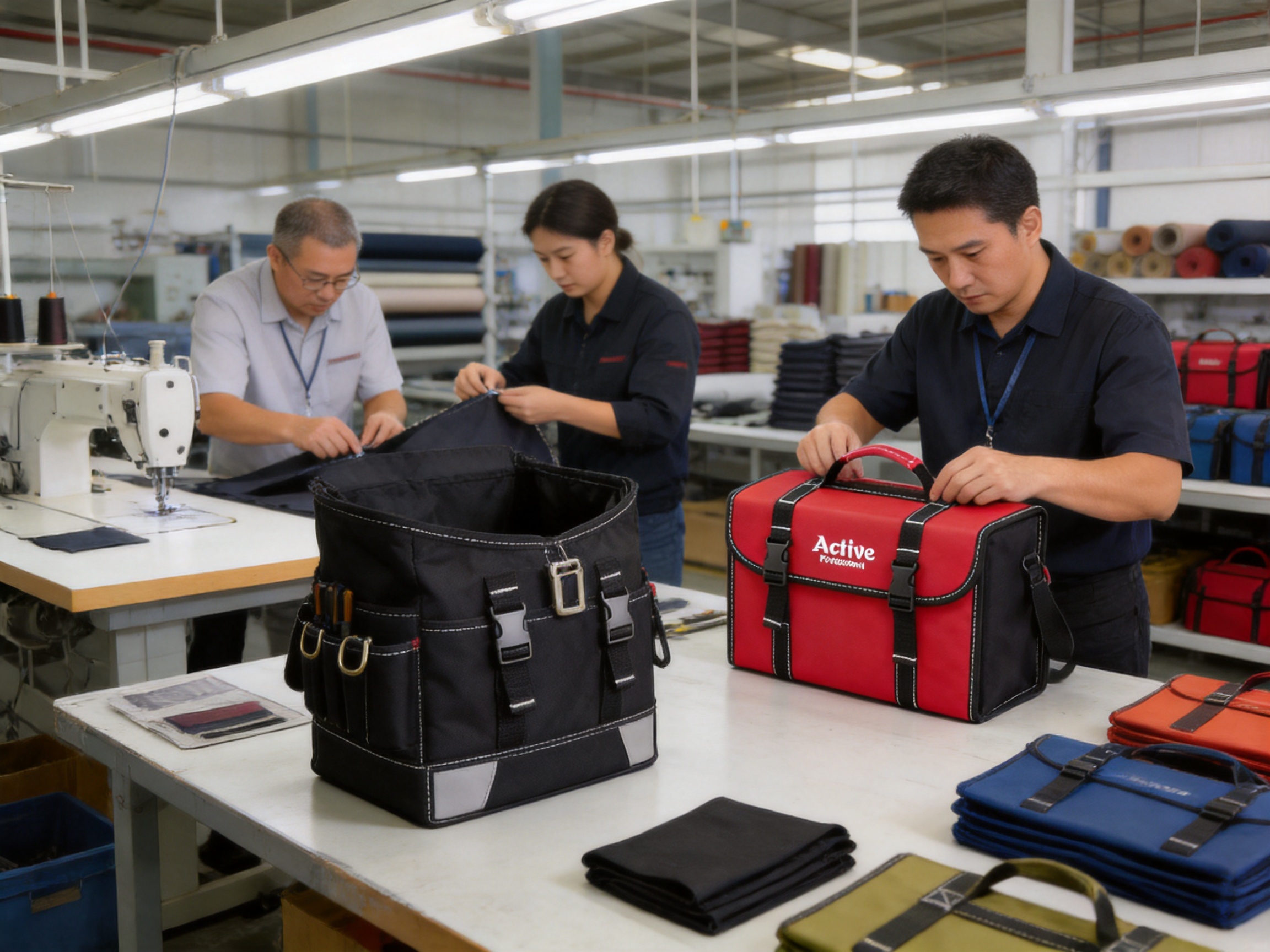
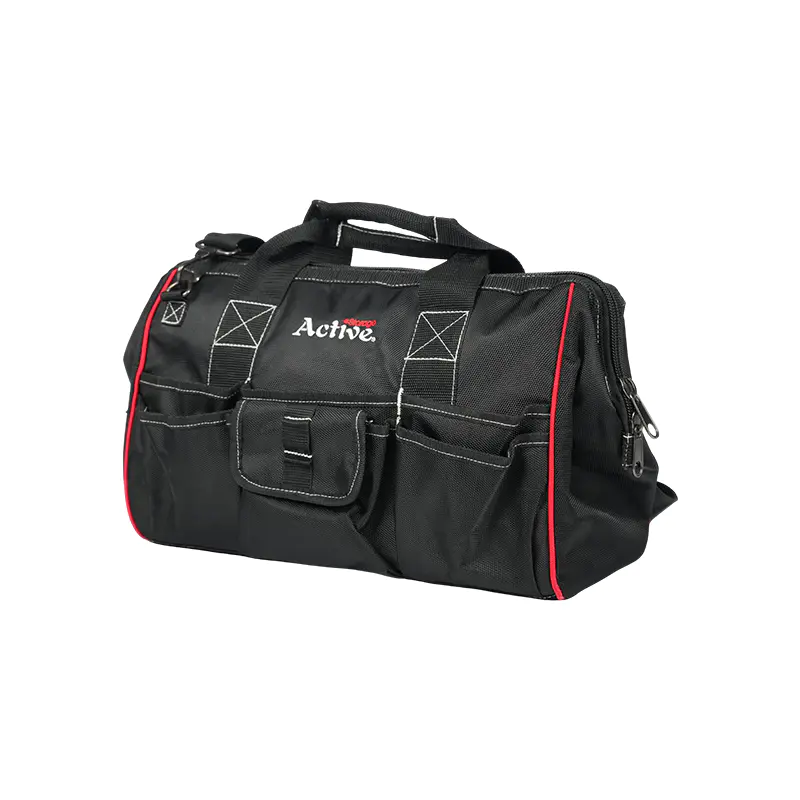
Professional tradespeople need more than a container for carrying equipment. A dependable tool bag must protect valuable tools, withstand rough handling, provide fast access during time-sensitive work, and remain comfortable and practical throughout a demanding day. The industrial-grade fully open wide-mouth heavy-duty tool storage bag is designed around these requirements. It combines tear-resistant polyester, a reinforced base, buckle-secured construction, a spacious main compartment, and multiple external attachment loops in a compact format measuring 35 x 16 x 21 cm.
This configuration makes the bag suitable for construction, electrical engineering, woodworking, maintenance, installation, repair, and other high-intensity applications. Its wide-mouth opening allows users to see and reach the contents quickly, while the reinforced bottom provides stability when the bag is placed on a workshop floor, jobsite platform, or vehicle surface. With a stated static load capacity of 33.07 pounds, approximately 15 kilograms, the bag is built to carry a substantial selection of hand tools, hardware, accessories, and selected power tools.
Unlike a basic fabric tote or a small zippered pouch, this tool storage bag is organized around jobsite efficiency. The fully open access design minimizes unnecessary searching. The engineered buckle closure provides a firm method of securing the opening. The polyester body is intended for repeated use in environments where abrasion, friction, dust, and contact with rough surfaces are common. Multi-loop attachment points also make it possible to keep frequently used items within easy reach rather than placing everything inside the main compartment.
Content
- 1 Designed for Real-World Professional Use
- 2 Wide-Mouth Access Improves Tool Retrieval
- 3 Industrial-Grade Polyester for Repeated Handling
- 4 Reinforced Bottom for Stability and Load Support
- 5 Engineered Buckle Closure for Secure Handling
- 6 Multi-Loop Organization for Frequently Used Tools
- 7 Product Specifications at a Glance
- 8 Advantages Over Conventional Tool Storage Options
- 9 Suitable Applications Across Multiple Industries
- 10 Manufacturing Strengths and Quality-Oriented Production
- 11 Advanced Customization Capabilities
- 12 Quality Management and Compliance Awareness
- 13 Production Process from Material to Finished Bag
- 14 Practical Packing Recommendations
- 15 Maintenance and Service-Life Considerations
- 16 Procurement Benefits for Professional Buyers
- 17 Why Category Expertise Matters
- 18 Q&A: Frequently Asked Questions
- 18.1 What type of tool bag is this?
- 18.2 What are the dimensions?
- 18.3 How much weight can it carry?
- 18.4 What material is used?
- 18.5 Does it have a zipper?
- 18.6 How many pockets does it have?
- 18.7 Is the color customizable?
- 18.8 Who can use this tool bag?
- 18.9 Is it waterproof?
- 18.10 Is the product a folding-seat tool bag?
- 18.11 Can the design be customized beyond color?
- 18.12 Where is the product manufactured?
- 19 Final Assessment
- 20 References
- 21 Product: Industrial-Grade Fully Open Wide-Mouth Heavy-Duty Tool Storage Bag
Designed for Real-World Professional Use
Tool bags are often exposed to conditions that ordinary storage products cannot handle. They may be placed on concrete, dragged across unfinished floors, loaded into service vehicles, carried up ladders, or transported between indoor and outdoor work areas. A bag used in these conditions must balance strength, capacity, access, and portability.
The wide-mouth heavy-duty tool storage bag addresses these needs through a practical structural layout. Its rectangular proportions create a stable footprint while preserving sufficient internal volume. The 35 x 16 x 21 cm dimensions provide a useful balance between storage capacity and portability. The bag is large enough for commonly used tools and accessories but compact enough to fit into a vehicle compartment, shelving system, workbench area, or larger tool case.
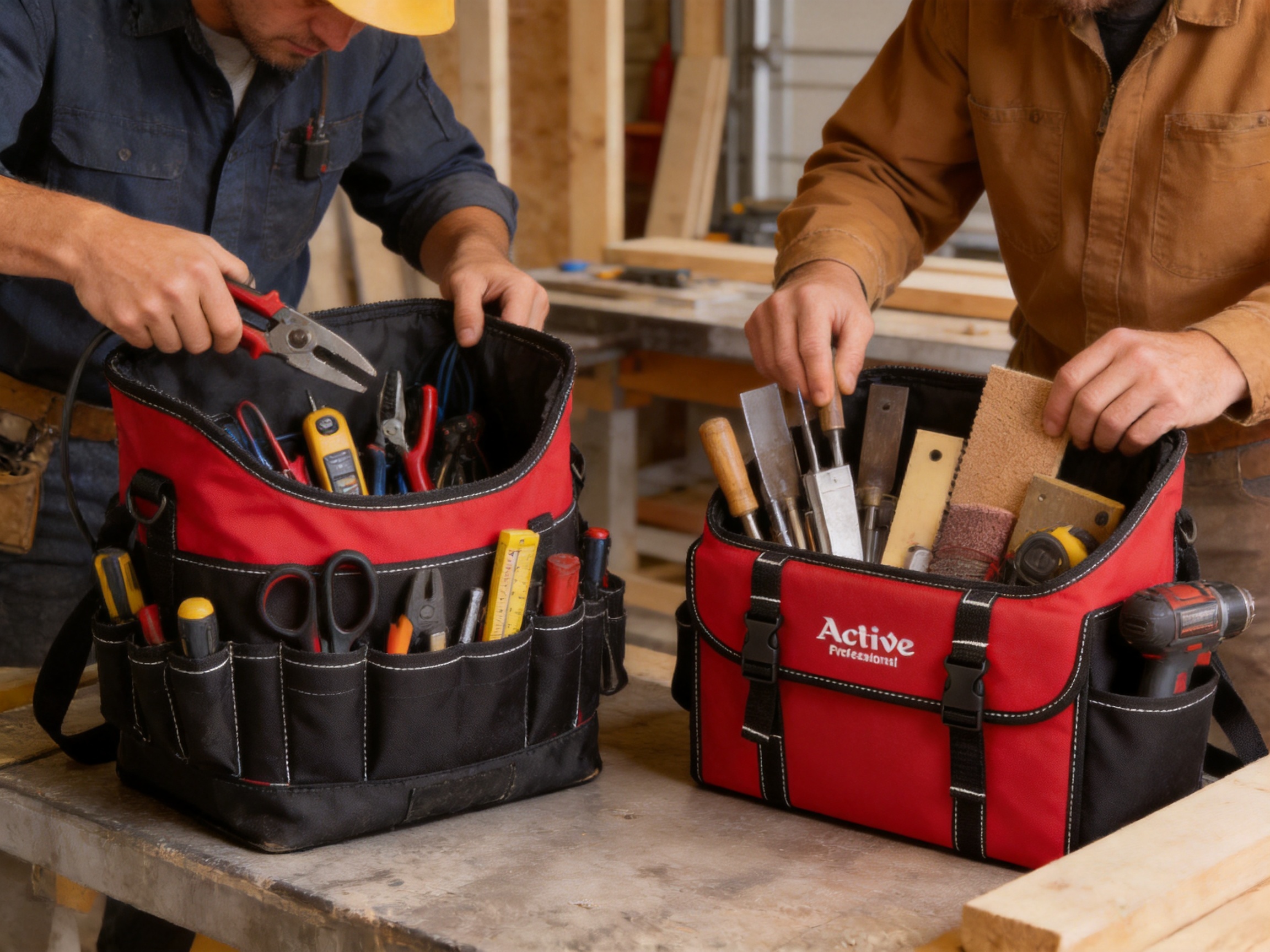
For electricians, the bag can accommodate items such as pliers, screwdrivers, cable cutters, measuring tools, voltage testers, wire accessories, and selected compact power tools. Woodworkers may use it for chisels, squares, marking tools, hand planes, bits, clamps, and sanding accessories. Construction and maintenance teams can use it for fasteners, hand tools, utility equipment, replacement components, and everyday repair essentials.
The design is also appropriate for organized work teams that want to assign specific bags to individual tasks. One bag can be configured for electrical installation, another for woodworking, and another for general maintenance. Because the color is customizable, businesses may use different colors to distinguish departments, work processes, or equipment categories.
Wide-Mouth Access Improves Tool Retrieval
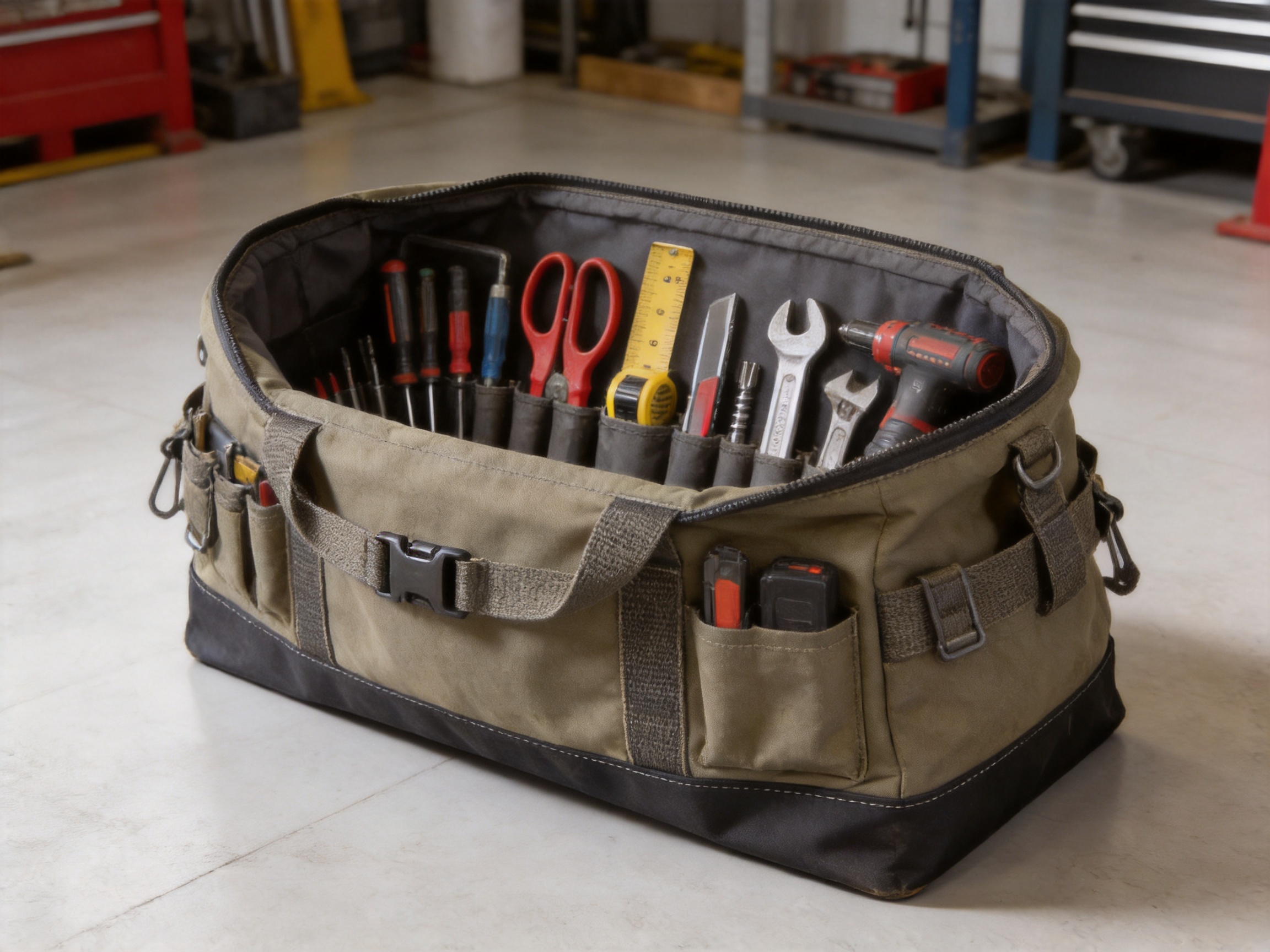
The main performance advantage of this model is its fully open, wide-mouth structure. In many conventional tool bags, the opening is narrow, partially blocked by a zipper, or restricted by soft side panels that collapse inward. These limitations can make it difficult to see the bottom of the bag and often force users to remove several tools before reaching the required item.
A fully open design changes the retrieval process. When the bag is placed on a stable surface, users can look directly into the main compartment and identify the contents more quickly. The large opening also makes it easier to load bulky items and remove equipment without catching handles or accessories against a narrow zipper track.
This is particularly valuable in electrical and woodworking workflows, where a worker may repeatedly switch between tools. Faster access can reduce interruptions, improve task continuity, and help keep the work area more orderly. The benefit is not simply a larger opening; it is a more efficient relationship between the user and the stored equipment.
The wide mouth also supports easier inventory checks. At the beginning of a shift, a supervisor or technician can inspect the bag visually to confirm that essential tools are present. At the end of a job, the open structure can help identify missing items before the worker leaves the site. This practical visibility is an important advantage over deep, closed, or poorly structured storage containers.
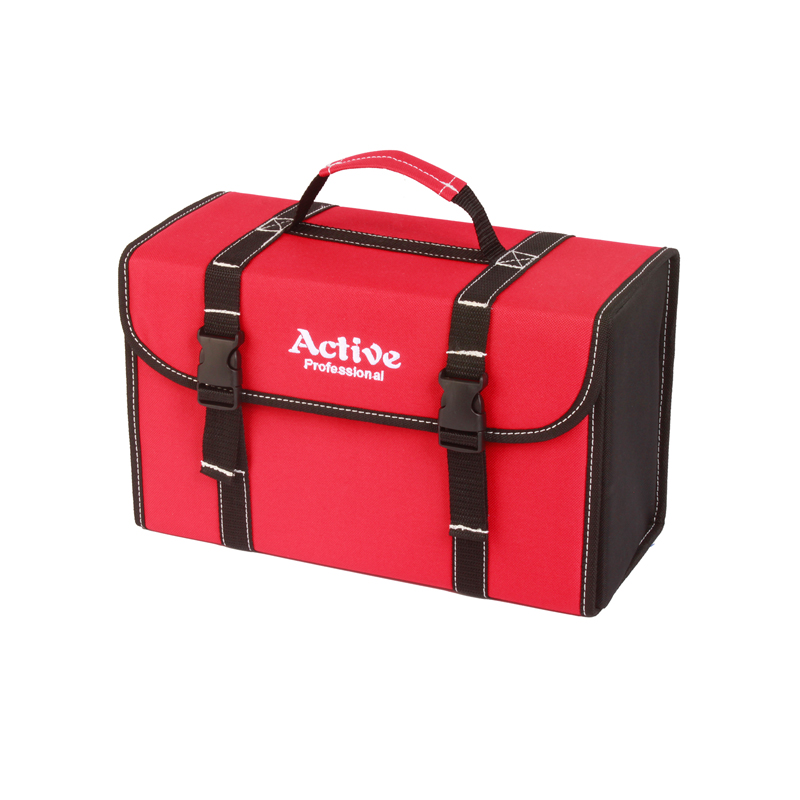
Industrial-Grade Fully Open Wide-Mouth Heavy-Duty Tool Storage Bag
Industrial-Grade Polyester for Repeated Handling
The body of the bag is made from high-quality industrial-grade polyester. Polyester is widely used in professional carrying products because it can provide a strong combination of abrasion resistance, tear resistance, flexibility, and manageable weight. For a tool bag, these properties are especially important because the fabric must tolerate contact with metal tools, rough surfaces, vehicle interiors, and repeated loading cycles.
Industrial work can create concentrated stress points. A screwdriver may press against the sidewall, a sharp tool edge may contact the fabric, or a heavy tool may pull against the bottom when the bag is lifted. A tear-resistant polyester construction helps reduce the risk that a small puncture or abrasion will immediately develop into a larger failure. While no fabric bag should be treated as indestructible, material selection plays a major role in extending useful service life.
Abrasion resistance is also essential when the bag is placed on unfinished floors or moved across a workbench. Lower-grade fabrics may quickly show scuffing, thinning, or fraying under these conditions. The industrial polyester specified for this product is intended for a more demanding duty cycle, making it better suited to professional use than lightweight household organizers.
The flexible nature of polyester provides another practical benefit. The bag can accommodate tools of different shapes without the rigid weight and bulk associated with a hard case. It can also be stored more efficiently when empty or partially loaded. This makes the product a useful middle ground between a soft pouch and a rigid toolbox.
Reinforced Bottom for Stability and Load Support
The bottom of a tool bag experiences some of the highest stresses during daily use. It carries the combined weight of all tools, absorbs impact when the bag is set down, and may be exposed to dust, moisture, splinters, and rough flooring. A reinforced bottom is therefore a critical structural feature rather than a cosmetic detail.
This model has a stated static load capacity of 33.07 pounds, or approximately 15 kilograms. The rating indicates that the bag is designed to support a substantial load when properly packed and handled. It gives users the flexibility to carry a practical selection of heavy hand tools, hardware, and power equipment without relying on a lightweight base that may sag or deform quickly.
A stable base also helps the bag remain upright. When the bottom holds its shape, the opening is easier to access, and tools are less likely to spill across the floor. Stability can be especially useful when the user is working from a vehicle, a temporary jobsite station, or a crowded workshop where dropped tools create safety and productivity concerns.
Load capacity should always be considered together with distribution. Heavy items should be placed low and centered, while smaller accessories can be positioned around them. The bag should not be overloaded beyond its specified capacity, and users should inspect the handles, buckles, seams, and base regularly when carrying heavy equipment.
Engineered Buckle Closure for Secure Handling
The bag uses a buckle closure rather than depending solely on a zipper. A buckle system can be particularly practical for professional users who need fast opening and closing while wearing gloves or working in dusty conditions. It allows the opening to be secured without requiring precise alignment of a zipper slider.
High-strength engineered buckles help keep the mouth of the bag controlled during transport. When the bag is lifted, moved through a vehicle, or carried across a worksite, the closure helps reduce the chance that tools will shift out of the main compartment. It also gives the bag a straightforward operating mechanism that can be inspected quickly.
Compared with a completely open tote, the buckle closure adds a useful level of containment. Compared with some zipper-centered designs, it can be faster to operate during repeated tool access. This combination of open access and secure closure is one of the product’s most practical design choices.
Users should ensure that the buckle is fully engaged before lifting a heavily loaded bag. The closure is intended to secure the bag during normal handling, but it should not be used as a substitute for careful load management. Periodic inspection is recommended to confirm that the buckle, webbing, and attachment points remain in good condition.
Multi-Loop Organization for Frequently Used Tools
The bag includes multiple loops intended for the attachment of frequently used tools. These external loops create a secondary organization zone outside the main compartment. Items that are used repeatedly can remain visible and accessible instead of being buried under heavier equipment.
For an electrician, loops may be used for a tester, small pliers, a screwdriver, or another hand tool selected for quick access. A carpenter or woodworker may use them for a marking instrument, utility knife, measuring tool, or compact accessory. A maintenance technician can reserve the loops for the tools needed during the first stage of inspection.
This organization method reduces the need to open and search the entire bag for every small task. It also helps users create a consistent personal layout. Once the same tools are kept in the same positions, workers can develop faster retrieval habits and more easily identify when an item is missing.
The external loops should be used according to their intended size and strength. Large or excessively heavy equipment should remain inside the main compartment unless the attachment system is specifically designed for that item. Proper organization improves both efficiency and safety because it reduces loose tools, unnecessary searching, and unstable packing.
Product Specifications at a Glance
| Parameter | Specification | Practical Benefit |
|---|---|---|
| Product type | Fully open wide-mouth heavy-duty tool storage bag | Fast visual access and easier loading |
| Dimensions | 35 x 16 x 21 cm | Compact footprint with useful working capacity |
| Material | Industrial-grade polyester | Resistance to abrasion and tearing |
| Closure | Engineered buckle | Quick securing and straightforward operation |
| Load capacity | 33.07 pounds, approximately 15 kg | Supports a substantial selection of tools |
| Pockets | 1 main pocket | Open central storage for larger tool groups |
| Attachment system | Multiple tool loops | Convenient access to regularly used tools |
| Color | Customizable | Suitable for brand, department, or product-line identification |
| Country of origin | China | Manufactured within an established tool-bag production base |
Advantages Over Conventional Tool Storage Options
Compared with Lightweight Fabric Totes
Lightweight fabric totes are often inexpensive and easy to carry, but they may lack sufficient structure for heavy professional tools. Their bases can flex under load, their openings may collapse, and their fabric may not be designed for repeated abrasion. The industrial-grade wide-mouth bag provides a more durable construction approach, a reinforced base, and a defined closure system.
The heavier-duty design is particularly advantageous for workers who carry the same tool set every day. Although a professional bag may have a higher initial cost than a basic tote, improved durability and better organization can contribute to a longer service life and lower replacement frequency.
Compared with Narrow Zippered Bags
Zippered bags can provide useful containment, but narrow openings often make large tools difficult to insert and remove. Searching inside a deep zippered bag may also take longer, especially when tools are mixed together. The full-width opening of this model prioritizes visibility and access.
The buckle closure provides a different operating experience from a zipper. It can be opened quickly, is easy to understand, and may be more convenient when the user is wearing gloves. The best choice depends on the application, but for fast-moving jobsites, an accessible buckle-secured opening can offer a meaningful productivity advantage.
Compared with Hard Tool Cases
Hard cases generally provide excellent impact protection and organized compartments, but they can be bulky, heavy, and less adaptable to tools of different shapes. A soft-sided polyester bag offers greater flexibility and can be easier to carry or store in limited spaces.
This product is best suited to users who need a durable, open-access carrier rather than a sealed protective case for delicate instruments. It combines the portability of soft storage with structural reinforcement in the areas that matter most for everyday tool transport.
Compared with Small Tool Pouches
A tool pouch is useful for a limited number of hand tools, but it cannot replace a general-purpose carrier when a project requires multiple tool categories. The 35 x 16 x 21 cm format provides substantially more central storage while retaining external loops for selected quick-access items.
The result is a more versatile solution for technicians who need to transport a complete working kit rather than only the tools carried on a belt.
Suitable Applications Across Multiple Industries
Electrical Engineering and Installation
Electrical work often requires a combination of hand tools, testing devices, connectors, fasteners, and protective accessories. A wide-mouth bag allows an electrician to arrange the most frequently used tools near the top and keep less frequently used items underneath. External loops can hold selected tools for rapid access during installation or troubleshooting.
The bag is not intended to replace specialized insulated storage for every electrical application. However, it can serve as a practical general-purpose carrier for appropriately rated equipment and accessories. Users should follow all electrical safety requirements and keep energized work tools properly insulated and maintained.
Construction and Site Maintenance
Construction teams often move equipment between work areas. A stable base and 15-kilogram static load capacity provide useful support for a working selection of hand tools, fasteners, measuring equipment, and compact devices. The reinforced polyester body is appropriate for routine contact with jobsite surfaces, while the buckle helps contain the load during transport.
Because the bag is compact, it can also be assigned to a specific task such as drywall repair, fixture installation, finish work, or general punch-list maintenance. Task-specific packing helps reduce the time workers spend returning to a central toolbox.
Woodworking
Woodworkers may need to carry marking tools, chisels, hand tools, bits, clamps, sanding accessories, and measuring equipment from a workshop to an installation site. The wide opening supports quick identification of these items, and the flexible polyester body can accommodate tools with different profiles.
Sharp tools should be capped, sheathed, or arranged so that their edges do not press directly against the fabric. Proper packing protects both the tools and the bag and helps preserve the advantages of the soft-sided design.
Repair, Service, and Facilities Management
Service technicians benefit from a portable bag that can support a repeatable daily tool layout. The bag can be organized for plumbing maintenance, furniture repair, equipment inspection, general facility service, or installation work. Custom colors may help service departments identify assigned bags and reduce mix-ups between teams.
Manufacturing Strengths and Quality-Oriented Production
The manufacturer behind this product was founded in 2004 and specializes in professional tool bags and customization solutions. More than two decades of industry experience provide an important foundation for understanding material selection, reinforcement methods, sewing construction, closure integration, and the practical demands of export markets.
Its manufacturing structure includes a core production base in China established in 2012 and an additional production facility in Cambodia. A multi-location production network can provide greater flexibility in capacity planning, sourcing, and international supply. It may also help customers manage changing trade conditions and production schedules.
The company operates with more than 200 employees and approximately 11,000 square meters of floor space. This scale supports the transition from product development to bulk manufacturing while maintaining dedicated processes for cutting, sewing, assembly, inspection, packing, and shipment preparation.
Tool bag manufacturing requires more than simply sewing fabric panels together. A reliable product depends on accurate pattern cutting, consistent seam allowances, appropriate thread tension, reinforcement at stress points, correct placement of buckles and loops, and inspection of the final shape. A manufacturer with dedicated experience in this category is better positioned to address these details than a general textile supplier unfamiliar with tool-carrying applications.
The company also maintains an independent research and development team that introduces more than 10 new designs each year. This development activity indicates an ongoing effort to improve product functionality, respond to customer requirements, and expand the range of tool-carrying solutions. New product development is particularly relevant in a market where users increasingly seek lighter materials, better organization, customized branding, and task-specific configurations.
Advanced Customization Capabilities
Customization is an important advantage for distributors, professional brands, wholesalers, and corporate purchasing teams. The product’s color is listed as customizable, allowing customers to select a visual identity that matches their brand system, product family, department, or market position.
Color customization can also support operational organization. For example, a company may use one color for electrical service, another for mechanical maintenance, and another for installation teams. In large facilities, visual differentiation can make it easier to identify equipment assigned to a specific function.
In addition to color, professional buyers may discuss other possible customization requirements with the manufacturer. These may include logo application, label placement, packaging, materials, dimensions, internal organization, closure details, and attachment configurations. Any modification should be reviewed through a formal sample and approval process so that the final version maintains the required load performance and usability.
Customization is most successful when it begins with a clear definition of the end user. A bag intended for an electrician may require different loop positions from one intended for a carpenter. A distributor serving mobile service teams may prioritize compact dimensions, while a construction contractor may emphasize maximum load support. The manufacturing process should translate these use cases into measurable specifications.
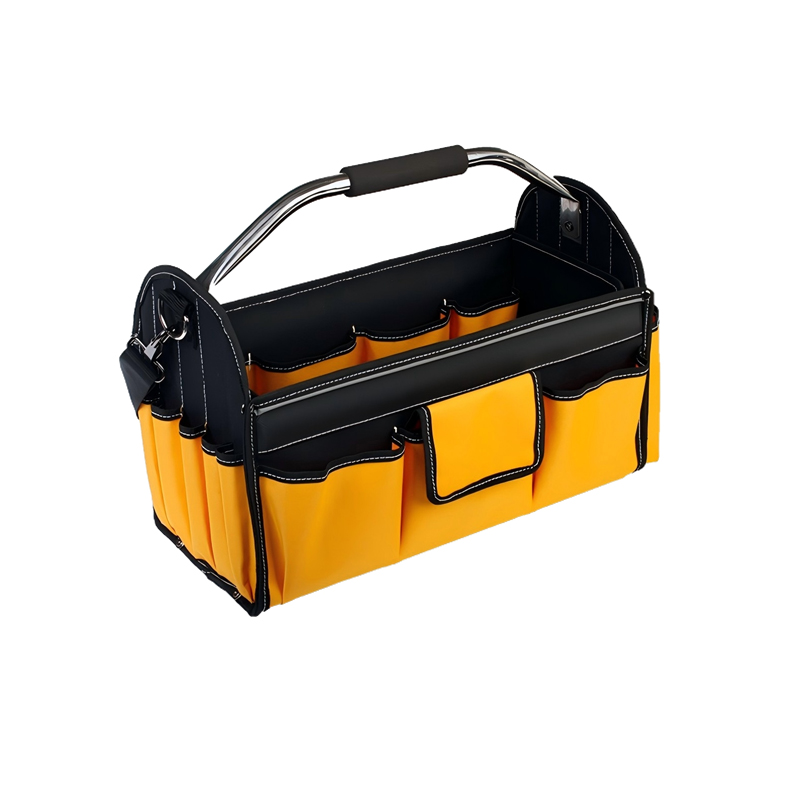
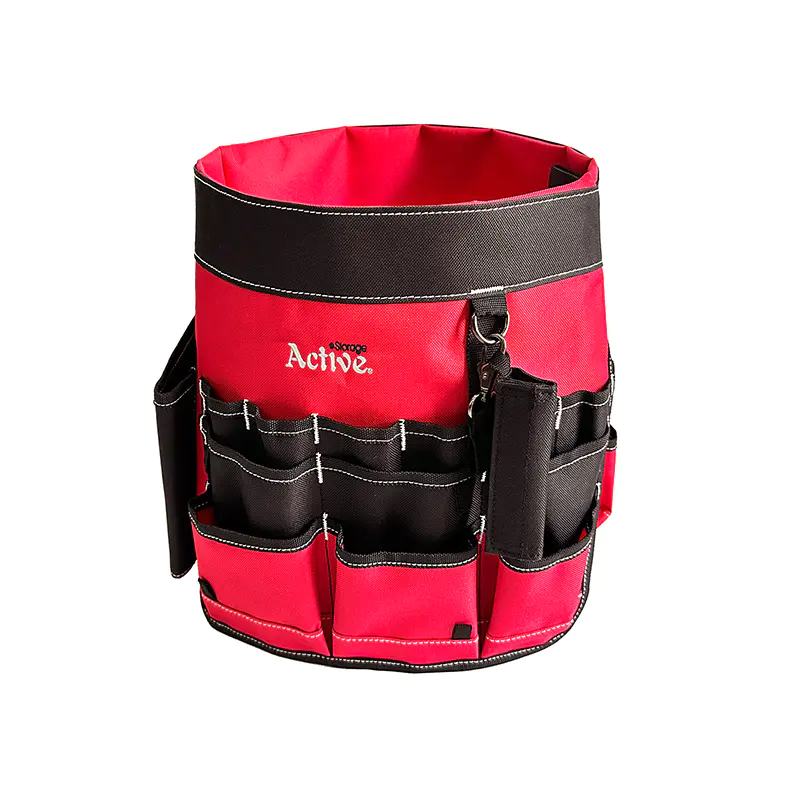
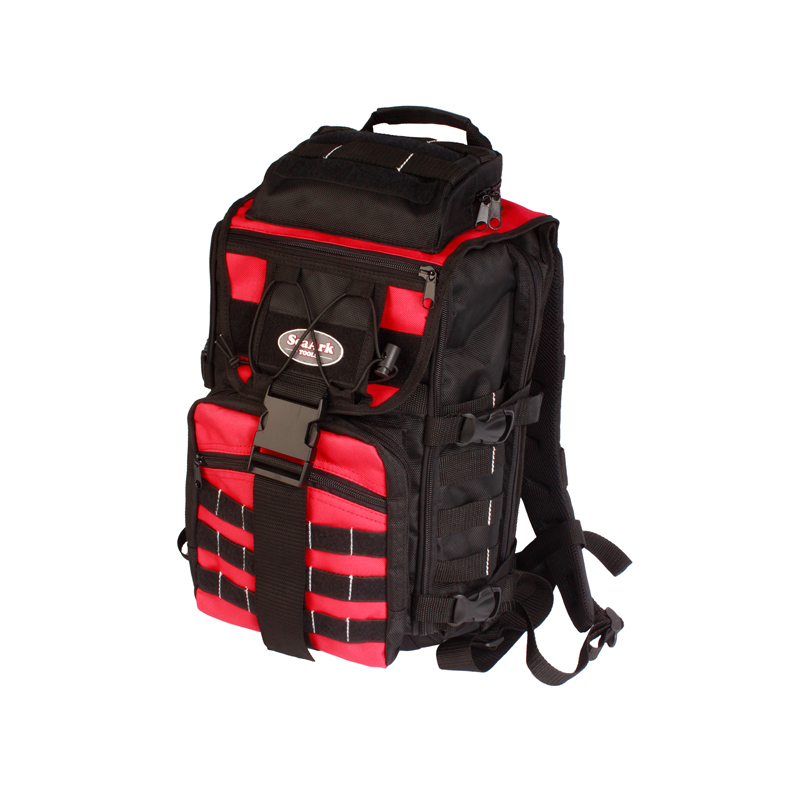
The company’s experience with global clients and tailor-made solutions supports this type of project. Its product portfolio includes trolley tool bags, tool backpacks, zippered tool bags, tool bags with tubular handles, waist tool bags, tool pouches, tool vests, tool bucket bags, folding-seat tool bags, pocket handy tool bags, garden bags, and other multifunctional carriers. This broad category knowledge can be valuable when customers need to develop a coordinated range rather than a single isolated product.
Quality Management and Compliance Awareness
Professional buyers increasingly evaluate suppliers according to both product quality and production transparency. The manufacturer’s facilities undergo annual third-party audits, including BSCI, SEDEX, FCCA, and SCS audits. These programs are associated with social responsibility, ethical supply-chain review, factory assessment, or compliance-oriented evaluation, depending on the specific audit scope.
Third-party audits do not eliminate the need for customer inspection, but they provide additional information about the supplier’s approach to standardized production and responsible operations. For international buyers, this can simplify the supplier qualification process and support internal procurement requirements.
A quality-oriented tool-bag manufacturing process should include checks at several stages. Incoming fabric and hardware should be reviewed for consistency. Cut panels should match approved patterns. Sewing lines should be inspected for skipped stitches, loose threads, uneven tension, and inadequate reinforcement. Buckles and loops should be checked for correct placement and attachment. Finished bags should be inspected for dimensions, appearance, closure performance, and packaging condition.
For customized orders, the approved sample should function as the reference standard. Production teams should compare bulk goods with the approved sample and document any permitted variations. This process helps reduce differences between development samples and final shipment quantities.
Production Process from Material to Finished Bag
Material Selection
The manufacturing process begins with the selection of polyester fabric, thread, webbing, buckles, labels, and other components. Material specifications should be matched to the expected load, abrasion exposure, color requirements, and final application. Industrial use requires materials that are not only visually consistent but also suitable for repeated handling.
Pattern Development and Cutting
Pattern development determines the final dimensions, opening size, base geometry, seam positions, loop placement, and closure layout. Precise cutting is important because even small variations can affect the way the bag stands, closes, and carries weight. For custom projects, digital or physical patterns can be adjusted during the sample-development stage.
Panel Preparation
Cut fabric panels may be prepared with reinforcement layers, binding, labels, webbing, or other components before the main sewing operation. Correct preparation ensures that stress-bearing elements are integrated into the structure rather than attached as an afterthought.
Sewing and Reinforcement
The body panels, base, loops, and closure components are assembled through controlled sewing operations. Stress points around handles, buckle attachments, and loop anchors require particular attention because these areas experience concentrated pulling forces. Consistent stitching helps produce a uniform appearance and supports repeatable performance across production batches.
Assembly and Inspection
After sewing, the bag is formed, hardware is checked, and the opening and base are inspected. Quality personnel can verify whether the bag stands correctly, whether the buckle engages properly, whether the loops are positioned as intended, and whether visible defects are present.
Final Packing
Finished bags are folded or arranged according to their structure, packed according to customer requirements, and prepared for export. Proper packing protects the product from unnecessary deformation and helps maintain order during transportation and warehousing.
Practical Packing Recommendations
To gain the best performance from the bag, users should organize tools by frequency of use, weight, and shape. Heavy items should be placed at the bottom and near the center. Frequently used hand tools can be positioned near the top or attached to the external loops. Small hardware should be placed in a suitable container rather than left loose if it could become difficult to retrieve.
Sharp tools should be protected with caps, sheaths, or dedicated holders. Drill bits, blades, chisels, and other edged equipment can damage fabric when allowed to move freely. Separating abrasive or sharp items from the sidewalls helps preserve the bag and reduces the risk of injury during retrieval.
The main compartment should not be packed so tightly that the buckle cannot close properly. Overpacking may distort the opening, increase stress on the seams, and make tool retrieval more difficult. The stated 33.07-pound capacity should be treated as a maximum static load reference rather than a target for every use.
After use, users should remove dust, sawdust, metal shavings, and spilled hardware. A clean interior makes inventory control easier and helps prevent abrasive particles from wearing the fabric. The bag should be stored in a dry, ventilated location away from excessive heat, solvents, and sharp objects when it is not in use.
Maintenance and Service-Life Considerations
Regular inspection is a simple way to extend the useful life of any tool bag. Users should examine the bottom, seams, loops, buckles, and handles before carrying a heavy load. Early signs of fraying, tearing, distorted hardware, or failed stitching should be addressed before the bag is returned to demanding service.
Surface dirt can generally be removed with a soft brush or damp cloth, subject to the care instructions supplied with the final product. Strong chemical cleaners, aggressive solvents, or high-temperature drying methods should be avoided unless specifically approved for the material. Harsh treatment may affect the polyester, coatings, webbing, or printed markings.
Moisture should be allowed to dry fully before the bag is packed and stored. Storing wet tools inside a closed bag may contribute to odor, corrosion, or material degradation. The bag is designed as a professional tool carrier, but it should not automatically be considered waterproof or suitable for submersion unless a particular customized version has been tested and rated for those conditions.
Good maintenance also includes responsible loading. A bag that is consistently overloaded may experience accelerated wear even when the fabric itself is durable. Matching the contents to the product’s intended capacity is one of the most effective ways to preserve its performance.
Procurement Benefits for Professional Buyers
For distributors and importers, this product offers a practical combination of recognizable function, customizable appearance, and broad market suitability. The wide-mouth structure is easy to explain to end customers because its primary benefit is immediately visible. The reinforced bottom, polyester construction, buckle closure, and external loops provide additional selling points for professional users.
For contractors and corporate purchasing departments, a standardized tool bag can help create consistent equipment packages across teams. Each worker can receive a defined set of tools in an identical carrier, simplifying training, inventory review, and replacement planning. Color customization can reinforce internal organization or corporate identity.
For private-label brands, the manufacturer’s development and production capabilities may support a complete product program. A customer could begin with this wide-mouth tool bag and later add backpacks, trolley bags, pouches, waist bags, or tool vests from the same category specialist. A coordinated range can create a more consistent retail presentation than sourcing unrelated products from multiple suppliers.
The supplier’s production bases in China and Cambodia may also provide flexibility for international sourcing strategies. Buyers should discuss order quantities, lead times, sample procedures, packaging, testing requirements, and shipping arrangements directly with the manufacturer before placing an order.
Why Category Expertise Matters
Tool bags are specialized textile products. They must support weight, resist abrasion, maintain shape, provide access, and remain comfortable to transport. These needs differ from those of fashion bags, luggage, or ordinary storage totes. A manufacturer focused on tool bags is more likely to understand the relationship between reinforcement, hardware, sewing construction, and jobsite use.
The company’s portfolio covers multiple tool-bag formats, including trolley bags, backpacks, zippered bags, tubular-handle bags, waist bags, pouches, vests, bucket bags, folding-seat bags, pocket tool bags, and garden bags. This breadth demonstrates familiarity with different carrying methods and work environments.
Category specialization can also improve communication during product development. Customers can discuss practical issues such as access speed, tool balance, attachment points, handle placement, base reinforcement, and compatibility with vehicle storage. These details are often more important to professional users than decorative features.
Q&A: Frequently Asked Questions
What type of tool bag is this?
It is an industrial-grade, fully open, wide-mouth heavy-duty tool storage bag. It has one main compartment, multiple tool loops, a buckle closure, and a reinforced bottom.
What are the dimensions?
The listed dimensions are 35 x 16 x 21 cm. This compact rectangular format is intended to provide useful storage while remaining practical for transport and vehicle storage.
How much weight can it carry?
The stated static load capacity is 33.07 pounds, approximately 15 kilograms. Users should distribute weight evenly and avoid exceeding the specified capacity.
What material is used?
The bag is made from high-quality industrial-grade polyester selected for tear resistance and abrasion resistance.
Does it have a zipper?
No. The listed closure type is a buckle. The buckle is designed to secure the wide-mouth opening while allowing quick operation.
How many pockets does it have?
The product information lists one main pocket. In addition, it includes multiple loops for attaching frequently used tools.
Is the color customizable?
Yes. The color is listed as customizable, which may support private-label branding, department identification, or coordinated product ranges.
Who can use this tool bag?
It is designed for construction, electrical engineering, woodworking, maintenance, installation, repair, and other demanding work environments where durable and accessible tool storage is required.
Is it waterproof?
The supplied specifications identify polyester construction but do not provide a waterproof or water-resistant rating. Buyers should request specific test information if water protection is necessary.
Is the product a folding-seat tool bag?
The product category information includes “Tool Bag With Folding Seat,” but the supplied product specifications describe a wide-mouth storage bag and do not identify an integrated seat feature. Buyers should confirm the exact configuration with the manufacturer before ordering if a folding seat is required.
Can the design be customized beyond color?
The company provides comprehensive customization solutions and tailor-made products. Buyers may discuss materials, dimensions, branding, packaging, loop placement, and other requirements directly with the manufacturer. Final availability depends on technical review, sampling, and order specifications.
Where is the product manufactured?
The listed country of origin is China. The manufacturer also operates a production facility in Cambodia as part of its international manufacturing network.
Final Assessment
The industrial-grade fully open wide-mouth heavy-duty tool storage bag is a practical solution for professionals who value durability, visibility, and fast access. Its industrial polyester body is designed to resist the wear associated with repeated jobsite handling. The reinforced bottom supports a stated 33.07-pound static load, while the rectangular 35 x 16 x 21 cm format offers a useful balance between capacity and portability.
The product’s strongest advantage is the combination of a fully open mouth and a secure buckle closure. Users can see and retrieve tools quickly without giving up the ability to contain the load during transport. Multiple loops add another layer of organization by keeping selected tools immediately available.
From a sourcing perspective, the manufacturer brings more than 20 years of tool-bag experience, multiple production bases, an independent research and development team, customization capabilities, and third-party audit experience. These strengths make the product relevant not only to individual tradespeople but also to distributors, contractors, private-label brands, and corporate procurement teams.
For the best results, users should pack the bag within its rated capacity, protect sharp tools, inspect stress points regularly, and confirm any special requirements before ordering. When properly selected and maintained, this wide-mouth tool bag can provide a durable, efficient, and adaptable storage solution for demanding professional work.
References
1. Product specification sheet for the industrial-grade fully open wide-mouth heavy-duty tool storage bag, including dimensions, materials, closure type, load capacity, and pocket configuration.
2. Manufacturer-provided company profile describing production history, customization services, research and development capabilities, facilities, workforce, and product categories.
3. Manufacturer-provided information concerning third-party factory audits, including BSCI, SEDEX, FCCA, and SCS assessments.
4. General principles of textile product construction, including polyester fabric performance, seam reinforcement, webbing attachment, hardware integration, and inspection procedures.
5. General occupational tool-storage practices covering load distribution, sharp-tool protection, workplace organization, equipment inspection, and preventive maintenance.
Product: Industrial-Grade Fully Open Wide-Mouth Heavy-Duty Tool Storage Bag




We are a professional enterprise engaged in exporting various types of toolkits.
We firmly believe that 'quality is everything, service enhances value'.
-
+86-15298800699

-
+86-512-58670375

-
karen@kun-bag.com

-
Building 11, No. 93 Chengang Road, Zhangjiagang City, Jiangsu Province, China

Copyright © Zhangjiagang Seaark Tools Industrial Co., Ltd. All Rights Reserved.
Custom Electrician Tool Backpack Manufacturers