
 en
 русский
 Español
 Deutsch

Multi-Functional All-Weather Tool Backpack with Folding Chair: A Complete Guide to Mobile Work, Tool Organization, and Outdoor Readiness
Content
- 1 Introduction
- 2 Product Concept and Intended Use
- 3 Core Product Advantages
- 3.1 Integrated backpack and folding chair configuration
- 3.2 Water-resistant construction for outdoor work
- 3.3 High-visibility reflective strips
- 3.4 Eight-compartment storage layout
- 3.5 Built-in insulated cooler bag
- 3.6 Compact dimensions and practical capacity
- 3.7 Zipper closure and accessible organization
- 4 Comparison with Conventional Tool-Carrying Solutions
- 5 Manufacturing Strength and Product Development
- 6 Materials, Construction, and Functional Engineering
- 7 Customization and Commercial Supply Opportunities
- 8 Recommended Packing and Use Practices
- 9 Safety and Operational Considerations
- 10 Why the Product Offers a Distinct Market Position
- 11 Frequently Asked Questions
- 11.1 What type of product is this?
- 11.2 What are the product dimensions?
- 11.3 How much weight can the product carry?
- 11.4 How many pockets does the backpack have?
- 11.5 Is the backpack waterproof?
- 11.6 Does it include reflective safety features?
- 11.7 What can the insulated cooler compartment be used for?
- 11.8 What tools are suitable for the internal slots?
- 11.9 Is the color customizable?
- 11.10 Can the product be customized for a private-label brand?
- 11.11 Where is the product manufactured?
- 11.12 Who manufactures the backpack?
- 11.13 Is the backpack suitable for electricians?
- 11.14 Can it be used for fishing or camping?
- 11.15 How should the chair be maintained?
- 12 Conclusion
- 13 References
- 14 Product: Multi-functional All-Weather Tool Backpack with Folding Chair
Introduction
Professional technicians, maintenance workers, utility crews, field service teams, anglers, and outdoor operators often face the same practical challenge: they need to transport tools safely while remaining mobile, organized, and prepared for changing working conditions. A conventional toolbox may provide rigid protection but can be awkward to carry over long distances. A standard backpack may be comfortable to transport but often lacks the structure, capacity, visibility, and specialized storage required for technical work. A folding chair, meanwhile, is usually carried as a separate item, creating additional bulk and increasing the risk of leaving essential equipment behind.
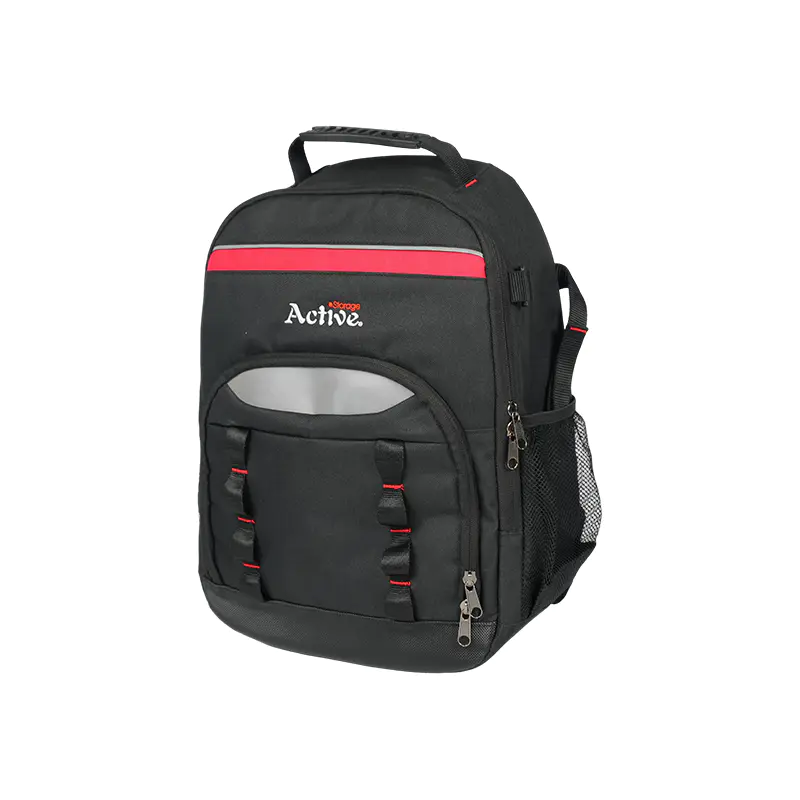
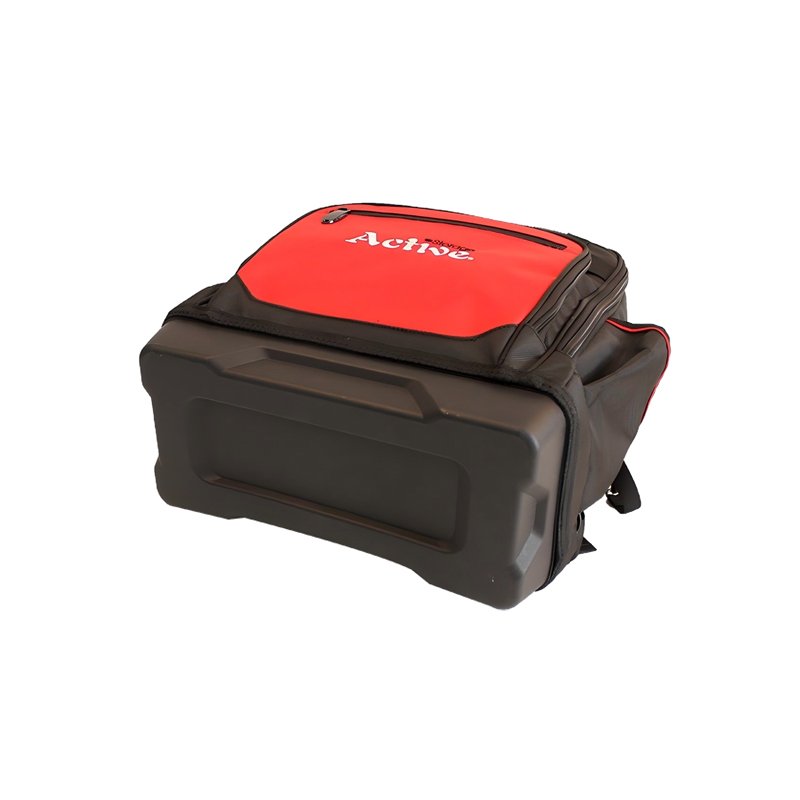
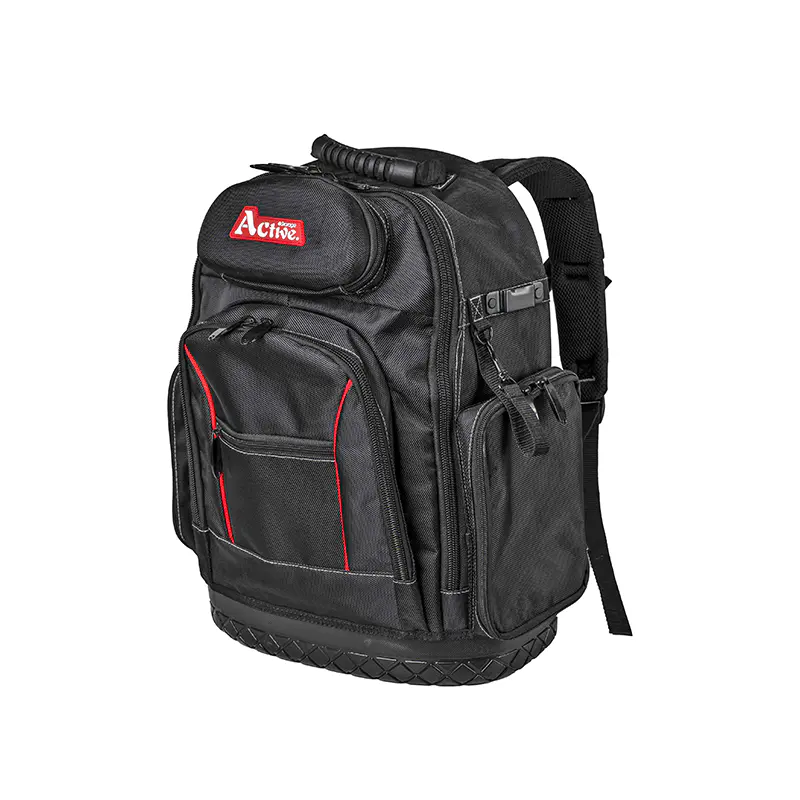
The Multi-Functional All-Weather Tool Backpack with Folding Chair addresses these needs through an integrated design that combines tool transportation, organized storage, outdoor protection, and portable seating. Designed for professional technicians and outdoor workers, the product brings together a backpack, a tool management system, an insulated cooler compartment, and a sturdy steel tube chair in one compact platform. Its stated dimensions of 38*33*41cm create a practical balance between storage capability and portability, while a listed load capacity of 33.07 lbs allows users to carry a substantial assortment of tools and supplies.
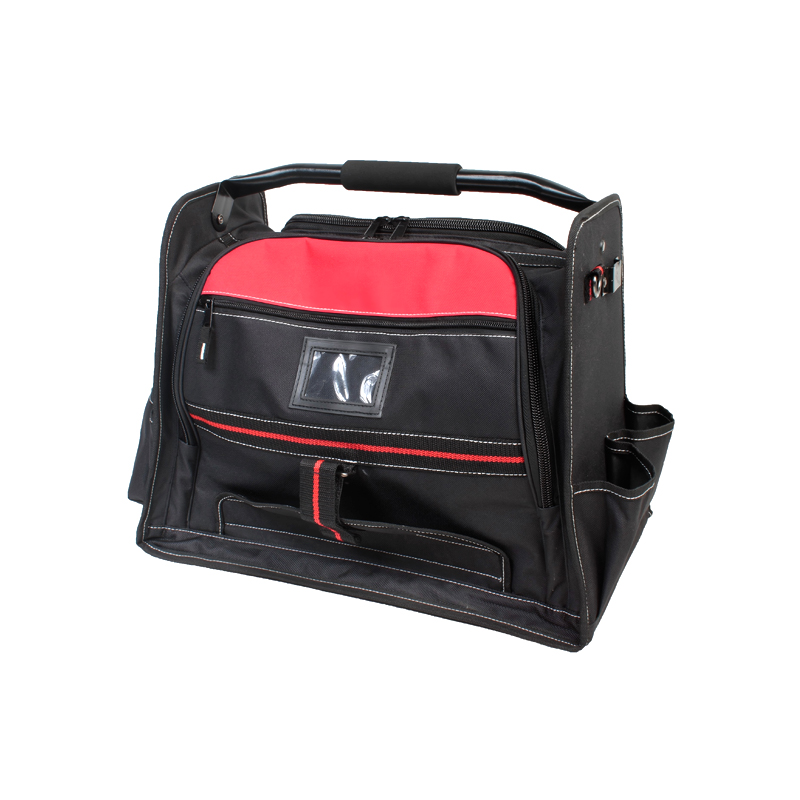
The product is categorized as a tool bag with folding seat, but its functional range extends beyond that basic description. It can serve as a rugged tool bag, electrician tool backpack, outdoor repair pack, fishing accessory carrier, and compact work-support system. The combination of water-resistant polyester, high-visibility reflective strips, multiple storage compartments, zipper closure, and integrated seating gives it a distinctive position within the professional tool bag market.
Manufactured by Zhangjiagang Seaark Tools Industrial Co., Ltd., a specialist with more than two decades of tool bag manufacturing experience, the backpack is supported by dedicated production resources, independent product development, multiple manufacturing bases, and customization capabilities. These factors are important for distributors, private-label brands, contractors, and professional users seeking more than a general-purpose carry bag.
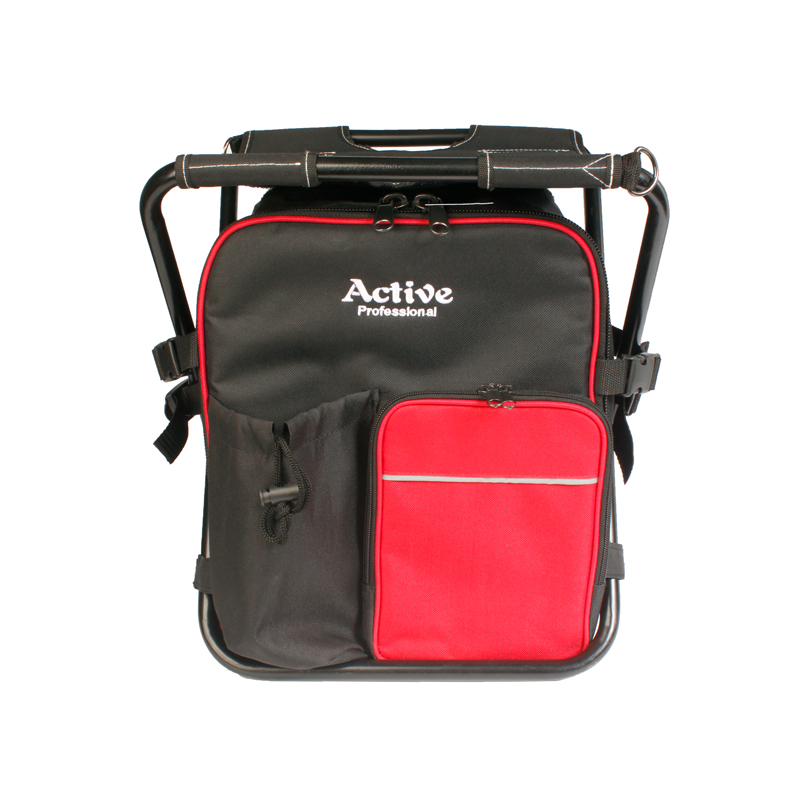
Multi-functional All-Weather Tool Backpack with Folding Chair
Product Concept and Intended Use
The central idea behind this product is integration. Instead of treating transportation, tool organization, personal comfort, weather protection, and field convenience as separate requirements, the design combines them into a single mobile work solution. This approach is particularly valuable when a worker must travel from a vehicle to a remote worksite, move between service points, or operate in outdoor conditions where a work surface or chair may not be readily available.
The backpack format allows the user to carry the product hands-free. This is useful when climbing stairs, walking along a pipeline, crossing uneven ground, or carrying additional equipment. Compared with a traditional hand-carried tool case, a backpack distributes weight across the shoulders and back when properly adjusted. It also leaves both hands available for handling instruments, opening access panels, supporting balance, or carrying supplementary materials.
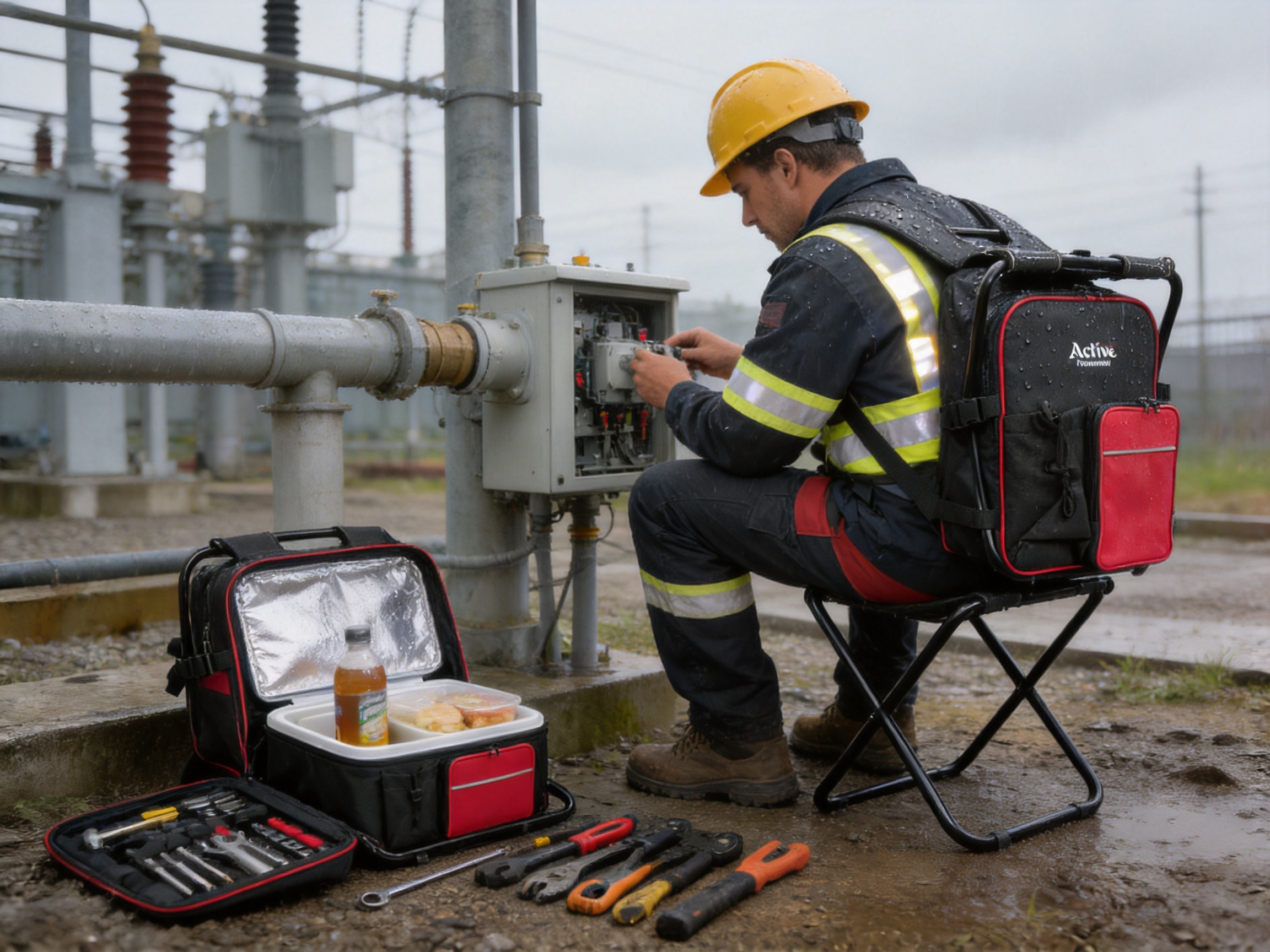
The folding chair provides a second level of utility. Field technicians may need to sit while performing detailed work, waiting for access authorization, inspecting equipment, organizing components, or completing documentation. Outdoor workers may also require a temporary seat during fishing, inspection, maintenance, or rest periods. By incorporating the chair into the backpack structure, the user does not need to carry a separate folding stool.
The design is also suitable for situations in which equipment must remain close to the operator. A technician can position the bag beside the work area, open the zipper, and access tools through the organized internal and external compartments. This reduces the need to search through a deep, unstructured container and helps maintain a clearer work routine.
Typical application environments
The product is suitable for outdoor pipe repair, field maintenance, utility inspection, electrical service, communications installation, equipment servicing, construction support, gardening, fishing, camping, and other mobile operations. It may also be useful for instructors, inspectors, repair contractors, and technical sales teams who need to carry demonstration tools or service instruments.
In pipe repair and utility work, the water-resistant exterior and reflective strips can provide useful protection and visibility during outdoor operations. In fishing and recreational use, the cooler compartment can help accommodate beverages, food, bait, or other temperature-sensitive supplies for shorter periods. In construction and maintenance, the internal slots can help separate hand tools, measuring devices, fasteners, and personal accessories.
The backpack is not presented as a substitute for specialized hard cases used for fragile laboratory instruments or hazardous materials. Instead, it is best understood as a flexible soft-sided mobile work platform for users who value portability, compartmentalization, and multifunctional performance.
Core Product Advantages
Integrated backpack and folding chair configuration
The most distinctive feature is the integration of a backpack and a folding chair. Many tool bags focus exclusively on storage, while portable stools and chairs are usually separate products. Carrying both items independently can require one hand, increase total bulk, and create difficulties when the user needs to move across a worksite.
The integrated configuration offers a more streamlined alternative. The user can transport tools and a seat as one unit, making the product particularly suitable for field operations where mobility is essential. The steel tube chair provides a stable seating solution for rest, inspection, or detailed work. It also gives the bag a clear functional identity that differentiates it from ordinary technician backpacks.
From a purchasing perspective, the combined format can reduce the need to source several separate accessories. For distributors and project buyers, it provides an opportunity to offer a product with multiple use cases rather than a basic storage bag. For end users, the primary benefit is convenience: fewer items must be packed, carried, and monitored during a workday.
Water-resistant construction for outdoor work
The backpack uses polyester material with water-resistant properties intended to improve protection in outdoor conditions. Water resistance is valuable for workers exposed to light rain, damp ground, splashes, and changing weather. It can help reduce the risk of ordinary moisture reaching tools and supplies during short-duration exposure.
Water-resistant construction also contributes to easier day-to-day use. Outdoor tool bags can encounter dust, wet surfaces, grass, soil, and incidental spills. A practical exterior material helps the bag withstand these conditions more effectively than delicate fabrics intended only for indoor use.
It is important to distinguish water resistance from complete waterproofing. The product information identifies the fabric as highly water-resistant but does not specify a waterproof rating, seam-sealing system, or immersion protection. Users working in heavy rain or near open water should therefore take additional precautions, such as using internal protective cases for sensitive electronics and closing all zippers properly.
High-visibility reflective strips
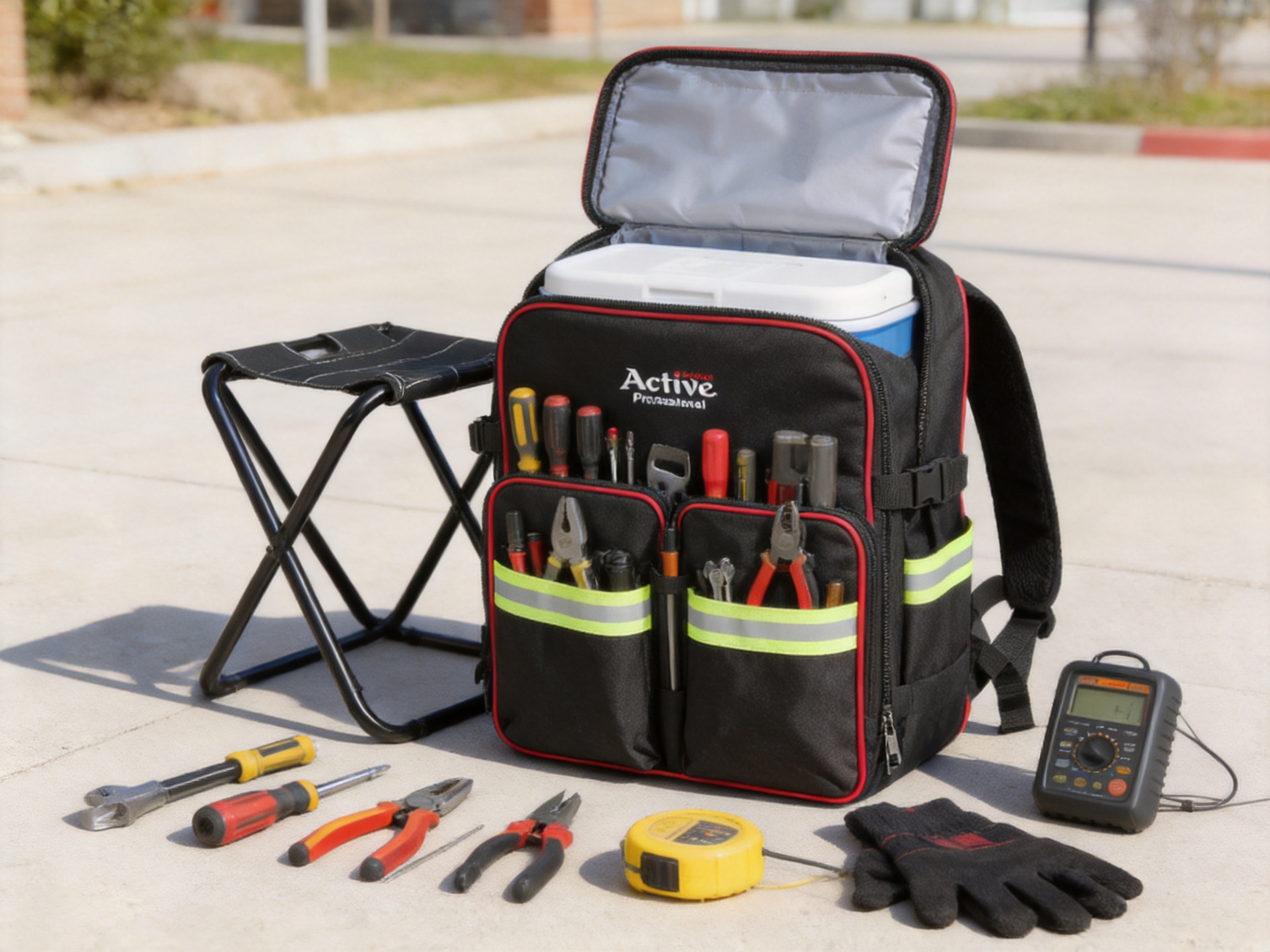
Visibility is a significant safety consideration for outdoor technicians. Workers may operate during early morning, evening, overcast weather, roadside maintenance, or poorly illuminated service conditions. The backpack includes high-visibility reflective strips designed to improve recognition when exposed to vehicle headlights, work lights, or other directed illumination.
Reflective detailing does not replace approved high-visibility clothing, warning signs, lighting, or site safety procedures. However, it can provide an additional visual safety feature. Compared with an ordinary dark tool backpack without reflective elements, a bag with reflective strips may be easier for nearby coworkers, drivers, and supervisors to notice.
This feature is especially relevant to pipe repair, utility inspection, construction support, and other activities performed near transportation routes or industrial facilities. It also adds a professional appearance by clearly signaling that the product has been designed with outdoor work conditions in mind.
Eight-compartment storage layout
The product includes two external functional pockets and six internal slots, creating a total of eight designated storage areas. This arrangement is intended to improve organization and reduce the inefficient “single large compartment” problem found in many general-purpose bags.
External pockets are convenient for items that require frequent access. Depending on the user’s equipment, these areas may hold gloves, notebooks, tape measures, charging cables, small accessories, personal protective items, or commonly used hand tools. Internal slots can be assigned to precision instruments, screwdrivers, pliers, meters, connectors, fasteners, or other components that should remain separated.
Organized storage can improve work efficiency in several ways. First, it reduces search time. Second, it helps users identify missing equipment before leaving a jobsite. Third, it can protect tools from striking one another during transport. Fourth, it allows users to establish a consistent packing system, making it easier to return items to their designated places.
The eight-compartment layout is not merely a numerical feature. Its value depends on how it matches the user’s workflow. A technician who carries a small, carefully selected tool set may benefit from the separation provided by the slots. A user with unusually large equipment may need to evaluate the dimensions of each compartment before ordering. The product is best suited to compact and medium-sized tools rather than oversized power tools or long-handled equipment.
Built-in insulated cooler bag
A built-in insulated cooler bag adds an additional layer of practicality. Outdoor personnel may spend several hours away from vehicles, offices, or convenient food storage. A dedicated insulated compartment can be used for beverages, packed food, snacks, bait, or selected supplies that benefit from temporary thermal protection.
The cooler compartment supports the product’s broader concept as an outdoor work platform. It recognizes that field productivity depends not only on tools but also on worker comfort and basic personal needs. By integrating this area into the backpack, the user can avoid carrying a separate lunch bag or small cooler in many short-duration applications.
The cooler compartment should not be interpreted as a medical-grade refrigerator or long-term temperature-controlled container. Its function is to provide insulation and temporary storage. The exact cooling duration depends on ambient temperature, the starting temperature of the contents, the use of ice packs, and how frequently the compartment is opened.
Compact dimensions and practical capacity
The listed dimensions are 38*33*41cm, and the listed load capacity is 33.07 lbs. This size offers a meaningful amount of storage while remaining compact enough for transport in vehicles, workshops, storage rooms, and field environments.
A compact profile can be advantageous when working in narrow areas, moving through doorways, or storing equipment alongside other jobsite materials. It can also make the backpack easier to manage on public transportation or in service vehicles. At the same time, the 33.07-pound load figure gives users room to carry a useful assortment of tools and supplies.
Load capacity should always be interpreted together with comfort, balance, and the requirements of the chair structure. Users should distribute heavy items evenly, avoid overloading individual pockets, and follow safe carrying practices. The most effective configuration is not necessarily the heaviest possible load; it is the load that provides the required tools without making movement difficult.
Zipper closure and accessible organization
The zipper closure helps keep the main storage area secured during transport. A properly closed zipper can help prevent tools from falling out, reduce exposure to dust and incidental moisture, and maintain a cleaner appearance. Zippers also allow the bag to open widely for inspection and packing.
For field technicians, easy access is as important as carrying capacity. An overly deep or loosely structured bag can force the user to remove several items before reaching the required tool. The combination of zipper access, external pockets, and internal slots is intended to create a more orderly experience.
Comparison with Conventional Tool-Carrying Solutions
Versus traditional hand toolboxes
Hard toolboxes generally provide strong structural protection and can accommodate heavier equipment. However, they may be inconvenient for long-distance walking and often require one hand for carrying. Their rigid form can also occupy substantial storage space when not in use.
The all-weather tool backpack offers greater mobility because it can be carried on the back. It also provides integrated seating and a cooler compartment, functions that are not normally found in conventional toolboxes. For technicians who move frequently or work in areas without nearby storage, this flexibility may be more valuable than the rigid structure of a standard box.
A hard toolbox may remain preferable for heavy-duty impact protection, large power tools, or highly delicate instruments. The backpack is a complementary solution for mobile tool management rather than a universal replacement for every toolbox.
Versus ordinary tool backpacks
Many tool backpacks provide shoulder straps and multiple pockets, but they may not include a folding chair, reflective safety detailing, or a built-in insulated compartment. The product’s combination of these elements gives it a broader use profile.
An ordinary tool backpack may be optimized for indoor service calls or construction work. The present design is more strongly oriented toward outdoor versatility. Water-resistant fabric, reflective strips, seating, and cooler storage support users who may remain in the field for extended periods or work in variable weather.
Versus separate backpack and folding stool combinations
Carrying a separate backpack and folding stool may provide more seating options, but it also creates a two-item system. The user must transport both objects, store them together, and ensure that neither is misplaced. The integrated design reduces this logistical burden.
The combined product may also occupy less effective space than two separate items. This is valuable in service vans, compact vehicles, storage cabinets, and crowded work areas. The trade-off is that the user receives one specific chair configuration rather than the broad range of seating styles available as independent products.
Versus open bucket-style tool bags
Open bucket bags provide fast access and may be useful for larger hand tools. However, they typically offer less protection from weather, less structured internal separation, and no integrated seating. The backpack’s zipper closure and multiple compartments provide a more enclosed and organized solution.
Workers who prioritize immediate top access for bulky tools may still prefer a bucket format. Workers who prioritize portability, compartmentalization, and outdoor features may find the backpack more suitable.
| Feature | All-Weather Tool Backpack with Folding Chair | Traditional Hand Toolbox | Basic Tool Backpack | Separate Backpack and Stool |
| Hands-free carrying | Yes | Usually no | Yes | Backpack only |
| Integrated seating | Yes | No | Usually no | Yes, as a separate item |
| Reflective visibility features | Yes | Uncommon | Product dependent | Product dependent |
| Water-resistant outdoor design | Yes | Product dependent | Product dependent | Product dependent |
| Insulated cooler compartment | Yes | Rare | Rare | Usually separate |
| Organized internal storage | Six internal slots | Often open or tray-based | Product dependent | Backpack dependent |
| External storage | Two exterior pockets | Product dependent | Product dependent | Backpack dependent |
| Listed load capacity | 33.07 lbs | Varies by model | Varies by model | Varies by model |
Manufacturing Strength and Product Development
The performance of a professional tool bag depends not only on its visible design but also on the manufacturer’s ability to control materials, construction, quality, and consistency. Zhangjiagang Seaark Tools Industrial Co., Ltd. was founded in 2004 and specializes in the export of professional tool bags and customized storage solutions. This specialization gives the company a focused understanding of the requirements involved in producing soft-sided tool-carrying products.
With more than 20 years of tool bag manufacturing experience, the company has developed practical knowledge in fabric selection, compartment design, zipper application, reinforcement, sewing construction, carrying systems, and product packaging. This experience can be important when developing multifunctional bags, because adding features such as a chair frame and insulated compartment creates additional engineering and production considerations.
Multiple production bases
The company established Zhangjiagang Haiyi Tool Bags Co., Ltd. in 2012 as a core manufacturing base in China. It also operates a production facility in Cambodia. Multiple manufacturing bases can support production flexibility, capacity planning, sourcing options, and market-specific supply strategies.
For global buyers, a distributed manufacturing structure may offer practical advantages. It can help accommodate different order volumes, support continuity planning, and provide options for customers evaluating international supply chains. The Cambodia facility may also help customers reduce the impact of additional United States tariffs, depending on the applicable trade rules, product classification, origin requirements, and current commercial conditions.
Tariff treatment should always be confirmed for the specific order and destination. Nevertheless, the existence of more than one production location demonstrates that the company is positioned to serve international customers rather than operating only as a small local workshop.
Production scale and workforce
The company reports more than 200 employees and approximately 11,000 square meters of floor space. These resources support manufacturing, product development, quality management, administration, packing, and export operations.
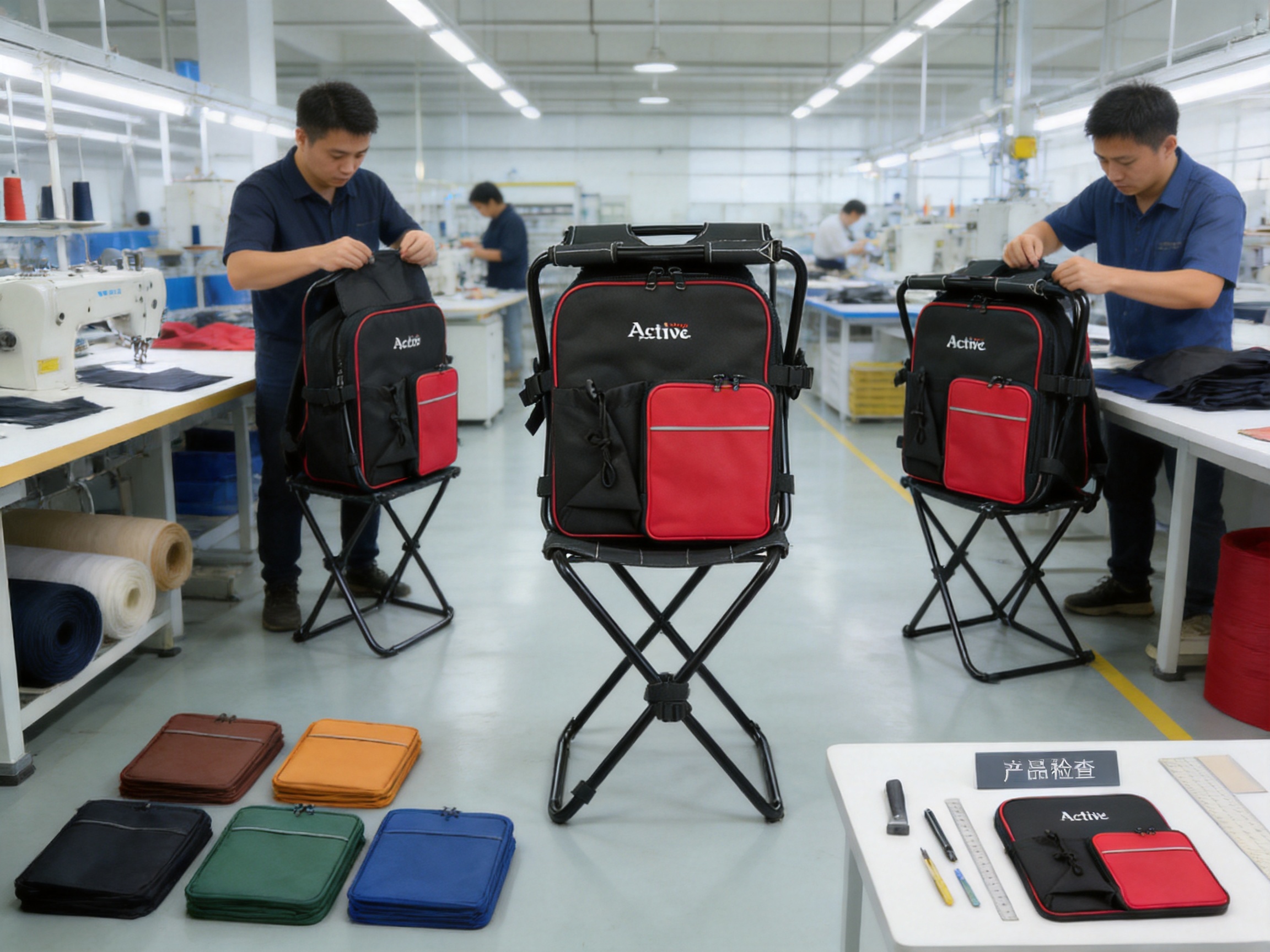
A larger production environment can help separate manufacturing stages and improve workflow organization. For tool bags, relevant processes may include fabric inspection, cutting, printing or labeling, foam and lining preparation, pocket assembly, sewing, frame installation, hardware attachment, inspection, cleaning, packing, and shipment preparation.
The precise process used for each order may vary according to the product specification, materials, customer requirements, and quality agreement. However, a structured factory environment provides a stronger foundation for repeat production than an informal, project-by-project operation.
Independent research and development
Seaark maintains an independent research and development team and develops more than 10 new designs each year. Continuous product development is especially important in the tool bag sector, where users expect improvements in organization, comfort, durability, appearance, and specialized functionality.
For the folding-chair backpack, product development must consider the relationship between textile construction and the steel tube chair. The bag must accommodate storage requirements while supporting a frame-based seating function. Designers also need to consider balance, portability, access, folding operation, and the practical needs of users working outdoors.
The company’s registered Active Storage brand and multiple design patents indicate an emphasis on original product development and design ownership. Patents do not automatically guarantee performance in every application, but they demonstrate that the company invests in formal design development rather than relying exclusively on generic market products.
Auditing and production compliance
The company’s facilities undergo annual third-party audits, including BSCI, SEDEX, FCCA, and SCS. These audits and compliance programs are relevant to buyers that require documented attention to social responsibility, supply-chain practices, factory management, and customer-specific standards.
Audit status can change over time and may differ by facility, scope, and assessment date. Buyers should request current certificates, audit reports, and applicable facility information during supplier evaluation. Even so, a stated commitment to recurring third-party assessment provides an important starting point for responsible sourcing discussions.
Materials, Construction, and Functional Engineering
Polyester outer material
Polyester is widely used for tool bags because it offers a useful balance of strength, flexibility, cost efficiency, and resistance to everyday wear. It can be woven into fabrics with different weights and textures, finished with coatings, and combined with lining or padding systems.
In this product, polyester supports the water-resistant exterior and helps maintain a relatively manageable overall weight. The material is also suitable for color customization, allowing buyers to select colors that align with a brand identity, corporate uniform, product range, or safety program.
Steel tube chair structure
The integrated chair uses a sturdy steel tube structure. Steel tubing is commonly selected for portable seating because it can provide a strong frame while remaining suitable for folding construction. The chair’s actual comfort, stability, and service life depend on tube dimensions, joints, welds, hinges, fabric support, load distribution, and the surface on which it is placed.
Users should operate the chair on stable ground, avoid exceeding the manufacturer’s recommended seating load, and inspect the frame and folding points periodically. The listed 33.07-pound figure is identified as the product’s load capacity and should not automatically be interpreted as the chair’s independent seating rating unless the manufacturer confirms that specification.
Reinforced soft-goods assembly
A professional tool bag requires more than a durable fabric panel. Stress is concentrated around handles, shoulder straps, pocket openings, zipper ends, base panels, frame attachments, and stitching points. Effective manufacturing therefore depends on appropriate reinforcement methods and consistent sewing quality.
Potential reinforcement techniques include additional fabric layers, webbing, binding, bar-tack stitching, reinforced seams, protective piping, and structured base components. The exact construction should be confirmed through product samples and technical documentation, particularly for private-label buyers or users with demanding work environments.
Customization and Commercial Supply Opportunities
The product information identifies color as customized, which creates opportunities for wholesale buyers, distributors, contractors, retailers, and corporate procurement departments. Color customization can help distinguish a product range, match a company uniform, support a private-label program, or identify different teams and service functions.
Customization may also extend beyond color, depending on the order quantity and technical discussion. Potential areas may include logos, labels, packaging, hangtags, pocket arrangements, lining colors, fabric specifications, reflective details, and accessory combinations. Any proposed modification should be assessed for its effect on performance, production cost, tooling, minimum order quantity, and lead time.
Because the company provides comprehensive customization solutions, it can serve both customers purchasing standard designs and customers developing tailor-made bags. This is valuable for brands that want a differentiated product but do not maintain their own bag engineering or manufacturing facilities.
Suitable customer groups
Wholesale distributors can position the backpack as a multifunctional product for tradespeople and outdoor users. Tool retailers can place it within a premium or specialty storage category. Industrial suppliers can offer it to maintenance contractors, utility teams, field engineers, and inspection personnel. Outdoor retailers may present it as a work-and-leisure carrier with seating and cooler functionality.
Corporate buyers may use customized versions for service teams, training programs, promotional campaigns, or equipment issue systems. The bag’s ability to combine storage and seating can also make it suitable for field events, demonstrations, mobile sampling, and outdoor technical support.
Quality evaluation for buyers
Before placing a large order, buyers should evaluate a production sample under realistic conditions. Important checks include zipper smoothness, pocket dimensions, stitching consistency, reflective strip adhesion, chair folding and unfolding, frame stability, shoulder strap adjustment, base durability, cooler compartment insulation, and resistance to light moisture.
Buyers should also confirm the packaging method, carton dimensions, product weight, loading quantity, production lead time, warranty policy, spare parts availability, and inspection procedure. If the product will carry precision instruments, buyers should specify whether additional padding, removable dividers, or protective sleeves are required.
Recommended Packing and Use Practices
The backpack will perform most effectively when tools are packed according to frequency of use and weight distribution. Frequently used items should be placed in the exterior pockets or the most accessible internal slots. Heavier items should be positioned close to the wearer’s back and distributed evenly from side to side.
Sharp tools should be secured with protective covers or placed so that their edges cannot damage fabric, lining, or neighboring equipment. Small components should be placed in dedicated pouches or sealed containers rather than left loose. Electronic instruments should receive additional protection if the user expects rain, condensation, impact, or temperature changes.
The cooler compartment should be kept separate from tools and electronic equipment. Any food, beverage, or ice pack should be sealed to prevent leakage. Users should dry the compartment after use and avoid storing wet items for extended periods.
The chair should be fully opened and checked before sitting. The frame should be placed on stable, reasonably level ground, and the user should avoid sudden movement that could shift the chair. After use, the chair should be folded according to the product’s intended mechanism and kept clear of objects that could obstruct closure.
After outdoor work, users should remove dirt and moisture from the exterior, inspect the zippers and reflective strips, and allow damp areas to dry naturally. Regular care can help preserve the appearance and function of the bag.
Safety and Operational Considerations
The backpack’s reflective strips can improve visibility, but they are not a replacement for legally required protective equipment. Workers near traffic, machinery, electrical systems, pipelines, or construction operations should follow all applicable workplace safety rules.
The water-resistant fabric provides useful protection against ordinary outdoor moisture, but users should not assume that the entire product is waterproof. Prolonged exposure to heavy rain, standing water, or immersion may damage tools and supplies. Sensitive equipment should be stored in suitable inner cases or sealed protective packaging.
The total load should remain within the stated capacity, and the chair should not be used beyond its confirmed seating specification. Uneven loading can affect carrying comfort and stability. Users should adjust the shoulder straps so that the backpack sits securely without restricting movement.
Any damaged zipper, torn strap, loose seam, bent tube, unstable joint, or compromised reflective strip should be inspected before continued use. Businesses issuing the product to employees may wish to include the backpack in routine equipment inspections.
Why the Product Offers a Distinct Market Position
The product’s main competitive strength is not one isolated feature but the combination of several practical functions. A water-resistant tool backpack is useful. A backpack with organized compartments is useful. A folding chair is useful. An insulated cooler compartment is useful. Reflective strips are useful. When these elements are integrated into a single product, the result addresses a broader set of field requirements than many conventional tool bags.
This integrated approach can reduce the number of separate items a user needs to transport. It can also improve the organization of a mobile work routine by creating one central location for tools, supplies, personal refreshments, and seating. For distributors, the design has a clear product story that is easy to communicate: it is a professional tool carrier designed for work, mobility, rest, and outdoor readiness.
The product may be especially attractive in market segments where workers spend meaningful time away from fixed facilities. Utility maintenance, pipe repair, fishing support, construction inspection, field installation, and outdoor service are examples of environments in which a multifunctional bag can offer practical value.
Its competitive positioning is further supported by the manufacturer’s experience. A company focused on professional tool bags is better placed to understand pocket layout, carrying requirements, textile construction, and customization than a general luggage producer with no specialized tool storage background.
Frequently Asked Questions
What type of product is this?
It is a multifunctional tool backpack with an integrated folding chair. It is categorized as a tool bag with folding seat and is designed for mobile technicians, maintenance personnel, outdoor workers, and users who need organized tool storage with portable seating.
What are the product dimensions?
The listed dimensions are 38*33*41cm. Buyers should confirm whether these measurements refer to the assembled product, the storage body, or the packed configuration when preparing transportation or retail packaging plans.
How much weight can the product carry?
The listed load capacity is 33.07 lbs. Users should distribute the load evenly and confirm any separate chair seating specification with the manufacturer before applying the product to a particular work requirement.
How many pockets does the backpack have?
The product includes two exterior functional pockets and six internal slots, creating an eight-compartment storage layout.
Is the backpack waterproof?
The fabric is described as highly water-resistant. This makes it suitable for light rain, splashes, and ordinary outdoor exposure, but the available information does not establish complete waterproofing or immersion protection.
Does it include reflective safety features?
Yes. High-visibility reflective strips are incorporated to improve recognition in low-light conditions when illuminated by headlights or work lights.
What can the insulated cooler compartment be used for?
It can be used for beverages, food, snacks, bait, and other supplies that benefit from temporary insulated storage. It should not be treated as a medical-grade or continuously refrigerated compartment.
What tools are suitable for the internal slots?
The slots are intended for compact and medium-sized tools and precision instruments. Suitable contents may include screwdrivers, pliers, measuring devices, connectors, fasteners, gloves, and small electrical or maintenance tools. Users should check individual tool dimensions before loading.
Is the color customizable?
Yes. The product information lists the color as customized. Specific color standards, minimum order quantities, logo requirements, and production timelines should be discussed with the manufacturer.
Can the product be customized for a private-label brand?
The manufacturer provides customization solutions and serves global brands and partners. Potential customization may include color, branding, labels, packaging, and selected design details, subject to technical review and order requirements.
Where is the product manufactured?
The company operates manufacturing resources in China and Cambodia. The applicable production location should be confirmed for each order because it may depend on capacity, product configuration, customer requirements, and supply arrangements.
Who manufactures the backpack?
The product is manufactured by Zhangjiagang Seaark Tools Industrial Co., Ltd., a Chinese company specializing in professional tool bags and customization solutions.
Is the backpack suitable for electricians?
It can be suitable for electricians who carry compact hand tools, meters, connectors, and accessories. Users carrying large power tools, high-voltage equipment, or specialized protective cases should verify compartment dimensions and safety requirements before purchase.
Can it be used for fishing or camping?
Yes. The product description identifies fishing and outdoor scenarios as intended applications. The cooler compartment, chair, storage pockets, and water-resistant fabric can support short-duration outdoor activities, although users should protect the backpack from prolonged heavy rain or immersion.
How should the chair be maintained?
Users should inspect the steel tube frame, joints, hinges, fabric support, and contact points regularly. The chair should be used on stable ground, kept within its confirmed seating capacity, and stored dry after exposure to moisture.
Conclusion
The Multi-Functional All-Weather Tool Backpack with Folding Chair is designed for users who need more than a conventional tool carrier. By combining backpack transportation, eight-compartment organization, water-resistant polyester, reflective visibility features, an insulated cooler compartment, and a steel tube folding chair, it creates a compact platform for mobile work and outdoor readiness.
Its advantages are particularly relevant to technicians and field workers who travel across worksites, operate in changing weather, require organized access to tools, and benefit from having a temporary seat available. The product also offers commercial potential for distributors, tool retailers, private-label brands, contractors, and industrial suppliers seeking a distinctive multifunctional bag.
The manufacturer strengthens the product proposition through more than 20 years of industry experience, multiple production bases, a workforce of more than 200 employees, approximately 11,000 square meters of manufacturing space, independent research and development, new product development, design patents, and third-party audit experience. Together, these capabilities support both standard product supply and customized project development.
Although the backpack is not intended to replace every hard case, toolbox, or specialized protective carrier, it provides a well-balanced solution for mobile professionals. Its value comes from functional integration: tools, personal supplies, weather-conscious construction, visibility, and seating are brought together in a single product intended to make field work more organized and convenient.
References
1. Product specification provided for the Multi-Functional All-Weather Tool Backpack with Folding Chair, including dimensions, material, closure type, pocket configuration, load capacity, and applications.
2. Manufacturer information supplied for Zhangjiagang Seaark Tools Industrial Co., Ltd., including company history, manufacturing locations, employee scale, facility size, research and development, customization services, and audit programs.
3. General principles of textile bag construction, including polyester fabric performance, zipper applications, reinforcement methods, and soft-sided product assembly.
4. General workplace equipment practices concerning load distribution, tool organization, outdoor visibility, moisture protection, and portable seating safety.
5. General product evaluation practices for professional tool bags, including sample inspection, compartment verification, stitching review, hardware assessment, packaging confirmation, and supplier quality control.
Product: Multi-functional All-Weather Tool Backpack with Folding Chair




We are a professional enterprise engaged in exporting various types of toolkits.
We firmly believe that 'quality is everything, service enhances value'.
-
+86-15298800699

-
+86-512-58670375

-
karen@kun-bag.com

-
Building 11, No. 93 Chengang Road, Zhangjiagang City, Jiangsu Province, China

Copyright © Zhangjiagang Seaark Tools Industrial Co., Ltd. All Rights Reserved.
Custom Electrician Tool Backpack Manufacturers