
 en
 русский
 Español
 Deutsch

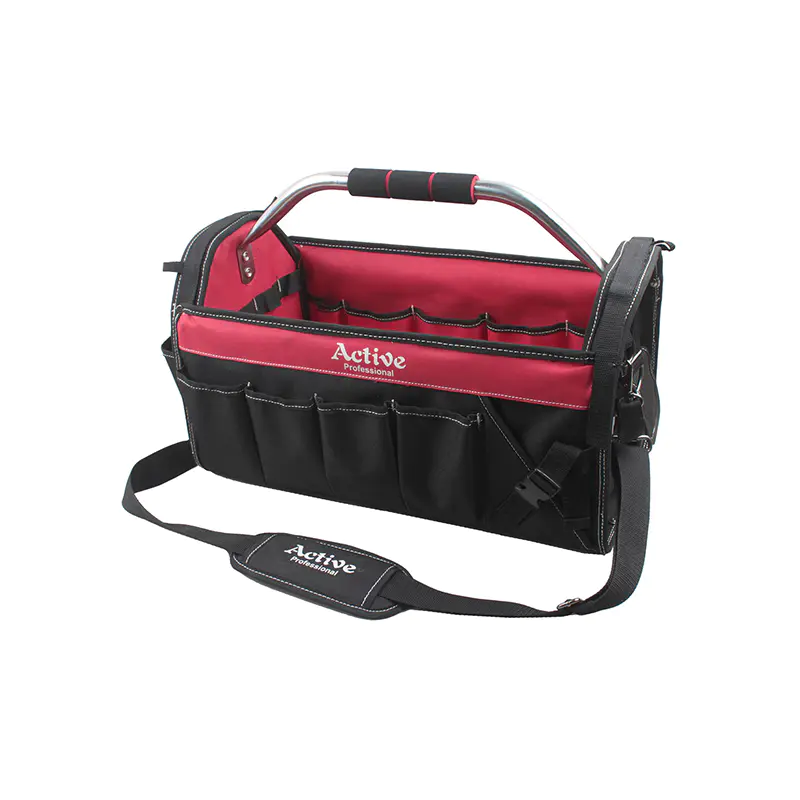
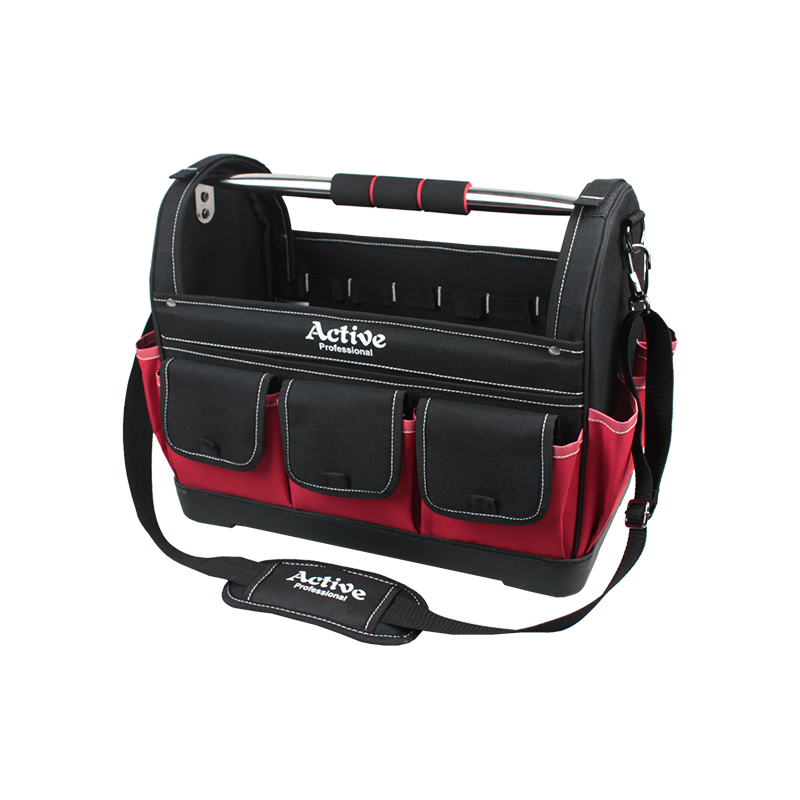
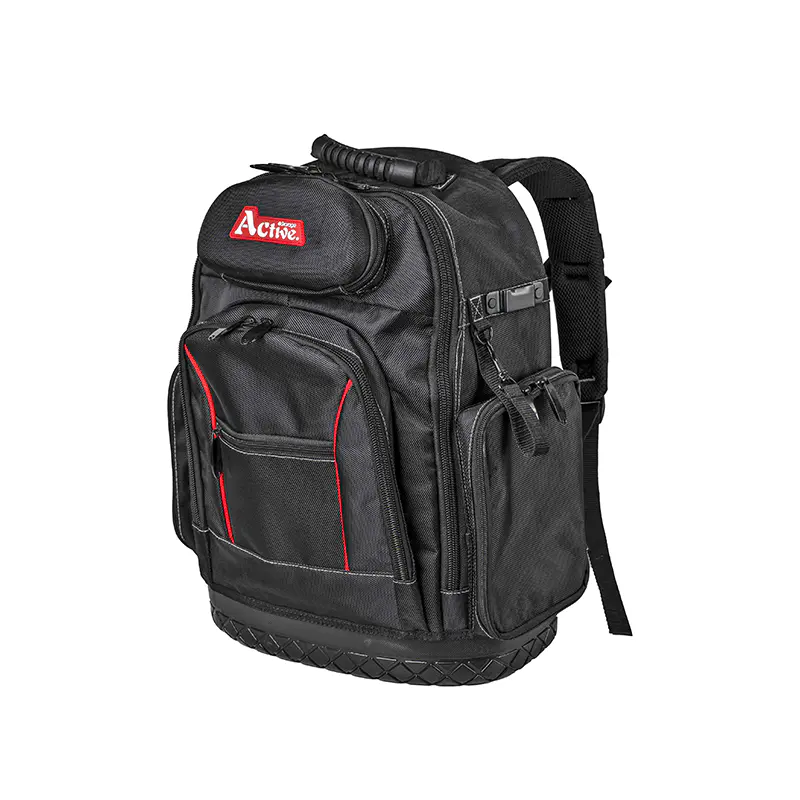
Heavy-Duty Tubular Steel Handle Tool Bag with Multiple Lined Pockets
For professional technicians, electricians, maintenance teams, installers, and field-service specialists, the right tool bag is more than a container. It is a mobile organization system that protects equipment, improves access, reduces wasted movement, and supports productive work in demanding environments. The T017 Heavy-Duty Tubular Steel Handle Tool Bag with Multiple Lined Pockets is designed around these practical requirements. With 42 internal pockets, 14 external pockets, a tubular steel handle, a 44.09-pound rated load capacity, and a durable polyester construction, it provides an organized and dependable solution for carrying a substantial collection of tools.
The T017 belongs to the tool bag with tubular handle category, but its capabilities extend beyond those of a basic open-top carrier. Its combination of high-capacity storage, compartmentalized interior design, reinforced handling structure, and customization potential makes it suitable for professionals who need to transport many tools without allowing them to become mixed together. The result is a mobile workstation that can accompany technicians from a workshop to a plant, construction site, laboratory, commercial building, or service vehicle.
This article examines the product’s design, storage advantages, handling performance, applications, customization possibilities, and manufacturing support. It also explains why an experienced specialized manufacturer is important when buyers require consistent quality, flexible specifications, reliable export capability, and professional development support.
Content
- 1 1. A Professional Tool Bag Built for Organized Work
- 2 2. Storage Capacity That Supports Complex Maintenance Tasks
- 3 3. Tubular Steel Handle for Structural Support
- 4 4. Polyester Construction for Daily Professional Use
- 5 5. Advantages Compared with Conventional Tool Bags
- 6 6. Applications Across Professional Industries
- 7 7. Product Specifications at a Glance
- 8 8. Manufacturing Expertise and Product Development
- 9 9. Customization for Global Buyers
- 10 10. Efficient Packing and Use Recommendations
- 11 11. Why Manufacturer Selection Matters
- 12 12. Sustainability and Responsible Production Considerations
- 13 13. Business Value for Distributors and Brands
- 14 14. Frequently Asked Questions
- 14.1 Q1: What type of product is the T017?
- 14.2 Q2: How many pockets does the tool bag have?
- 14.3 Q3: What are the dimensions of the bag?
- 14.4 Q4: Is the top closed with a zipper?
- 14.5 Q5: What is the bag made from?
- 14.6 Q6: Can the color be customized?
- 14.7 Q7: Who can use this tool bag?
- 14.8 Q8: Does the bag replace a rigid tool case?
- 14.9 Q9: How should the bag be loaded?
- 14.10 Q10: Can the product be customized for a private-label program?
- 14.11 Q11: What manufacturing experience does the supplier have?
- 14.12 Q12: Does the manufacturer support product development?
- 14.13 Q13: What quality-related audits are mentioned?
- 14.14 Q14: Where is the product manufactured?
- 15 15. Conclusion
- 16 References
- 17 Product: Heavy-Duty Tubular Steel Handle Tool Bag with Multiple Lined Pockets
1. A Professional Tool Bag Built for Organized Work
Tool storage directly influences work efficiency. When tools are placed together in one large compartment, technicians must often empty part of the bag or search through multiple layers before finding the correct item. This process consumes time and can cause tools to rub against one another. Small components may become difficult to locate, while delicate equipment can be scratched or damaged by heavier tools.
The T017 addresses this common problem through a highly compartmentalized design. Its 42 internal pockets provide individual storage locations for frequently used equipment, while 14 external pockets keep additional tools and accessories accessible from the outside. Instead of treating the bag as a single container, the design divides it into a practical storage layout for a broad selection of tools.
This organization is particularly useful for workers who carry multiple sizes and types of equipment. Screwdrivers, pliers, wrenches, cutters, measuring tools, electrical testers, drill bits, fasteners, adapters, and other accessories can be separated according to function or frequency of use. A technician can develop a consistent loading arrangement so that each tool returns to the same position after use.
Such consistency is valuable in professional settings. When a tool bag has a logical internal system, another member of the team can also identify where equipment is stored. The bag becomes easier to inspect before departure and easier to restock after a job. Missing tools can be detected more quickly, helping reduce the risk of leaving expensive equipment at a worksite.
The T017’s open-top closure also supports rapid access. Unlike a fully enclosed case that must be unzipped before every task, an open-top tool bag enables the user to reach into the main compartment directly. This format is useful when a technician repeatedly changes tools during an installation or repair. The external pocket arrangement further reduces the need to search through the central storage area.
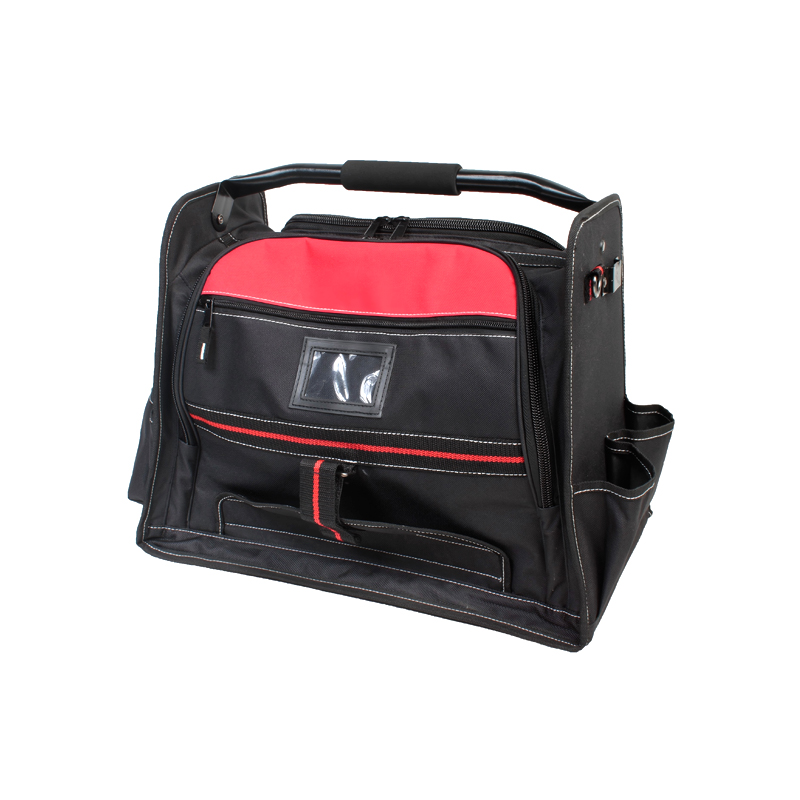
Heavy-Duty Tubular Steel Handle Tool Bag with Multiple Lined Pockets
2. Storage Capacity That Supports Complex Maintenance Tasks
A major advantage of the T017 is its unusually high number of pockets. Many conventional tool bags offer a limited selection of external sleeves and one large internal cavity. While that arrangement may be adequate for light household tasks, it is less suitable for professional maintenance work involving a wide variety of tools.
The T017 provides 14 exterior pockets and 42 interior pockets, creating a total of 56 designated storage locations. This capacity allows the user to separate tools by type, size, purpose, or work sequence. For example, hand tools may be stored in one section, precision accessories in another, and electrical testing equipment in a separate area. This arrangement can be adapted to different trades and working styles.
Individual compartments are especially useful for small tools. Drill bits, precision screwdrivers, cable accessories, terminal tools, measuring devices, and replacement components can easily disappear beneath larger equipment when no internal organization is available. Dedicated pockets make small items more visible and help prevent them from collecting at the bottom of the bag.
Compartmentalization also helps prevent tool stacking. When heavy items are placed on top of smaller tools, the lower items may be exposed to pressure and abrasion. Over time, repeated contact can damage handles, finishes, blades, cases, or sensitive instruments. Separating tools reduces unnecessary contact and gives the user greater control over how equipment is stored.
The bag’s dimensions are 47 by 26 by 30 centimeters. This size provides a useful balance between capacity and portability. It is large enough to carry a professional selection of tools but compact enough to remain practical for transport between vehicles, work areas, and buildings. The rectangular format also makes it suitable for placement in a service van, workshop cabinet, storage shelf, or jobsite staging area.
The 44.09-pound rated load capacity gives the T017 the ability to support a substantial working load. The exact contents will vary according to tool density and user requirements, but the stated capacity makes the bag appropriate for demanding applications where a lightweight organizer would not be sufficient. Users should always distribute the load evenly and avoid exceeding the specified rating.
2.1 Interior organization
The internal pockets are designed to turn a large storage volume into a more manageable working environment. The user can assign sections based on the tools required for a particular job. A maintenance engineer may organize the interior around mechanical, electrical, and measuring instruments. An installer may arrange the bag according to installation sequence. A service technician may place the most frequently used tools in the most accessible locations.
This approach supports faster retrieval. Rather than searching through a mixed collection, the user can identify a general area first and then select the tool from its individual pocket. Over a period of repeated use, the arrangement can become habitual, reducing the mental and physical effort required to prepare for a task.
2.2 Exterior accessibility
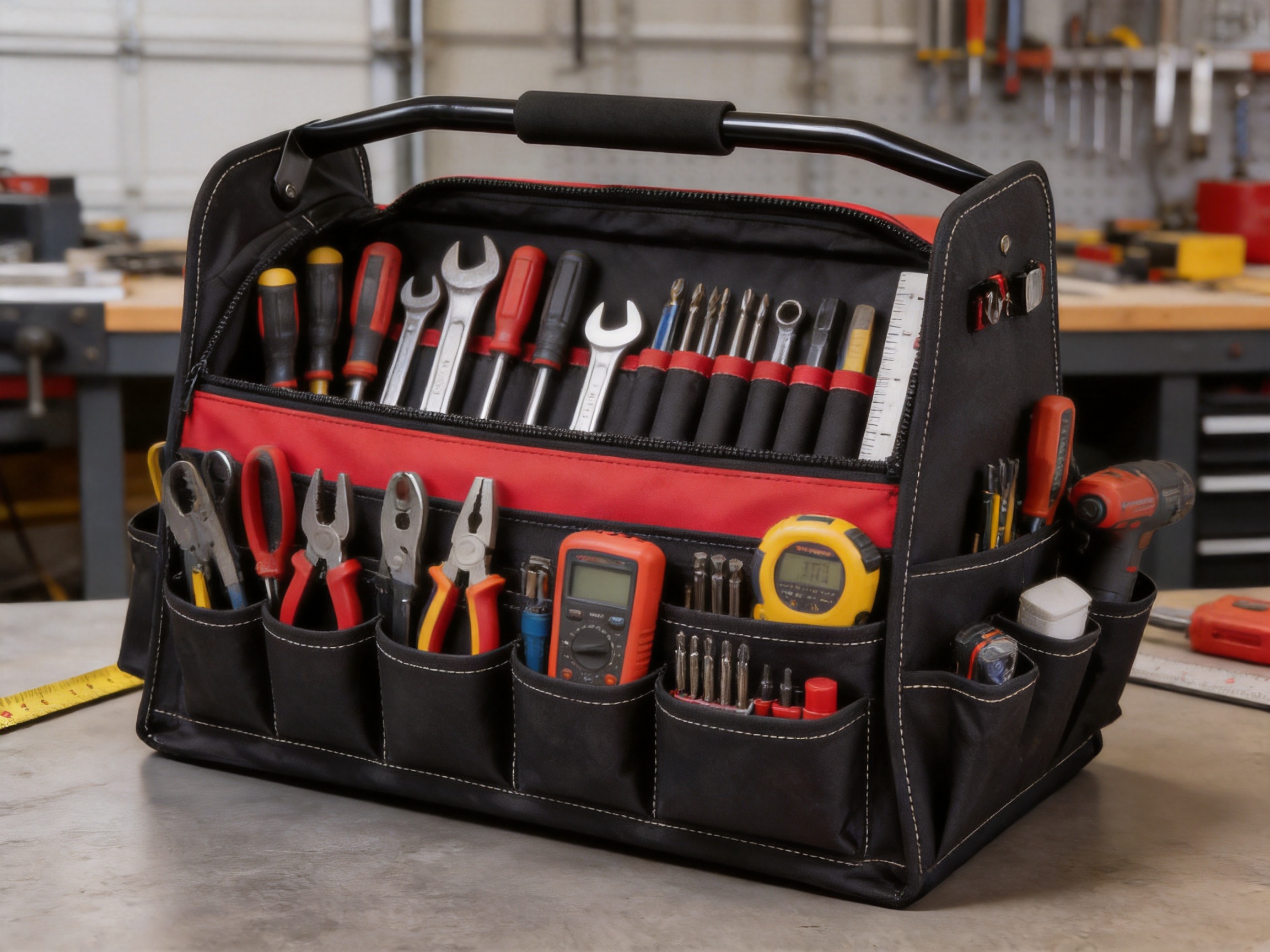
The 14 exterior pockets are useful for equipment that must be reached quickly. Frequently used screwdrivers, pliers, cutters, markers, tape measures, small notebooks, gloves, cable ties, and similar accessories can be placed outside the main compartment. This keeps routine items immediately available without requiring the user to open or disturb the central storage area.
Exterior pockets also provide visibility. A technician can quickly check whether essential items are present before leaving the workshop. For teams that share equipment, visible storage may make it easier to establish a standard packing procedure and identify whether a tool has been returned after a job.
3. Tubular Steel Handle for Structural Support
The tubular steel handle is one of the T017’s defining features. A heavily loaded tool bag places considerable stress on its carrying structure, especially when it is lifted repeatedly or moved across a worksite. A handle that lacks sufficient support may bend, loosen, or become uncomfortable under load. The T017’s tubular steel construction is intended to provide a firm structural connection between the bag and the user’s hand.
Steel tubing offers a useful combination of strength and efficient material use. The hollow tubular form can provide rigidity without the unnecessary weight of a solid bar. This is important for a tool bag, because the overall product must remain portable even when it carries heavy tools. The handle also gives the bag a defined lifting point, helping distribute the load more consistently during transport.
For maintenance teams, the handle is valuable when the bag needs to be moved from one location to another throughout the day. A technician may carry it from a service vehicle to a mechanical room, from a workshop to a production line, or between different areas of a construction project. The handle supports this repeated movement while preserving the bag’s professional utility.
The tubular structure also contributes to the product’s visual identity. It communicates that the bag is designed for serious working conditions rather than occasional light use. When paired with a reinforced polyester body and a high pocket count, the handle helps position the T017 as a heavy-duty storage solution for professional users.
Correct handling remains important. The bag should be lifted by its intended handle, carried with the load balanced, and stored in a way that prevents the frame from receiving unnecessary impact. Regular inspection of the handle, stitching, pocket attachment points, and base can help extend service life in demanding environments.
4. Polyester Construction for Daily Professional Use
The T017 is made from polyester, a widely used material in professional tool bags because of its balance of durability, flexibility, weight, and manufacturing adaptability. Polyester fabric can be configured into reinforced panels, pocket structures, binding sections, and load-bearing seams. It also accepts a range of colors and surface treatments, making it suitable for customized product programs.
A fabric tool bag offers practical advantages over a rigid box in many working environments. It can provide more flexible storage around irregularly shaped tools, is easier to carry through narrow spaces, and can be placed in vehicle compartments without the sharp edges associated with some hard cases. The flexible body can also accommodate tools of different shapes while maintaining the bag’s overall form.
For professional performance, the material itself is only one part of the construction. Fabric weight, weave, coating, edge binding, stitching density, reinforcement placement, and hardware selection all affect the final result. A well-designed polyester bag must transfer the load from the pockets and body panels to the handle and base without concentrating excessive stress at one point.
The T017’s multiple pockets require careful integration. Each pocket creates another attachment area, and a high pocket count increases the importance of consistent sewing and reinforcement. Pocket openings must remain accessible, while the surrounding fabric must be strong enough to support the tools placed inside. This is where experienced pattern development and production control become essential.
The open-top structure also requires a stable body design. The bag must remain sufficiently open for access while retaining its shape during loading and transport. Internal support, panel construction, edge finishing, and handle attachment all contribute to this balance. The result is intended to be a functional tool carrier rather than a simple soft-sided sack.
5. Advantages Compared with Conventional Tool Bags
The T017 offers several advantages when compared with conventional low-capacity tool bags. The first is organization. A basic bag may provide only a central compartment with a few outer sleeves, forcing users to store tools together. The T017’s 56-pocket configuration offers a much more structured alternative for professionals who carry a large tool selection.
The second advantage is accessibility. Exterior pockets support rapid access to frequently used items, while the interior pockets allow the remaining tools to stay arranged. This reduces the need to remove every item before locating one particular tool. In fast-moving maintenance environments, even small reductions in search time can improve productivity across many tasks.
The third advantage is load support. The tubular steel handle is suited to a heavier working load than a lightweight fabric handle commonly found on casual tool bags. The 44.09-pound rated capacity gives users greater flexibility when preparing for complex jobs, provided that the bag is packed responsibly and the load is not exceeded.
The fourth advantage is specialization. The T017 is not limited to a single trade. Its compartment system can be configured for mechanical service, electrical work, precision maintenance, laboratory equipment installation, commercial construction, telecommunications support, or general field repair. This adaptability may be more valuable than a bag designed around one narrow tool category.
The fifth advantage is professional presentation. A well-organized tool bag helps technicians arrive at a worksite prepared and equipped. It can contribute to a cleaner, more efficient working method and make it easier to demonstrate control over tools and accessories. For service providers, this can support a consistent professional image when working at customer facilities.
Compared with rigid tool cases, the T017 offers greater flexibility and potentially easier access. Compared with backpacks, it provides a more open working format and a dedicated tubular handle. Compared with small pouches, it provides substantially more capacity. These distinctions make it a useful middle-ground solution for users who need both high storage density and convenient carrying.
6. Applications Across Professional Industries
6.1 Precision machinery maintenance
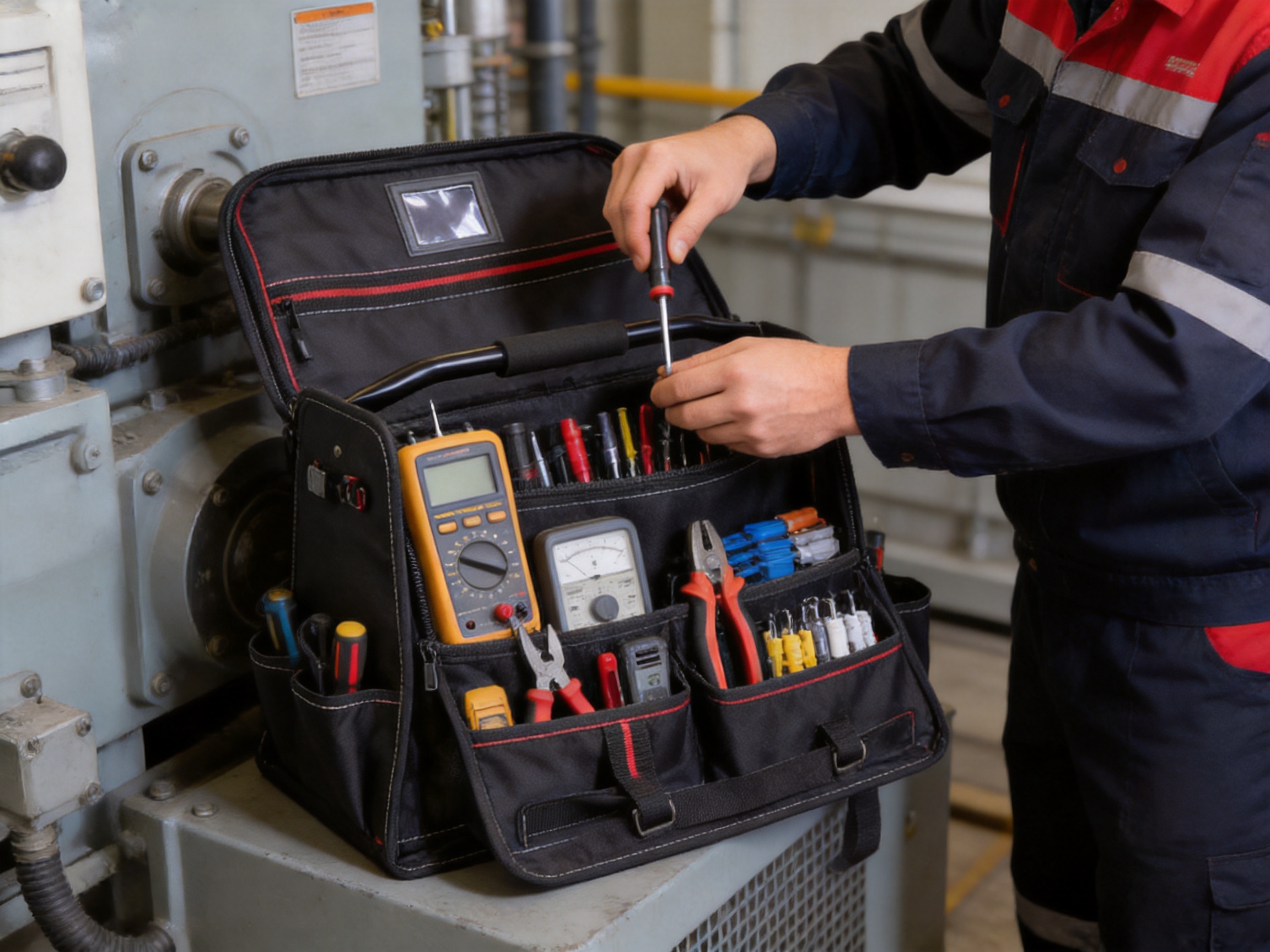
Precision machinery maintenance often involves multiple hand tools, measuring devices, replacement components, cleaning accessories, and adjustment instruments. A disorganized bag can cause delays when the technician must distinguish between similar tools or locate small components. The T017’s internal pocket structure allows equipment to be separated according to machine section or maintenance procedure.
The open-top design is useful beside production equipment because technicians can reach tools without placing a hard case on the floor or repeatedly opening a lid. Exterior pockets may hold the instruments needed during routine adjustments, while less frequently used tools remain protected in the interior compartments.
6.2 Laboratory equipment installation
Laboratory equipment installation frequently requires a combination of precision screwdrivers, small wrenches, cutters, measuring tools, connectors, protective items, and installation accessories. These items vary in size and may be sensitive to contact with heavier tools. Separate pockets can help preserve order and reduce unnecessary abrasion during transport.
A clearly organized bag is also useful when technicians work in clean, controlled, or customer-facing environments. It allows tools to be presented in a more orderly way and helps reduce the chance that small components will be misplaced during installation.
6.3 Electrical engineering and field service
Electrical professionals often carry insulated hand tools, testers, wire preparation tools, terminals, connectors, labels, and small accessories. The T017 can support a role-based arrangement in which electrical testing items, cutting and stripping tools, and installation accessories are placed in separate areas.
Users must select and handle tools according to the safety requirements of their work. The bag is a storage and transport product; it does not replace electrical personal protective equipment or safe working procedures. Nevertheless, its organization can support better preparation and reduce the likelihood of leaving essential equipment behind.
6.4 Construction and commercial installation
Construction and commercial installation projects often involve movement between floors, rooms, vehicles, and staging areas. A technician may need to carry a broad range of tools for fastening, measuring, alignment, cutting, and adjustment. The T017’s combination of high capacity and a structured body can help consolidate equipment into one professional carrier.
The external pockets can hold items needed repeatedly during installation, while the main compartment accommodates larger tools and job-specific accessories. The tubular handle provides a clear lifting point when the bag is moved between work areas.
6.5 General service and repair operations
Service companies can use the T017 as a standardized equipment bag for mobile technicians. A company may develop a packing layout for each service category, allowing team members to work from a consistent configuration. This can simplify onboarding, inventory checks, and replacement planning.
The customized color option may also support visual identification. Different colors can be assigned to departments, job types, or service levels, subject to the buyer’s requirements and manufacturing feasibility.
7. Product Specifications at a Glance
| Parameter | Details |
| Product model | T017 |
| Product type | Tool bag with tubular handle |
| Material | Polyester |
| Dimensions | 47 × 26 × 30 cm |
| Closure type | Open top |
| Load capacity | 44.09 pounds |
| External pockets | 14 |
| Internal pockets | 42 |
| Total designated pockets | 56 |
| Color | Customizable |
| Country of origin | China |
The specifications show how the T017 combines capacity and organization in one format. The dimensions provide enough volume for a substantial tool set without moving into the size of a large wheeled tool case. The open-top structure supports fast access, while the tubular handle helps manage the bag during transport. The high pocket count is the central functional feature, giving the product a clear distinction from simpler tool carriers.
8. Manufacturing Expertise and Product Development
Product performance depends not only on the design concept but also on how consistently the design is manufactured. A professional tool bag contains numerous components: body panels, internal dividers, pocket sections, binding, reinforcement layers, handles, hardware, labels, and packaging. Each element must be coordinated to achieve the intended result.
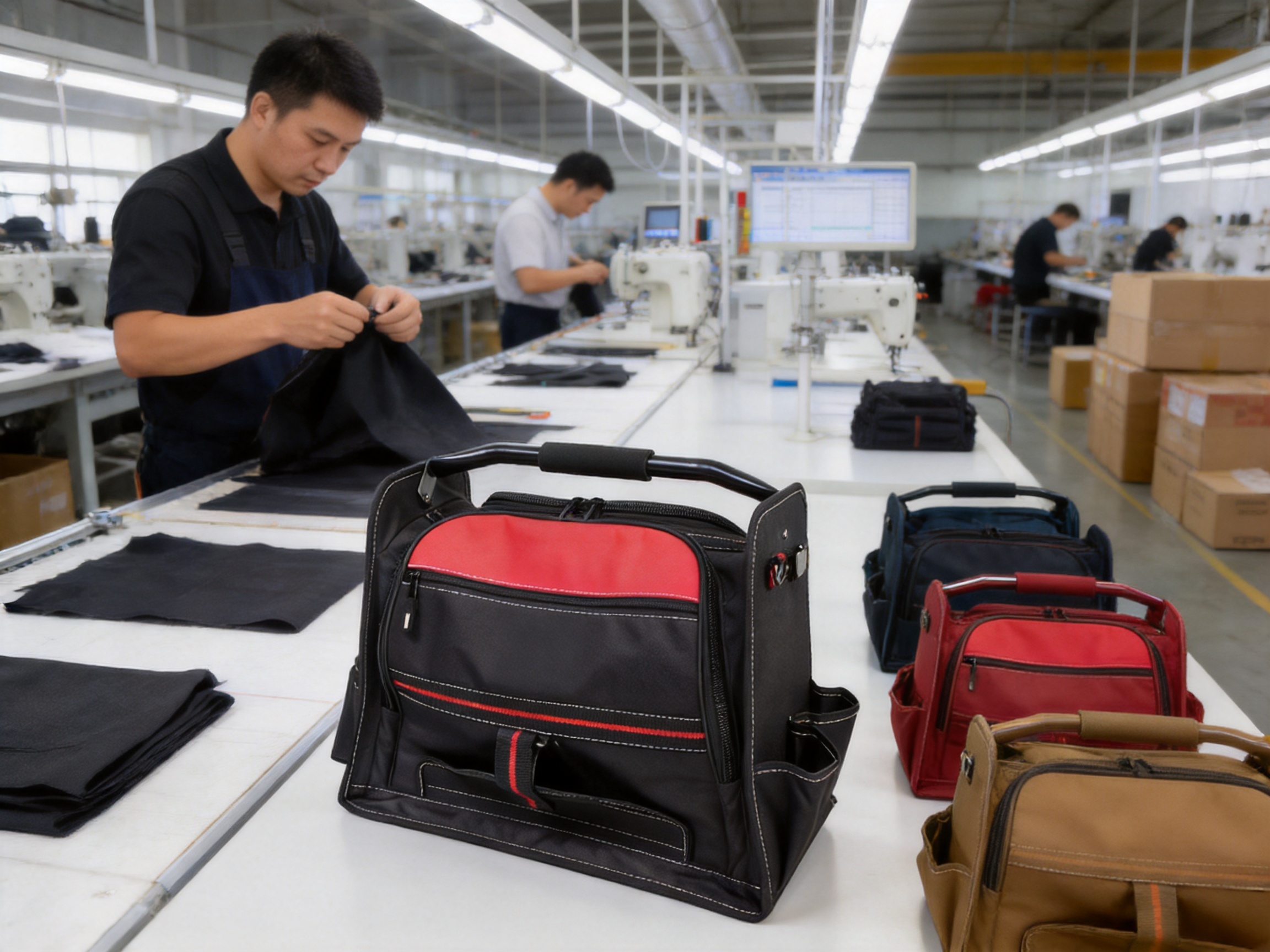
Zhangjiagang Seaark Tools Industrial Co., Ltd. has specialized in exporting professional tool bags and providing customization solutions since 2004. This long-term focus gives the company experience in developing products for different markets, customer specifications, and working environments. Rather than treating tool bags as a secondary product line, the company has built its business around this category.
In 2012, the company established Zhangjiagang Haiyi Tool Bags Co., Ltd. as a core manufacturing base in China. The company also operates a production facility in Cambodia. A multi-location production structure can provide additional flexibility for supply planning, production allocation, and international customer support. It may also help buyers manage changing market conditions and reduce exposure to specific regional cost pressures.
The company operates with more than 200 employees and approximately 11,000 square meters of floor space across its production activities. These resources support the coordinated processes required for cutting, sewing, assembly, inspection, packing, and shipment. A production organization of this scale can be valuable to buyers seeking both customized development and repeat-order consistency.
8.1 Research and development
The company maintains an independent research and development team that creates more than 10 new designs each year. Ongoing product development is important in the tool bag sector because users continue to demand better organization, improved carrying comfort, greater durability, and more specialized formats.
New design activity can also help a manufacturer respond to different professional applications. A trolley tool bag may prioritize mobility, while a tool backpack may emphasize weight distribution. A waist bag may focus on quick access, while a tubular-handle bag may prioritize open-top capacity and structural support. Development experience across these categories can strengthen the design process for each individual product.
The company’s registered brand is Active Storage, and it holds multiple design patents. Intellectual property protection can support investment in original product structures and help establish a clear development identity. For buyers seeking private-label or customized programs, an experienced design team may also provide practical recommendations regarding pocket layouts, material selection, and construction details.
8.2 Quality and compliance systems
Manufacturing consistency is especially important for a bag with many pockets and a high stated load capacity. Variations in stitching, reinforcement, dimensions, or handle attachment can affect the user experience. The company’s facilities undergo annual third-party audits, including BSCI, SEDEX, FCCA, and SCS audits. These audits support standardized and compliant production practices.
Third-party audits do not replace product-specific inspection, but they provide an additional indication that a manufacturer maintains formal systems for workplace standards, social responsibility, and operational management. Buyers can further define inspection requirements for materials, dimensions, color, stitching, pocket count, hardware, packaging, and load performance during the order process.
8.3 Production process
A professional tool bag typically begins with product engineering and pattern development. The manufacturer translates the product concept into two-dimensional patterns that define the shape and assembly sequence of each panel. For a multi-pocket design, this stage is particularly important because pocket positions must align with the body structure and remain accessible after sewing.
Material preparation follows. Polyester fabric and reinforcement materials are inspected, measured, and cut according to approved specifications. Color, fabric quality, surface condition, and dimensional stability can be checked before assembly. Proper cutting accuracy helps ensure that finished bags maintain consistent dimensions.
During sewing and assembly, pocket panels, liners, binding, handles, and structural components are joined in a controlled sequence. High-stress areas such as handle connections and pocket attachment points require suitable reinforcement. Operators must maintain consistent seam allowances and stitch quality so that the bag performs uniformly across production batches.
After assembly, finished products can undergo inspection for appearance, dimensions, functionality, and workmanship. Depending on the customer’s quality plan, inspection may include checking pocket quantity, handle attachment, fabric defects, open-top dimensions, label placement, hardware operation, and packaging condition. Products that meet the approved requirements can then be packed for shipment.
9. Customization for Global Buyers
The T017 is available with customized color options, which gives importers, distributors, contractors, and private-label brands an opportunity to align the product with their own visual identity. Color customization may support brand recognition, departmental organization, or differentiation between product series.
Customization can extend beyond color. Depending on order volume, technical feasibility, and development requirements, buyers may discuss pocket configurations, logos, labels, fabric selections, handle details, packaging, and other product elements with the manufacturer. Such changes should be confirmed through samples and approved specifications before mass production.
A strong customization process normally includes several stages. The buyer first defines the target user, working environment, required tools, preferred capacity, and visual expectations. The manufacturer then reviews the concept and identifies suitable materials and construction methods. A prototype or sample is produced for evaluation, followed by revisions if necessary. Once the design is approved, the production team works from documented specifications.
This process is particularly valuable for professional distributors. A distributor may need one tool bag for electrical contractors, another for industrial maintenance, and a third for general installation. A manufacturer with experience in multiple tool bag categories can help develop a coherent product family while preserving differences in size, pocket layout, and carrying style.
Customization should always be balanced against practical performance. A visual change must not compromise pocket strength, handle attachment, load support, or access. Similarly, adding compartments may increase organization but also affect weight and production cost. Professional product development evaluates these factors together rather than focusing on appearance alone.
10. Efficient Packing and Use Recommendations
To obtain the best performance from the T017, users should organize tools according to frequency of use and weight. Frequently accessed tools can be placed in exterior pockets or upper internal compartments. Heavier items should be positioned low and near the central structure to support balance. Small accessories should be grouped in dedicated pockets rather than placed loose in the main cavity.
Tools with sharp edges should be positioned so that they cannot damage adjacent fabric or equipment. Protective covers may be used where appropriate. Delicate measuring instruments should be separated from heavier tools, and any manufacturer-specific storage requirements should be followed.
The bag should not be overloaded beyond its 44.09-pound rated capacity. An excessive load can increase stress on the handle, seams, pocket attachments, and base. Even when the total weight remains within the rating, uneven distribution may make the bag difficult to carry. A balanced arrangement improves handling and reduces unnecessary strain.
After use, the bag should be emptied or checked regularly. Removing metal filings, dust, moisture, and debris can help preserve the fabric and prevent contamination of tools. If the bag becomes wet, it should be allowed to dry fully before long-term storage. Routine inspection of high-stress areas can identify wear before it becomes a larger problem.
Users should also establish a consistent storage map. A simple checklist can identify which tools belong in each pocket. This is useful for individual technicians and even more valuable for companies managing multiple service bags. Standardized organization supports faster preparation, easier training, and improved accountability.
11. Why Manufacturer Selection Matters
When purchasing professional tool bags in volume, product selection should include more than a review of photographs and basic dimensions. Buyers should evaluate the manufacturer’s experience, production capability, quality systems, customization support, export knowledge, and ability to maintain consistent supply.
A specialized tool bag manufacturer understands the relationship between fabric, reinforcement, pocket placement, load distribution, and user access. This knowledge can help prevent design problems that may not be visible in an initial concept. For example, a pocket may appear useful on a drawing but become difficult to access after the handle or liner is installed. An experienced factory can identify such issues during development.
Long-term manufacturing experience also supports more reliable communication. Buyers can discuss material alternatives, construction details, sample revisions, packaging requirements, and quality standards with a team familiar with the category. This reduces the risk of treating every order as an entirely new manufacturing challenge.
Seaark’s product range includes trolley tool bags, tool backpacks, zippered tool bags, tubular-handle tool bags, waist tool bags, tool pouches, tool vests, tool bucket bags, folding-seat tool bags, pocket handy tool bags, garden bags, and other multifunctional bags. This broad category coverage indicates experience with different carrying systems and professional use cases.
For global customers, the company’s production presence in China and Cambodia can offer additional supply flexibility. Its experience exporting professional bags supports the practical requirements of international orders, including communication, production coordination, packaging, and shipment preparation. Buyers should still confirm all commercial, regulatory, testing, and delivery requirements for their specific market.
12. Sustainability and Responsible Production Considerations
Professional buyers are increasingly evaluating not only product performance but also manufacturing responsibility. A durable tool bag can contribute to longer product use by reducing the need for frequent replacement. Strong construction, repairable components, and suitable material selection may support a more economical service life.
Responsible sourcing also includes attention to workplace conditions, production transparency, and compliance systems. The company’s participation in annual third-party audits, including BSCI, SEDEX, FCCA, and SCS, provides a framework for reviewing operational practices. Buyers may request additional information according to their own responsible sourcing policies.
Material efficiency is another consideration. A well-planned pattern can reduce unnecessary fabric waste, while standardized components may simplify production and replacement. However, sustainability should not be evaluated only by material quantity. A bag that fails early and must be replaced repeatedly may have a greater overall impact than a more robust bag designed for long-term professional use.
13. Business Value for Distributors and Brands
For distributors, the T017 provides a clear product story. It combines a high pocket count, a heavy-duty tubular handle, a professional load rating, an open-top format, and customization potential. These features can help distinguish it from basic tool totes and low-capacity organizers.
The product may appeal to customers who are willing to invest in organization and durability because their tools directly support revenue-generating work. Contractors, service companies, and industrial maintenance teams often evaluate tool bags according to time savings, access, protection, and carrying reliability rather than price alone.
For private-label brands, the product offers a platform that can be adapted through color, branding, packaging, and potentially other approved specifications. A manufacturer with in-house development capabilities can help the buyer move from a general concept to a documented, repeatable product.
The bag can also serve as part of a broader product family. A brand may offer a backpack for mobile technicians, a waist bag for quick-access tasks, a trolley bag for larger equipment, and the T017 for users who need a structured high-capacity hand carrier. A coordinated range gives customers more choices while maintaining a recognizable design language.
14. Frequently Asked Questions
Q1: What type of product is the T017?
The T017 is a heavy-duty tool bag with a tubular steel handle. It has an open-top design, a polyester body, 42 internal pockets, 14 external pockets, and a rated load capacity of 44.09 pounds.
Q2: How many pockets does the tool bag have?
The bag has 14 exterior pockets and 42 interior pockets, providing 56 designated pockets in total. The arrangement is intended to separate tools and accessories for faster identification and access.
Q3: What are the dimensions of the bag?
The stated dimensions are 47 × 26 × 30 centimeters. Buyers should confirm whether the requested dimensions refer to the finished external dimensions and whether any tolerance applies to a specific production order.
Q4: Is the top closed with a zipper?
No. The listed closure type is open top. This allows users to reach into the main compartment quickly, which is useful during repair, installation, and maintenance work.
Q5: What is the bag made from?
The primary listed material is polyester. The final construction may also include reinforcement materials, binding, hardware, and a tubular steel handle according to the approved product specification.
Q6: Can the color be customized?
Yes. The product information identifies the color as customizable. Specific color standards, minimum order quantities, sampling requirements, and production conditions should be confirmed with the manufacturer.
Q7: Who can use this tool bag?
The bag is suitable for professional technicians, electricians, machinery maintenance teams, laboratory equipment installers, construction and commercial installation workers, and general field-service personnel who need organized storage for many tools.
Q8: Does the bag replace a rigid tool case?
It serves a different purpose. The T017 provides flexible fabric storage, many individual pockets, an open-top working format, and a tubular handle. A rigid case may offer different protection characteristics, but it may not provide the same pocket accessibility and flexible organization.
Q9: How should the bag be loaded?
Users should distribute the weight evenly, place heavy tools low and near the center, keep frequently used items accessible, and avoid exceeding the 44.09-pound rated capacity. Sharp or delicate tools should be separated appropriately.
Q10: Can the product be customized for a private-label program?
The company provides customization solutions and offers customized colors. Buyers can discuss logos, labels, packaging, pocket layouts, materials, and other possible modifications subject to development requirements, order volume, and technical feasibility.
Q11: What manufacturing experience does the supplier have?
The supplier has specialized in exporting professional tool bags and customization solutions since 2004. It has more than 20 years of tool bag manufacturing experience, multiple production bases, more than 200 employees, and approximately 11,000 square meters of floor space.
Q12: Does the manufacturer support product development?
Yes. The company maintains an independent research and development team that develops more than 10 new designs each year. It also holds multiple design patents and provides standard products as well as tailor-made solutions.
The company’s facilities undergo annual third-party audits, including BSCI, SEDEX, FCCA, and SCS audits. Buyers may also establish their own product inspection requirements for specific orders.
Q14: Where is the product manufactured?
The product is identified as originating from China. The company also operates a production facility in Cambodia, supporting flexible global supply arrangements.
15. Conclusion
The T017 Heavy-Duty Tubular Steel Handle Tool Bag with Multiple Lined Pockets is designed for professionals who need more than a basic tool carrier. Its 42 internal pockets and 14 external pockets create a structured storage system for a wide variety of tools, while the open-top format supports quick access during active work. The polyester body provides a flexible professional construction, and the tubular steel handle is intended to support the bag’s substantial rated load.
Its strongest advantage over simpler tool bags is the combination of capacity and organization. The product can accommodate a broad working selection without forcing the user to place every item in one undivided compartment. This makes it suitable for precision machinery maintenance, laboratory installation, electrical engineering, construction, commercial service, and general field repair.
The product is also supported by a manufacturer with long-term specialization in professional tool bags, multiple production bases, independent research and development, customization experience, and third-party audit participation. These capabilities are important for buyers who require more than an off-the-shelf item and need dependable development, quality control, and repeat production.
For distributors, contractors, service companies, and private-label brands, the T017 offers a practical combination of professional appearance, high storage density, carrying support, and customization potential. When properly loaded and maintained, it can function as a mobile mini-workbench that helps technicians keep essential equipment organized, accessible, and ready for demanding work.
References
1. Product specification sheet for T017 Heavy-Duty Tubular Steel Handle Tool Bag with Multiple Lined Pockets.
2. Manufacturer-provided company profile for Zhangjiagang Seaark Tools Industrial Co., Ltd.
3. Manufacturer-provided information on tool bag product categories, customization services, and production facilities.
4. Manufacturer-provided information on research and development activities, registered design rights, and annual third-party audits.
5. General professional tool storage and workplace organization principles for field-service and maintenance applications.
6. General fabric product development practices covering pattern making, sewing, reinforcement, inspection, and packaging.
Product: Heavy-Duty Tubular Steel Handle Tool Bag with Multiple Lined Pockets




We are a professional enterprise engaged in exporting various types of toolkits.
We firmly believe that 'quality is everything, service enhances value'.
-
+86-15298800699

-
+86-512-58670375

-
karen@kun-bag.com

-
Building 11, No. 93 Chengang Road, Zhangjiagang City, Jiangsu Province, China

Copyright © Zhangjiagang Seaark Tools Industrial Co., Ltd. All Rights Reserved.
Custom Electrician Tool Backpack Manufacturers