
 en
 русский
 Español
 Deutsch

5-Gallon Bucket Tool Organizer: A Professional Storage Solution for Organized, Efficient Work
Content
- 1 Introduction
- 2 Product Overview
- 3 Designed Around a Standard 5-Gallon Bucket
- 4 High-Capacity Pocket Organization
- 5 Durable 600D Polyester Construction
- 6 Reinforced Stitching and Load-Bearing Areas
- 7 Advantages Compared with Conventional Tool Storage
- 8 Practical Applications
- 9 Manufacturing Experience and Production Capabilities
- 10 Research, Development, and Customization
- 11 Quality Management and Compliance
- 12 Production Process for a Bucket Tool Organizer
- 13 Why Work with an Experienced Tool Bag Manufacturer?
- 14 Ordering and Customization Considerations
- 15 Care and Use Recommendations
- 16 Frequently Asked Questions
- 16.1 What type of bucket does the organizer fit?
- 16.2 How many pockets does the product have?
- 16.3 What material is used?
- 16.4 What is the load capacity?
- 16.5 Can the organizer be customized?
- 16.6 Can it hold power tools?
- 16.7 Is the organizer waterproof?
- 16.8 Who can use this product?
- 16.9 Where is the product manufactured?
- 16.10 Does the manufacturer provide other tool bags?
- 17 Conclusion
- 18 References
- 19 Product: 5-Gallon Bucket Tool Organizer with 30 Pockets Bucket Tool Bag/Bag Organizer
Introduction
Professional tradespeople, maintenance technicians, electricians, contractors, installers, and serious do-it-yourself users often need to carry many tools to a job site. A screwdriver, pliers, wrench, measuring tape, drill bit, utility knife, electrical accessory, fastener, and spare component may all be required for a single task. Without a practical organization system, these tools can become mixed together, difficult to find, and vulnerable to damage.
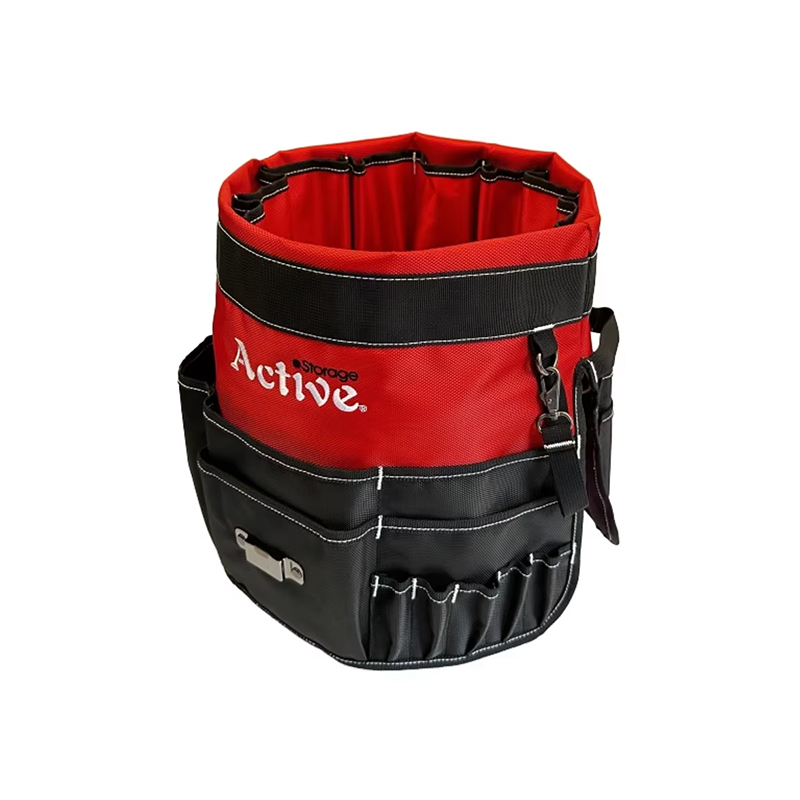
The 5-Gallon Bucket Tool Organizer with 30 Pockets is designed to turn a standard bucket into a practical mobile workstation. It combines the storage capacity of a bucket with a broad selection of exterior and interior pockets. The result is a flexible tool storage solution that keeps frequently used tools visible and accessible while preserving the bucket’s internal space for larger equipment, materials, and supplies.
Manufactured from durable polyester fabric, including 600D and 600D ripstop options, the organizer is designed for demanding working environments. Reinforced stitching, strengthened pocket areas, and a reinforced bottom help improve durability when the organizer is loaded with hand tools and accessories. With a listed load capacity of up to 30 pounds, it is suitable for many construction, repair, installation, maintenance, and outdoor work applications.
This article examines the product’s structure, material advantages, organization features, manufacturing strengths, customization possibilities, and practical applications. It also explains how an experienced tool bag manufacturer can support international buyers seeking dependable products, private-label solutions, and customized production.
5-Gallon Bucket Tool Organizer with 30 Pockets Bucket Tool Bag/Bag Organizer
Product Overview
The bucket tool organizer is a fitted textile organizer intended for standard 5-gallon buckets. Its open-top structure allows the organizer to be placed over the outside of a compatible bucket, creating multiple external storage compartments without removing the bucket’s original function.
The product has listed dimensions of approximately 48.5 by 35 centimeters. Its overall design is intended to sit securely around the outside of a common 5-gallon plastic bucket. Because bucket shapes and rim designs can vary by supplier, buyers should confirm compatibility during the sampling and product-development stage. The manufacturer can also discuss dimensions, pocket layouts, materials, and construction details for customized projects.
The product information identifies a 30-pocket design, while the detailed specification lists 32 pockets. This type of difference can occur when pocket sections, tool loops, internal compartments, or customized configurations are counted differently. For standard production, buyers should confirm the final pocket count and layout on the approved sample and technical specification sheet.
| Parameter | Details |
| Product Type | 5-gallon bucket tool organizer |
| Category | Tool bucket bag |
| Dimensions | Approximately 48.5 × 35 cm |
| Material | Polyester, including 600D or 600D ripstop fabric options |
| Closure Type | Open top |
| Listed Load Capacity | Up to 30 pounds |
| Pocket Configuration | 30-pocket design; specification lists 32 pockets |
| Color | Customizable |
| Country of Origin | China |
| Primary Applications | Construction, repair, electrical work, maintenance, installation, and outdoor work |
The open-top format is particularly useful for users who want immediate access to tools. Unlike a fully enclosed tool case, the organizer does not require a zipper to be opened before each tool can be removed. Workers can see and reach common hand tools directly from the outside pockets, helping reduce interruptions during a job.
Designed Around a Standard 5-Gallon Bucket
The main advantage of this product is its compatibility with a familiar and widely available bucket format. A standard 5-gallon bucket is inexpensive, easy to replace, and useful for carrying larger items. However, an ordinary bucket usually provides little or no organization for small tools. The bucket tool organizer addresses this limitation by adding structured compartments around the bucket’s exterior.
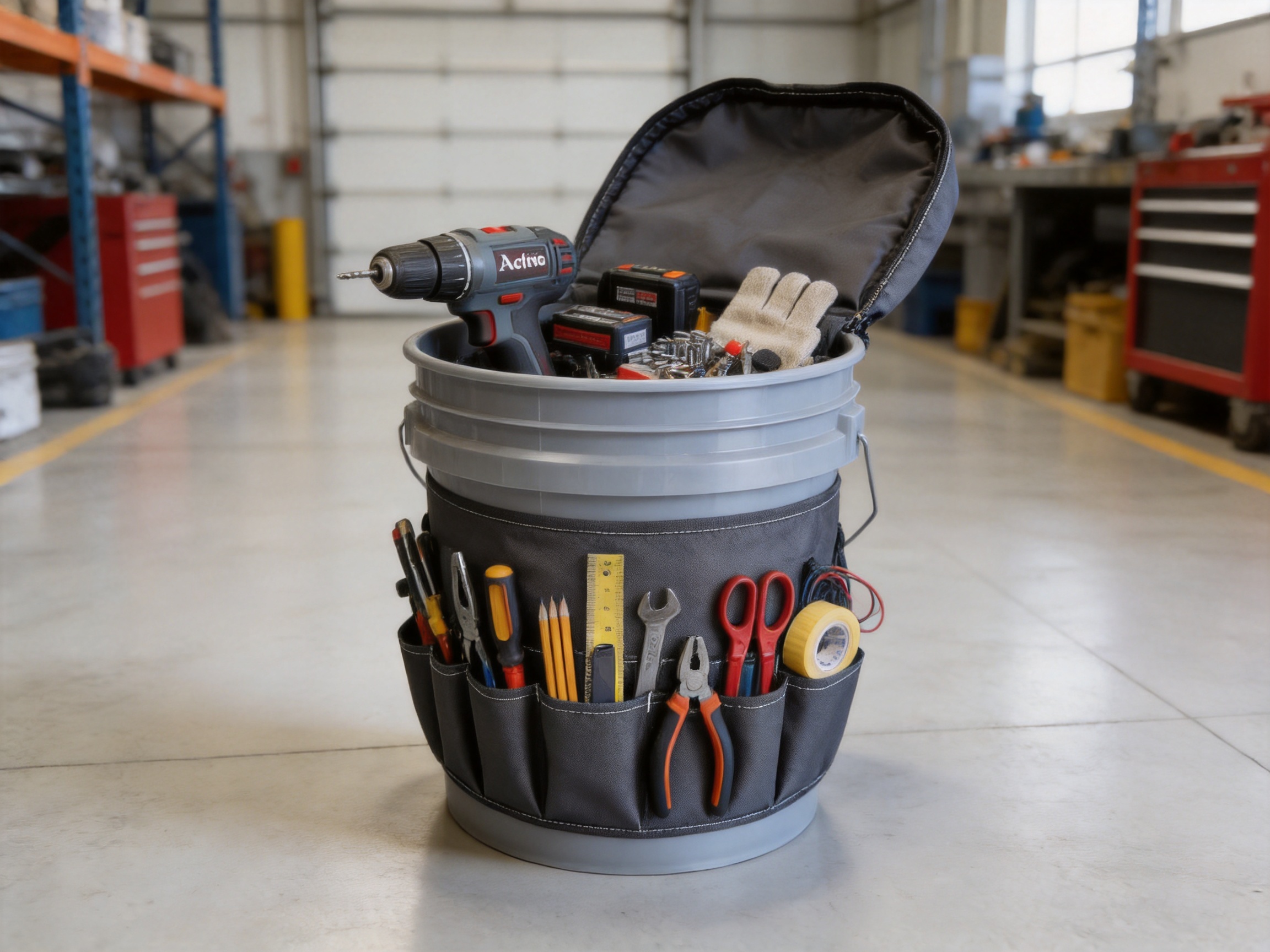
After installation, the bucket can continue to hold drills, batteries, extension cords, spare parts, fasteners, sealants, protective equipment, or other larger items. At the same time, screwdrivers, pliers, wrenches, measuring tools, and small accessories can be stored in the organizer’s pockets. This division between external pocket storage and internal bucket storage creates a practical two-level system.
Compared with a conventional open bucket, the organizer reduces the need to search through a deep container. Small tools are placed in individual pockets rather than being buried under heavier equipment. This can make the working process faster and can reduce the possibility of tools being dropped, misplaced, or left behind at the end of a job.
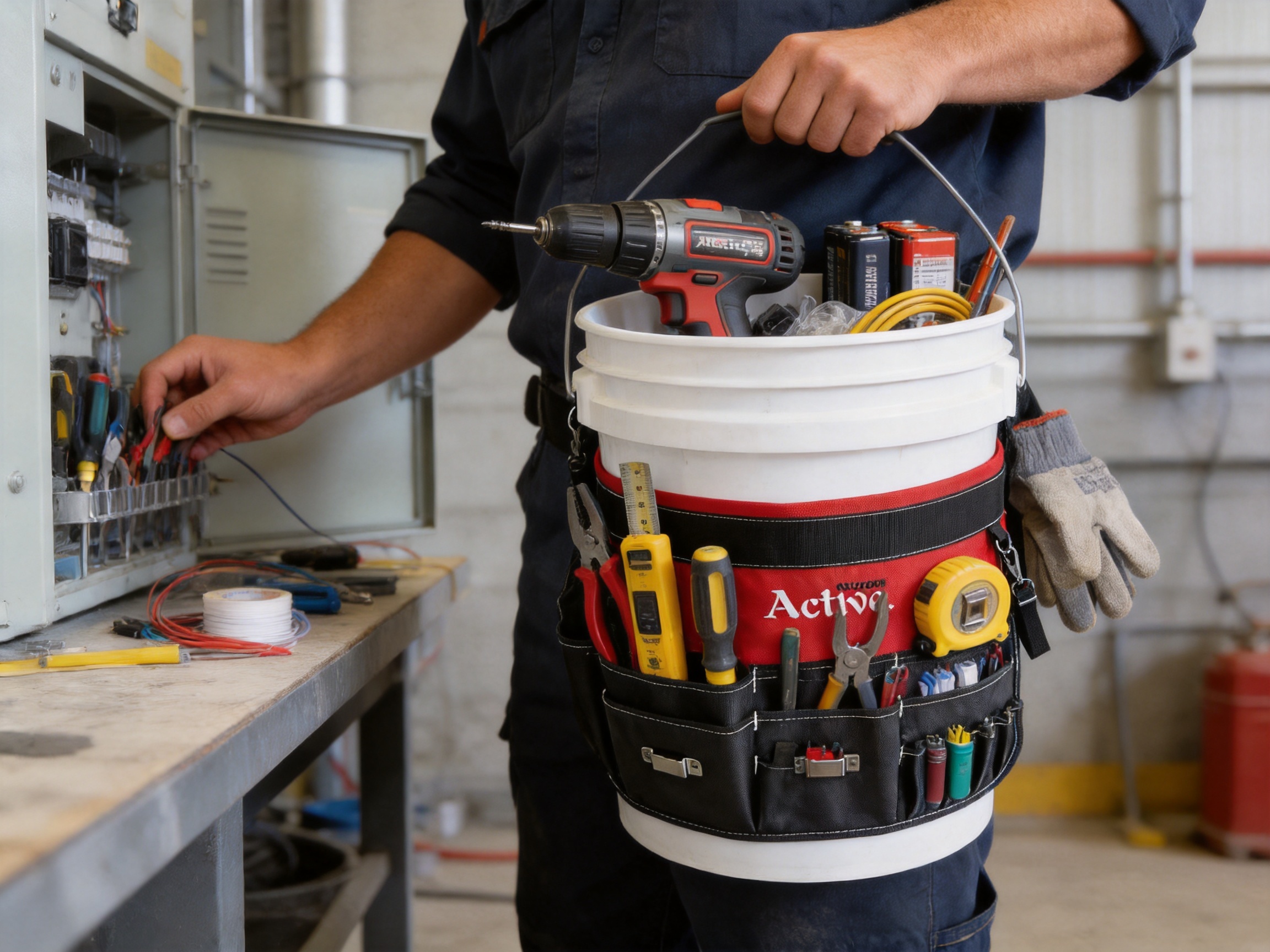
The bucket format also offers flexibility for different work locations. A user can select a bucket that matches the task, place the organizer around it, and create a job-specific storage system. For example, an electrician may use the pockets for pliers, wire strippers, screwdrivers, electrical tape, and testing accessories. A maintenance worker may carry wrenches, sockets, fasteners, lubricants, and measuring tools. A contractor may use the interior for drill batteries and the external compartments for frequently used hand tools.
High-Capacity Pocket Organization
The organizer includes multiple pockets of different sizes. This is important because tools are not uniform. A narrow pocket may be suitable for a screwdriver or pen-shaped tester, while a wider compartment may hold pliers, a wrench, a tape measure, or a utility knife. Larger sections can accommodate bulkier hand tools or accessories.
The mixed pocket design allows users to create a predictable storage arrangement. Tools can be grouped according to function, frequency of use, or size. Frequently used tools may be placed in the most accessible outside pockets, while less frequently used items can be placed in lower or side compartments. A consistent layout helps workers know where each tool belongs.
Organized storage is especially valuable in environments where tools are shared by multiple workers. A clearly arranged bucket organizer makes it easier to check whether equipment has been returned after use. It may also assist supervisors and technicians in preparing standardized tool kits for different tasks.
The external and internal compartments provide a balance between visibility and capacity. Exterior pockets support quick access, while the bucket remains available for larger items that do not fit into fabric pockets. This arrangement differentiates the product from a small hand pouch, which may be convenient but often lacks the volume required for a complete task-oriented kit.
The pocket arrangement can also be adapted during product development. Depending on the customer’s requirements, pocket width, depth, spacing, reinforcement, color, labeling, and branding may be reviewed. Buyers supplying specialist industries can request layouts designed for particular tools, such as electrician tools, plumbing tools, gardening equipment, automotive tools, or general maintenance kits.
Durable 600D Polyester Construction
Fabric selection has a direct influence on the service life of a tool bag. Tool organizers are exposed to abrasion, friction, contact with rough surfaces, repeated loading, and the weight of metal tools. For this reason, the product uses durable polyester fabric, with 600D polyester or 600D ripstop fabric available for demanding applications.
The “D” in fabric descriptions refers to denier, a measurement associated with the linear density of fibers. A 600D fabric is commonly used in bags, luggage, outdoor products, workwear accessories, and equipment covers because it provides a practical balance of strength, weight, flexibility, and cost.
Polyester is suitable for tool organizers because it offers good resistance to everyday abrasion and tearing. It is also relatively easy to process into complex shapes, allowing manufacturers to create pockets, gussets, binding, panels, loops, and reinforced sections. Depending on the specific fabric and finishing treatment, some versions may offer a degree of water resistance for ordinary outdoor working conditions.
600D ripstop fabric adds a grid-like reinforcement structure that can help limit the spread of a tear if the surface is punctured or cut. This option may be appropriate for applications where the organizer will experience more frequent contact with rough materials, sharp edges, or demanding job-site conditions.
Material selection should be matched to the intended use. A lightweight organizer may be suitable for small hand tools and retail applications, while a heavier fabric and additional reinforcement may be preferred for construction, industrial maintenance, or professional service teams. The manufacturer can review the expected load, tool types, usage frequency, and target price before recommending a material combination.
Reinforced Stitching and Load-Bearing Areas
Fabric strength alone does not determine the durability of a tool organizer. Stitching, seam construction, edge binding, pocket attachment, and stress distribution are equally important. A pocket may be made from strong fabric but still fail if its attachment points are not properly reinforced.
This product uses reinforced stitching in key stress-bearing areas. These areas may include the upper rim, pocket openings, side seams, carrying sections, and points where pocket panels connect to the main body. Reinforcing these locations helps the organizer manage repeated loading and unloading.
Some pocket bottoms are strengthened to help support heavy tools. A reinforced bottom can reduce sagging, deformation, and premature wear caused by metal tools resting in the same location over a long period. It can also help maintain the shape of a pocket, making it easier to insert and remove tools.
Edge binding is another useful construction detail. Binding can cover raw fabric edges, improve appearance, reduce fraying, and create a cleaner finish around pocket openings and the organizer’s upper perimeter. Consistent binding is particularly important for products intended for retail sale or private-label programs because finishing quality influences the customer’s perception of the entire product.
Quality production requires more than simply adding extra stitches. Stitch density, thread selection, seam allowance, needle control, and the position of reinforcement should be considered together. Excessive stitching can weaken or puncture some fabrics, while insufficient stitching may not provide adequate load support. Experienced manufacturing teams use production standards and inspection procedures to maintain consistency across large quantities.
Advantages Compared with Conventional Tool Storage
More Accessible Than a Basic Tool Bucket
A standard bucket can carry a large amount of equipment, but it does not naturally separate small tools. Users often need to remove several items before finding the tool they need. The organizer adds external compartments that keep frequently used tools visible and easier to reach.
More Flexible Than a Single-Purpose Tool Case
A molded tool case may offer protection and a fixed layout, but it can be less adaptable when the tool selection changes. The bucket organizer can be used with different compatible buckets and can serve different work categories. The interior bucket space can also be reconfigured according to the job.
Greater Capacity Than a Small Tool Pouch
A waist pouch or compact tool pouch is useful for carrying a limited number of tools, but it may not provide enough storage for a full task kit. The bucket organizer offers numerous compartments while also preserving the bucket’s interior volume. This makes it suitable for users who need more equipment without moving to a large toolbox.
Convenient for Job-Specific Kits
Because buckets and organizers can be prepared for particular tasks, companies can create dedicated kits for installation teams, repair technicians, facility maintenance departments, or service vehicles. A job-specific kit can reduce preparation time and help standardize the equipment provided to each worker.
Efficient Use of Vertical Space
The organizer uses the outside wall of the bucket as storage space. This vertical arrangement makes use of an area that would otherwise remain empty. It also keeps smaller tools around the perimeter instead of requiring them to be placed at the bottom of the bucket.
Practical Applications
Construction and General Contracting
Construction workers often carry a combination of hand tools, fasteners, measuring equipment, and accessories. The organizer can hold commonly used items such as screwdrivers, pliers, wrenches, utility knives, measuring tapes, pencils, levels, and small hardware. The bucket interior can hold a drill, batteries, protective gloves, or consumable materials.
Electrical Installation and Repair
Electricians need quick access to specialized hand tools and small accessories. Pocket sections may be used for wire strippers, cutters, voltage testers, screwdrivers, electrical tape, connectors, cable ties, and measuring devices. The organizer can be configured as an electrician-focused tool kit, subject to the buyer’s required pocket dimensions and layout.
Plumbing and Mechanical Maintenance
Plumbers and maintenance technicians frequently use wrenches, pliers, thread-sealing materials, small replacement parts, and measuring tools. The bucket format is useful for carrying larger supplies, while the outer pockets can hold tools that must be reached repeatedly during a repair.
Automotive Service
Automotive technicians may use the organizer for a selected group of diagnostic tools, hand tools, gloves, cleaning materials, and small replacement components. It may be especially useful for mobile service work where technicians travel between vehicles or work areas.
Gardening and Outdoor Work
The organizer can also support gardening and outdoor maintenance applications. Small pruning tools, gloves, plant ties, measuring tools, seed packets, and hand accessories can be placed in the pockets, while the bucket can carry soil, cleaning supplies, or other materials. The selected fabric should reflect the expected exposure to moisture, dirt, and abrasion.
Facility and Property Maintenance
Maintenance departments often need portable tool kits for routine inspections and minor repairs. A clearly organized bucket bag can be stored in a service vehicle, workshop, equipment room, or maintenance cart. Multiple organizers can be assigned to different departments or work categories.
Manufacturing Experience and Production Capabilities
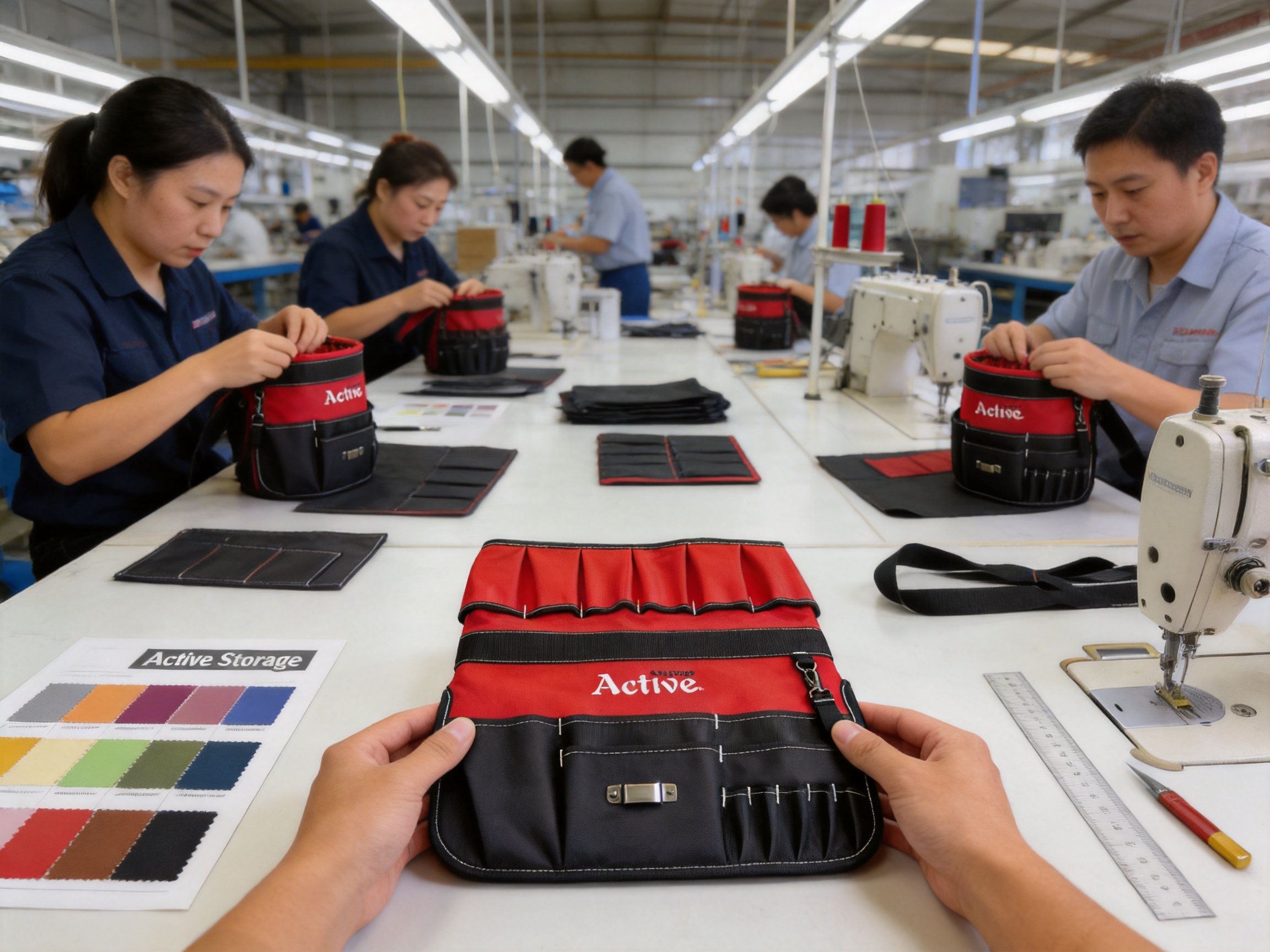
The product is manufactured by Zhangjiagang Seaark Tools Industrial Co., Ltd., a Chinese company specializing in tool bags and customization solutions. Founded in 2004, the company has more than 20 years of experience in the tool bag manufacturing field. This background supports an understanding of material selection, pattern development, sewing construction, reinforcement, quality control, and export requirements.
The company established Zhangjiagang Haiyi Tool Bags Co., Ltd. as a core manufacturing base in 2012. It also operates a production facility in Cambodia. Multiple production locations can provide greater flexibility for international customers, particularly when buyers need alternative sourcing arrangements, production planning support, or assistance in managing changing tariff conditions.
The company reports a workforce of more than 200 employees and approximately 11,000 square meters of factory space. These resources can support the production of standard products as well as customized tool bag programs. A broader production base may also help coordinate material purchasing, cutting, sewing, assembly, inspection, packing, and shipment preparation.
Manufacturing capacity is valuable, but product consistency depends on the quality of the production system. A professional tool bag program typically includes technical review, sample approval, material confirmation, cutting control, sewing standards, in-process inspection, final inspection, and packaging verification. Each stage helps reduce the risk of dimensional variation, incorrect components, uneven stitching, or inconsistent color.
Research, Development, and Customization
The company maintains an independent research and development team and develops more than 10 new designs each year. Continued product development is important in the tool storage industry because professional users regularly seek improvements in accessibility, capacity, weight, ergonomics, durability, and compatibility with modern equipment.
For customers purchasing under a private label or developing a new product range, the R&D process can support more than simple logo application. Customization may include pocket count, pocket depth, organizer dimensions, handle construction, bucket compatibility, fabric type, color, webbing, zipper selection, labels, packaging, and additional functional features.
A customization project normally begins with a product brief. The buyer should provide information about the intended users, tools to be stored, target capacity, expected load, preferred materials, market requirements, price range, color standards, and packaging expectations. The manufacturer can then evaluate feasibility and prepare a sample or prototype for review.
Sample development is especially important for a product with multiple pockets. A pocket that looks suitable in a drawing may be too narrow for the actual tool, while a deep pocket may make short tools difficult to retrieve. Testing with representative tools helps confirm the practicality of the layout before mass production.
Customization can also address branding requirements. Logos may be applied through methods such as woven labels, printed labels, embroidery, heat transfer, or other appropriate techniques. The final method depends on the fabric, logo detail, color requirements, expected durability, and target cost. Packaging, carton markings, care labels, and instruction cards can also be reviewed for export programs.
Quality Management and Compliance
International buyers increasingly evaluate not only product appearance but also manufacturing transparency, ethical practices, and supply chain reliability. The company’s facilities undergo annual third-party audits, including BSCI, SEDEX, FCCA, and SCS audits. Such audits are intended to support standardized and compliant production practices.
Audit programs may review areas such as workplace conditions, labor practices, environmental management, documentation, safety procedures, and operational controls. The exact scope and status of each audit should be confirmed directly with the supplier for a specific order or customer program.
For tool bag buyers, quality assurance should include both visual and functional checks. Visual inspection may review fabric defects, color consistency, loose threads, seam appearance, pocket alignment, labels, and finishing. Functional inspection may examine pocket dimensions, load performance, attachment strength, bucket fit, and the operation of any closures or accessories.
Pre-production samples and approved reference samples are useful tools for controlling mass production. The buyer and manufacturer can agree on the final dimensions, materials, construction details, logo placement, color standards, and packaging before production begins. This reduces ambiguity and gives both parties a clear quality reference.
Production Process for a Bucket Tool Organizer
Design and Technical Review
The process begins with the review of product requirements. Designers and technicians examine the organizer’s dimensions, pocket layout, bucket compatibility, expected load, fabric, reinforcement points, and branding requirements. If the buyer has a drawing or existing sample, the factory can assess how to reproduce or improve it.
Pattern Making
Patterns define the shape and size of each fabric panel. Accurate patterns are essential for maintaining symmetry, pocket alignment, and correct fit around the bucket. Pattern makers must account for seam allowances, fabric thickness, binding, folds, and possible shrinkage or dimensional changes during production.
Material Preparation
Fabric, webbing, thread, labels, reinforcement materials, and other components are prepared according to the approved specification. The material team may inspect fabric rolls for color, surface defects, width, and consistency. Materials should be matched to the production order to reduce the risk of shade differences between batches.
Cutting
Fabric panels are cut according to the approved patterns. Consistent cutting helps ensure that pockets are aligned and that the organizer fits the intended bucket. Efficient cutting plans can also improve material utilization and reduce unnecessary waste.
Pocket Assembly
Pocket panels are prepared and attached to the main body. Different pocket sizes may require separate operations, including folding, binding, reinforcement, and stitching. The sequence of assembly is important because some seams become inaccessible after later panels are attached.
Reinforcement and Stitching
High-stress areas receive additional stitching or reinforcement according to the product specification. Pocket bottoms, upper edges, side seams, and attachment points are checked during assembly. Consistent stitch quality helps support the listed load capacity and extends the product’s useful service life.
Finishing and Inspection
After the main sewing work is complete, the organizer is inspected for loose threads, incorrect seams, alignment issues, stains, missing components, and other defects. Any required labels, trims, or finishing details are added before final packing.
Packing and Shipment Preparation
Finished products are folded or arranged according to the approved packing method. Carton quantities, carton markings, product labels, and shipping documentation are checked before shipment. International buyers should confirm packaging requirements early, especially when products will be sold through retail, e-commerce, or distribution channels.
Why Work with an Experienced Tool Bag Manufacturer?
Tool bags require a combination of textile knowledge and practical product understanding. A general bag factory may be able to sew a basic pouch, but a specialized tool bag manufacturer is more likely to understand the demands placed on pockets, handles, seams, bottoms, webbing, and load-bearing areas.
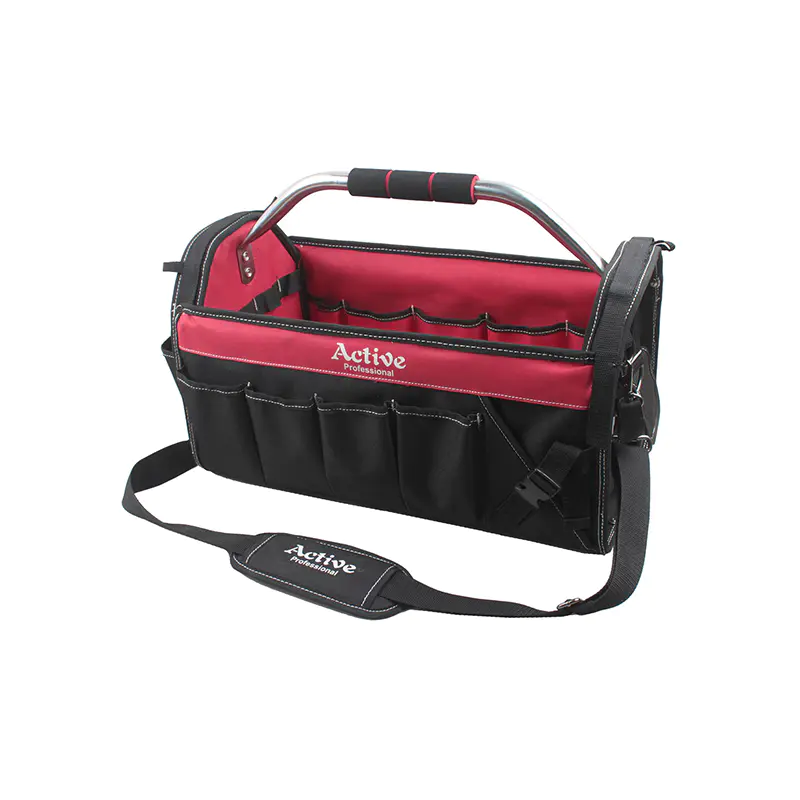
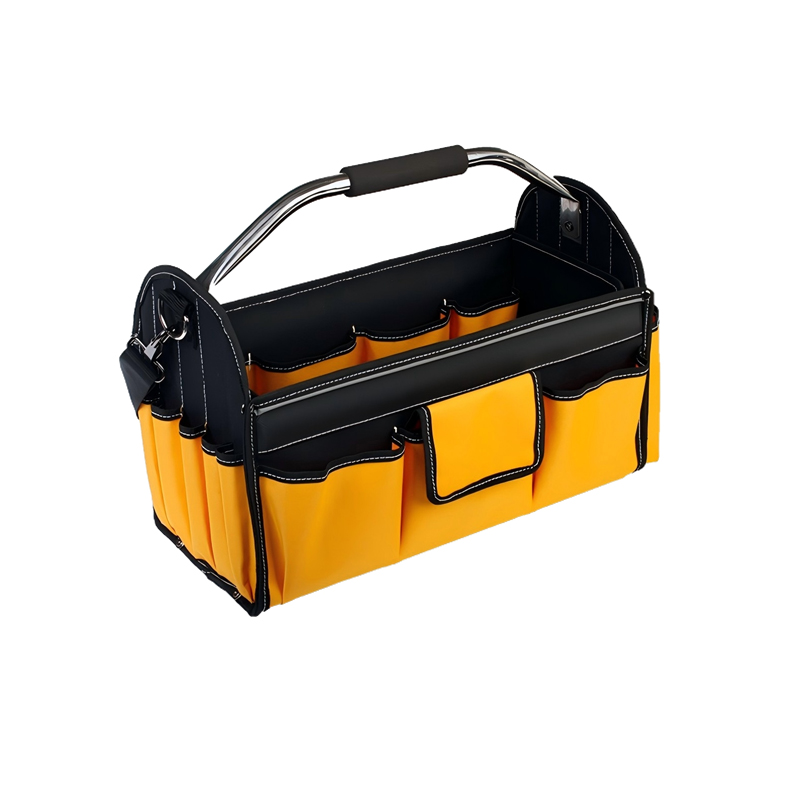
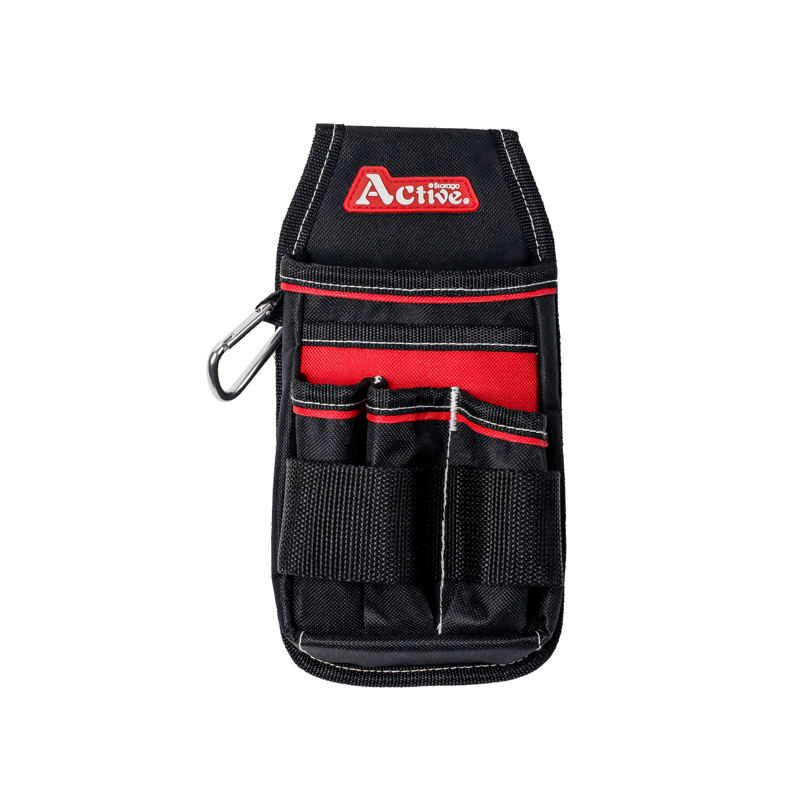
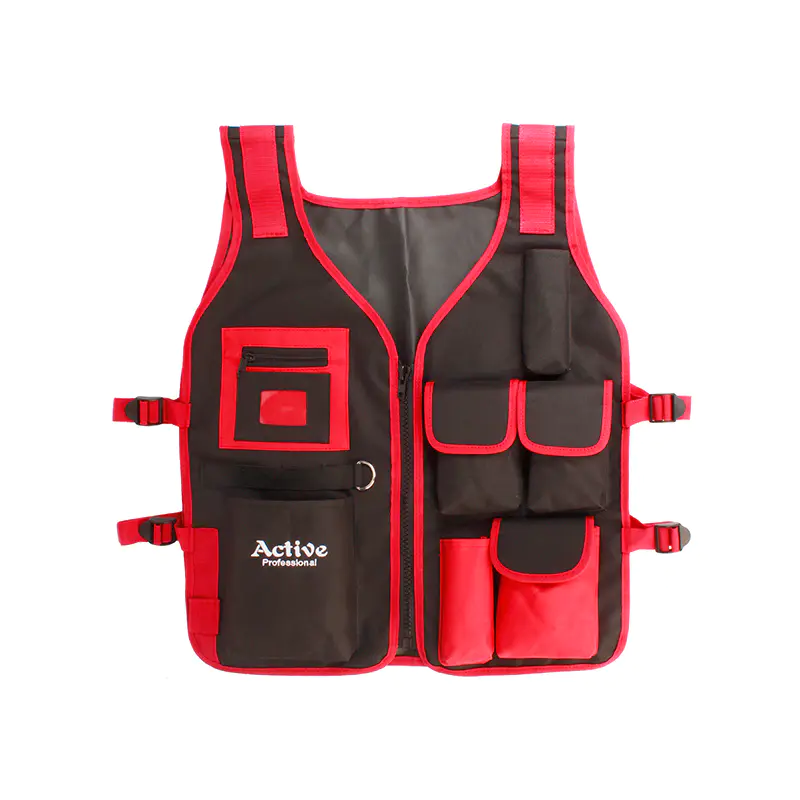
Experience with multiple product types can also support broader sourcing programs. The company manufactures trolley tool bags, tool backpacks, zippered tool bags, tool bags with tubular handles, waist tool bags, tool pouches, tool vests, tool bucket bags, folding-seat tool bags, pocket handy tool bags, garden bags, and other multifunctional bags.
This product range allows customers to develop coordinated collections rather than sourcing each bag type from a different supplier. A retailer, distributor, or professional equipment brand may be able to create a consistent family of products using related fabrics, colors, labels, and packaging.
More than two decades of manufacturing experience can also help the supplier identify common design problems before production. For example, a pocket may need a larger opening, a seam may need reinforcement, or a fabric may be unsuitable for a particular load. Early technical advice can reduce the number of sample revisions and help control development costs.
Ordering and Customization Considerations
Buyers should define the intended application before requesting a quotation. Important information includes the number and type of tools, approximate total weight, expected working conditions, preferred bucket size, color, branding, packaging, order quantity, and target market.
The listed load capacity is up to 30 pounds, but actual performance depends on how the weight is distributed and how the organizer is used. Buyers should not exceed the agreed specification. If a heavier-duty version is required, the manufacturer can evaluate stronger fabric, additional reinforcement, wider binding, improved attachment structures, or a revised pocket layout.
The pocket count should also be confirmed. Product materials identify a 30-pocket design, while the specification lists 32 pockets. This should be resolved in the final technical documentation to ensure that samples, purchase orders, inspection criteria, and marketing materials use the same information.
Color customization is available. Buyers should provide a recognized color reference where possible, such as a physical standard or an agreed color system. Fabric appearance can vary depending on weave, coating, lighting, and production batch, so a pre-production sample is recommended.
Packaging may be customized for wholesale or retail distribution. Options can include individual polybags, printed cartons, hang tags, barcode labels, instruction sheets, and master-carton markings. Packaging decisions should consider the destination market, warehouse handling, shipping method, and environmental requirements.
Buyers should also clarify whether they need a standard product or a fully customized product. A standard product may offer faster development and simpler purchasing, while a customized design can better match a specific tool set or brand identity. The best approach depends on order volume, launch schedule, budget, and product strategy.
Care and Use Recommendations
To extend the service life of the organizer, users should distribute tools across several pockets instead of placing excessive weight in one compartment. Heavy tools should be positioned in reinforced areas whenever possible. Sharp objects should be stored carefully to reduce the risk of puncturing the fabric or damaging neighboring tools.
The organizer should be kept reasonably clean. Dirt and grit can increase abrasion when tools are repeatedly inserted and removed. Surface cleaning should follow the fabric supplier’s recommendations. Unless the product is specifically designed for machine washing, aggressive washing or harsh chemicals should be avoided.
Users should inspect the organizer periodically for loose stitching, damaged pocket bottoms, frayed edges, and other signs of wear. Early inspection can help prevent tool loss and identify whether the organizer needs repair or replacement.
The organizer should be used with a compatible bucket that is stable and in good condition. The bucket should be placed on a secure surface, especially when the organizer is fully loaded. The combined weight of the bucket, tools, and materials should be handled carefully during transportation.
Frequently Asked Questions
What type of bucket does the organizer fit?
The organizer is designed for standard 5-gallon buckets. Since bucket rim shapes and external dimensions can vary, buyers should confirm fit with the manufacturer before placing a large order or using a non-standard bucket.
How many pockets does the product have?
The product is promoted as a 30-pocket bucket tool organizer, while the detailed specification lists 32 pockets. The final pocket count should be confirmed in the approved sample and technical specification because counting methods may vary between pocket sections and compartments.
What material is used?
The listed material is polyester. Depending on the project, 600D polyester or 600D ripstop fabric can be considered. The best option depends on the required durability, weight, appearance, application, and target cost.
What is the load capacity?
The listed load capacity is up to 30 pounds. Actual performance depends on the weight distribution, tool shape, bucket condition, sewing construction, and usage environment. Users should follow the final approved product specification.
Can the organizer be customized?
Yes. Customization may include color, dimensions, pocket layout, material, reinforcement, labels, branding, packaging, and other design details. A product sample or technical drawing is recommended for approval before mass production.
Can it hold power tools?
The bucket interior can remain available for drills, batteries, spare parts, and other larger items. The external pockets are generally better suited to hand tools and smaller accessories. Buyers should test the intended power tools and confirm weight distribution before finalizing the design.
Is the organizer waterproof?
The product is made from polyester, and some fabric options may provide a degree of water resistance. It should not automatically be considered fully waterproof unless a specific waterproof construction and test standard have been agreed upon.
Who can use this product?
Construction workers, electricians, plumbers, maintenance technicians, installers, automotive technicians, gardeners, facility teams, contractors, and do-it-yourself users can all benefit from the organizer. Its usefulness depends on the tools required for the specific task.
Where is the product manufactured?
The company operates manufacturing facilities in China and Cambodia. The product information identifies China as the country of origin for this item. Buyers should confirm the production location for a particular order, especially when origin documentation is important.
Does the manufacturer provide other tool bags?
Yes. The manufacturer’s product range includes trolley tool bags, tool backpacks, zippered tool bags, tubular-handle tool bags, waist tool bags, tool pouches, tool vests, folding-seat tool bags, garden bags, and other multifunctional bags.
Conclusion
The 5-Gallon Bucket Tool Organizer with 30 Pockets provides a practical way to improve the organization, accessibility, and portability of everyday tools. By combining a multi-pocket textile organizer with a standard bucket, it offers more structured storage than a basic bucket and more capacity than a small pouch.
Its key advantages include numerous compartments, compatibility with common 5-gallon buckets, external access to frequently used tools, remaining internal bucket capacity, 600D polyester or ripstop fabric options, reinforced stitching, strengthened pocket bottoms, and a listed load capacity of up to 30 pounds. These characteristics make it suitable for construction, electrical work, repair, maintenance, installation, outdoor work, and job-specific professional kits.
The product is supported by a manufacturer with more than 20 years of tool bag experience, multiple production bases, an independent R&D team, a workforce of more than 200 employees, and experience with both standard and customized products. Its manufacturing range and third-party audit experience can support international brands, distributors, wholesalers, and professional equipment companies seeking reliable tool storage solutions.
For buyers, the most important next steps are to confirm the final pocket count, bucket compatibility, material specification, load requirement, color, branding, packaging, and production location. With careful sample approval and technical communication, this bucket organizer can be developed into a durable, efficient, and market-ready tool storage product.
References
1. Product specification for the 5-Gallon Bucket Tool Organizer with 30 Pockets, including dimensions, materials, pocket configuration, closure type, load capacity, and color options.
2. Technical product description covering pocket organization, standard 5-gallon bucket compatibility, 600D polyester and ripstop fabric, reinforced stitching, and reinforced pocket bottoms.
3. Company information provided by Zhangjiagang Seaark Tools Industrial Co., Ltd., including company history, manufacturing locations, production experience, research and development activities, product categories, and customization services.
4. General textile manufacturing principles relating to polyester fabric, denier specifications, ripstop construction, seam reinforcement, pocket assembly, and quality inspection.
5. General professional tool storage practices concerning load distribution, tool accessibility, job-specific organization, product care, and compatibility testing.
Product: 5-Gallon Bucket Tool Organizer with 30 Pockets Bucket Tool Bag/Bag Organizer




We are a professional enterprise engaged in exporting various types of toolkits.
We firmly believe that 'quality is everything, service enhances value'.
-
+86-15298800699

-
+86-512-58670375

-
karen@kun-bag.com

-
Building 11, No. 93 Chengang Road, Zhangjiagang City, Jiangsu Province, China

Copyright © Zhangjiagang Seaark Tools Industrial Co., Ltd. All Rights Reserved.
Custom Electrician Tool Backpack Manufacturers