
 en
 русский
 Español
 Deutsch

Heavy-Duty Multi-Pocket Tool Organizer for Efficient Professional Work
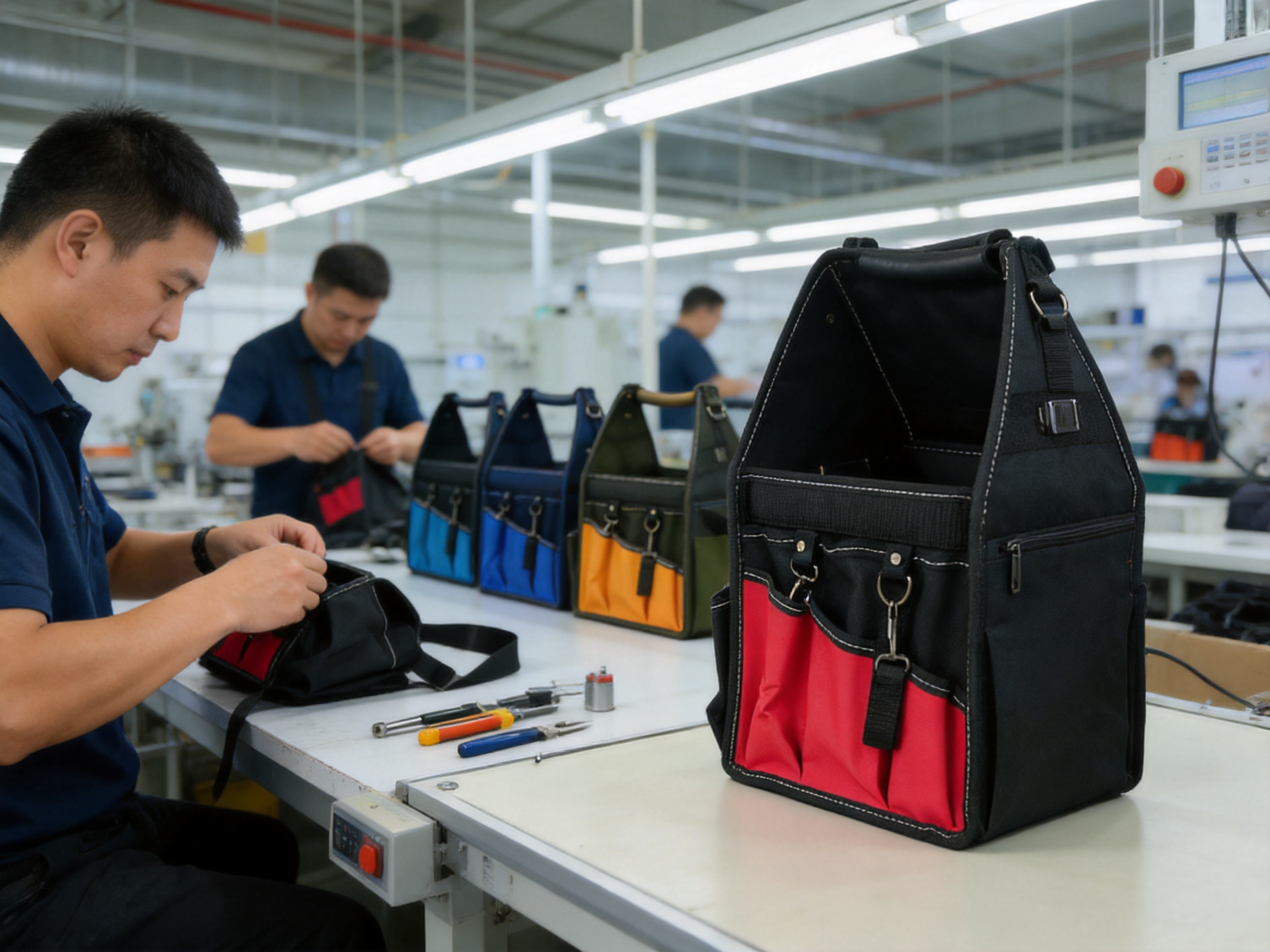
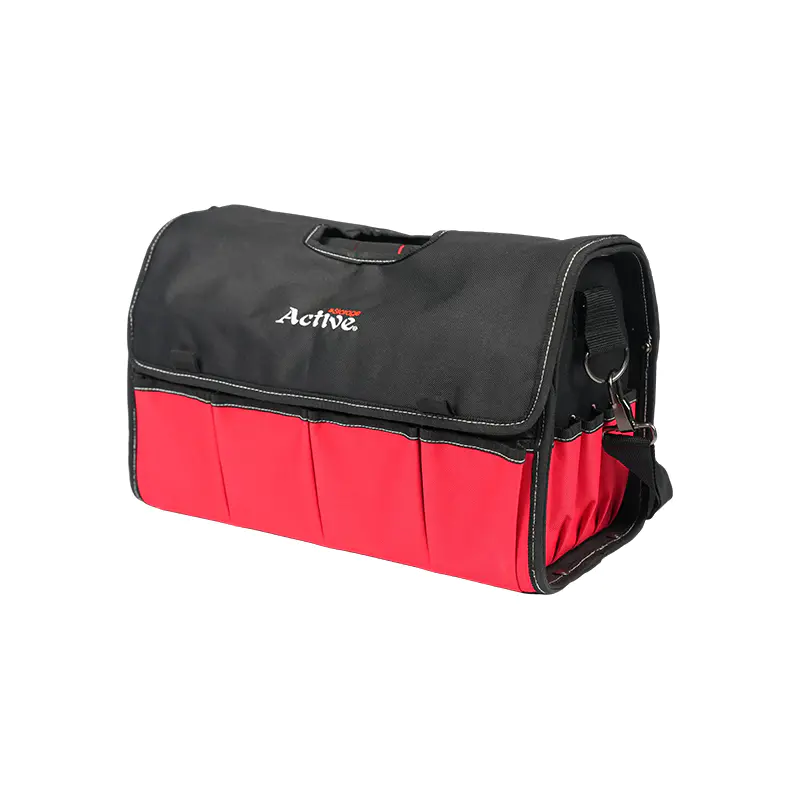
Professional tradespeople depend on their tools to complete demanding work safely, accurately, and efficiently. Whether the job involves electrical installation, construction, maintenance, plumbing, carpentry, mechanical repair, or equipment servicing, a dependable storage solution is essential. A disorganized tool carrier can waste valuable time, expose equipment to unnecessary damage, and make transportation more difficult. The Heavy-Duty Multi-Pocket Tool Organizer with Adjustable Shoulder Strap is designed to solve these everyday challenges through a practical combination of capacity, accessibility, structural stability, and industrial-grade durability.
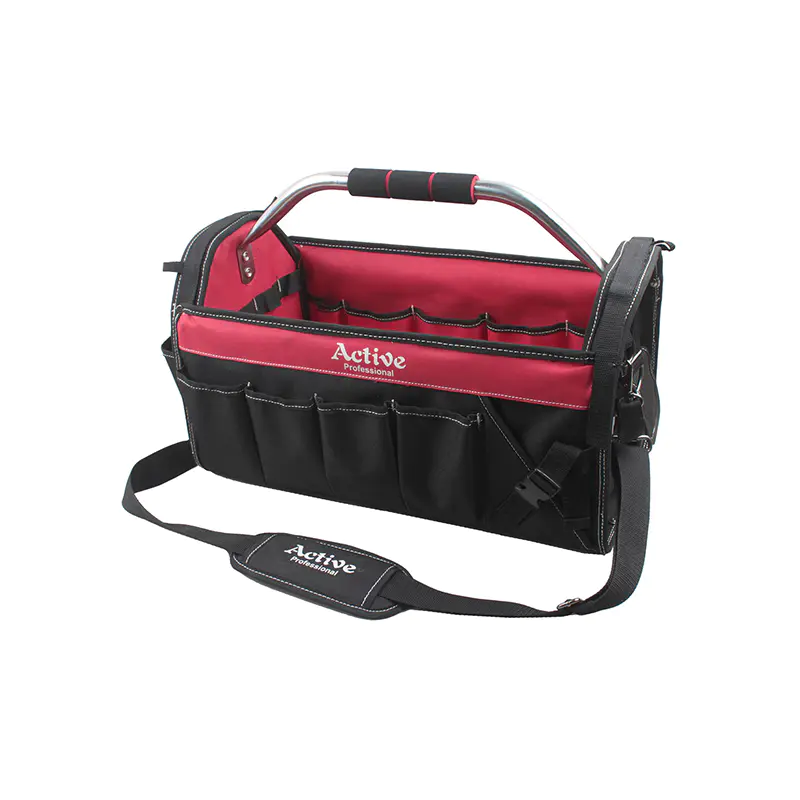
This pocket handy tool bag is built for users who need more than a simple container. It provides a high-capacity central compartment for larger equipment, together with 27 dedicated interior and exterior pockets for organizing frequently used hand tools and accessories. Its open-top construction enables fast access, while the adjustable shoulder strap supports more flexible carrying. Reinforced stitching, metal rivets, tear-resistant polyester, and a rigid upright structure further enhance its suitability for professional environments.
The product is manufactured by Zhangjiagang Seaark Tools Industrial Co., Ltd., a China-based tool bag manufacturer with more than two decades of experience in professional storage products and customized soft goods. Through dedicated research and development, multiple production bases, third-party social and quality audits, and a broad customization capability, the company supports both standard product supply and tailor-made solutions for international brands.
Content
- 1 Designed Around the Real Needs of Working Professionals
- 2 Scientific Space Management for Faster Tool Access
- 3 Capacity for Power Tools and Hand Tools
- 4 Industrial-Grade Materials and Reinforced Construction
- 5 Advantages Compared with Conventional Tool Carriers
- 6 Carrying Comfort and Mobility
- 7 Applications Across Multiple Trades
- 8 Customization Opportunities for Business Buyers
- 9 Manufacturing Experience and Production Strength
- 10 Research and Development for Practical Product Innovation
- 11 Quality Management and Compliance-Oriented Production
- 12 How the Manufacturing Process Supports Product Performance
- 13 Specification Overview
- 14 Recommended Loading and Care Practices
- 15 Value for Distributors, Contractors, and Private-Label Brands
- 16 Q&A: Heavy-Duty Multi-Pocket Tool Organizer
- 16.1 What type of product is this?
- 16.2 How many tools can the bag hold?
- 16.3 Can it hold power tools?
- 16.4 Does the bag have a zipper closure?
- 16.5 Is the shoulder strap adjustable?
- 16.6 What material is used?
- 16.7 How does the bag remain upright?
- 16.8 Is the color customizable?
- 16.9 What are the product dimensions?
- 16.10 Where is the product manufactured?
- 16.11 Who is the product suitable for?
- 16.12 Can the product be customized for a private-label program?
- 16.13 What makes it different from a basic tool tote?
- 16.14 How should the bag be loaded?
- 17 Why Choose an Experienced Tool Bag Manufacturer?
- 18 Conclusion
- 19 References
- 20 Product: Heavy Duty Multi-Pocket Tool Organizer with Adjustable Shoulder Strap
Designed Around the Real Needs of Working Professionals
Tool bags are often used in environments where convenience and durability are equally important. A technician may need to move between workstations, climb stairs, work in confined spaces, or transport equipment from a vehicle to a job site. The storage product must therefore remain stable, withstand repeated handling, and provide fast access without requiring the user to empty the entire bag.
The Heavy-Duty Multi-Pocket Tool Organizer addresses these requirements with a carefully divided interior and exterior layout. Large equipment can be placed in the main compartment, while smaller items remain separated in vertical pockets around the bag’s perimeter. This arrangement creates an organized working system rather than a single open cavity filled with loose tools.
The product dimensions are 21.5 by 21.5 by 46 centimeters. The tall profile offers useful vertical storage for long-handled tools, while the square base helps the bag stand upright during loading and unloading. With a stated load capacity of 30 pounds, it can accommodate a substantial selection of equipment for mobile maintenance and repair work.
The open-top closure is another practical feature. Instead of opening zippers or flaps every time a tool is needed, users can reach directly into the main compartment or select an item from the external pockets. This is especially valuable when a technician is working under time pressure or wearing gloves. The open configuration also makes it easier to identify the contents before leaving for a job.
Scientific Space Management for Faster Tool Access
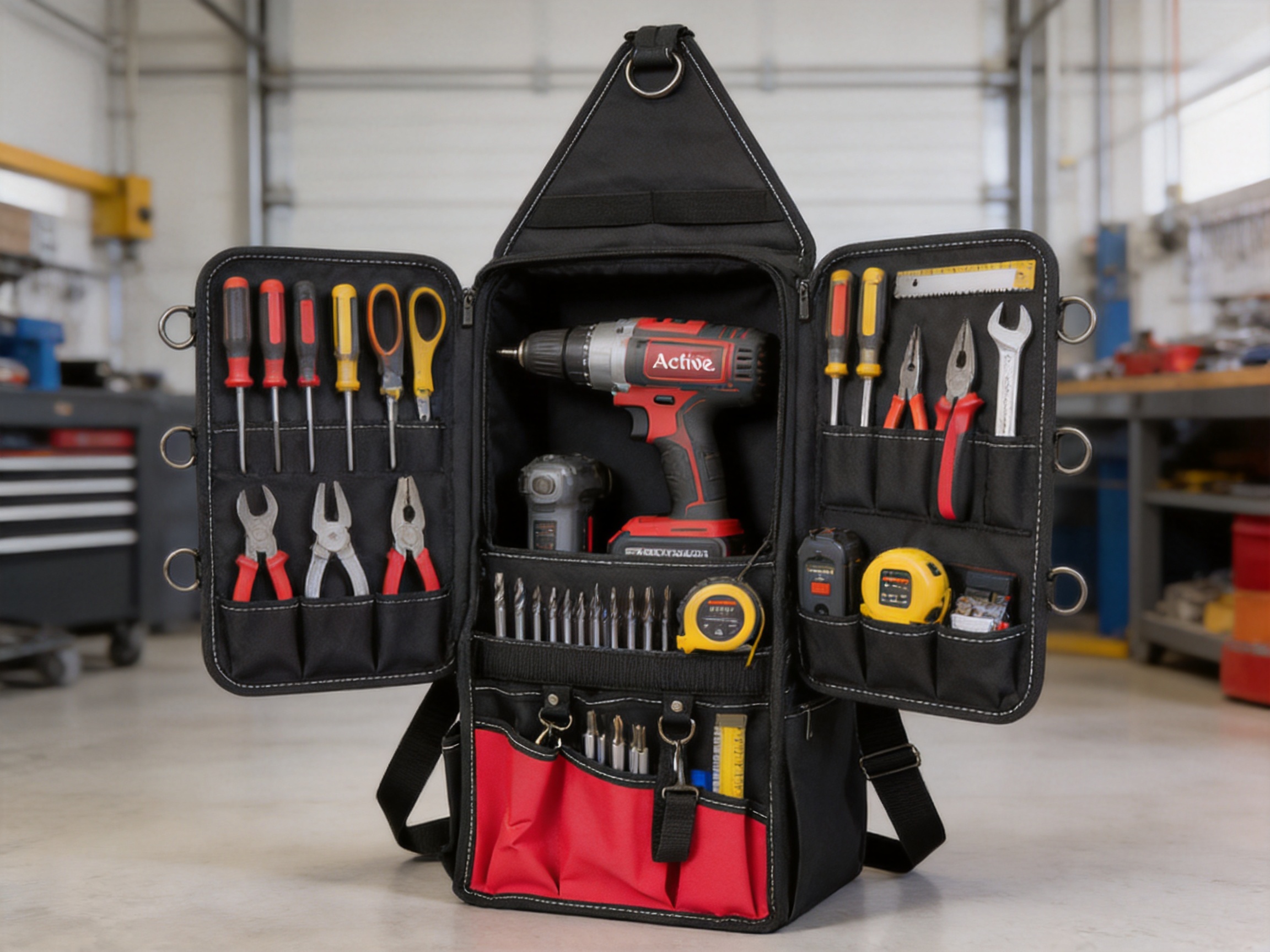
A major advantage of this organizer is its systematic use of vertical pocket space. The bag includes 18 exterior pockets and 9 interior pockets, giving the user 27 locations for separating tools, accessories, and consumable items. Each pocket can serve a specific purpose according to the user’s trade and workflow.
Small precision screwdrivers, test pens, measuring tools, cutters, wrenches, pliers, tape measures, fasteners, and electrical accessories can be placed in individual compartments. Long-handled tools can be secured in taller pockets, while smaller components can be positioned in areas that remain easy to see and reach. The result is less searching and less unnecessary movement on the job site.
Many conventional tool bags rely primarily on a large central cavity. Although this construction may offer basic capacity, it often allows tools to shift, overlap, and become difficult to retrieve. A user may need to remove several items before locating a screwdriver or pair of pliers. Over the course of a workday, these repeated delays can significantly reduce productivity.
By contrast, the multi-pocket structure supports a visual inventory system. When tools have dedicated positions, missing items are easier to identify. At the end of a task, tools can be returned to their original locations. This helps prevent tools from being left behind at a job site and supports more consistent work habits.
The layout is also beneficial for protecting tools from unnecessary contact. When hand tools are stored in separate pockets, sharp edges and metal surfaces are less likely to rub continuously against one another. Larger equipment placed in the central compartment can remain separated from small precision items. While the bag is not intended to replace specialized hard cases for fragile instruments, its internal organization offers an important level of everyday protection.
| Product Feature | Practical Function | Professional Benefit |
|---|---|---|
| High-capacity main compartment | Stores power drills, impact wrenches, and larger equipment | Allows essential equipment to travel together in one carrier |
| 18 exterior pockets | Provides fast access to frequently used tools | Reduces searching and improves workflow efficiency |
| 9 interior pockets | Separates additional tools and accessories | Improves organization and helps protect smaller items |
| Open-top construction | Enables direct access to the bag’s contents | Supports quick tool selection, including when wearing gloves |
| Rigid upright structure | Helps the bag remain open and stable | Makes loading, unloading, and job-site placement easier |
| Adjustable shoulder strap | Provides an alternative carrying method | Improves transport flexibility between locations |
Capacity for Power Tools and Hand Tools
The central compartment is designed to accommodate larger equipment such as power drills and impact wrenches. This gives users the ability to combine powered equipment with the hand tools required to operate, adjust, or maintain it. Rather than carrying several small containers, a worker can create one coordinated mobile tool station.
The 30-pound load capacity is appropriate for a broad range of professional applications. Electricians may use the bag for drills, wire preparation tools, screwdrivers, pliers, testers, and installation accessories. Maintenance technicians may carry wrenches, sockets, cutters, measuring devices, and replacement components. Construction workers and installers can use the available volume for a combination of power tools and hand tools needed for assembly or repair.
Load capacity should always be managed according to the intended use. A well-organized bag is easier to carry and less stressful on its handles and strap than an overloaded bag with tools packed without structure. The product’s reinforced stress points provide additional support, but good distribution remains important. Heavier items should be placed low and near the center, while lighter tools can be placed in the surrounding pockets.
The upright form also helps maximize usable space. Soft bags that collapse completely can waste internal volume and make it difficult to insert larger items. A stable structure provides a more predictable opening and helps tools remain in their approximate positions. This is particularly useful for workers who load the bag repeatedly throughout the day.
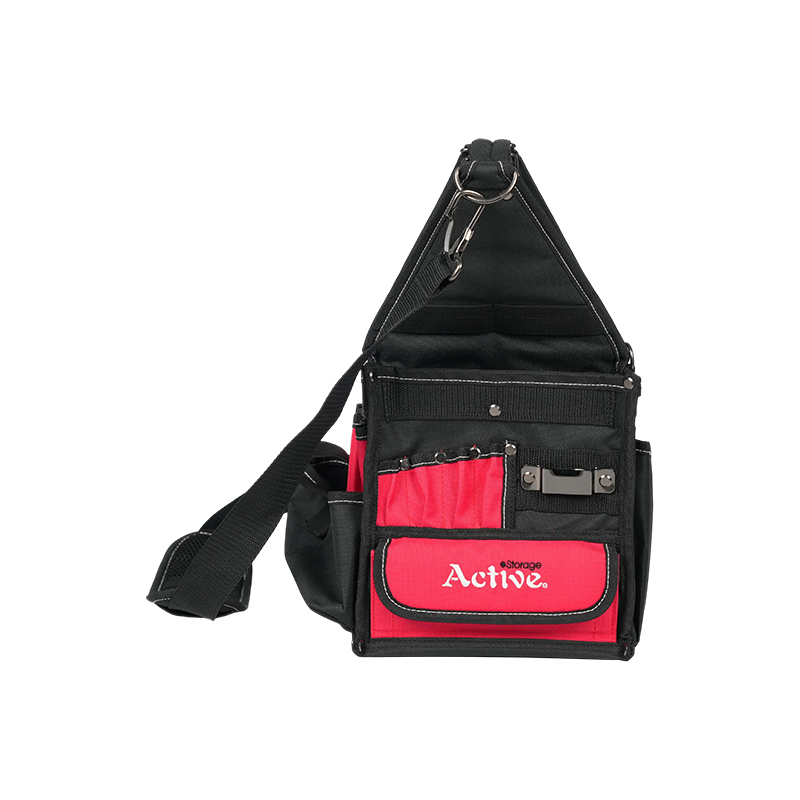
Heavy Duty Multi-Pocket Tool Organizer with Adjustable Shoulder Strap
Industrial-Grade Materials and Reinforced Construction
Professional tool storage must withstand more demanding treatment than ordinary household bags. It may be placed on concrete floors, transported in service vehicles, exposed to dust, and handled repeatedly with heavy contents. For this reason, the Heavy-Duty Multi-Pocket Tool Organizer uses polyester fabric selected for its balance of strength, flexibility, and abrasion resistance.
The high-density, tear-resistant fabric supports the bag’s long-term use in demanding work environments. Polyester is widely used in professional soft goods because it offers practical resistance to everyday abrasion while remaining suitable for sewing, reinforcement, printing, and color customization. Its relatively low maintenance requirements also make it appropriate for products that may accumulate dust and surface marks during normal use.
Material performance is not determined by fabric alone. Sewing quality, reinforcement design, edge finishing, and load distribution all influence the service life of a tool bag. The product therefore incorporates reinforced stitching and metal rivets at key stress points. These areas include the handles and the D-rings used for the shoulder strap, where concentrated forces are generated during lifting and carrying.
Metal rivets provide additional mechanical reinforcement at points that experience repeated pulling. When a loaded bag is lifted by its handles, the force is transferred through a limited number of attachment areas. Reinforcing these locations helps reduce the risk of premature separation. Similarly, shoulder strap D-rings require dependable attachment because the weight of the bag is transferred through them while the product is carried at the user’s side.
The rigid structure creates another distinction from lightweight, unstructured tool totes. A bag that retains its shape is easier to place on the floor, in a vehicle, or beside a workbench. It is less likely to fold over onto its contents, and its opening remains more accessible. The stable form can also help prevent heavier tools from crushing smaller items stored around them.
Advantages Compared with Conventional Tool Carriers
Different tool storage formats serve different purposes, but many basic carriers have limitations when used for professional work. A simple open tote may offer quick access but little organization. A fully zippered bag may protect the contents more completely but take longer to open and close. A compact pouch may be convenient for a few hand tools but lack the capacity for power equipment. The Heavy-Duty Multi-Pocket Tool Organizer combines several useful characteristics in a single format.
More Organized Than a Basic Open Tote
Traditional open totes often provide one large interior area with a few external pockets, if any. This arrangement is suitable for carrying a small number of large items, but it can become inefficient when the user needs many different hand tools. The 18 exterior and 9 interior pockets of this organizer create a clearer separation between tools and reduce the tendency for contents to collect in one pile.
More Accessible Than a Fully Closed Tool Bag
Fully zippered tool bags can be useful for storage and transport, particularly when contents must be enclosed. However, opening and closing a zipper repeatedly can slow down work, especially when the user needs to change tools frequently. The open-top format of this organizer provides immediate access and allows the user to see into the main compartment without completely opening a closure system.
More Capable Than a Small Tool Pouch
A waist pouch or compact tool pouch is convenient for light tasks, but its capacity is naturally limited. It may carry screwdrivers, pliers, or fasteners but cannot easily accommodate power drills, impact wrenches, or a larger group of tools. This product provides substantially more storage while retaining portable carrying options through its handles and adjustable shoulder strap.
More Stable Than a Collapsible Soft Bag
Highly flexible bags can be easy to fold and store, but they may lose their shape when loaded. This can make tool retrieval less convenient and cause the contents to shift. The rigid upright structure of this organizer helps it remain stable and open, making it better suited to repeated access during active work.
More Flexible Than a Single-Purpose Tool Case
Hard cases can provide excellent impact protection, but they may be bulky and less adaptable to different tool combinations. The polyester organizer offers a lighter, more flexible solution for users who need to change their tool selection from one job to another. Its pockets can be assigned according to trade, project, or personal preference.
Carrying Comfort and Mobility
A tool bag’s usefulness depends not only on how much it holds but also on how easily it can be transported. The product includes an adjustable shoulder strap that gives users an alternative to carrying the bag by hand. This is important when both hands are needed for other equipment, when walking between locations, or when the bag must be carried over a longer distance.
An adjustable strap allows the carrying position to be adapted to the user’s body and clothing. A shorter setting may be preferred for close control in crowded spaces, while a longer adjustment can make it easier to carry the bag at the side. The strap can also support different working styles across various users, which is valuable for professional teams sharing standardized equipment.
The reinforced D-rings provide dedicated attachment points for the shoulder strap. Because these fittings are positioned at structural stress areas, they are supported with metal rivets and reinforced construction. This design reflects an understanding of how a loaded tool bag is actually used rather than treating the strap as a decorative accessory.
Handles remain useful when the user needs to lift the bag into a vehicle, place it on a workbench, or move it a short distance. The combination of hand carrying and shoulder carrying makes the product more adaptable than a carrier designed around only one transport method.
For best results, users should adjust the strap so the bag remains balanced and does not swing excessively. Heavy equipment should be distributed evenly, and the load should remain within the stated capacity. These practices improve comfort and help preserve the bag’s structural components over time.
Applications Across Multiple Trades
The product’s layout and capacity make it suitable for a wide range of professional users. Its customizable color and adaptable internal organization also allow distributors, contractors, and brands to align the product with specific market requirements.
Electrical Installation and Service
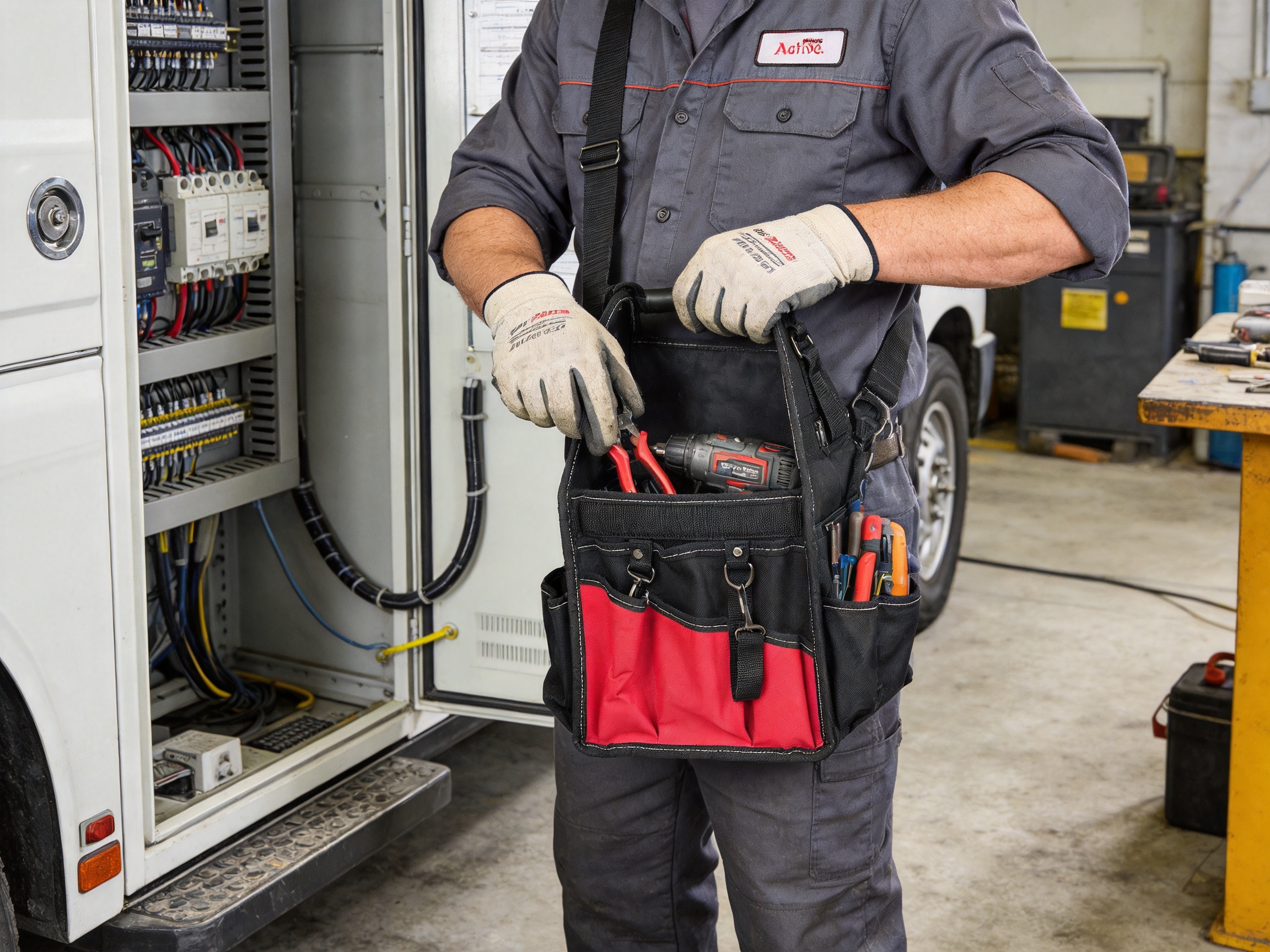
Electricians often work with a combination of insulated hand tools, testing equipment, cable preparation tools, fasteners, and power tools. The exterior pockets can keep screwdrivers, pliers, cutters, and measuring devices immediately accessible, while the main compartment accommodates a drill or impact driver. Interior pockets can be assigned to connectors, bits, electrical tape, and other accessories.
Construction and Installation
Construction and installation professionals frequently move between storage areas, vehicles, and active job sites. A stable tool bag helps keep essential equipment together and reduces the need for repeated trips. The tall design is useful for long-handled tools, while the reinforced body is suited to regular placement on work surfaces and floors.
Mechanical Maintenance
Maintenance workers may need wrenches, pliers, screwdrivers, measuring equipment, impact tools, and replacement components. The pocket arrangement makes it possible to separate tools according to task or size. A technician can dedicate particular pockets to commonly used tools and reserve the main compartment for larger equipment or parts.
Plumbing and HVAC Work
Plumbers and HVAC technicians often carry a diverse selection of hand tools, fittings, tapes, cutters, inspection devices, and powered equipment. The organizer can function as a mobile working kit for routine service calls. Its open top is helpful when tools must be selected quickly in mechanical rooms, service areas, or construction zones.
Automotive and Equipment Repair
Automotive and equipment service work requires a practical mix of tools and accessories. While a rolling tool chest may be appropriate for a workshop, a portable bag is more convenient for inspections, field repairs, and maintenance performed away from a fixed workstation. The shoulder strap makes it easier to move tools around a facility or between vehicles.
Facilities and General Maintenance
Building maintenance teams may handle electrical, plumbing, hardware, assembly, and minor repair tasks during the same day. The multi-pocket design supports a mixed tool selection without requiring a separate carrier for every specialty. This flexibility can help organizations standardize their mobile maintenance equipment.
Customization Opportunities for Business Buyers
The product is listed with a customized color option, which creates opportunities for wholesalers, distributors, contractors, and private-label brands. Color can be selected to align with a corporate identity, product series, safety program, or retail positioning. In professional environments, color coding may also help differentiate tool categories or identify equipment assigned to particular departments.
Customization is most effective when it is considered together with the intended market. A distributor serving electricians may prefer a color and pocket arrangement associated with electrical service. A construction supply brand may prioritize a visibly rugged appearance. A facility management supplier may require consistent colors across a family of bags, pouches, backpacks, and trolley products.
In addition to color, professional buyers may discuss branding, packaging, labeling, and other product details with the manufacturer. The company’s broader product range includes trolley tool bags, tool backpacks, zippered tool bags, tool bags with tubular handles, waist tool bags, tool pouches, tool vests, tool bucket bags, folding-seat tool bags, garden bags, and other multifunctional bags. This allows customers to develop coordinated product collections rather than sourcing every style from a different supplier.
For custom projects, buyers should define performance expectations before production begins. Important considerations include the target tool types, expected loading pattern, pocket dimensions, carrying method, fabric specifications, color requirements, packaging, inspection standards, and delivery schedule. Clear specifications help ensure that the final product matches both the application and the intended market position.
Manufacturing Experience and Production Strength
Zhangjiagang Seaark Tools Industrial Co., Ltd. was founded in 2004 and specializes in exporting professional tool bags and providing customization solutions. More than 20 years of industry experience give the company a substantial understanding of tool storage requirements, soft bag construction, export procedures, and customer support.
In 2012, the company established Zhangjiagang Haiyi Tool Bags Co., Ltd. as its core manufacturing base in China. It also operates a production facility in Cambodia. The combination of facilities supports flexible global supply and may help customers manage sourcing requirements and the impact of additional United States tariffs, depending on the applicable trade conditions and order structure.
The company’s operations include multiple production bases, more than 200 employees, and approximately 11,000 square meters of floor space. These resources provide a foundation for handling standard product orders as well as customized development projects. A multi-site production structure can also improve sourcing flexibility when customers require different production arrangements or regional supply options.
Manufacturing strength is not simply a matter of factory size. It also depends on the ability to translate a product concept into consistent production. Tool bags involve numerous construction details, including pattern accuracy, fabric cutting, pocket placement, binding, stitching, hardware installation, reinforcement, and final inspection. Experience across these processes helps reduce avoidable variation between samples and production units.
The company’s product specialization is another advantage. A manufacturer focused on professional tool bags is more likely to understand the functional differences between an electrician backpack, a trolley bag, a waist pouch, and a rigidly structured pocket organizer. This product knowledge can support better communication during development and make it easier to adapt a design for a particular trade.
Research and Development for Practical Product Innovation
Seaark maintains an independent research and development team that develops more than 10 new designs every year. Regular design development is important in a competitive tool storage market because professional users continue to seek better access, improved comfort, more efficient organization, and more durable construction.
Product innovation in this category does not necessarily mean adding unnecessary features. Practical innovation may involve changing the position of a pocket, improving the shape of the opening, strengthening a handle attachment, adjusting the balance of the bag, or making the internal space more suitable for modern power tools. These details can have a meaningful effect on daily use.
The company’s registered brand is Active Storage, and it holds multiple design patents. Registered designs and patents indicate an ongoing effort to develop distinctive products and protect selected design concepts. For business customers, this can be valuable when creating a differentiated product range rather than competing only on price.
The Heavy-Duty Multi-Pocket Tool Organizer reflects this practical development approach. Its design integrates a large main compartment, extensive pocket coverage, a rigid body, reinforced stress points, open access, and two carrying options. Each feature contributes to a specific use case and supports the overall purpose of making tools easier to transport and access.
Quality Management and Compliance-Oriented Production
Professional buyers increasingly evaluate suppliers according to more than product appearance. They also consider production consistency, workplace standards, supply-chain transparency, and the ability to satisfy customer compliance requirements. Seaark’s facilities undergo annual third-party audits, including BSCI, SEDEX, FCCA, and SCS audits.
Third-party audits can provide an external review of selected production and management practices. Depending on the specific audit scope, these programs may assess areas such as social responsibility, ethical sourcing, workplace conditions, factory management, and compliance procedures. Buyers should confirm the current audit status, scope, and documentation relevant to their particular order.
Audits do not replace product inspection, but they contribute to a more structured manufacturing environment. For international customers, a supplier with established compliance processes may be better prepared to support documentation requests and retailer requirements. This is especially relevant for brands and distributors selling through organized retail, e-commerce platforms, or commercial procurement channels.
For the product itself, quality control should cover fabric, stitching, pocket dimensions, handle attachment, rivet placement, D-ring security, strap adjustment, overall dimensions, appearance, and load-related performance. A consistent inspection approach helps ensure that the finished organizer performs as expected across production batches.
Customers placing large or customized orders should establish inspection criteria in advance. These may include acceptable tolerance ranges, color standards, packaging specifications, labeling details, carton requirements, and sampling procedures. Written standards create a common reference for the buyer, manufacturer, and inspection team.
How the Manufacturing Process Supports Product Performance
The product’s performance begins with material selection. High-density polyester provides a suitable foundation for a durable soft tool carrier. Fabric weight, weave, coating, colorfastness, and finish can all influence the final product. The appropriate specification depends on the required balance of strength, appearance, flexibility, and cost.
After material preparation, accurate pattern cutting is essential. The bag’s vertical profile, pocket placement, base dimensions, and opening shape depend on properly cut panels. Inconsistent panels can create alignment problems, uneven tension, or difficulty during assembly. Experienced production teams use controlled cutting and assembly methods to maintain dimensional consistency.
Pocket construction requires particular attention because each pocket must remain accessible and securely attached. Exterior pockets are exposed to repeated tool insertion and removal, while interior pockets must fit within the main structure without unnecessarily reducing usable volume. Stitching density, seam allowance, edge binding, and reinforcement all contribute to pocket durability.
The body panels are then assembled into a structure capable of retaining its shape. A rigid or semi-rigid construction requires appropriate support materials and careful sewing. If the structure is too flexible, the bag may collapse; if it is too rigid, it may become difficult to handle or store. The design balances stability with the practical flexibility expected from a polyester tool bag.
Handles and D-rings are installed at reinforced locations. Metal rivets are added at critical stress points to complement the stitching. These operations require accurate positioning because hardware that is misaligned or poorly secured can affect both appearance and performance.
Final assembly includes strap attachment, trimming loose threads, checking pocket openings, confirming dimensions, inspecting the base, and reviewing the overall appearance. A finished product should be evaluated not only when empty but also when loaded in a manner representative of its intended use. This helps identify issues that may not be visible during a simple visual inspection.
Specification Overview
| Specification | Details |
|---|---|
| Product type | Pocket handy tool bag |
| Product name | Heavy-Duty Multi-Pocket Tool Organizer with Adjustable Shoulder Strap |
| Material | Polyester |
| Dimensions | 21.5 × 21.5 × 46 cm |
| Closure type | Open top |
| Load capacity | 30 pounds |
| Exterior pockets | 18 |
| Interior pockets | 9 |
| Total listed pockets | 27 |
| Color | Customized |
| Country of origin | China |
| Carrying methods | Handles and adjustable shoulder strap |
Recommended Loading and Care Practices
Correct loading can improve both user comfort and product life. Heavier tools should be placed toward the bottom of the main compartment, close to the center of the bag. This lowers the center of gravity and helps the organizer remain stable when set down. Lighter items can be distributed through the interior and exterior pockets.
Sharp tools should be positioned carefully so that blades, points, and exposed edges do not repeatedly press against fabric or neighboring items. Where appropriate, users should employ protective caps or dedicated sheaths. Small accessories should be placed in pockets that prevent them from collecting at the bottom of the main compartment.
The bag should not be overloaded beyond its stated capacity. Excess weight can increase strain on the handles, shoulder strap, D-rings, seams, and base. Staying within the 30-pound load rating supports safer carrying and more consistent performance.
Routine cleaning can help preserve the appearance of the polyester fabric. Surface dust and loose debris should be removed regularly. If additional cleaning is needed, users should follow the care guidance supplied with the final product and avoid methods that could damage coatings, printing, hardware, or structural materials. The bag should be allowed to dry fully before storage.
When not in use, the organizer should be stored in a dry, ventilated area away from prolonged exposure to extreme heat or moisture. Tools should not be left inside indefinitely if the bag is being stored for an extended period. Removing the contents allows the fabric and interior areas to be checked and reduces unnecessary long-term load on the structure.
Value for Distributors, Contractors, and Private-Label Brands
For distributors, a professional tool organizer can occupy an important position between low-cost utility bags and premium hard cases. It provides visible functional value through its large number of pockets, structured shape, reinforced construction, and carrying flexibility. These features are easy for customers to understand and demonstrate at the point of sale.
Contractors can use the product as a standardized mobile kit for teams working across multiple locations. Assigning a consistent tool bag format to different crews may simplify equipment management and make it easier to identify whether essential tools have been returned. Customized colors can further support department or project identification.
Private-label brands may benefit from the product’s combination of practical design and manufacturing support. Because the color is customizable and the manufacturer offers broader development capabilities, buyers can discuss a coordinated product range rather than selling a generic item without brand distinction.
The product is also suitable for online retail presentation. Its core selling points can be communicated clearly through product photography, specifications, pocket-count graphics, dimensional diagrams, and application-based descriptions. Buyers should present the load capacity accurately and avoid making unsupported claims about waterproofing, impact resistance, or specialized protective ratings unless those features have been specifically tested and confirmed.
For commercial procurement, a clear technical specification is equally important. Purchasing teams can evaluate dimensions, material, pocket count, carrying options, production origin, customization potential, and supplier capabilities. These objective details make the product easier to compare with competing tool carriers while highlighting the areas in which it offers practical value.
Q&A: Heavy-Duty Multi-Pocket Tool Organizer
What type of product is this?
It is a pocket handy tool bag designed for professional tool organization and transport. It combines a large main compartment with 18 exterior pockets and 9 interior pockets.
How many tools can the bag hold?
The exact number depends on the size and shape of the tools. The product has a stated load capacity of 30 pounds and includes 27 listed pockets, allowing users to organize a substantial selection of hand tools, accessories, and larger equipment.
Can it hold power tools?
Yes. The main compartment is designed for larger equipment such as power drills and impact wrenches. Users should distribute weight carefully and remain within the stated load capacity.
Does the bag have a zipper closure?
No. The product uses an open-top design. This allows users to reach into the bag quickly and see the contents without opening a zipper.
Is the shoulder strap adjustable?
Yes. The adjustable shoulder strap provides an alternative to hand carrying and can be adapted to different users and carrying preferences.
What material is used?
The bag is made from polyester fabric. The construction also includes reinforced stitching and metal rivets at important stress points, including the handle and shoulder strap D-ring areas.
How does the bag remain upright?
The product uses a rigid structure designed to retain its shape, even when loaded. This helps maintain an accessible opening and reduces the chance of the bag collapsing onto its contents.
Is the color customizable?
Yes. The listed color is customized. Buyers should discuss available color standards, minimum order quantities, branding requirements, and production details with the manufacturer.
What are the product dimensions?
The dimensions are 21.5 by 21.5 by 46 centimeters. The tall design provides useful vertical storage for longer tools.
Where is the product manufactured?
The product is associated with production in China. The manufacturer also operates a facility in Cambodia, supporting flexible global supply options for qualified customers.
Who is the product suitable for?
It is suitable for electricians, construction workers, maintenance technicians, plumbers, HVAC professionals, installers, automotive service workers, facilities teams, and other users who need organized portable tool storage.
Can the product be customized for a private-label program?
The manufacturer provides customization solutions and offers customized color options for this product. Buyers should confirm the available scope of customization for materials, branding, packaging, and design changes.
What makes it different from a basic tool tote?
It combines a structured upright body, a large main compartment, 27 listed pockets, reinforced stress points, an adjustable shoulder strap, and an open-top layout. This provides more organized access and carrying flexibility than a simple single-compartment tote.
How should the bag be loaded?
Heavier equipment should be positioned low and near the center of the main compartment. Lighter tools and frequently used items can be placed in the surrounding pockets. The total load should remain within the stated 30-pound capacity.
Why Choose an Experienced Tool Bag Manufacturer?
Choosing a supplier for professional tool storage involves more than evaluating one product photograph. Buyers need confidence that the supplier understands materials, construction, customization, production planning, inspection, export service, and long-term communication. An experienced manufacturer can help identify practical design solutions before a project enters production.
Seaark’s specialization in tool bags gives customers access to knowledge across multiple formats and applications. Its product range includes portable, wearable, structured, wheeled, and multifunctional storage products. This broad experience can be useful when a customer wants to build a complete tool storage collection or adapt one design for multiple markets.
The company’s independent R&D team supports the creation of new designs, while its manufacturing bases provide options for production planning. More than 200 employees and approximately 11,000 square meters of facility space form a substantial operational foundation. Annual third-party audits further demonstrate attention to standardized and compliant production practices.
For customers seeking a reliable combination of product functionality and manufacturing capability, these strengths can reduce development complexity. Instead of treating the organizer as an isolated item, buyers can work with a supplier that understands how it may fit into a larger professional equipment program.
Conclusion
The Heavy-Duty Multi-Pocket Tool Organizer with Adjustable Shoulder Strap is designed for professionals who require portable storage with clear organization, reliable structure, and practical access. Its 21.5 by 21.5 by 46 centimeter format provides vertical capacity for a combination of large equipment and hand tools. The main compartment accommodates items such as power drills and impact wrenches, while 18 exterior pockets and 9 interior pockets help keep smaller tools in dedicated locations.
The product’s principal advantages include an open-top design, adjustable shoulder strap, rigid upright form, polyester construction, reinforced stitching, metal rivets, and a stated 30-pound load capacity. Together, these features distinguish it from basic totes, small pouches, unstructured bags, and single-purpose cases. The result is a flexible tool carrier suited to electrical, construction, maintenance, plumbing, HVAC, automotive, installation, and facilities applications.
Its value is supported by the manufacturing capabilities of Zhangjiagang Seaark Tools Industrial Co., Ltd. Founded in 2004, the company combines more than 20 years of tool bag experience with multiple production bases, an independent R&D team, customized manufacturing services, and annual third-party audits. This foundation enables the company to serve distributors, contractors, private-label brands, and international customers seeking both standard products and tailor-made solutions.
For users, the organizer offers a more efficient way to carry and access essential equipment. For business buyers, it provides a practical platform for customization and product-line development. When properly loaded, maintained, and matched to the intended application, this multi-pocket tool bag can support more orderly, productive, and professional work across a wide range of job-site environments.
References
1. Product specification sheet for the Heavy-Duty Multi-Pocket Tool Organizer with Adjustable Shoulder Strap, including dimensions, material, pocket count, closure type, and load capacity.
2. Manufacturer-provided product description concerning the scientific space management system, reinforced construction, industrial-grade fabric, and rigid upright structure.
3. Manufacturer company profile for Zhangjiagang Seaark Tools Industrial Co., Ltd., including founding history, production bases, employee scale, facility area, and customization services.
4. Manufacturer information concerning research and development activity, registered design ownership, and annual new product development.
5. Manufacturer-provided compliance information concerning BSCI, SEDEX, FCCA, and SCS third-party audits.
6. General professional tool storage principles concerning load distribution, pocket organization, carrying ergonomics, and routine product care.
Product: Heavy Duty Multi-Pocket Tool Organizer with Adjustable Shoulder Strap




We are a professional enterprise engaged in exporting various types of toolkits.
We firmly believe that 'quality is everything, service enhances value'.
-
+86-15298800699

-
+86-512-58670375

-
karen@kun-bag.com

-
Building 11, No. 93 Chengang Road, Zhangjiagang City, Jiangsu Province, China

Copyright © Zhangjiagang Seaark Tools Industrial Co., Ltd. All Rights Reserved.
Custom Electrician Tool Backpack Manufacturers