
 en
 русский
 Español
 Deutsch

Heavy-Duty Tool Tote with 21 Pockets: A Practical Storage Solution for Gardening and Professional Work
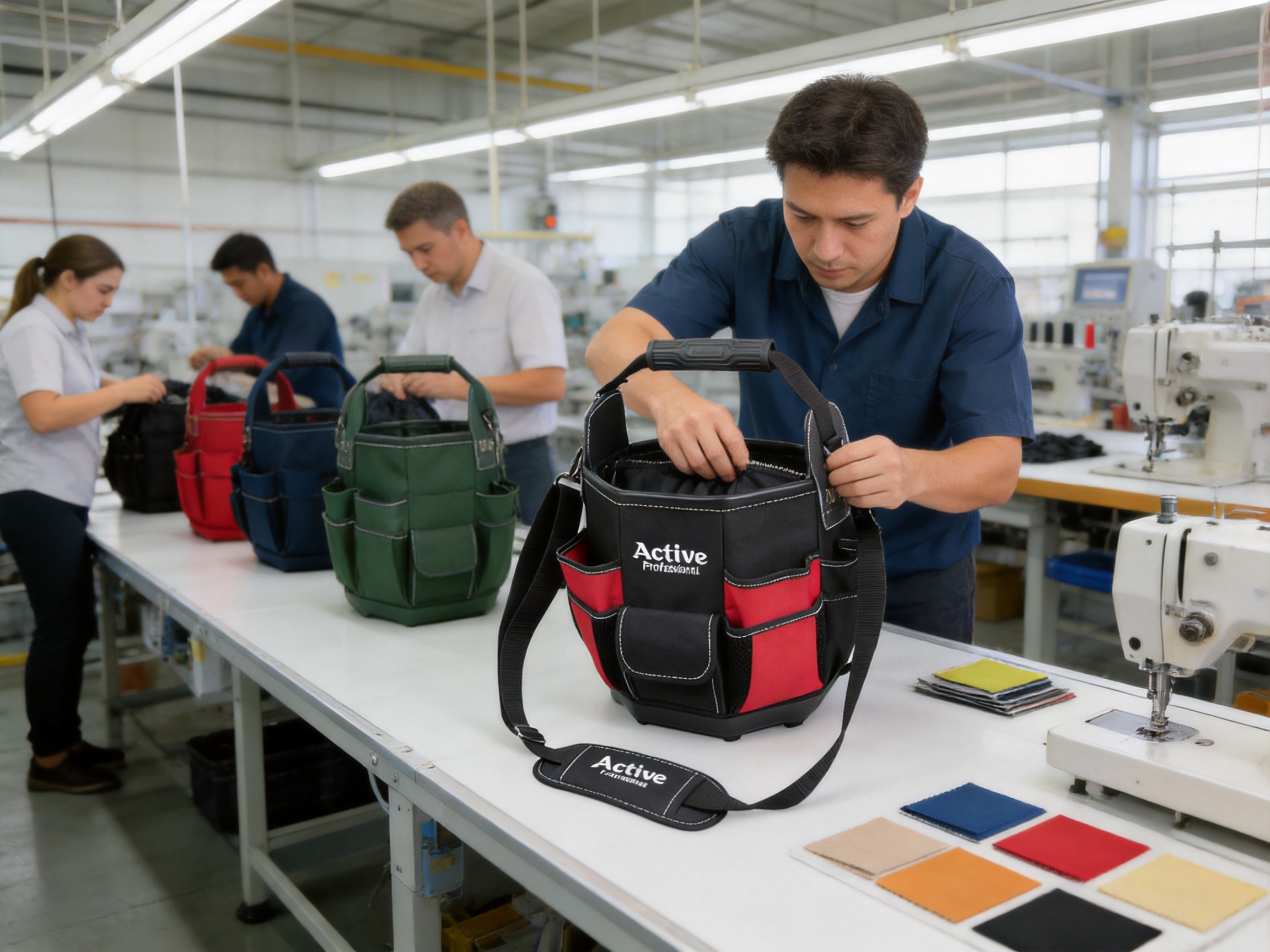
Organizing tools efficiently is essential for gardeners, landscapers, maintenance workers, contractors, and do-it-yourself users. A scattered collection of pruning shears, trowels, gloves, screwdrivers, spray bottles, and other accessories can reduce productivity and increase the risk of misplaced or damaged equipment. A dependable tool bag provides more than simple storage: it helps users transport equipment, protect tools from difficult working conditions, and maintain an orderly workflow throughout the day.
The Heavy-Duty Tool Tote with 21 Pockets is designed to meet these practical requirements. Combining wear-resistant polyester fabric, a reinforced molded bottom, multiple exterior and interior pockets, and a spacious open-top structure, this garden tool bag provides a flexible way to carry frequently used tools. Its design is suitable for gardening, landscaping, workshop organization, farm maintenance, home improvement, and many other applications where tools must remain accessible and protected.
This product is manufactured by Zhangjiagang Seaark Tools Industrial Co., Ltd., a Chinese supplier specializing in professional tool bags and customized storage solutions. With more than 20 years of experience in the tool bag industry, the company supports the development, production, inspection, and export of bags for global customers. Its manufacturing capabilities, research and development resources, and multi-location production structure help make the tool tote suitable for both standard orders and private-label projects.
Content
- 1 Product Overview
- 2 Why Tool Organization Matters
- 3 Heavy-Duty Polyester Construction
- 4 Reinforced Molded Bottom
- 5 Multi-Pocket Storage for Different Tools
- 6 Advantages Over Basic Tool Bags
- 7 Applications in Gardening and Landscaping
- 8 Workshop, Farm, and DIY Uses
- 9 Ergonomic and Workflow Benefits
- 10 Manufacturing Expertise and Product Development
- 11 Quality Control and Compliance Support
- 12 Customization Options for Global Buyers
- 13 Responsible Use and Maintenance
- 14 Purchasing Considerations for Distributors
- 15 Why Choose an Experienced Tool Bag Manufacturer
- 16 Recommended Product Positioning
- 17 Frequently Asked Questions
- 17.1 What is the Heavy-Duty Tool Tote primarily designed for?
- 17.2 How many pockets does the product have?
- 17.3 What material is used for the bag?
- 17.4 Does the tote have a zipper or other closure?
- 17.5 What is the stated load capacity?
- 17.6 What is the purpose of the molded bottom?
- 17.7 Can the color be customized?
- 17.8 Can the product be customized beyond color?
- 17.9 Can the tote be used for professional work?
- 17.10 Is the bag suitable for rainy conditions?
- 17.11 How should the tote be maintained?
- 17.12 Where is the product manufactured?
- 17.13 Does the manufacturer offer other tool bag categories?
- 17.14 What should buyers confirm before placing an order?
- 18 Conclusion
- 19 References
- 20 Product: Heavy Duty Tool Tote with 21 Pockets Garden Tool Bag Molded Bottom Gardening Tools Storage
Product Overview
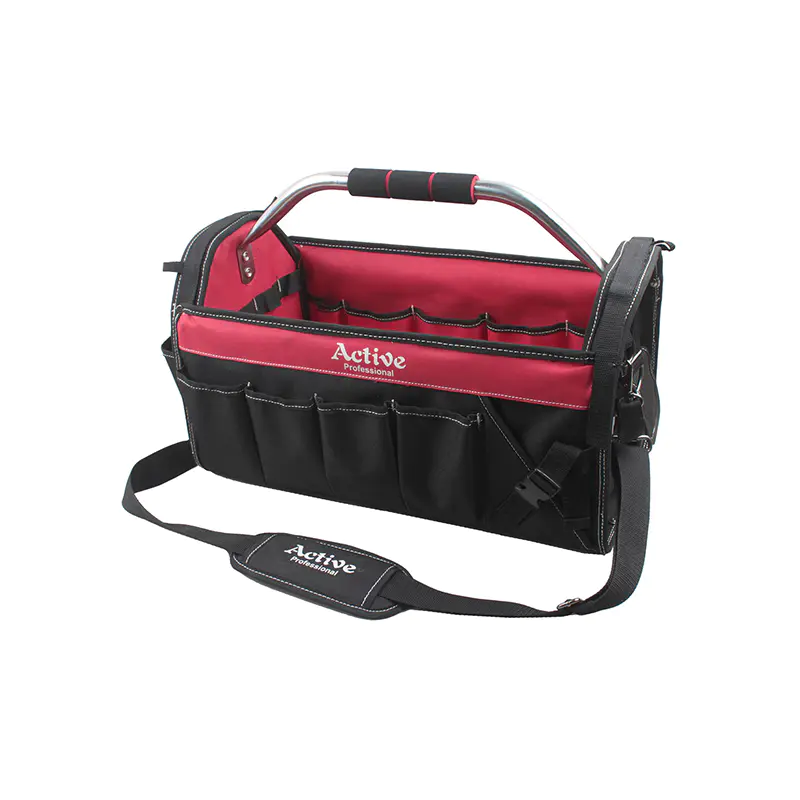
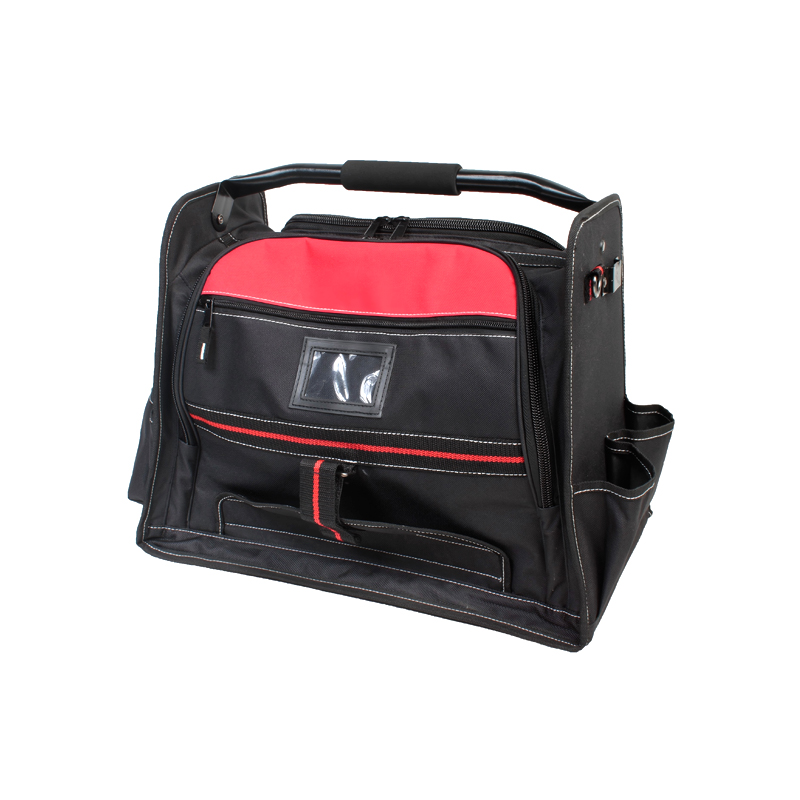
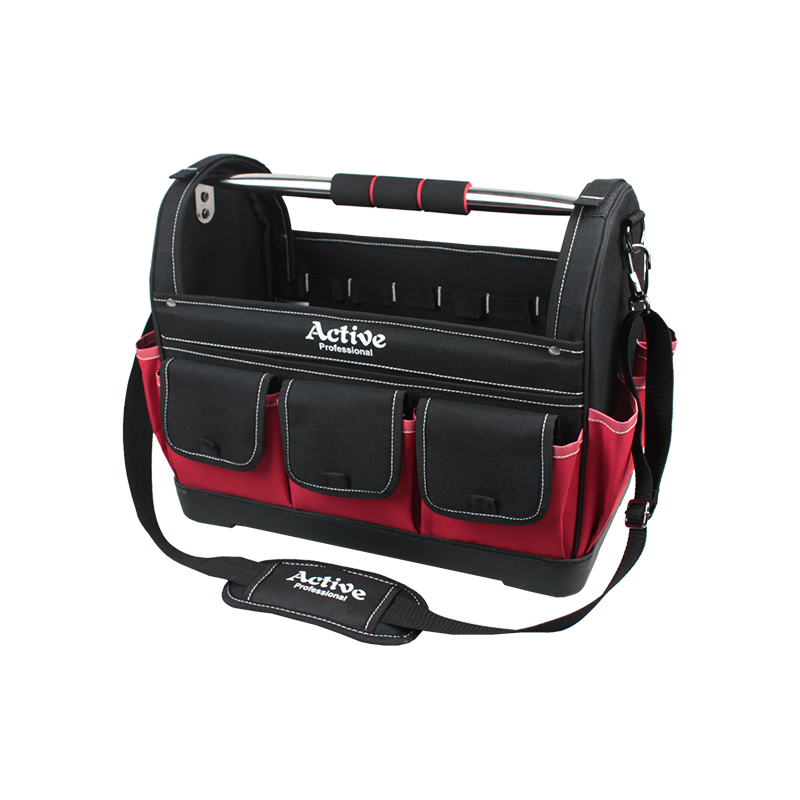
The Heavy-Duty Tool Tote with 21 Pockets is an open-top garden bag measuring 28 × 28 × 38 centimeters. Its vertical tote profile offers a practical balance between capacity and portability. The shape is tall enough to hold long-handled hand tools while remaining compact enough for carrying between a shed, garden bed, workshop, vehicle, or jobsite.
The main body is made from polyester, a material widely used in professional tool storage because it offers a useful combination of strength, flexibility, relatively low weight, and resistance to everyday abrasion. The fabric can support frequent handling and transportation while allowing the bag to retain a manageable weight compared with rigid tool cases or metal storage containers.
A molded bottom reinforces the base and helps the tote remain upright when placed on the ground. This feature is especially valuable in gardening and outdoor work, where bags are often placed on soil, gravel, concrete, damp grass, or workshop floors. The molded construction creates a more stable foundation than a soft-bottom bag and helps separate the contents from dirt and moisture on the working surface.
The tool tote is designed around a high-capacity pocket system. Product positioning identifies 21 pockets, while the detailed specification lists 15 exterior pockets and 5 interior pockets. This information should be confirmed with the supplier for each production version or customized order. In either case, the layout provides numerous storage locations for tools of different sizes, helping users separate narrow accessories from larger equipment and frequently used items from less frequently accessed supplies.
| Parameter | Specification |
|---|---|
| Product Type | Heavy-duty garden tool tote |
| Product Category | Garden bag |
| Material | Polyester |
| Dimensions | 28 × 28 × 38 cm |
| Closure Type | Open top |
| Load Capacity | Up to 44 lb |
| Pocket Configuration | Marketed as 21 pockets; specification lists 15 exterior and 5 interior pockets |
| Color | Customizable |
| Country of Origin | China |
| Typical Applications | Gardening, landscaping, workshop use, farm maintenance, household repairs, and DIY work |
The stated load capacity is up to 44 pounds, giving the bag the potential to carry a substantial selection of hand tools and accessories. Actual safe loading performance may depend on the distribution of weight, the type of tools, handle construction, stitching, and the conditions of use. For best results, users should distribute heavy items evenly and avoid placing sharp or excessively heavy objects in a way that strains a single pocket or seam.
Why Tool Organization Matters
Tool organization directly affects productivity. When equipment is placed randomly in a deep container, users may need to remove several items before finding the one they need. This wastes time and can interrupt repetitive tasks such as pruning, planting, repair, inspection, or installation. A pocketed tote reduces this problem by creating designated storage points for commonly used items.
For gardening work, narrow pockets can hold pruning shears, hand trowels, cultivators, plant ties, markers, and screwdrivers. Larger compartments can accommodate gloves, spray bottles, measuring tools, seed packets, small containers, or folded protective equipment. Because the tote has an open top, users can identify and retrieve tools quickly without opening a zipper, fastening a flap, or searching through a fully enclosed case.
Organization also contributes to tool protection. Sharp tools placed loosely together may scrape against one another, damage fabric, or create a safety hazard when reaching into the bag. Separate pockets help maintain spacing and make sharp edges easier to identify. Small accessories are less likely to disappear at the bottom of the main compartment, while frequently used tools can remain in exterior pockets for immediate access.
A well-organized bag can also improve inventory control. At the beginning of a job, a user can quickly check whether essential equipment is present. At the end of a shift, the pocket arrangement provides a simple visual checklist. This is valuable for professional crews that move between multiple gardens, service locations, construction areas, or maintenance sites.
Heavy-Duty Polyester Construction
The polyester body is one of the principal features supporting the tote’s durability. Tool bags are exposed to repeated friction, compression, pulling, and contact with rough surfaces. A lightweight fashion fabric may not perform well under these conditions, particularly when the bag is filled with tools that have metal edges or concentrated weight. A heavy-duty polyester construction is better suited to work environments where the bag must be carried and placed down frequently.
Polyester is also suitable for production in a variety of colors, finishes, and configurations. This makes it practical for standard products as well as customized business orders. Customers can request different color combinations for brand identification, product line differentiation, or coordination with existing uniforms and equipment. The supplied product specification identifies color as customizable, allowing purchasing teams to discuss their preferred color standards with the manufacturer.
Fabric performance depends not only on the fiber itself but also on denier, weave, coating, stitching, seam reinforcement, edge binding, and quality control. Professional tool bag production therefore requires a coordinated process rather than simply selecting a thick textile. The manufacturer’s experience in tool bags allows these elements to be considered together during product development and production.
For demanding use, the fabric should be evaluated through practical testing. Relevant checks may include abrasion resistance, seam strength, handle pull testing, load testing, colorfastness, dimensional stability, and inspection after repeated loading and unloading. These tests help confirm that the final product meets the expectations established during development.
Reinforced Molded Bottom
The molded bottom gives the tool tote an advantage over many conventional soft-bottom bags. When a soft bag is placed on the ground, it can collapse, tip over, or allow the contents to press directly against moisture and dirt. A molded base provides structural support, helping the tote stand upright and making it easier to load and unload.
Stability is particularly important for users who work outdoors. Gardeners often move from one planting area to another and place their bags on uneven or damp surfaces. Landscapers may need to keep tools upright near lawns, planting beds, driveways, and hardscape surfaces. Maintenance technicians may set the bag down on concrete or dusty floors. In each environment, a structured base helps keep the bag in a more usable position.
The bottom also acts as a protective barrier. It helps reduce direct contact between the fabric body and the working surface, limiting exposure to mud, moisture, small stones, and abrasive debris. This does not make the bag waterproof, and the open-top design is not intended to protect tools from heavy rain or immersion. However, the molded bottom provides useful protection during ordinary work conditions and makes the bag easier to clean and maintain.
A stable bottom can also improve safety. A bag that remains upright is less likely to spill sharp tools across a walkway or work area. Users can place the tote beside them and return equipment to its designated pocket instead of leaving tools on the ground. This reduces clutter and helps create a more orderly workspace.
Multi-Pocket Storage for Different Tools
The pocket system is central to the product’s functionality. Tools used in gardening and maintenance vary considerably in length, shape, and weight. Pruning shears require a secure narrow location, while gloves or a spray bottle need a larger space. Screwdrivers, markers, measuring tapes, plant ties, and small hand tools benefit from separate storage points.
Exterior pockets support quick access. A user can reach for a frequently used tool without opening the main compartment or moving other equipment. This is helpful during repetitive work, such as trimming several shrubs, installing plants, repairing irrigation components, or making repeated adjustments on a jobsite.
Interior pockets provide more protected storage for smaller items. They can help keep accessories from falling out when the tote is carried or moved. Interior organization is also useful for separating personal items, replacement parts, consumables, and tools that should not be exposed to the same level of dirt or impact as exterior equipment.
The large central compartment adds flexibility. While pockets are ideal for organization, some equipment cannot be stored in narrow slots. The main area can hold bulkier tools, folded gloves, small containers, protective eyewear, work instructions, or additional supplies. The combination of pockets and open central storage means users are not limited to one tool size or one type of task.
Because the tote is open at the top, users have a clear view of the contents. This design is different from a zippered tool bag, which may provide more enclosure but requires an additional opening step. The open structure is particularly convenient when tools are being used continuously and returned to the bag repeatedly.
At the same time, an open top means that the bag is not designed as a fully sealed storage case. It should be stored indoors or under cover when not in use, especially in wet weather. Users who need protection against rain, dust, or unauthorized access may prefer to combine the tote with a separate protective cover or select a different enclosed product from the manufacturer’s broader range.
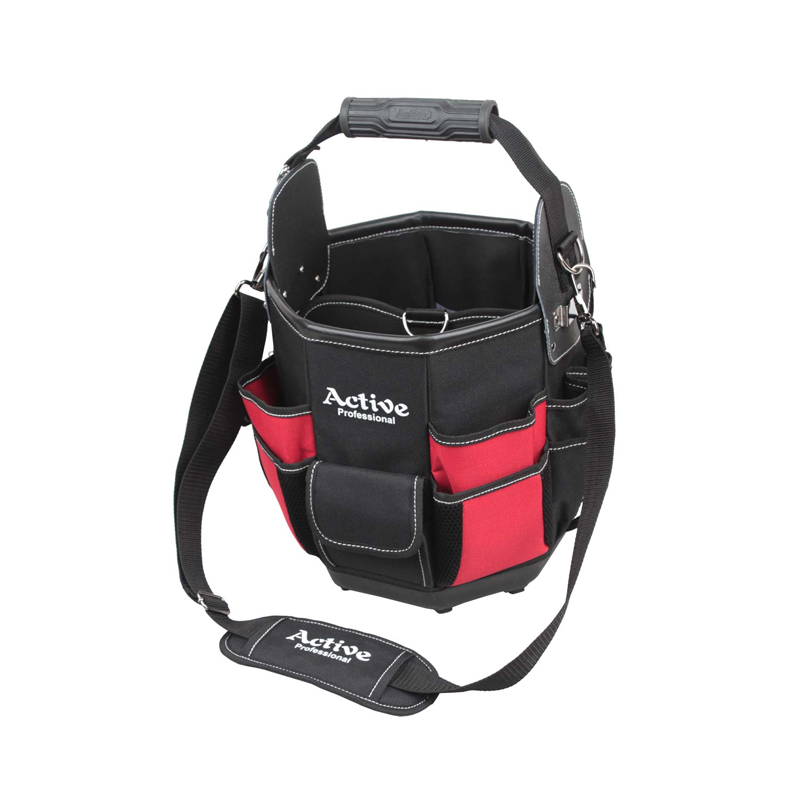
Heavy Duty Tool Tote with 21 Pockets Garden Tool Bag Molded Bottom Gardening Tools Storage
Advantages Over Basic Tool Bags
Many basic tool bags are built around a single soft compartment with limited organization. Although such bags may be inexpensive, they can become difficult to use once filled with tools of different shapes. Items collect at the bottom, the bag may collapse when empty, and the user may have difficulty identifying which equipment is inside.
The Heavy-Duty Tool Tote addresses these weaknesses through its structured base and multiple pockets. Instead of treating all tools as one undifferentiated load, the design offers separate storage zones. This can make the bag more efficient for users who carry a variety of small and medium-sized tools.
Compared with a rigid toolbox, the polyester tote can offer more flexibility and lower handling weight. A rigid case may provide excellent impact protection, but it can be bulky and less adaptable when carrying irregularly shaped gardening equipment. The tote can conform more easily to the contents while remaining durable enough for regular work.
Compared with a simple bucket, the tote provides a more organized storage system. A bucket may carry a surprising amount of equipment, but tools usually gather together without dedicated pockets. The multiple-pocket design reduces this problem and gives users more control over placement.
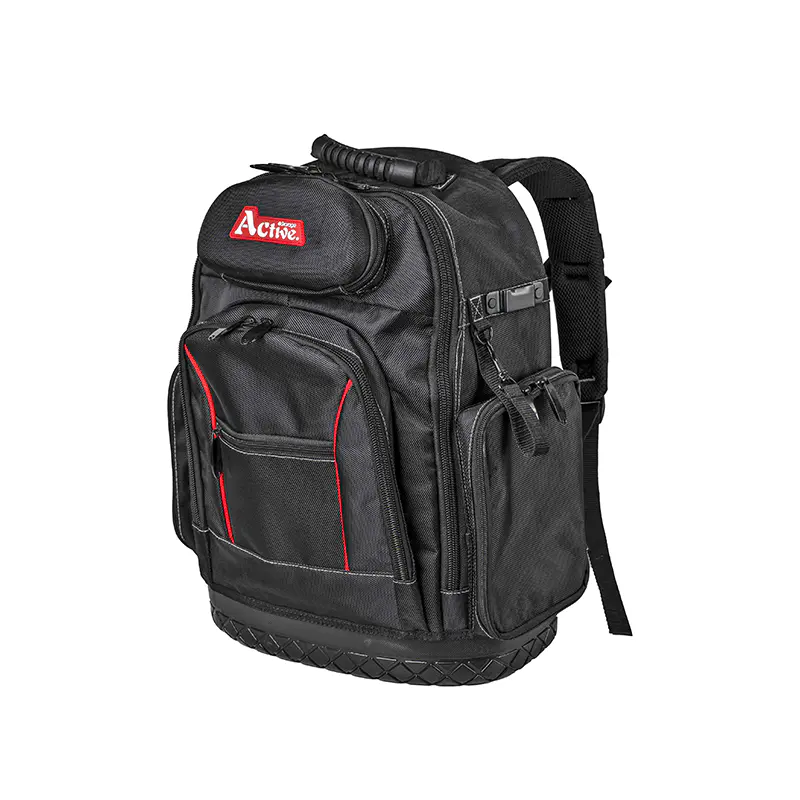
Compared with a backpack, the tote offers immediate access from above and can be placed beside the user during work. A backpack is useful when both hands must remain free during transport, but tools may be less accessible while it is being worn. The tote is better suited to stationary or short-distance work in which quick access is more important than hands-free carrying.
Compared with a fully enclosed zippered bag, the open-top tote is faster to access. This can be an advantage for professional gardeners and technicians who repeatedly take out and return tools. However, an enclosed bag may be preferable for dusty, wet, or transport-heavy situations. The right choice depends on the user’s workflow, and the manufacturer’s broad product range allows buyers to select different formats for different applications.
| Product Type | Main Strength | Possible Limitation | Best Use Scenario |
|---|---|---|---|
| Open-top tool tote | Fast access, multiple pockets, stable base | Less protection from rain and dust | Gardening, landscaping, workshop tasks |
| Basic soft tool bag | Simple and often economical | Limited organization and weaker structure | Light-duty occasional use |
| Rigid toolbox | Strong impact protection | Heavier and less flexible | Transporting precision or heavy tools |
| Tool backpack | Hands-free transport | Access can be slower while worn | Long-distance carrying and mobile service work |
| Zippered tool bag | More enclosed storage | Requires opening before access | Transport and protected storage |
| Tool bucket bag | Large open capacity | May provide fewer dedicated pockets | General carrying of mixed equipment |
Applications in Gardening and Landscaping
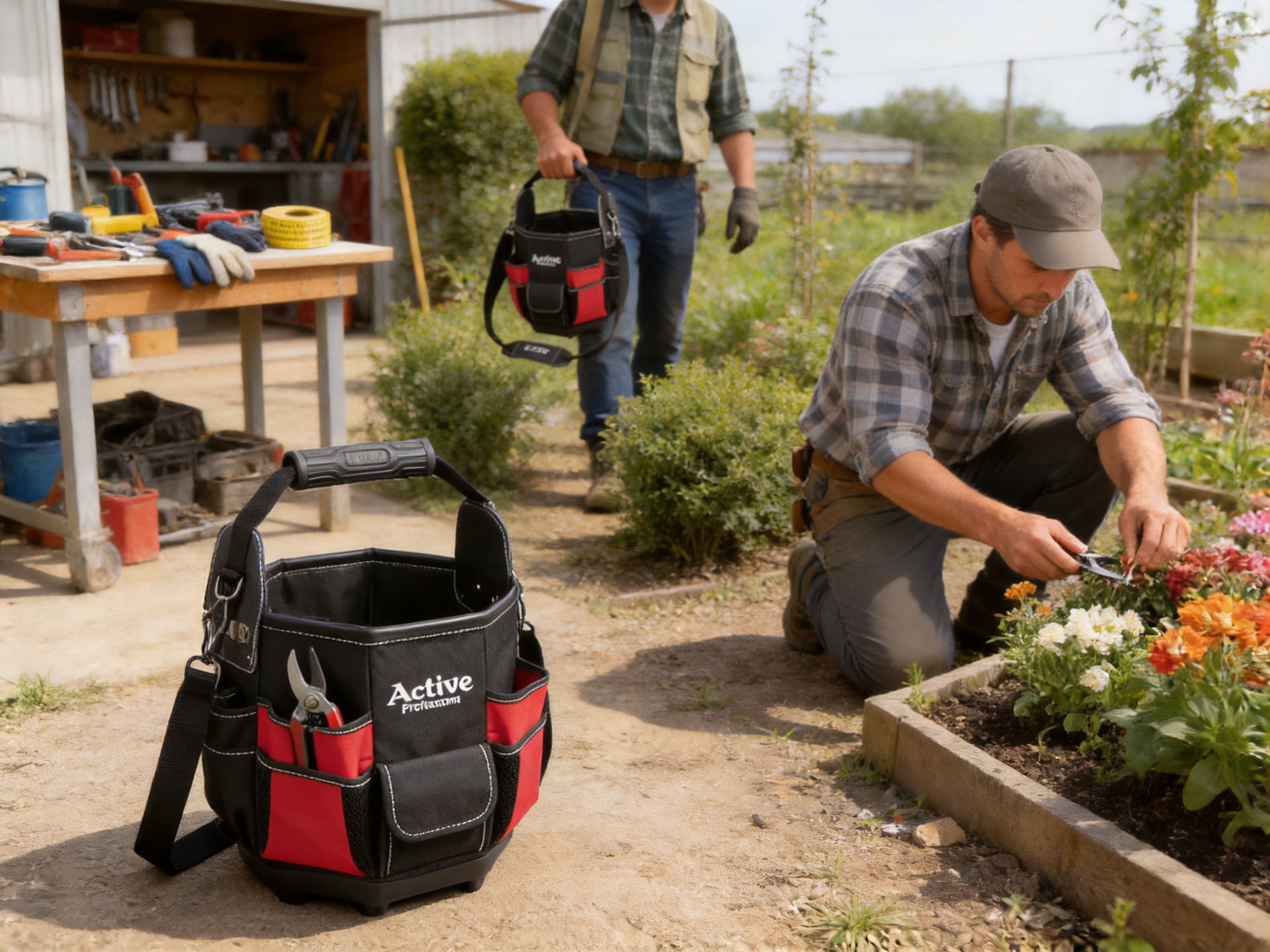
Gardeners can use the tote as a central carrying station for everyday hand tools. A typical load might include pruning shears, a hand trowel, a cultivator, a weeder, gloves, plant labels, twine, a small spray bottle, and a screwdriver. The pocket arrangement gives each item a practical location, while the main compartment can hold larger or less frequently used supplies.
For planting work, the tote can carry hand tools, soil testing accessories, labels, ties, and small containers. The open top makes it easy to compare tools visually, which is useful when moving from one planting bed to another. The molded bottom helps the bag remain stable while the user works nearby.
For pruning and trimming, exterior pockets can keep shears and narrow tools within reach. Users should place cutting tools with their blades closed or protected whenever possible. The bag is a storage and transport solution, not a substitute for safe handling practices. Sharp equipment should be positioned so that it cannot accidentally injure the user when another item is removed.
Landscaping teams can use multiple totes for different work crews or task categories. One bag may be dedicated to planting, another to irrigation maintenance, and another to general repair. Custom colors can help identify each function or coordinate the bags with a contractor’s visual identity.
For greenhouse and nursery operations, the tote can organize hand tools and small supplies used throughout the day. The polyester construction is suitable for routine handling, while the molded bottom can help reduce contact with wet floors. As with any fabric product, the bag should be cleaned and dried regularly to prevent the buildup of soil and moisture.
Workshop, Farm, and DIY Uses
The product is not limited to garden tools. Its pocket configuration can support workshop tasks involving screwdrivers, pliers, measuring tapes, fasteners, gloves, utility knives, and small repair components. The vertical shape makes it useful for keeping hand tools together near a bench or work area.
Farm users may use the tote for routine maintenance around equipment, fences, storage buildings, and animal-care areas. The open design permits quick selection of tools, while the durable body is suited to regular movement between locations. The bag should not be overloaded beyond its stated capacity, and tools with sharp or oily surfaces should be handled carefully to protect the fabric.
DIY users can keep a dedicated home repair kit in the tote. Instead of moving separate tools from a drawer or cabinet each time a minor task arises, users can prepare one organized bag containing commonly used equipment. This can save preparation time for furniture assembly, household maintenance, small plumbing tasks, and seasonal outdoor work.
Professional service providers may also adapt the tote for specialized kits. An electrician could use selected pockets for testers, screwdrivers, wire tools, and accessories, although the exact suitability depends on the size and weight of the equipment. A maintenance worker could carry inspection tools, replacement parts, gloves, and cleaning supplies. A facility manager might assign separate totes to plumbing, electrical, groundskeeping, and general repair activities.
Ergonomic and Workflow Benefits
A practical tool bag should reduce unnecessary movement rather than create additional inconvenience. By consolidating tools in one portable unit, the tote can limit repeated trips between a work area and a storage room. This is especially valuable on larger properties, where the distance between a vehicle, shed, and task location may be considerable.
The pocket arrangement can also support a consistent work method. Users can place their most frequently used tools in the same exterior locations each day. Over time, this arrangement becomes familiar, allowing users to reach for tools with less visual searching. Consistency is particularly beneficial for teams, because a shared placement system makes it easier for different workers to use the same equipment.
The 44-pound stated load capacity gives users flexibility, but a fully loaded bag may be heavy. Ergonomic use requires attention to total weight, carrying distance, and lifting technique. Users should avoid carrying more tools than necessary and should divide exceptionally heavy loads between multiple bags. For longer-distance transport, a backpack, rolling bag, or trolley tool bag may be more appropriate.
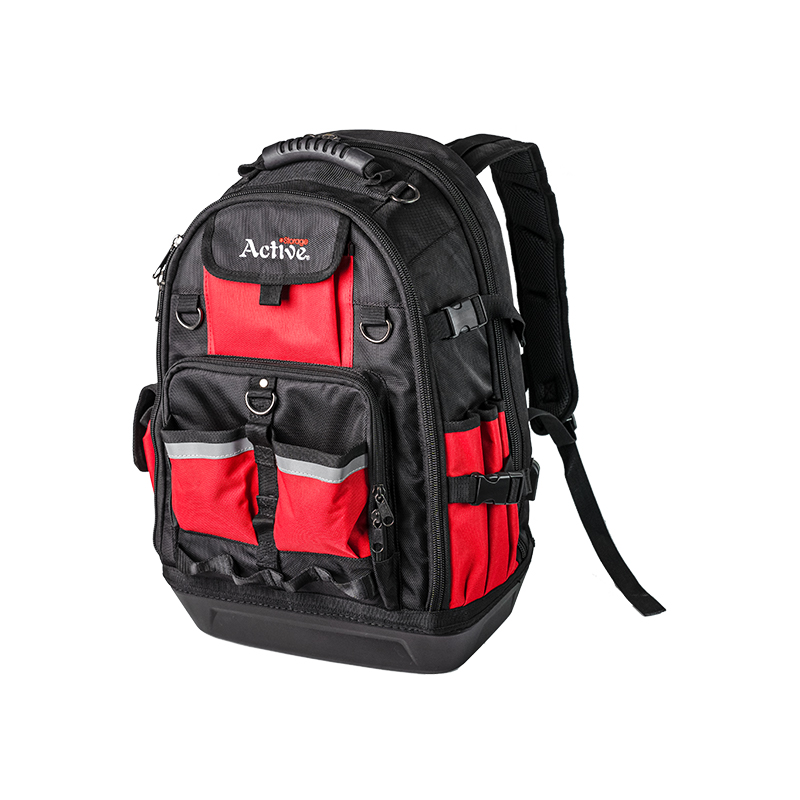
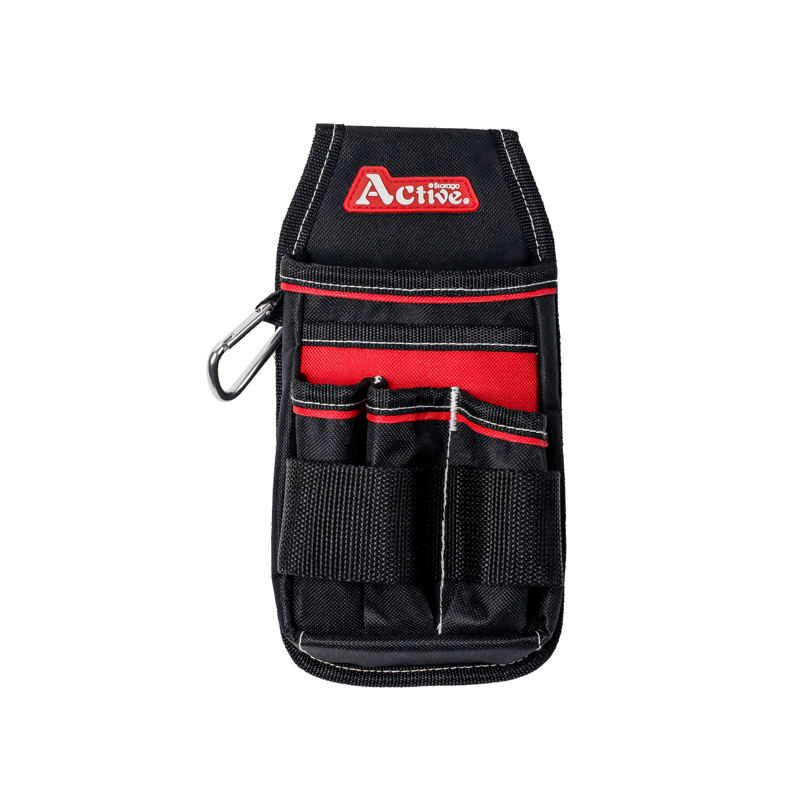
The company’s product portfolio includes trolley tool bags, tool backpacks, zippered tool bags, bags with tubular handles, waist tool bags, tool pouches, tool vests, tool bucket bags, folding-seat tool bags, pocket handy tool bags, garden bags, and multifunctional bags. This broad selection enables customers to choose a carrying format according to the physical demands of a specific job.
Manufacturing Expertise and Product Development
Zhangjiagang Seaark Tools Industrial Co., Ltd. was founded in 2004 and specializes in exporting professional tool bags and providing customization solutions. More than two decades of industry experience can support better understanding of fabric selection, pocket placement, reinforcement methods, production planning, and export requirements.
In 2012, the company established Zhangjiagang Haiyi Tool Bags Co., Ltd. as a core manufacturing base in China. The company also operates a production facility in Cambodia. A multi-location manufacturing structure can provide supply flexibility and help customers evaluate production options according to capacity, delivery planning, regional requirements, and tariff considerations.
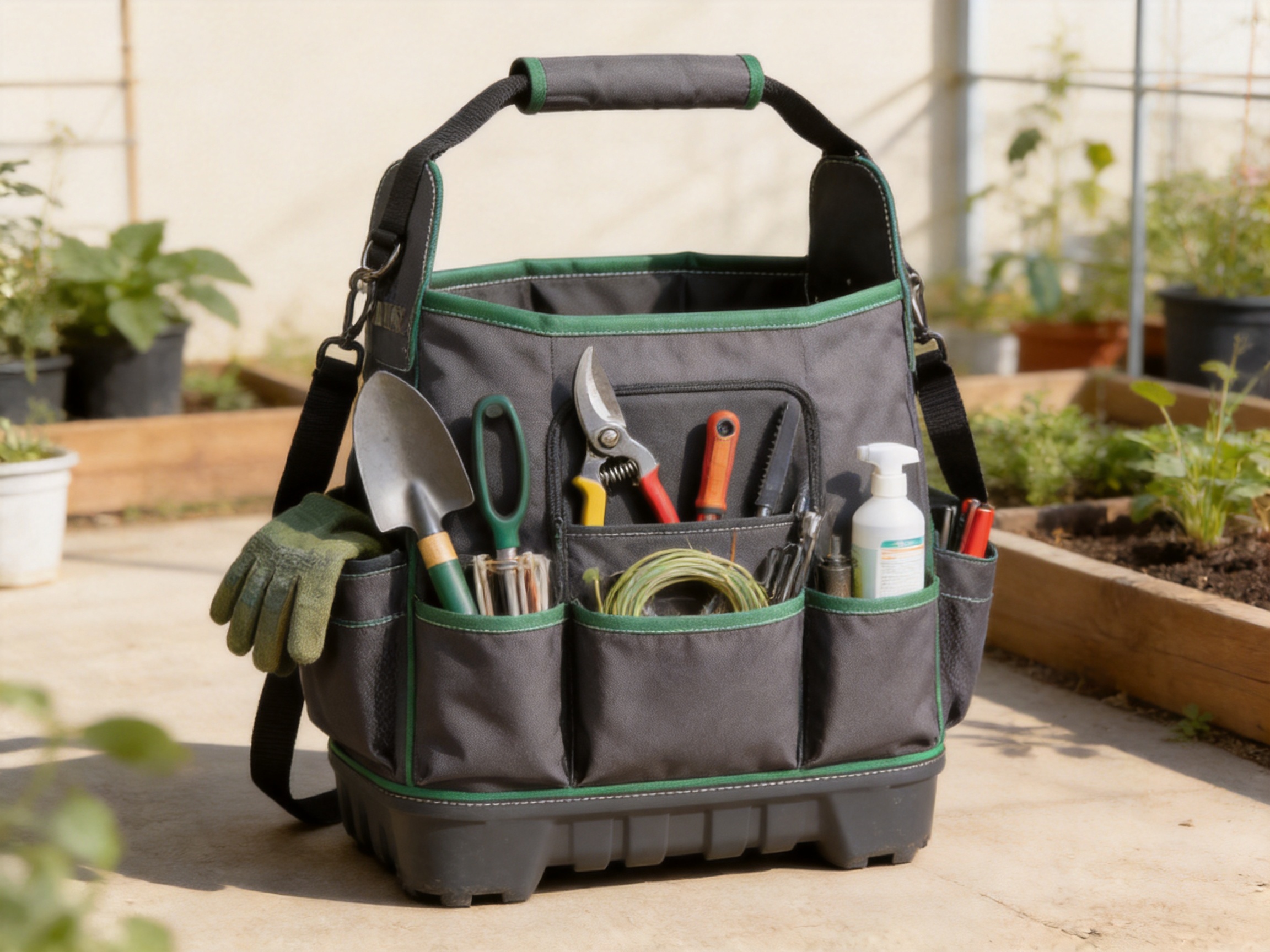
The company reports a workforce of more than 200 employees and approximately 11,000 square meters of floor space. These resources support the coordinated activities required to produce tool bags at commercial scale. A professional production operation may include material inspection, cutting, printing or labeling, sewing, reinforcement, assembly, molding or base integration, finishing, quality inspection, packing, and shipment preparation.
Tool bag production requires attention to both appearance and function. A pocket that is attractive but too shallow may not hold a tool securely. A seam that looks neat but lacks reinforcement may fail under concentrated weight. A bottom that is rigid but poorly attached may separate from the fabric body during repeated use. Manufacturing experience helps connect design decisions with real-world performance.
Product development begins with understanding the intended use. For a garden tote, this may include identifying the likely tool sizes, determining the required number and position of pockets, estimating the expected load, selecting fabric and reinforcement materials, and deciding whether an open top or closure system is most appropriate. Prototypes can then be reviewed for capacity, access, stability, and comfort before production specifications are finalized.
The company maintains an independent research and development team that develops more than 10 new designs each year. An active R&D function allows the manufacturer to respond to changes in customer demand, professional workflows, materials, and product categories. It also supports the development of customized products for brands that need a unique pocket layout, color scheme, logo application, or carrying configuration.
Quality Control and Compliance Support
Reliable tool bags depend on consistent quality at every production stage. Quality control begins with incoming materials. Fabric, webbing, thread, hardware, molded components, labels, and packaging materials should be checked against approved specifications. Variations in material weight, color, width, or surface condition can affect the appearance and durability of the finished bag.
During cutting, accurate pattern dimensions help ensure that panels fit together correctly. Inconsistent cutting can create uneven seams, distorted pockets, or differences between production batches. Sewing operations require attention to stitch length, seam allowance, thread tension, bartack placement, and reinforcement at high-stress points such as handles and pocket openings.
For a heavy-duty tote, load-bearing areas deserve particular attention. Handles, upper edges, pocket seams, bottom attachments, and corners may experience concentrated stress. Reinforcement techniques can include additional fabric layers, binding, bartacks, stronger webbing, and carefully designed seam structures. The appropriate method depends on the product’s intended load and use environment.
Finished products may be inspected for dimensions, pocket count, visual defects, stitching quality, color consistency, hardware function, bottom stability, and packaging accuracy. Sample testing can include load simulation and handle pull tests. Customers ordering customized products may also establish inspection standards, approved samples, tolerances, and packaging requirements before mass production.
Seaark’s facilities undergo annual third-party audits, including BSCI, SEDEX, FCCA, and SCS audits, according to the company’s supplied information. Such audits are intended to evaluate aspects of production responsibility, workplace practices, supply chain management, or facility standards depending on the applicable program. Buyers should request current audit documentation and clarify the scope and validity of any certification or audit report when conducting supplier qualification.
Compliance is especially important for international buyers. Importers may need accurate product descriptions, material information, packaging details, country-of-origin documentation, and testing records. A manufacturer familiar with export operations can help customers organize the information needed for purchasing, logistics, and market-entry processes.
Customization Options for Global Buyers
The product specification identifies color as customizable. Color customization can support brand recognition, product segmentation, and coordination with uniforms or other equipment. A buyer may choose a single corporate color, a contrasting pocket color, a two-tone design, or a color system that distinguishes different professional applications.
Customization may also involve logos, labels, woven marks, printed graphics, hangtags, packaging, and carton markings. These details should be finalized through approved artwork, color references, placement drawings, and pre-production samples. Proper approval procedures reduce the risk of incorrect branding or inconsistent product presentation.
Functional customization is equally important. Buyers may request modifications to pocket width, pocket depth, main compartment dimensions, handle length, webbing color, bottom construction, internal dividers, or closure systems. Such changes may affect the load capacity, production cost, minimum order quantity, and delivery schedule, so they should be reviewed with the manufacturer before an order is placed.
For professional brands, a standard garden tote may serve as a starting point for a broader product program. A matching tool backpack, zippered tool bag, waist pouch, or trolley bag can be developed with related colors and branding. This creates a coordinated range for different working conditions while allowing customers to offer both open-access and enclosed storage formats.
Customization should preserve the essential performance characteristics of the original design. Adding too many pockets can reduce the usable central capacity. Increasing fabric thickness may improve durability but also increase weight. Enlarging the bag may provide more storage but change the balance and carrying comfort. Effective product development considers these trade-offs rather than treating customization as a simple visual change.
Responsible Use and Maintenance
Regular maintenance can extend the service life of the tool tote. Users should remove soil, leaves, metal fragments, and other debris from the pockets and main compartment. Fine dirt can accumulate in seams and pocket corners, while sharp fragments may gradually damage the fabric if left inside the bag.
The bag should be emptied and inspected periodically. Users can check for loose threads, damaged stitching, worn webbing, cracked bottom components, or distorted pockets. Early identification of damage makes it easier to remove the bag from service or request repair before a complete failure occurs.
Cleaning instructions should follow the final material and finishing specifications. In general, surface dirt may be removed with a soft brush or damp cloth. Harsh chemicals, aggressive solvents, and high-temperature drying may affect polyester, coatings, prints, or molded components. The bag should be allowed to dry fully before storage.
Although the molded bottom offers protection from rough and damp surfaces, the tote should not be submerged or left outdoors in prolonged rain. The open top allows water to enter directly. If the contents include rust-sensitive tools, electronic equipment, documents, or materials affected by moisture, users should take additional protective measures.
Tool placement also affects durability. Heavy tools should be distributed rather than concentrated in one area. Sharp edges should be closed, capped, or positioned carefully. Wet tools should be dried before storage whenever possible. These simple practices reduce stress on pockets and fabric and help maintain a clean working environment.
Purchasing Considerations for Distributors
Distributors and professional buyers should evaluate more than the product photograph when sourcing a tool tote. Important considerations include fabric specifications, stitching construction, bottom design, load testing, pocket dimensions, color standards, packaging, order quantity, lead time, and inspection procedures.
Because the product is described as having 21 pockets while the detailed table lists 15 exterior and 5 interior pockets, buyers should confirm the exact pocket configuration before placing a production order. The supplier should provide a current technical drawing or approved sample showing the number and position of all pockets. This is particularly important when the product will be sold with printed packaging or a specification sheet.
Buyers should also clarify whether the 44-pound load capacity refers to a tested working load, a maximum static load, or a design target. The practical rating may vary according to how the weight is distributed and how the tote is carried. A clear testing method helps prevent misunderstanding between the manufacturer, distributor, and end customer.
Sample approval is recommended for customized orders. A sample can be assessed for dimensions, pocket accessibility, fabric hand feel, bottom stability, handle comfort, visual appearance, and compatibility with the intended tools. If changes are required, they should be documented before mass production begins.
Packaging should protect the bags from moisture, compression, dirt, and deformation during storage and transport. Buyers may require individual polybags, recycled packaging options, carton labels, barcode labels, instruction cards, or retail-ready packaging. These requirements should be included in the purchase specification rather than communicated informally.
Why Choose an Experienced Tool Bag Manufacturer
Tool bags combine textile manufacturing, product engineering, load-bearing design, and commercial packaging. An inexperienced supplier may be able to sew a basic bag but may have difficulty balancing pocket design, reinforcement, durability, and production consistency. An experienced specialist is more likely to understand the problems that arise during actual use.
Seaark focuses specifically on professional tool bags and related storage products. Its product categories cover several carrying formats, allowing the company to develop solutions for different users rather than relying on one generic bag design. This specialization can support more informed recommendations regarding fabrics, construction methods, pocket layouts, and applications.
The company’s independent R&D team and annual development activity support ongoing product innovation. Its multiple manufacturing bases provide additional supply options for global buyers. The combination of Chinese production resources, a Cambodian facility, experienced personnel, and international export knowledge can be valuable for customers seeking a stable long-term supplier.
Seaark also offers standard products and tailor-made solutions. Standard products can help buyers enter the market quickly or test demand with a proven format. Customized solutions can support established brands that need distinct features, packaging, or visual identity. This two-level approach gives customers flexibility when planning product lines and procurement strategies.
The company’s stated philosophy emphasizes quality and service. In practice, these principles should be reflected in clear communication, accurate samples, reliable production scheduling, transparent inspection standards, responsive after-sales support, and proper handling of customization requests. Buyers should evaluate these elements throughout the sourcing process.
Recommended Product Positioning
The Heavy-Duty Tool Tote with 21 Pockets can be positioned as a practical mid- to professional-level organization solution for users who need frequent access to a broad selection of hand tools. Its strongest selling points are the combination of multiple pockets, a large central compartment, a reinforced molded bottom, heavy-duty polyester construction, customizable color, and a substantial stated load capacity.
For retail customers, the product can be presented as a garden tool organizer for home gardeners, allotment users, and DIY enthusiasts. For professional users, it can be marketed toward landscapers, groundskeepers, maintenance teams, nursery workers, farm operators, and repair technicians. For distributors, the customizable design can support private-label programs and coordinated product families.
Marketing materials should describe the product accurately. The open top should be presented as an access advantage rather than as weatherproof protection. The molded bottom should be described as helping with stability and surface separation rather than claiming complete waterproofing. The load capacity should be accompanied by responsible-use guidance and, where applicable, test information.
Clear product communication builds customer confidence. Buyers should understand what the tote is designed to do, what type of tools it can hold, and how it should be maintained. Accurate claims are especially important for professional products because end users depend on them during repeated and sometimes demanding work.
Frequently Asked Questions
What is the Heavy-Duty Tool Tote primarily designed for?
The tote is primarily designed for organizing and transporting gardening tools, hand tools, maintenance equipment, and DIY accessories. It is especially suitable for gardeners, landscapers, workshop users, farm operators, and household repair users who need quick access to multiple tools.
How many pockets does the product have?
The product is marketed as a 21-pocket tool tote. However, the supplied detailed specification lists 15 exterior pockets and 5 interior pockets, which totals 20. Buyers should confirm the exact production configuration with the manufacturer before ordering, particularly for customized products or printed retail packaging.
What material is used for the bag?
The bag is made from polyester. The heavy-duty fabric is intended to provide resistance to regular wear and support daily use in gardens, workshops, farms, and outdoor working environments.
Does the tote have a zipper or other closure?
No. The specified closure type is open top. This allows tools to be inserted and removed quickly, but it also means the tote is not a sealed or fully weatherproof container.
What is the stated load capacity?
The stated load capacity is up to 44 pounds. Users should distribute weight evenly and follow the manufacturer’s final loading guidance. The practical carrying limit can depend on tool shape, weight distribution, handle construction, and working conditions.
What is the purpose of the molded bottom?
The molded bottom helps the tote remain upright and provides a protective barrier between the fabric body and the ground. It can reduce direct contact with dirt, moisture, and rough surfaces, but it should not be interpreted as a guarantee that the entire bag is waterproof.
Can the color be customized?
Yes. Color is listed as customizable. Buyers can discuss color combinations, branding requirements, minimum quantities, artwork, and sample approval procedures with the manufacturer.
Can the product be customized beyond color?
Potential customization may include logos, labels, packaging, pocket layouts, dimensions, webbing, handles, and other construction details. Each change should be reviewed with the manufacturer because it may influence cost, minimum order quantity, lead time, load balance, and performance.
Can the tote be used for professional work?
Yes. Its heavy-duty polyester construction, multiple pockets, molded bottom, and stated load capacity make it suitable for many professional gardening, landscaping, workshop, maintenance, and farm applications. Users should select the correct bag format for the distance carried and the weight of the equipment.
Is the bag suitable for rainy conditions?
The open-top design does not provide full protection against rain. The molded bottom helps reduce contact with damp surfaces, but the bag should be kept covered or stored indoors during wet weather. Moisture-sensitive tools should be protected separately.
How should the tote be maintained?
Users should remove dirt and debris regularly, inspect seams and handles, dry the bag before storage, and avoid overloading it. Cleaning should follow the final material-care instructions. Sharp tools should be closed, capped, or positioned safely.
Where is the product manufactured?
The product is supplied by Zhangjiagang Seaark Tools Industrial Co., Ltd., based in Zhangjiagang, Jiangsu Province, China. The company also operates a production facility in Cambodia, supporting flexible global manufacturing and supply planning.
Does the manufacturer offer other tool bag categories?
Yes. The company offers trolley tool bags, tool backpacks, zippered tool bags, tool bags with tubular handles, waist tool bags, tool pouches, tool vests, tool bucket bags, folding-seat tool bags, pocket handy tool bags, garden bags, and multifunctional bags.
What should buyers confirm before placing an order?
Buyers should confirm the final pocket count, dimensions, fabric specifications, load testing, color, logo requirements, packaging, minimum order quantity, delivery schedule, inspection process, and any applicable compliance documentation. A pre-production sample is recommended for customized orders.
Conclusion
The Heavy-Duty Tool Tote with 21 Pockets is designed to make tool transport and organization more efficient in gardening, landscaping, workshop, farm, maintenance, and DIY environments. Its combination of heavy-duty polyester, a structured molded bottom, multiple pockets, an open-top format, and a spacious central compartment addresses several common weaknesses found in basic soft tool bags.
The tote offers quick access for users who frequently select and return tools. Its pocket layout helps separate equipment, reduce clutter, and support a consistent working routine. The molded base improves stability and helps protect the bag from rough or damp surfaces, while the customizable color provides an opportunity for private-label and professional branding programs.
Its performance is supported by the manufacturing experience of Zhangjiagang Seaark Tools Industrial Co., Ltd. Founded in 2004, the company has developed extensive expertise in professional tool bags, operates multiple production bases, maintains an independent R&D team, and provides both standard and customized solutions. Third-party facility audits and export experience further support its ability to serve international customers, subject to buyer verification of current documentation.
For end users, the product provides a convenient and organized way to carry essential tools. For distributors and brands, it provides a flexible platform for a durable garden and maintenance bag program. With correct loading, regular maintenance, accurate product communication, and careful customization, this tool tote can serve as a dependable storage solution for a wide range of daily working environments.
References
1. Product specification supplied for the Heavy-Duty Tool Tote with 21 Pockets, including dimensions, material, pocket configuration, closure type, and load capacity.
2. Company information supplied by Zhangjiagang Seaark Tools Industrial Co., Ltd., including company history, manufacturing locations, workforce, facility size, R&D activity, product categories, and customization services.
3. General textile product development principles concerning fabric selection, seam construction, reinforcement, load testing, inspection, and maintenance.
4. General occupational organization and tool-storage practices for gardening, landscaping, workshop, maintenance, and DIY applications.
5. General supplier evaluation practices for customized textile products, including sample approval, material verification, packaging review, factory auditing, and production inspection.
Product: Heavy Duty Tool Tote with 21 Pockets Garden Tool Bag Molded Bottom Gardening Tools Storage




We are a professional enterprise engaged in exporting various types of toolkits.
We firmly believe that 'quality is everything, service enhances value'.
-
+86-15298800699

-
+86-512-58670375

-
karen@kun-bag.com

-
Building 11, No. 93 Chengang Road, Zhangjiagang City, Jiangsu Province, China

Copyright © Zhangjiagang Seaark Tools Industrial Co., Ltd. All Rights Reserved.
Custom Electrician Tool Backpack Manufacturers