
 en
 русский
 Español
 Deutsch

Heavy-Duty Tool Backpack Storage Tool Bag for Professional Field Work
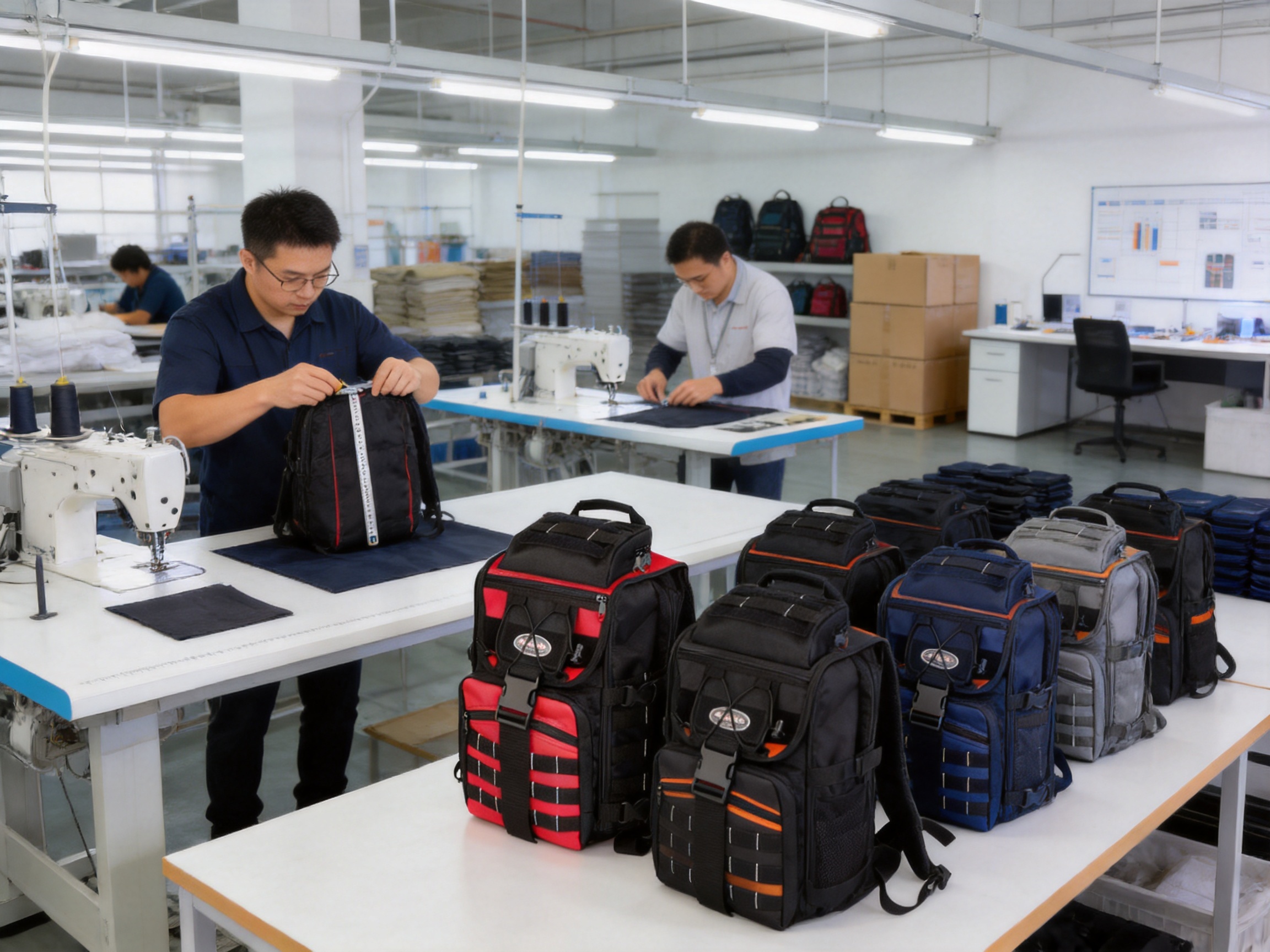
Professional technicians need more than a container for carrying tools. They need a dependable organization system that can move through narrow corridors, protect equipment from changing weather, remain comfortable during long shifts, and provide quick access when a repair cannot wait. The Heavy Duty Tool Backpack Storage Tool Bag is designed around these practical requirements. With a compact 30.5 × 24 × 50 cm structure, waterproof polyester construction, a zipper closure, ten strategically arranged pockets, and a load capacity of 22.05 lbs, it offers a focused solution for electricians, mechanics, cable technicians, maintenance teams, installers, and service professionals.
The P002 model takes a different approach from oversized trolley tool bags and loosely organized carry bags. Instead of maximizing external volume at the expense of mobility, it concentrates on efficient storage, accessible pocket depth, and a backpack format that can be carried through demanding work environments. Its proportions are suitable for confined locations such as server rooms, cable shafts, plant equipment areas, service corridors, utility spaces, and commercial buildings where a larger wheeled case may be inconvenient.
This article examines the product’s design, construction, organization, advantages over competing tool-carrying solutions, and the manufacturing capabilities behind it. It also explains how customization, quality control, research and development, and global production support make this type of tool backpack suitable for professional buyers and private-label programs.
Content
- 1 1. A Practical Tool-Carrying Solution for Restricted Work Areas
- 2 2. Product Specifications at a Glance
- 3 3. Compact Dimensions Without Sacrificing Utility
- 4 4. Ten-Pocket Organization for Faster Access
- 5 5. Waterproof Polyester for Changing Conditions
- 6 6. Zipper Closure for Secure Tool Storage
- 7 7. A Strong Alternative to Larger Trolley Tool Bags
- 8 8. Advantages Over Unstructured Tool Bags
- 9 9. Advantages Over Simple Tool Pouches
- 10 10. Suitable Applications Across Professional Industries
- 11 11. Ergonomic and Operational Considerations
- 12 12. Construction Quality and Material Selection
- 13 13. Manufacturing Expertise Behind the Product
- 14 14. Research and Development for Functional Bag Design
- 15 15. Customization Capabilities for Global Buyers
- 16 16. Quality and Compliance Infrastructure
- 17 17. Global Supply and Export Experience
- 18 18. How the P002 Supports Professional Efficiency
- 19 19. Recommended Packing Method
- 20 20. Maintenance and Care Recommendations
- 21 21. Purchasing Considerations for Distributors and Brands
- 22 22. Why Specialized Manufacturing Matters
- 23 23. Frequently Asked Questions
- 23.1 What is the main purpose of the P002 tool backpack?
- 23.2 What are the dimensions of the backpack?
- 23.3 How many pockets does the tool backpack have?
- 23.4 What material is used to make the product?
- 23.5 What is the load capacity?
- 23.6 Does the backpack use a zipper closure?
- 23.7 Can the color be customized?
- 23.8 Is this backpack better than a trolley tool bag?
- 23.9 Who can use this tool backpack?
- 23.10 Can the product be customized for private-label projects?
- 23.11 Where is the product manufactured?
- 23.12 What manufacturing support does the supplier provide?
- 24 24. Final Assessment
- 25 References
- 26 Product: Heavy Duty Tool Backpack Storage Tool Bag
1. A Practical Tool-Carrying Solution for Restricted Work Areas
Tool storage requirements vary according to the work environment. A construction crew working in an open area may prefer a large trolley bag with multiple compartments and wheels. However, technicians who work inside data centers, telecommunications rooms, electrical cabinets, industrial machinery enclosures, or building service shafts often face the opposite challenge. Their primary concern is not maximum storage volume. It is the ability to transport essential tools through limited spaces without repeatedly moving, lifting, or repositioning a bulky case.
The P002 Heavy Duty Tool Backpack addresses this challenge with a relatively compact footprint. Its 30.5 cm width and 24 cm depth are designed to reduce the space required when moving through corridors or working around installed equipment. The 50 cm height provides useful vertical capacity while maintaining a backpack-oriented shape. This combination helps technicians bring a practical selection of hand tools, testing instruments, repair accessories, and consumables into locations where a wider trolley model may be difficult to maneuver.
The backpack format also leaves both hands available while the user is walking, climbing stairs, carrying additional equipment, or stabilizing themselves in a difficult work position. For service professionals, this can make movement more efficient. A technician can carry the tool bag on the back while holding a diagnostic device, replacement component, ladder rail, cable reel, or protective equipment in the hands.
Compared with an unstructured duffel bag, the P002 gives tools a defined storage environment. Compared with many large trolley models, it emphasizes portability and access. Compared with a simple tool pouch, it provides greater capacity and better protection for a broader selection of equipment.
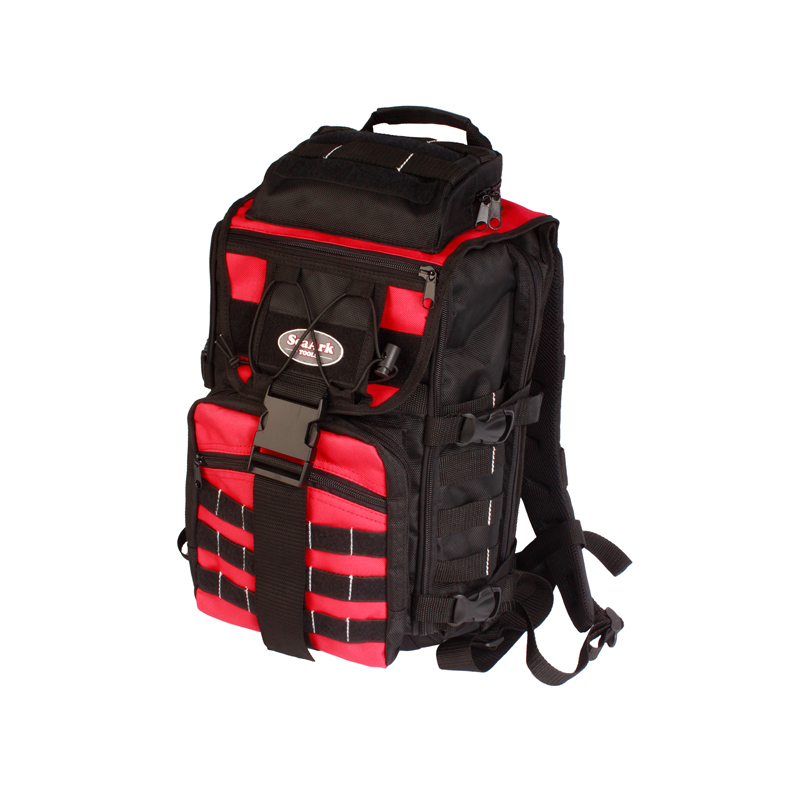
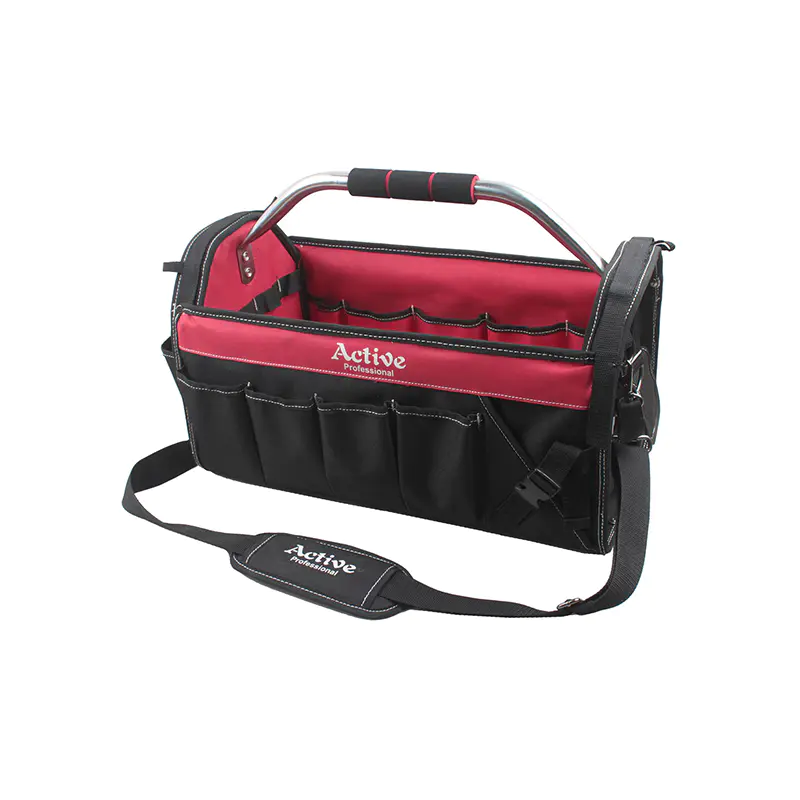
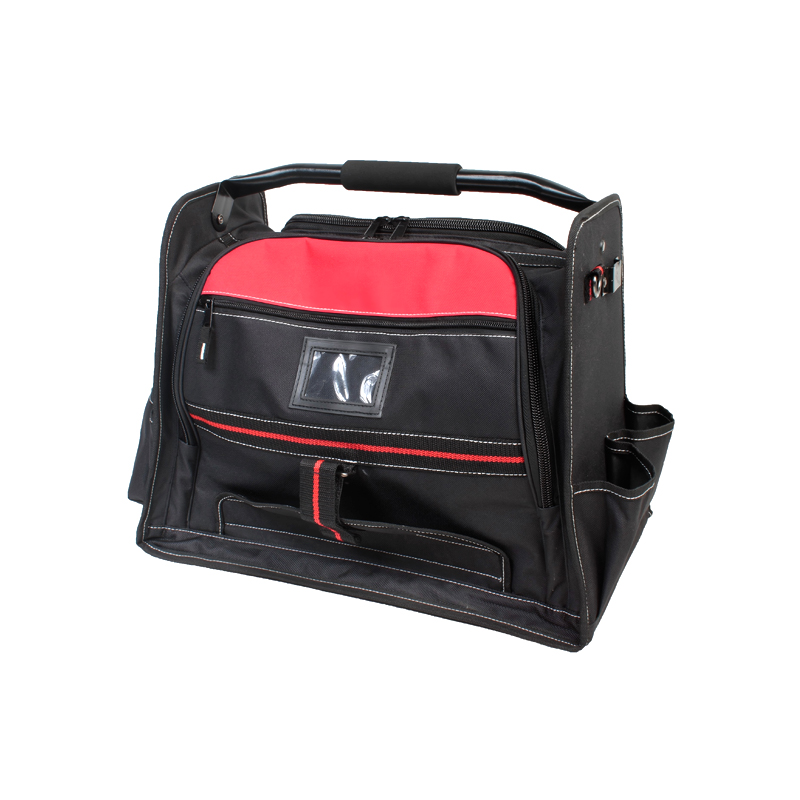
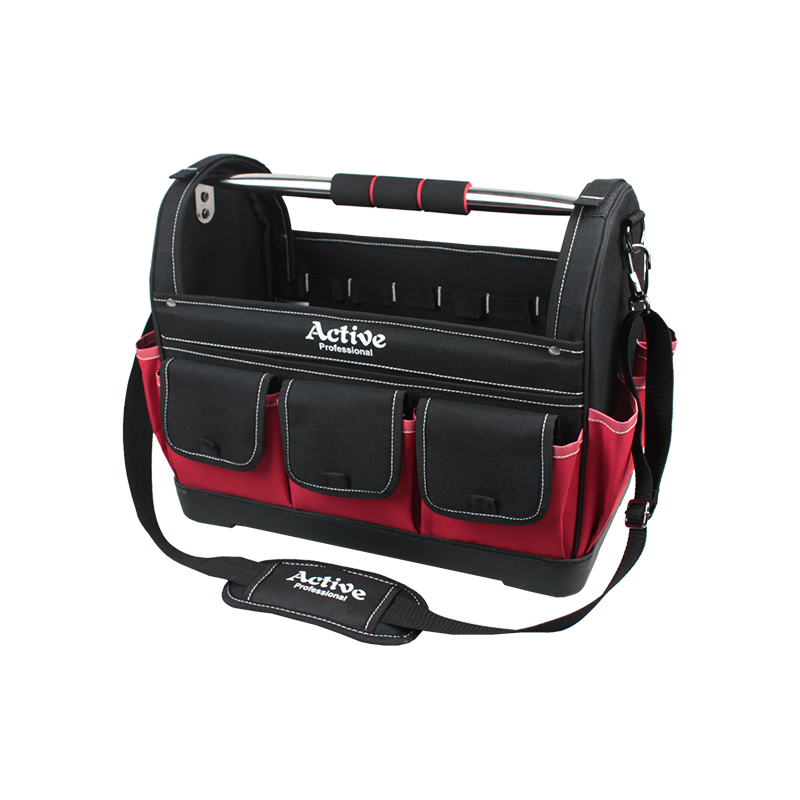
Heavy Duty Tool Backpack Storage Tool Bag
2. Product Specifications at a Glance
The following table summarizes the principal specifications of the Heavy Duty Tool Backpack Storage Tool Bag.
| Parameter | Details |
|---|---|
| Product Model | P002 |
| Product Category | Tool Backpack |
| Dimensions | 30.5 × 24 × 50 cm |
| Material | Polyester |
| Water Resistance | Waterproof polyester construction |
| Closure Type | Zipper |
| Total Number of Pockets | 10 pockets |
| External Pockets | 7 |
| Internal Pockets | 3 |
| Load Capacity | 22.05 lbs |
| Color | Customized |
| Country of Origin | China |
These specifications show the product’s balance between compactness and usable capacity. Ten pockets are sufficient for organizing frequently used tools without creating an unnecessarily complex interior. Seven exterior pockets can be used for items that require rapid access, while the three internal pockets provide a more protected location for smaller tools, accessories, documentation, or equipment that should remain separated from the outer working area.
3. Compact Dimensions Without Sacrificing Utility
One of the most important advantages of this tool backpack is its compact configuration. Large tool bags can be useful when a job requires a broad assortment of tools, but they are not always efficient in restricted environments. A bulky bag can catch on door frames, obstruct a narrow aisle, or become difficult to place near a control panel. It may also force the technician to leave the bag outside the work zone and make repeated trips to retrieve individual tools.
The P002 minimizes these problems. Its narrow profile is appropriate for work settings where every centimeter of space matters. The vertical design allows the bag to hold tools in an organized column rather than spreading them across a wide horizontal base. This makes the bag easier to position beside a technician or place near a work area without consuming excessive floor space.
Compact does not mean unsuitable for demanding work. The stated 22.05 lbs load capacity allows users to carry a substantial set of tools and accessories. The capacity is appropriate for a focused professional kit, including screwdrivers, pliers, wrenches, measuring devices, cable preparation tools, electrical testers, fastening accessories, and small replacement parts. Users can select the tools required for a specific task instead of carrying every item in the workshop.
This task-focused approach can improve efficiency. A technician who prepares a bag according to a service route can reduce unnecessary weight and spend less time searching through an oversized container. The result is a tool-carrying system that supports mobility while still accommodating the equipment needed for routine repair and installation work.
4. Ten-Pocket Organization for Faster Access
Organization is a central performance feature in any professional tool bag. A bag may have a large capacity, but if tools become mixed together, the user loses time searching. The P002 uses ten pockets divided between the exterior and interior. This arrangement supports a practical separation between frequently used tools and items that should remain in a more protected compartment.
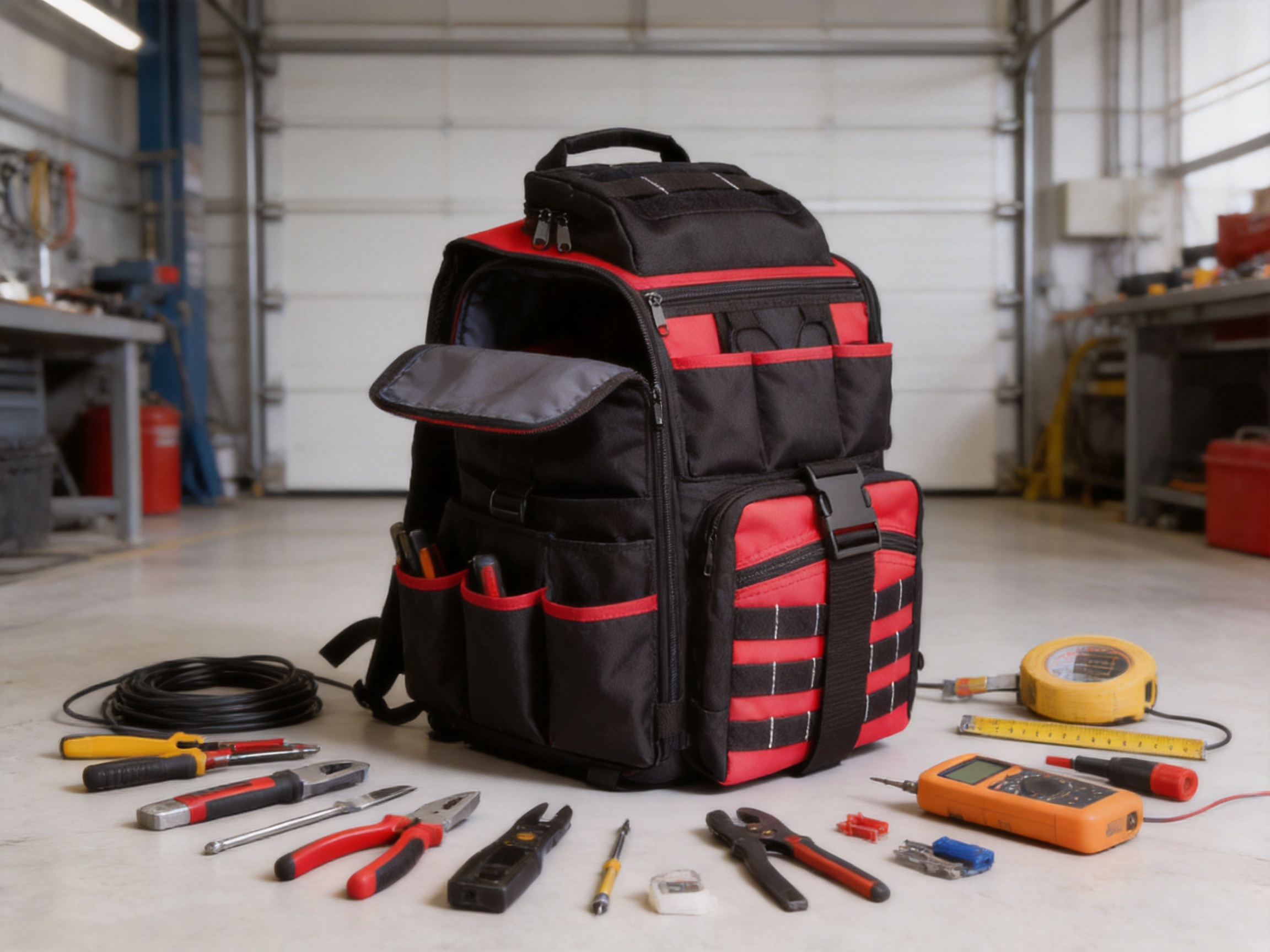
The seven exterior pockets are designed for quick access. A technician can assign them according to tool type or frequency of use. For example, one pocket may hold screwdrivers, another may carry pliers, and another may be used for cable accessories or measuring equipment. Since the tools are kept in separate locations, the user can develop a consistent organization pattern and identify missing equipment more easily before leaving for a job.
The three interior pockets offer an additional layer of organization. These spaces may be used for smaller tools, replacement components, documents, electronic accessories, or personal protective items. Keeping such items inside the main structure can reduce the chance of accidental loss when the bag is placed on the floor or moved through a crowded site.
The product description emphasizes optimized pocket depth. This detail is particularly important. Pockets that are too shallow may allow tools to fall out or remain unstable. Pockets that are excessively deep may hide small tools at the bottom, forcing the user to unload the compartment to find them. Balanced depth makes it easier to reach into a pocket, identify its contents, and remove one tool without disturbing the rest.
For mechanics and cable repair technicians, this feature can be especially useful. Cable work often involves a combination of hand tools, connectors, measuring instruments, cutting devices, and small accessories. A well-organized bag reduces the need to place tools on the floor or on sensitive equipment surfaces, helping maintain a cleaner and more controlled work area.
Exterior Storage Advantages
External pockets are valuable when the user needs immediate access. A technician can store the tools used during the first stage of a job in these compartments, including a tape measure, marker, screwdriver, cutter, pliers, or inspection accessory. Keeping these items outside the main compartment minimizes opening and closing actions.
The exterior pocket layout also supports visual organization. When a tool is returned to its designated pocket, the user can quickly determine whether it is present. This is helpful at the end of a repair, when tools must be accounted for before the technician leaves the work site.
Interior Storage Advantages
The internal pockets are suitable for equipment that requires additional separation. A technician may use them for small electronic devices, cable ends, fasteners, spare blades, adapters, or documents. Interior storage also helps prevent small items from being buried among larger tools.
By combining exterior and interior storage, the backpack accommodates different levels of accessibility. Tools needed continuously remain close at hand, while less frequently used or more easily misplaced items remain inside the protected body of the bag.
5. Waterproof Polyester for Changing Conditions
Field work does not always take place in a clean, dry workshop. Technicians may need to work outdoors, travel between buildings, enter unfinished construction areas, or respond to sudden weather changes. A tool bag made with waterproof polyester provides a practical barrier against moisture and helps preserve the usability of the bag during demanding conditions.
The P002 uses waterproof polyester as its primary material. This construction helps the bag resist moisture during outdoor repairs and unexpected weather events. It is particularly relevant for service personnel who travel between locations and may not have the opportunity to store their tools indoors immediately after use.
Moisture resistance also contributes to the long-term practicality of the bag. A wet or absorbent material can become heavy, retain odors, and take longer to dry. Waterproof polyester is easier to maintain and can help reduce the impact of light rain, damp surfaces, and accidental exposure to moisture. The material is suitable for a professional product that must be repeatedly transported and used across different environments.
Water resistance should not be interpreted as unlimited protection against submersion or extreme weather. Users should still close the zipper properly, avoid leaving the bag exposed to severe conditions for extended periods, and allow it to dry when necessary. Nevertheless, the waterproof polyester construction provides an important advantage over ordinary fabric bags that offer little defense against moisture.
6. Zipper Closure for Secure Tool Storage
The P002 uses a zipper closure to help keep tools and accessories contained. A reliable closure is essential when a bag is carried on the back, moved through a work site, or placed on its side. Without an effective closure, tools can shift or fall out during transportation.
A zipper also allows the user to open the main storage area widely when loading or arranging equipment. This is more convenient than reaching through a narrow opening, particularly when the bag contains several tools of different sizes. When closed, the zipper helps protect the contents from dust, accidental contact, and exposure to the surrounding environment.
For professional users, the closure contributes to predictable daily operation. The bag can be packed before a shift, transported between locations, opened during work, and closed again without requiring complex adjustments. This simple operating method supports efficient service routines.
7. A Strong Alternative to Larger Trolley Tool Bags
Trolley tool bags have clear benefits, including high capacity, rolling mobility, and the ability to carry a large volume of equipment. However, their size and wheel-based structure can become disadvantages in confined work areas. Wheels require a suitable surface, handles need clearance, and the overall case can be difficult to maneuver around stairs, cable trays, equipment racks, or narrow corridors.
The P002 is not intended to replace every trolley model. Instead, it provides a more suitable option for jobs where portability and compactness are more important than maximum volume. It can move through areas in which a trolley may be inconvenient or unusable. The user can carry it over stairs, uneven ground, and obstacles without needing to pull it behind them.
The backpack format also distributes the load across the user’s body rather than requiring one hand to pull a case. This leaves the hands available for other tasks and may be especially helpful when a technician needs to climb, hold a rail, or carry additional equipment.
For service teams, the choice between a trolley bag and a backpack can be based on job conditions. A trolley may be preferable for a large tool inventory and smooth indoor floors. The P002 may be preferable for confined spaces, short service visits, mobile repair tasks, and locations where carrying is more efficient than rolling.
8. Advantages Over Unstructured Tool Bags
Basic tool bags often provide a large open compartment with limited internal organization. Such a design may be inexpensive, but it can create several difficulties for professional users. Tools may pile on top of one another, sharp items may contact other equipment, and small accessories may disappear beneath larger objects.
The P002’s ten-pocket layout offers a more structured alternative. Tools can be assigned to specific positions, improving retrieval speed and reducing disorder. The separation between external and internal pockets also gives the user greater control over access and protection.
The product’s vertical format can further reduce wasted space. Instead of spreading tools across the bottom of a wide bag, the user can arrange them by task or category. This makes it easier to prepare the bag for a particular maintenance route and remove unnecessary items before travel.
For professional teams, better organization can also support standardization. A company can establish a recommended layout for each technician or job type. New staff members can learn where tools belong, supervisors can inspect the bag more efficiently, and missing items can be identified more quickly.
9. Advantages Over Simple Tool Pouches
Tool pouches are convenient for carrying a small number of frequently used tools, especially when the user needs immediate access while working at a bench or wearing a work belt. However, a pouch alone may not provide enough capacity for a complete service kit. It may also leave tools exposed to dust, weather, and accidental impact.
The P002 provides a broader storage solution while retaining a focused footprint. It can serve as a primary tool carrier for a compact kit or as a supporting bag used alongside a pouch. A technician may keep everyday hand tools in a pouch and carry testing equipment, replacement items, and reserve tools in the backpack.
This flexibility makes the product suitable for different work routines. It can support electrical maintenance, cable installation, equipment servicing, building maintenance, telecommunications repair, and general mechanical tasks. The exact contents can be customized according to the user’s professional specialty.
10. Suitable Applications Across Professional Industries
Electrical Installation and Maintenance
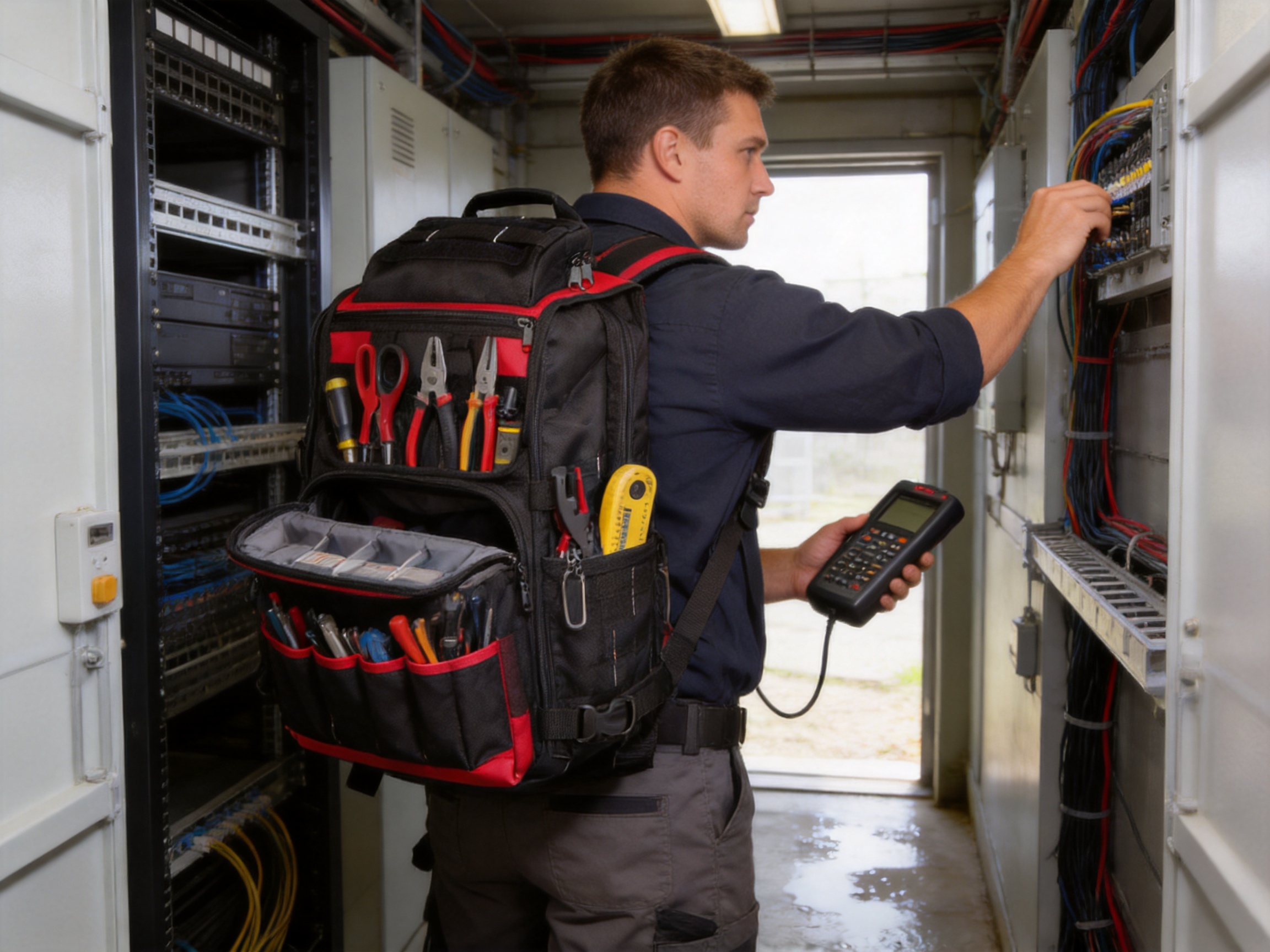
Electricians often carry tools with different shapes and functions, including screwdrivers, insulated pliers, cutters, testers, measuring devices, and fastening accessories. The P002’s pocket arrangement allows these tools to be separated and carried into electrical rooms, control cabinets, commercial buildings, and construction sites.
The waterproof polyester body is also useful for technicians who work in unfinished structures or move between indoor and outdoor areas. The compact design makes it easier to position near panels and equipment without blocking access routes.
Telecommunications and Cable Repair
Cable technicians frequently work in server rooms, communication closets, cable shafts, ceiling spaces, and network infrastructure areas. These locations may involve narrow paths and valuable equipment that must not be obstructed. The P002 was described as particularly suitable for mechanics and cable repair technicians because its compact dimensions and optimized pockets support easy access.
Its ten-pocket organization can accommodate cable preparation tools, connectors, testers, labeling materials, cutters, and small repair accessories. Keeping these items organized can help reduce service time and prevent small components from being left behind in sensitive equipment areas.
Mechanical Service Work
Mechanics can use the backpack for a focused set of hand tools and maintenance accessories. The 22.05 lbs load capacity provides room for a practical selection without requiring the user to transport a full workshop inventory. The external pockets support fast access to common tools, while the internal compartments can hold smaller parts and accessories.
Building and Facility Maintenance
Facility maintenance teams often move between rooms, floors, mechanical spaces, and outdoor service areas. Their work may include minor electrical repair, plumbing adjustments, hardware replacement, inspection, and general equipment servicing. A multifunctional tool backpack allows one worker to carry a balanced selection of tools while keeping both hands available during movement.
Industrial Equipment Inspection
Industrial technicians may need to walk through production areas while carrying instruments and hand tools. A backpack format is useful when the work site includes stairs, uneven floors, safety barriers, or restricted access zones. The P002 can serve as a compact support bag for inspection and routine maintenance tasks.
11. Ergonomic and Operational Considerations
A tool bag’s usefulness depends not only on material and storage volume but also on how easily it can be integrated into a daily work routine. A backpack format can reduce the need to carry a bag by hand and may improve balance when the user is moving between work locations.
The 22.05 lbs load capacity should be treated as a maximum working specification rather than a target weight for every trip. Users should distribute tools evenly, keep heavier items positioned securely, and avoid carrying unnecessary equipment. Proper packing helps maintain comfort and reduces movement inside the bag.
Tool organization also affects ergonomics. Frequently used tools should be stored in the most accessible exterior pockets. Heavier tools should be placed in a stable position, while small accessories should be kept in the interior compartments. This arrangement minimizes repeated searching and reduces the need to remove the entire contents during a repair.
Because the P002 is compact, it encourages users to select equipment carefully. A focused kit can be more comfortable and efficient than an oversized bag filled with tools that are rarely used. Professional teams can prepare different loadouts for installation, inspection, emergency response, and routine maintenance.
12. Construction Quality and Material Selection
Material selection is one of the foundations of tool bag durability. Professional bags must withstand repeated loading, transportation, opening, closing, and contact with work surfaces. Polyester is widely used in tool bag manufacturing because it combines flexibility, relatively low weight, and practical resistance to everyday abrasion.
For the P002, waterproof polyester supports the product’s intended use in mobile and outdoor service environments. The material provides a balance between protection and portability. A bag that is too heavy before tools are added can reduce the value of its load capacity, while a material that is too light may not provide adequate support for professional equipment.
The zipper closure, pocket construction, and overall body design must work together as a complete system. A strong fabric alone cannot ensure product reliability if pocket attachment, seam formation, or closure installation is inconsistent. For this reason, professional manufacturing requires attention to cutting accuracy, sewing quality, reinforcement points, and final inspection.
13. Manufacturing Expertise Behind the Product
The company producing this tool backpack has specialized in professional tool bags since 2004. Its experience covers product development, manufacturing, exporting, and customization. More than two decades of specialization provide a foundation for understanding the requirements of tool bag users, distributors, industrial buyers, and private-label customers.
The manufacturing organization includes Zhangjiagang Haiyi Tool Bags Co., Ltd., established in 2012 as a core production base in China. The company also operates a production facility in Cambodia. Maintaining production capability in multiple locations supports flexible supply planning and can help customers manage sourcing requirements and the impact of additional United States tariffs.
The company operates multiple production bases, employs more than 200 people, and manages approximately 11,000 square meters of floor space. These resources support the production of different types of bags, from compact tool backpacks to trolley tool bags, waist bags, tool pouches, tool vests, bucket bags, and other multifunctional storage products.
A production network of this scale can provide advantages in capacity planning, material coordination, quality management, and delivery scheduling. It also allows the manufacturer to serve both standard product programs and customers requiring tailored solutions.
14. Research and Development for Functional Bag Design
Tool bags must evolve with the needs of technicians. New equipment, changing work environments, and different customer preferences can require adjustments to pocket arrangement, material selection, carrying format, and appearance. The company maintains an independent research and development team that creates more than ten new designs each year.
This design activity supports continuous improvement rather than reliance on a single traditional pattern. Product development can examine how tools are stored, how pockets are accessed, how the bag is carried, and how materials perform during regular use. A design such as the P002 reflects this functional approach by concentrating on compact dimensions and accessible storage rather than simply increasing capacity.
The company’s registered brand is Active Storage, and it holds multiple design patents. Intellectual property protection indicates an effort to develop original product structures and maintain distinct design capabilities. For buyers seeking private-label or customized tool bags, an experienced design team can also help transform a general specification into a practical production sample.
15. Customization Capabilities for Global Buyers
The P002 is offered with customized color options. Color customization can help distributors and professional brands maintain consistent visual identity across their product lines. It may also allow companies to assign colors to different departments, applications, or levels of equipment.
Customization can extend beyond color. Depending on project requirements, buyers may discuss branding, labels, packaging, pocket arrangements, material specifications, zipper details, dimensions, and other functional features with the manufacturer. Any modification should be reviewed through sampling and technical confirmation before mass production.
For a private-label customer, the ability to work with a specialized tool bag manufacturer can simplify product development. The manufacturer already understands the construction requirements of professional bags, including fabric cutting, pocket placement, zipper assembly, reinforcement, and quality inspection. This can reduce the need for a buyer to develop every technical detail independently.
Customized production is particularly useful for distributors serving electrical, mechanical, telecommunications, construction, industrial, or facility maintenance markets. Each sector may require a different tool layout or visual design. A flexible manufacturer can help adapt a base product to a specific sales channel or professional application.
16. Quality and Compliance Infrastructure
Professional buyers increasingly evaluate not only the finished product but also the manufacturing systems used to produce it. Consistent quality depends on standardized processes, trained workers, suitable equipment, material control, and documented inspection procedures.
The company’s facilities undergo annual third-party audits, including BSCI, SEDEX, FCCA, and SCS audits. These programs are associated with areas such as social responsibility, ethical sourcing, factory management, and supply-chain compliance. Although an audit does not replace product testing or customer inspection, regular third-party review provides additional visibility into manufacturing practices.
Quality management for a tool backpack should consider several stages. Incoming polyester and accessory materials should be checked for specification and visible defects. Cutting should maintain consistent dimensions. Sewing operations should create secure seams and correctly positioned pockets. Zippers should operate smoothly and remain properly aligned. Finished bags should be inspected for appearance, construction, measurements, and functional performance.
For customized orders, quality control should also confirm color consistency, logo placement, packaging instructions, and any approved sample requirements. Clear communication between the buyer and manufacturer is essential because even small changes in pocket depth or closure design can affect the final user experience.
17. Global Supply and Export Experience
The company specializes in exporting professional tool bags and has built long-term partnerships with customers in international markets. Export experience is valuable because global buyers often require more than product manufacturing. They may need support with sampling, packaging, documentation, production scheduling, inspection, and shipment coordination.
The combination of Chinese production capability and a Cambodian facility provides additional supply flexibility. Customers can evaluate sourcing options according to order volume, delivery plans, market requirements, and tariff considerations. This multi-location structure may also support continuity when production schedules or regional conditions change.
For international distributors, a manufacturer with established export experience can make communication more efficient. Product specifications, customization requests, sample approvals, and quality expectations can be documented before production begins. This reduces ambiguity and helps align the finished tool backpack with the buyer’s market requirements.
18. How the P002 Supports Professional Efficiency
Efficiency in field service is often measured in small improvements. Finding a tool quickly, carrying the correct equipment into a restricted area, protecting tools from moisture, and avoiding repeated trips can all contribute to a faster repair process. The P002 is designed around these practical improvements.
Its compact shape reduces movement difficulties. Its ten pockets establish a defined organization system. Its waterproof polyester construction helps protect the bag in damp conditions. Its zipper closure keeps contents contained. Its 22.05 lbs load capacity allows a focused professional kit. Together, these features create a tool carrier that supports mobility and readiness.
The product can also help standardize field operations. A company may create a checklist for packing each bag according to a specific service type. When every technician uses a consistent arrangement, training can become easier and missing equipment can be identified faster. A standardized bag can also reinforce a professional appearance when employees visit customer sites.
19. Recommended Packing Method
To obtain the best performance from the P002, users should organize the bag according to frequency of use, tool weight, and sensitivity. Frequently used hand tools should be placed in the seven exterior pockets. This allows rapid access without repeatedly opening the main storage area.
Smaller parts and less frequently used items should be assigned to the three interior pockets. This can include connectors, fasteners, adapters, replacement blades, labels, or documentation. Items that may be affected by contact with larger tools should be separated from the main group.
Heavier equipment should be positioned so that it remains stable and does not shift excessively during movement. Sharp tools should be placed securely to reduce the chance of damaging the fabric or contacting other equipment. The zipper should be fully closed before the backpack is carried or stored.
Users should avoid exceeding the stated 22.05 lbs load capacity. Overloading may affect comfort, zipper operation, seam stress, and product service life. A compact professional kit is generally more useful than an overloaded bag that is difficult to carry and slow to organize.
20. Maintenance and Care Recommendations
Routine care can help preserve the appearance and function of a tool backpack. After outdoor use, users should remove surface dirt and allow the bag to dry if it has been exposed to rain or damp conditions. The waterproof polyester construction helps resist moisture, but proper drying remains important for long-term freshness and cleanliness.
The pockets should be emptied periodically so that dust, metal fragments, cable pieces, and other debris do not accumulate. The zipper should be checked for dirt or obstruction, and the user should avoid forcing it when the pocket is overfilled.
Tool bags should be stored in a clean, dry location away from unnecessary heat or prolonged direct sunlight. Heavy objects should not be placed on top of the empty bag for long periods, as this may affect its shape. Any damage to a seam, pocket, or zipper should be evaluated promptly before the bag is returned to heavy service.
21. Purchasing Considerations for Distributors and Brands
Buyers evaluating a professional tool backpack should consider more than the listed capacity. They should review the bag’s dimensions, pocket layout, material, closure system, load rating, intended application, customization options, and manufacturing support.
The P002 is most appropriate for buyers seeking a compact tool backpack rather than a large trolley case. Its value is strongest in applications where access, mobility, and organization are priorities. Distributors should compare the product with competing models based on usable storage, not only on total external volume.
Sample evaluation should include inspection of the fabric, seams, pocket depth, zipper operation, dimensional accuracy, and overall balance. Buyers should load the bag with representative tools to confirm whether the pocket arrangement fits their target market. For customized projects, the approved sample should become the reference point for production quality.
Order planning should also address color, labels, packaging, production location, inspection requirements, delivery schedule, and after-sales communication. Clear specifications help the manufacturer produce consistently and reduce the possibility of misunderstandings.
22. Why Specialized Manufacturing Matters
A general sewing factory may be able to produce a basic bag, but professional tool bags require a more specific understanding of load distribution, pocket accessibility, reinforcement, material performance, and field use. A specialized manufacturer is more likely to recognize the difference between a decorative pocket and a functional tool pocket, or between a visually attractive design and one that remains practical under daily use.
More than 20 years of tool bag manufacturing experience provide a strong foundation for this specialization. The company’s product range covers multiple formats, including trolley tool bags, backpacks, zippered tool bags, bags with tubular handles, waist bags, pouches, vests, bucket bags, folding-seat tool bags, pocket handy tool bags, garden bags, and multifunctional bags.
This broad product knowledge can benefit customers seeking a complete tool storage program. A buyer may source several related products from one experienced manufacturer while maintaining consistent materials, colors, branding, and quality expectations across the range.
23. Frequently Asked Questions
What is the main purpose of the P002 tool backpack?
The P002 is designed to carry and organize professional tools in a compact backpack format. It is suitable for electricians, mechanics, cable repair technicians, maintenance workers, installers, and other field professionals who need mobility and quick access in restricted work areas.
What are the dimensions of the backpack?
The dimensions are 30.5 × 24 × 50 cm. This compact vertical format is intended to make the bag easier to carry and position in places such as server rooms, cable shafts, service corridors, equipment rooms, and other confined environments.
How many pockets does the tool backpack have?
The backpack has ten pockets in total: seven external pockets and three internal pockets. The external pockets support quick access, while the internal pockets provide additional organization and separation.
What material is used to make the product?
The product is made with polyester described as waterproof. The material helps the bag resist moisture during outdoor repairs, travel between work locations, and unexpected weather exposure.
What is the load capacity?
The stated load capacity is 22.05 lbs. Users should distribute tools evenly and avoid exceeding this specification to support comfort, closure performance, and product durability.
Does the backpack use a zipper closure?
Yes. The main closure type is a zipper, which helps contain tools and provides convenient access to the storage area.
Can the color be customized?
Yes. The listed color specification is customized. Buyers can discuss their color requirements with the manufacturer during the sampling and order confirmation process.
Is this backpack better than a trolley tool bag?
It depends on the work environment. A trolley bag may be preferable when maximum capacity and rolling mobility are priorities. The P002 is advantageous in narrow spaces, on stairs, over uneven ground, and in situations where carrying a compact bag is easier than pulling a larger case.
Who can use this tool backpack?
Potential users include electricians, cable technicians, mechanics, telecommunications installers, facility maintenance teams, industrial service workers, construction professionals, and equipment inspectors.
Can the product be customized for private-label projects?
The manufacturer provides comprehensive customization solutions. Buyers can discuss color, branding, packaging, pocket arrangements, dimensions, materials, and other requirements subject to technical review, sampling, and production confirmation.
Where is the product manufactured?
The product is manufactured in China. The company also operates a production facility in Cambodia, providing additional global supply flexibility.
What manufacturing support does the supplier provide?
The supplier offers product development, standard manufacturing, customization, export support, and access to an independent research and development team. Its facilities undergo annual third-party audits, including BSCI, SEDEX, FCCA, and SCS audits.
24. Final Assessment
The Heavy Duty Tool Backpack Storage Tool Bag is a focused solution for professionals who need organized equipment without the bulk of a large trolley model. Its compact 30.5 × 24 × 50 cm dimensions make it suitable for confined work environments, while its 22.05 lbs load capacity provides room for a practical professional tool kit.
The product’s ten-pocket layout supports quick access and orderly storage. Seven exterior pockets are available for frequently used items, while three interior pockets help separate smaller or less frequently used equipment. Waterproof polyester adds protection against moisture, and the zipper closure helps keep tools secure during transport.
Its strongest competitive advantage is the balance between portability, organization, and usable capacity. It is more structured than a basic open tool bag, more capable than a simple pouch, and easier to carry through restricted locations than many larger trolley cases. The design is especially relevant to electricians, mechanics, cable repair technicians, telecommunications workers, and facility maintenance professionals.
Behind the product is a specialized manufacturing organization with more than two decades of tool bag experience, multiple production bases, more than 200 employees, approximately 11,000 square meters of floor space, independent research and development, design patents, export experience, and third-party audit programs. These capabilities support both standard products and customized solutions for global brands, distributors, and professional users.
For buyers seeking a rugged tool bag, compact tool luggage solution, or electrician tool backpack, the P002 provides a practical foundation for daily field work and private-label development. Its value comes not from excessive size, but from deliberate organization, moisture-resistant construction, mobile design, and the manufacturing expertise used to bring those features together.
References
1. Product specification sheet for the P002 Heavy Duty Tool Backpack Storage Tool Bag.
2. Manufacturer-provided information regarding polyester construction, pocket configuration, zipper closure, dimensions, and load capacity.
3. Manufacturer profile describing tool bag production experience, customization services, research and development, and international supply capabilities.
4. Manufacturer-provided company history covering production bases, workforce, facility area, product categories, and export activities.
5. Manufacturer-provided audit information concerning BSCI, SEDEX, FCCA, and SCS third-party assessments.
Product: Heavy Duty Tool Backpack Storage Tool Bag




We are a professional enterprise engaged in exporting various types of toolkits.
We firmly believe that 'quality is everything, service enhances value'.
-
+86-15298800699

-
+86-512-58670375

-
karen@kun-bag.com

-
Building 11, No. 93 Chengang Road, Zhangjiagang City, Jiangsu Province, China

Copyright © Zhangjiagang Seaark Tools Industrial Co., Ltd. All Rights Reserved.
Custom Electrician Tool Backpack Manufacturers