
 en
 русский
 Español
 Deutsch

Heavy-Duty Electrician Tool Pouch with Belt Clip and Work Belt: A Practical Guide to Organized Job-Site Carry
Professional electricians, maintenance technicians, installers, construction workers, and service contractors depend on fast access to hand tools. A few seconds spent searching for a screwdriver, wire stripper, tape measure, or pair of pliers can interrupt a task, slow down a project, and create unnecessary movement on a busy job site. The Electrician Tool Pouch with Belt Clip Heavy Duty Work Belt Set is designed to solve this everyday problem by combining organized storage, quick attachment, secure tool retention, and comfortable weight distribution in one wearable system.
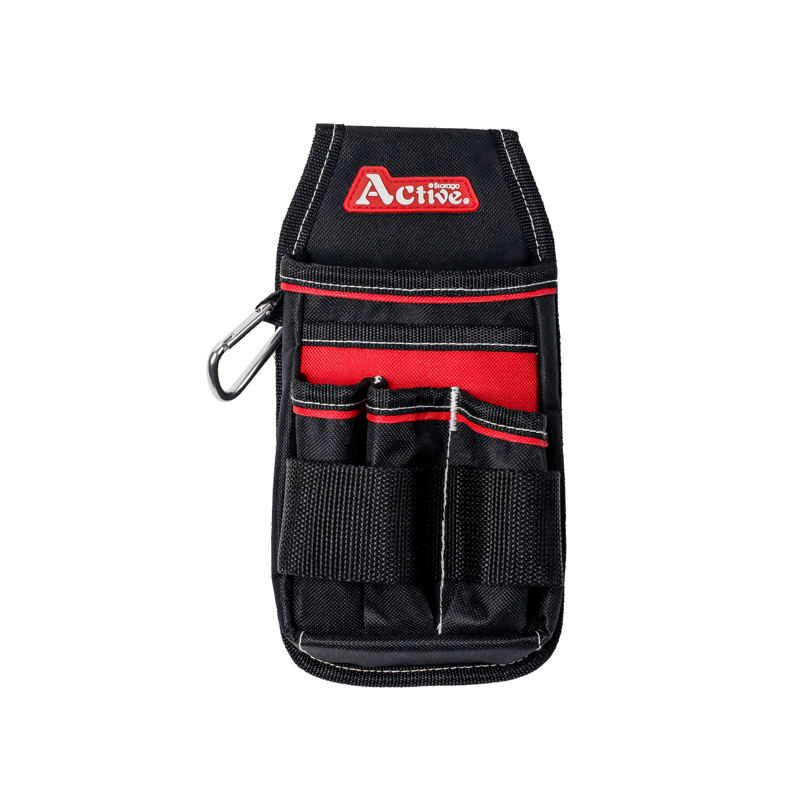
This product belongs to the tool pouch category, but its function extends beyond that of a basic pocket organizer. It combines a 12-pocket pouch, a quick-release belt clip, a heavy-duty support belt, dedicated tool attachments, and a reinforced structure capable of supporting a stated load capacity of up to 20 pounds. Its open-top configuration enables quick visual and tactile access, while its deep compartments help keep tools in place during movement, ladder work, overhead installation, and other demanding tasks.
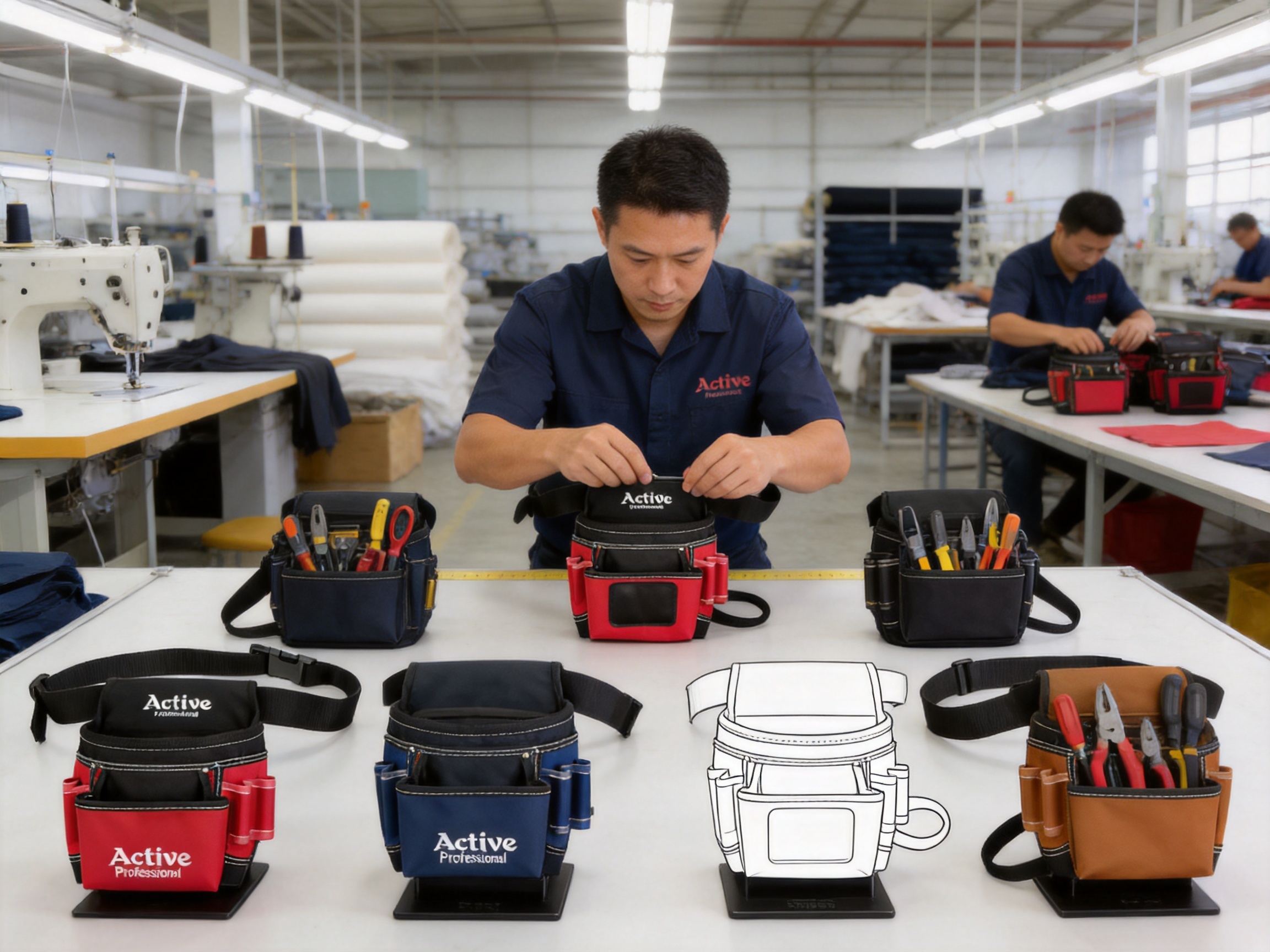
The product is identified as model B007 and is manufactured from polyester. Its listed pouch dimensions are approximately 27 by 21 centimeters, while the belt length is approximately 119 centimeters. Color options can be customized, making the set suitable for private-label programs, professional distributors, hardware retailers, electrical supply companies, and occupational equipment brands.
What distinguishes this type of tool pouch from a simple utility belt is the combination of modular attachment and systematic organization. Users can attach or remove the pouch without fully unbuckling their belt, arrange frequently used tools according to personal preference, and carry essential equipment close to the working hand. These features improve efficiency without requiring a large backpack or a bulky tool case.
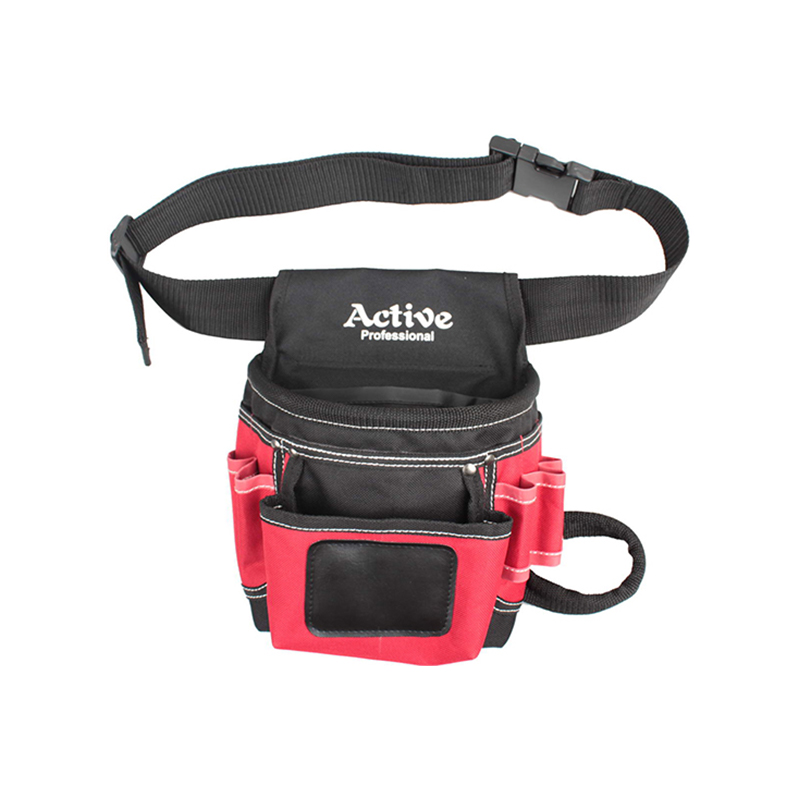
Electrician Tool Pouch with Belt Clip Heavy Duty Work Belt Set
Content
- 1 Product Overview and Intended Applications
- 2 Construction and Material Advantages
- 3 Quick-Release Belt Clip and Modular Wearing System
- 4 Organized Storage for Electrical and General Hand Tools
- 5 Comfort, Weight Distribution, and Ergonomics
- 6 Performance Compared with Alternative Tool Storage Options
- 7 Manufacturing Strengths and Quality-Oriented Production
- 8 Customization Opportunities for Global Buyers
- 9 Specification Summary
- 10 Recommended Loading and Use Practices
- 11 Why the Product Is Suitable for Professional Distribution
- 12 Quality Assurance Considerations for Buyers
- 13 Q&A
- 13.1 What type of product is this?
- 13.2 How many pockets does the pouch have?
- 13.3 Is the pouch suitable only for electricians?
- 13.4 What is the pouch made from?
- 13.5 How is the pouch attached to the belt?
- 13.6 What is the belt length?
- 13.7 What is the load capacity?
- 13.8 Does the pouch have a zipper or flap?
- 13.9 Can the color be customized?
- 13.10 Does the pouch stand upright when placed on the ground?
- 13.11 What accessories are included in the design?
- 13.12 Is the product waterproof?
- 13.13 Who manufactures the product?
- 13.14 What manufacturing capabilities does the company provide?
- 14 Conclusion
- 15 References
- 16 Product: Electrician Tool Pouch with Belt Clip Heavy Duty Work Belt Set
Product Overview and Intended Applications
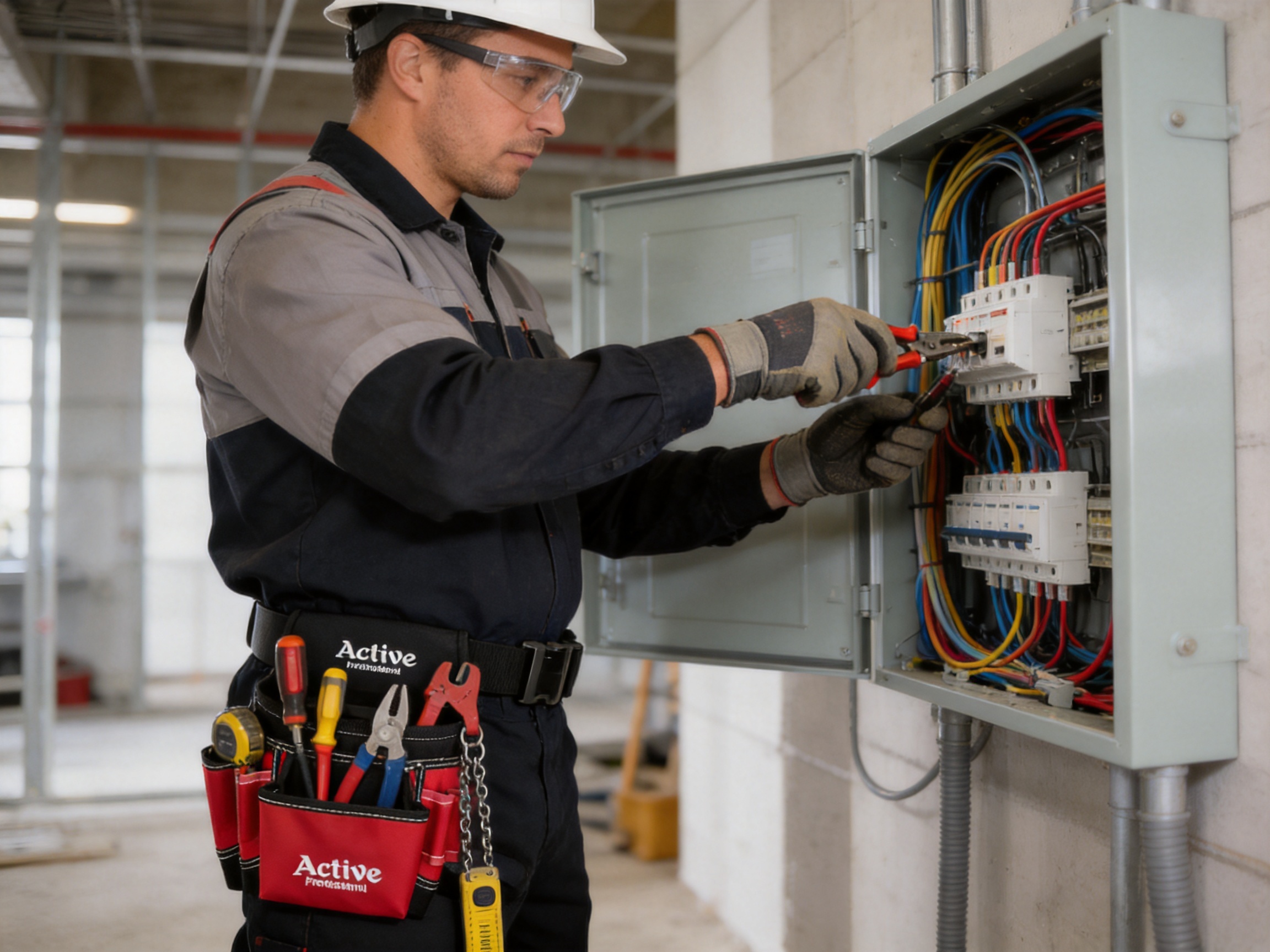
The Electrician Tool Pouch with Belt Clip Heavy Duty Work Belt Set is intended for users who need immediate access to frequently used tools while keeping both hands available for work. Electricians may use it for wire strippers, cutters, screwdrivers, voltage testers, electrical tape, measuring tools, and small accessories. Maintenance personnel can organize pliers, adjustable wrenches, drivers, fasteners, and inspection tools. Installers, technicians, carpenters, construction workers, and do-it-yourself users can also adapt the pouch to their own working routines.
The pouch is worn at the waist and supported by a dedicated work belt. The belt provides a stable foundation, while the quick-release clip makes the pouch removable. This arrangement is useful in work environments where a technician frequently moves between a workshop, vehicle, ladder, scaffold, and installation area. Instead of carrying a separate tool box for every short task, the user can select the essential tools and transport them directly on the body.
The open-top design is especially practical for professional work. Many tools are used repeatedly throughout the day, so closed zippers or flaps may slow down operation. An open-top pouch allows the user to reach into a compartment, identify the correct tool by touch, and continue working. This is valuable when the user is wearing gloves, working in a confined space, or looking at an electrical panel rather than down at the tool pouch.
The design is also suitable for private-label customization. The color is listed as customized, allowing buyers to coordinate the product with corporate identity, safety programs, retail packaging, or a broader tool storage collection. Customization may also support different market preferences, including high-visibility colors, neutral industrial tones, or coordinated color systems for identifying different trades.
Construction and Material Advantages
Durable Polyester Body
The pouch is manufactured from polyester, a material widely used in professional tool storage because it offers a practical balance between strength, weight, flexibility, and cost. Polyester fabric can withstand regular friction against clothing, vehicle interiors, ladders, work benches, and construction materials. It is also suitable for industrial sewing processes and can be configured in different weights and weaves according to the intended application.
For demanding tool pouches, fabric selection is only one part of durability. The overall performance also depends on the quality of the lining, binding, webbing, thread, seam construction, pocket reinforcement, belt interface, and bottom structure. A properly engineered polyester pouch can provide reliable daily service without the excessive weight of a rigid metal or molded plastic case.
Compared with a lightweight fabric pouch designed for occasional household use, this heavy-duty format is better suited to repeated professional handling. The product description emphasizes reinforced construction, including double stitching or riveted stress points in common heavy-duty designs. These reinforcement methods help reduce the risk of seam separation at areas that experience concentrated force, such as pocket openings, belt attachment points, tool loops, and the lower corners of the pouch.
Reinforced Stress Areas
Tool pouches experience more stress than ordinary bags because tools are inserted and removed repeatedly, often with one hand. Pliers and cutters may be pulled out at an angle. A hammer or larger hand tool can create leverage against a loop. A fully loaded pouch may pull downward on the belt clip while the wearer climbs, bends, or turns. Reinforcing these high-stress locations is therefore essential to service life.
Double stitching can distribute tension across a wider area of fabric. Bar-tack stitching can strengthen belt loops, pocket corners, and webbing intersections. Rivets or other hardware may be used in selected locations where repeated pulling forces are expected. A well-designed product does not merely add material; it places reinforcement where the user’s movement and the tool load generate the greatest mechanical stress.
The stand-up base is another practical structural feature. A reinforced, relatively flat bottom allows the pouch to remain upright when placed on the floor, a work surface, or a vehicle seat. This reduces the chance of tools spilling out and makes it easier to reload the pouch between tasks. A pouch that stands independently is also more convenient during inventory checks, cleaning, and tool organization.
Resistance to Job-Site Conditions
Professional tool storage must operate in environments that are rarely clean or gentle. Dust, wood particles, concrete residue, metal edges, oil, moisture, and repeated contact with rough surfaces can damage poorly constructed bags. A tightly woven polyester exterior and reinforced seams help the product withstand ordinary job-site abrasion. While the pouch should not be treated as fully waterproof unless separately specified, polyester construction can provide useful resistance to light moisture and everyday exposure.
Users should still maintain the pouch properly. Wet tools should not be stored inside for extended periods, and accumulated dust should be removed before it works into the seams or pocket interiors. Periodic inspection of the belt clip, stitching, loops, and belt buckle can help identify wear before it becomes a safety or performance problem.
Quick-Release Belt Clip and Modular Wearing System
Fast Attachment and Removal
The quick-release belt clip is one of the product’s most important advantages. Conventional tool belts often require the user to unbuckle the belt or thread it through multiple loops before a pouch can be installed or removed. That process is inconvenient when a technician must change tools frequently, enter a vehicle, pass through a restricted area, or switch from a full tool load to a lighter setup.
A clip-based system allows the pouch to be attached directly to the work belt. The user can prepare the belt, position the pouch at the preferred hip, and remove the pouch when the task is complete. This modular approach supports different working patterns. A technician may keep the belt on while changing pouches, or may use several pouches for separate categories of tools.
For example, one pouch could be organized for electrical installation, another for maintenance, and a third for communication or low-voltage work. The belt can serve as a common platform, reducing the need to reorganize every tool from the beginning each time the job changes.
Stability During Movement
A quick-release clip must provide more than convenience. It must also keep the pouch stable during normal movement. The product description highlights a locking mechanism in the clip design. A secure locking interface helps prevent accidental detachment when the wearer bends, climbs stairs, reaches overhead, or moves across uneven ground.
Stability is important for both productivity and safety. A pouch that swings excessively can strike nearby equipment, interfere with climbing, or cause the wearer to compensate with awkward body movement. A pouch that shifts away from the hip can also make tool access less predictable. A properly positioned and locked pouch remains close to the body, helping the user develop consistent muscle memory for each pocket.
Users should always confirm that the clip is fully engaged before beginning work. The belt should be adjusted so that it fits securely without restricting movement. The pouch should be placed where it does not interfere with climbing equipment, fall-protection harnesses, vehicle seat belts, or other required personal protective equipment.
Advantage Over Fixed-Sleeve Pouches
Fixed-sleeve pouches can be dependable, but they are less flexible when the wearer needs to change configurations. They may also require a wider opening or a full belt removal process. The clip-based design offers a useful advantage in mixed work environments where speed and adaptability matter.
Compared with a loose accessory bag carried by hand, the belt-mounted pouch keeps tools within a predictable reach and leaves both hands available. Compared with a large tool backpack, it provides faster access to a smaller group of essential tools. Compared with a rigid tool box, it is lighter and can move naturally with the worker. These differences make the product particularly useful for short-duration tasks, service calls, inspections, repairs, and installation work.
Organized Storage for Electrical and General Hand Tools
Twelve Dedicated Pockets
The pouch includes 12 pockets, creating a structured layout for tools of different sizes. A single large compartment may hold many items, but it also causes tools to overlap and become difficult to identify. Multiple pockets separate tools into functional locations and reduce unnecessary searching.
An electrician can place wire strippers in a larger central pocket, screwdrivers in narrow vertical sleeves, pliers in reinforced side compartments, a tester in a protected section, and small connectors or fasteners in another pocket. The user can customize the arrangement based on handedness, frequency of use, and the order of operations during a task.
Organization also makes it easier to identify missing tools. At the end of a job, an empty pocket is immediately visible. This can reduce the chance of leaving a screwdriver inside an electrical cabinet, dropping a pair of pliers behind equipment, or forgetting a measuring tool at a customer site.
Specialized Accessory Attachments
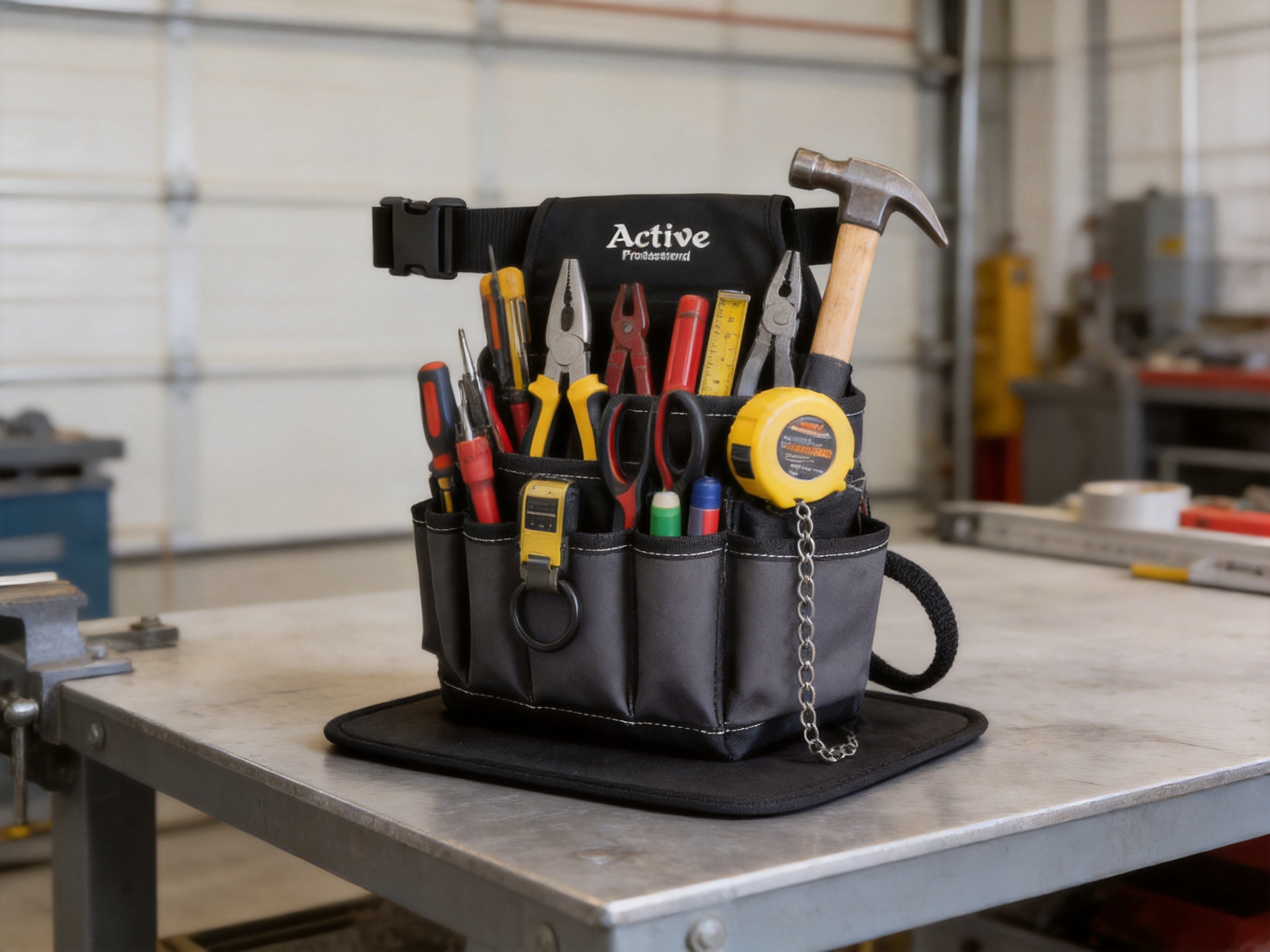
In addition to general pockets, the design incorporates dedicated attachments for common work accessories. An external tape measure clip provides one-handed access to a measuring tool. The user can attach the tape measure externally instead of placing it inside a fabric compartment, where it might consume valuable pocket space or be difficult to retrieve.
An electrical tape chain, sometimes called a T-chain, is intended to hold rolls of electrical tape. Electrical tape is a frequent consumable for electricians and technicians, but rolls can be awkward to store in a conventional pocket. A chain keeps the rolls visible and accessible while allowing them to remain outside the main tool compartments.
A hammer loop or pliers sleeve provides a stable location for larger hand tools. The rigid or reinforced loop reduces the chance that a heavy tool will collapse into a soft pocket. It also makes the tool easier to grasp and return after use. Depending on the user’s trade, the loop may hold a hammer, pry tool, larger pliers, or another item with a suitable handle.
Open-Top Access and Blind Operation
The open-top closure type supports rapid access. Professionals often work in positions where looking down at the pouch is inconvenient or unsafe. They may be facing a wall, holding a component with one hand, standing on a ladder, or working in reduced lighting. An open-top arrangement allows the user to locate tools through touch and repeated placement habits.
This “blind operation” capability depends on consistent organization. Users should return each tool to the same compartment after use. Over time, the pouch becomes an extension of the worker’s normal workflow. The hand moves toward a familiar position, identifies the tool shape, and retrieves it without a prolonged visual search.
Open-top storage is not intended to replace secure closure in every environment. If the pouch will be used during running, extreme vibration, or inverted work, the user should ensure that all tools fit snugly and that the pouch is not overloaded. The stated anti-drop design relies on deep, close-fitting pockets and proper loading practices.
Comfort, Weight Distribution, and Ergonomics
Wide Work Belt
The set includes a work belt with a listed length of approximately 119 centimeters. The belt is designed to support the pouch and distribute its load around the waist. A belt width of approximately two to three inches is typical for heavy-duty support systems of this type, providing a broader contact area than a narrow clothing belt.
A wider belt can help reduce pressure concentrations. When a pouch is heavily loaded, a narrow strap may dig into the waist or allow the pouch to tilt. A broader belt offers improved support and can help keep the pouch positioned consistently. The product description also refers to a padded, breathable mesh lining in heavy-duty support belt designs. Breathable padding may improve comfort during extended wear by allowing air movement and reducing direct contact between the belt and the body.
Reducing Unnecessary Strain
Carrying tools at the waist does not eliminate load-related fatigue, but it can make the load more manageable when the pouch is correctly positioned and balanced. Frequently used tools can be placed near the dominant hand, while heavier or less frequently used items can be distributed toward the opposite side or kept in another storage system.
Workers should avoid loading every pocket simply because capacity is available. The stated load capacity is up to 20 pounds, but the most comfortable working load may be lower depending on the user, task duration, belt adjustment, and other equipment being worn. A practical approach is to carry only the tools required for the current assignment and return unused items to a larger tool bag or vehicle case.
The product’s modular design supports this approach. A user can remove the pouch when entering a confined location, transfer it to another belt, or carry a lighter configuration for inspection work. This flexibility can reduce the need to wear a complete tool load throughout an entire shift.
Balanced Accessibility
Ergonomics also depends on pocket placement. Tools used repeatedly should be kept in the easiest-to-reach positions. Items with sharp edges should be stored so that the working end is protected or oriented away from the body. Long tools should be secured in vertical pockets rather than placed diagonally across the main compartment, where they may interfere with movement.
The user should periodically reassess the layout. A pocket arrangement that works for rough-in electrical work may not be ideal for service calls. The ability to reposition tools within 12 pockets makes it possible to adapt the pouch to different tasks without purchasing a completely different carrying system.
Performance Compared with Alternative Tool Storage Options
| Storage Option | Main Strength | Typical Limitation | Advantage of This Tool Pouch |
|---|---|---|---|
| Basic fabric pouch | Low weight and simple storage | Limited organization and weaker support | Provides 12 pockets, a dedicated belt, and reinforced professional construction |
| Fixed belt-loop pouch | Stable attachment | Often requires belt removal for installation or removal | Quick-release clip improves modularity and convenience |
| Large tool backpack | High carrying capacity | Tools may be slower to access and the backpack can be excessive for short tasks | Keeps essential tools immediately available at the waist |
| Rigid tool box | Strong protection and high capacity | Must be placed nearby and does not move naturally with the worker | Allows hands-free mobility during installation and repair work |
| Open bucket bag | Flexible storage for many tools | Tools can overlap and become difficult to identify | Provides dedicated compartments and specialized attachments |
| General utility belt | Convenient wearable storage | May not support heavier tools or electrical accessories effectively | Combines a heavy-duty belt, tool loops, tape chain, and structured pockets |
The pouch is not intended to replace every other type of tool storage. Large projects still require a tool backpack, trolley bag, or workshop case for transporting a full inventory. Its advantage is specialization: it carries the tools most likely to be used during a particular task and places them where they can be reached immediately.
This focused capacity can improve efficiency. Instead of repeatedly walking to a tool box, the technician can keep essential tools at hand. Instead of carrying a bulky backpack into a narrow service area, the worker can bring a compact waist-mounted system. Instead of using a single deep compartment, the user can maintain a repeatable layout that reduces search time.
Manufacturing Strengths and Quality-Oriented Production
More Than Two Decades of Experience
The manufacturer, Zhangjiagang Seaark Tools Industrial Co., Ltd., was founded in 2004 and specializes in professional tool bags and customization solutions. More than 20 years of experience in the category provides a strong foundation for understanding fabric selection, industrial sewing, reinforcement methods, belt systems, pocket layouts, and the practical demands of professional users.
Tool bag manufacturing requires more than the ability to sew fabric panels together. A dependable product must account for load paths, abrasion points, tool dimensions, user movement, attachment security, and production consistency. Experience helps a manufacturer identify where a pouch is most likely to fail and which construction details can improve durability without adding unnecessary weight or cost.
Multiple Production Bases
The company established Zhangjiagang Haiyi Tool Bags Co., Ltd. in 2012 as a core manufacturing base in China. It also operates a production facility in Cambodia. Multiple production bases can provide supply flexibility for international customers and help reduce exposure to regional production disruptions or additional United States tariffs, depending on the applicable commercial arrangement and current trade regulations.
For distributors and global brands, supply continuity is an important purchasing consideration. A manufacturer with more than one production location may be better positioned to support different delivery requirements, manage capacity changes, and develop sourcing strategies for specific markets. Production location alone does not guarantee quality, so buyers should still evaluate samples, approved specifications, inspection procedures, and compliance documentation.
Research and Development Capability
The company maintains an independent research and development team and develops more than 10 new designs each year. This design activity is relevant to the product category because tool storage requirements continue to change. Professionals increasingly expect lighter materials, better modularity, stronger attachment systems, improved comfort, and more specialized organization.
An active R&D program can support improvements in pocket geometry, clip design, belt adjustment, bottom reinforcement, fabric combinations, and customization methods. It can also help the manufacturer adapt existing patterns for different markets. A retailer may require a revised number of pockets, a different belt length, additional branding, special packaging, or a dedicated accessory arrangement.
The company holds multiple design patents and operates the registered Active Storage brand. These details indicate an emphasis on product development and intellectual property. For private-label customers, an established design and engineering process can reduce the time needed to move from a product concept to a manufacturable sample.
Audited Facilities and Compliance Awareness
The company’s facilities undergo annual third-party audits, including BSCI, SEDEX, FCCA, and SCS audits. Such audits are used by many international buyers to review areas such as social responsibility, workplace practices, factory management, and supply-chain standards. Audits do not replace product testing or buyer inspection, but they can provide additional visibility into the manufacturing environment.
For professional tool bag buyers, compliance awareness is increasingly important. Retailers and brands often need suppliers that can maintain documented processes, support corrective actions, and provide consistent production records. A factory accustomed to third-party evaluations may be more prepared to work with formal supplier qualification systems and customer-specific inspection requirements.
Production Scale
The company operates multiple production bases, employs more than 200 people, and manages approximately 11,000 square meters of floor space. This scale can support both standard product production and tailored orders. It may also make it easier to coordinate cutting, sewing, quality control, packing, sampling, and export preparation within an organized production structure.
Production scale should be matched with a clear quality system. For a product such as the Electrician Tool Pouch, quality control may include fabric inspection, measurement checks, pocket alignment, seam inspection, clip installation, belt attachment testing, load testing, color verification, and packaging review. Consistent inspection is particularly important when the product is sold under a distributor or private-label brand.
Customization Opportunities for Global Buyers
The listed color is customized, which gives buyers an initial opportunity to adapt the product to their market. Color can serve functional and commercial purposes. A high-visibility shade may improve recognition on a busy job site. Dark neutral colors may appeal to industrial maintenance users. A coordinated color system can distinguish electrician products from plumbing, carpentry, gardening, or general maintenance products.
Customization may also involve logos, labels, woven badges, zipper pulls, packaging, hangtags, instruction sheets, and carton markings. The final options depend on order quantity, production capability, material availability, and approval of samples. Buyers should provide clear artwork, color references, packaging requirements, and labeling regulations at the quotation stage.
The pouch layout may be adapted for different professional groups. An electrical version may prioritize wire strippers, screwdrivers, cutters, tape, testers, and pliers. A telecommunications version may require space for punch-down tools, connectors, cable shears, and testers. A maintenance version may emphasize adjustable wrenches, drivers, fasteners, and inspection accessories. The base pattern can serve as a starting point for such developments.
Different markets may also require different belt lengths or adjustment ranges. The listed belt length is approximately 119 centimeters, but buyers should confirm the usable adjustment range, buckle type, maximum recommended waist size, and whether extended sizes are available. Accurate sizing improves comfort and helps prevent the pouch from moving during work.
Specification Summary
| Parameter | Listed Specification |
|---|---|
| Product type | Electrician tool pouch with belt clip and heavy-duty work belt |
| Model reference | B007 |
| Category | Tool pouch |
| Material | Polyester |
| Color | Customized |
| Pouch dimensions | Approximately 27 by 21 centimeters |
| Belt length | Approximately 119 centimeters |
| Closure type | Open top |
| Number of pockets | 12 pockets |
| Load capacity | Up to 20 pounds as listed |
| Country of origin | China |
| Primary users | Electricians, technicians, installers, maintenance workers, contractors, and general tradespeople |
Specifications should be confirmed against an approved production sample before mass manufacturing or retail launch. Dimensions may be measured differently depending on whether they refer to the exterior body, usable interior, or maximum loaded profile. Similarly, load capacity should be interpreted together with the belt, clip, stitching, and user movement. Buyers may request a formal test method if the product will be marketed for a specific professional application.
Recommended Loading and Use Practices
Begin by identifying the tools required for the specific task. A typical electrical service configuration may include wire strippers, diagonal cutters, long-nose pliers, combination pliers, insulated screwdrivers, a non-contact voltage tester, a measuring tape, electrical tape, marker, small fasteners, and a compact flashlight. The exact selection should match the job and the employer’s safety requirements.
Place high-frequency tools in the easiest-to-reach pockets. Keep heavier tools close to the belt’s strongest support areas and avoid allowing one side of the pouch to become significantly heavier than the other. Use the tape measure clip and tape chain for their intended accessories rather than filling the main compartments with bulky rolls or cases.
Inspect each tool before placing it in the pouch. Sharp blades, damaged handles, exposed conductors, and loose accessories can harm the user or damage the fabric. Tools with pointed ends should be positioned so that they do not press against the wearer’s body. Small components should be placed in a secure compartment rather than left loose at the bottom of the pouch.
Before climbing or working overhead, check that every tool is seated fully inside its pocket and that the belt clip is locked. Avoid carrying tools that are too large for the compartments. A tool that protrudes excessively may catch on surrounding objects or fall during movement. The pouch should complement, not replace, the user’s fall-protection and tool-tether procedures where those procedures are required.
At the end of the shift, remove dust and debris, inspect the stitching and hardware, and return tools to their assigned locations. This routine maintains organization and makes it easier to identify wear. If the pouch becomes wet, allow it to dry naturally before storing it in a closed container.
Why the Product Is Suitable for Professional Distribution
For distributors, the product offers a clear value proposition: a recognizable professional use case, practical organization, modular attachment, and customization potential. It can be marketed to electrical supply stores, hardware wholesalers, industrial distributors, construction equipment retailers, online trade-product sellers, and private-label workwear brands.
The product also fits naturally into a broader tool storage range. It can be sold alongside trolley tool bags for high-volume transport, tool backpacks for mobile storage, zippered tool bags for protected organization, tool vests for expanded wearable capacity, tool bucket bags for general carrying, and folding-seat tool bags for service work. A complete product family allows retailers to serve customers with different carrying preferences and project sizes.
From a merchandising perspective, the pouch is easy to explain. Its features are visible and functional: 12 pockets, a belt clip, a work belt, an open top, tool loops, a tape measure clip, and an electrical tape chain. These features can be demonstrated in product photography, packaging, showroom displays, and online listings.
Its customizable color also creates opportunities for brand differentiation. A distributor can select a color that complements an existing workwear collection, while an industrial brand can use a consistent color and logo system across tool bags, backpacks, pouches, and accessories. The manufacturer’s experience with custom solutions can support the sampling and approval process required for such programs.
Quality Assurance Considerations for Buyers
Buyers should request a pre-production sample and examine the actual construction rather than relying only on a written description. Important points include fabric density, seam consistency, pocket depth, belt width, clip engagement, reinforcement at stress points, buckle operation, bottom stability, and the fit of common electrical tools.
Load testing should simulate realistic use. A sample can be loaded with representative tools up to the proposed capacity and observed while stationary and during controlled movement. The inspection should check whether the pouch tilts, whether pockets stretch excessively, whether the belt clip remains locked, and whether any stitching shows distortion.
Buyers should also test tool retrieval. A professional pouch must not only hold tools; it must allow them to be removed and replaced efficiently. Check whether screwdrivers remain upright, whether pliers can be grasped without catching, whether the tape measure clip is accessible, and whether the tape chain can hold the intended number of rolls.
For customized products, color approval is important because fabric, webbing, binding, thread, labels, and packaging may not display color identically. A physical color sample or approved reference should be retained. Buyers should also define tolerances for dimensions, logo placement, stitching, and packaging before production begins.
Documentation may include material information, inspection reports, audit records, packaging specifications, sample approvals, and corrective-action procedures. The exact documentation package depends on the market, retailer, and product category. A supplier capable of supporting structured documentation can make long-term purchasing more predictable.
Q&A
What type of product is this?
It is a heavy-duty electrician tool pouch supplied with a work belt and a quick-release belt clip. It is designed to carry frequently used hand tools and electrical accessories at the waist.
How many pockets does the pouch have?
The listed specification includes 12 pockets. These compartments can be arranged for screwdrivers, pliers, wire strippers, testers, small accessories, and other commonly used tools.
Is the pouch suitable only for electricians?
No. Although its configuration is especially suitable for electrical work, maintenance technicians, installers, construction workers, service contractors, and other tradespeople can use it. The pocket layout can be adapted to different tool combinations.
What is the pouch made from?
The listed material is polyester. Heavy-duty versions of this construction typically use reinforced seams, webbing, and stress-point reinforcement to improve resistance to abrasion and repeated loading.
How is the pouch attached to the belt?
The pouch uses a quick-release belt clip. This allows the user to attach or remove the pouch without completely unbuckling or removing the work belt. The clip should be checked to ensure that its locking mechanism is fully engaged before use.
What is the belt length?
The listed belt length is approximately 119 centimeters. Buyers should confirm the usable adjustment range and sizing requirements for their target market before placing a large order.
What is the load capacity?
The listed load capacity is up to 20 pounds. Users should distribute tools evenly, avoid overloading individual pockets, and consider comfort, movement, and job-site safety when selecting the actual working load.
Does the pouch have a zipper or flap?
No. The listed closure type is open top. This design provides fast access and supports tactile retrieval, but users should ensure that tools are properly seated when climbing, bending, or working overhead.
Can the color be customized?
Yes. The color is listed as customized. Specific color options, minimum order quantities, logo methods, packaging, and sample procedures should be confirmed with the manufacturer.
Does the pouch stand upright when placed on the ground?
The product description highlights a stand-up base in heavy-duty designs. Buyers should verify the exact behavior of the approved sample, including its stability when empty and when loaded with tools.
What accessories are included in the design?
The design includes or accommodates a tape measure clip, an electrical tape chain, and a hammer loop or pliers sleeve, in addition to its main pockets. The exact hardware configuration should be confirmed in the final product specification.
Is the product waterproof?
The supplied information identifies polyester as the material and refers to resistance to ordinary job-site conditions, but it does not establish a waterproof rating. The pouch should not be marketed as fully waterproof unless a specific test standard and result are available.
Who manufactures the product?
The product is manufactured by Zhangjiagang Seaark Tools Industrial Co., Ltd., a professional tool bag manufacturer founded in 2004. The company provides standard products and customized tool storage solutions.
What manufacturing capabilities does the company provide?
The company operates multiple production bases, has more than 200 employees, manages approximately 11,000 square meters of space, maintains an independent R&D team, develops more than 10 new designs each year, and supports third-party facility audits. These capabilities are relevant to both standard purchasing and private-label development.
Conclusion
The Electrician Tool Pouch with Belt Clip Heavy Duty Work Belt Set is designed around a simple professional need: keeping essential tools organized, secure, and immediately available. Its 12-pocket structure reduces clutter, while the open-top format supports rapid access. The quick-release clip adds flexibility compared with fixed belt-loop systems, and the work belt provides a stable foundation for daily use.
The polyester construction, reinforced stress areas, specialized accessory attachments, stand-up base, and stated 20-pound load capacity position the product above a basic household utility pouch. It is especially well suited to electricians and service technicians who need to carry a focused selection of tools without the bulk of a backpack or large tool case.
From a sourcing perspective, the manufacturer brings more than two decades of tool bag experience, multiple production bases, independent product development, design patents, third-party audit experience, and customization capabilities. These strengths can support retailers, distributors, contractors, and global brands seeking a dependable tool pouch or a tailored product program.
When correctly loaded and maintained, the pouch can improve working efficiency by shortening tool retrieval time, supporting hands-free mobility, and creating a repeatable organization system. Its greatest value is not simply the number of pockets it provides, but the way its belt-mounted design integrates tool storage directly into the worker’s routine.
References
1. Product specification sheet for Electrician Tool Pouch with Belt Clip Heavy Duty Work Belt Set, model B007.
2. Manufacturer-provided company profile for Zhangjiagang Seaark Tools Industrial Co., Ltd.
3. Manufacturer-provided information regarding polyester tool bag construction, reinforced seams, modular belt clips, accessory attachments, and ergonomic work belt design.
4. General industrial sewing and soft-tool-storage quality-control practices for fabric bags, belts, webbing, pockets, and load-bearing attachments.
5. General workplace organization and ergonomic principles for wearable hand-tool storage.
Product: Electrician Tool Pouch with Belt Clip Heavy Duty Work Belt Set




We are a professional enterprise engaged in exporting various types of toolkits.
We firmly believe that 'quality is everything, service enhances value'.
-
+86-15298800699

-
+86-512-58670375

-
karen@kun-bag.com

-
Building 11, No. 93 Chengang Road, Zhangjiagang City, Jiangsu Province, China

Copyright © Zhangjiagang Seaark Tools Industrial Co., Ltd. All Rights Reserved.
Custom Electrician Tool Backpack Manufacturers