
 en
 русский
 Español
 Deutsch

600D Heavy-Duty Tool Bag: A Rugged Storage Solution for Professional Technicians
Professional technicians need more than a container for carrying tools. They need organized storage, dependable protection, comfortable handling, and a construction standard capable of surviving demanding work environments. The 600D high-strength rubber-based plastic handle tool bag is designed around these practical requirements. With a thickened polyester body, a reinforced high-polymer rubber base, an impact-resistant plastic handle, a secure zipper closure, and a carefully balanced pocket layout, it provides a reliable solution for electricians, maintenance professionals, contractors, installers, repair technicians, and industrial service teams.
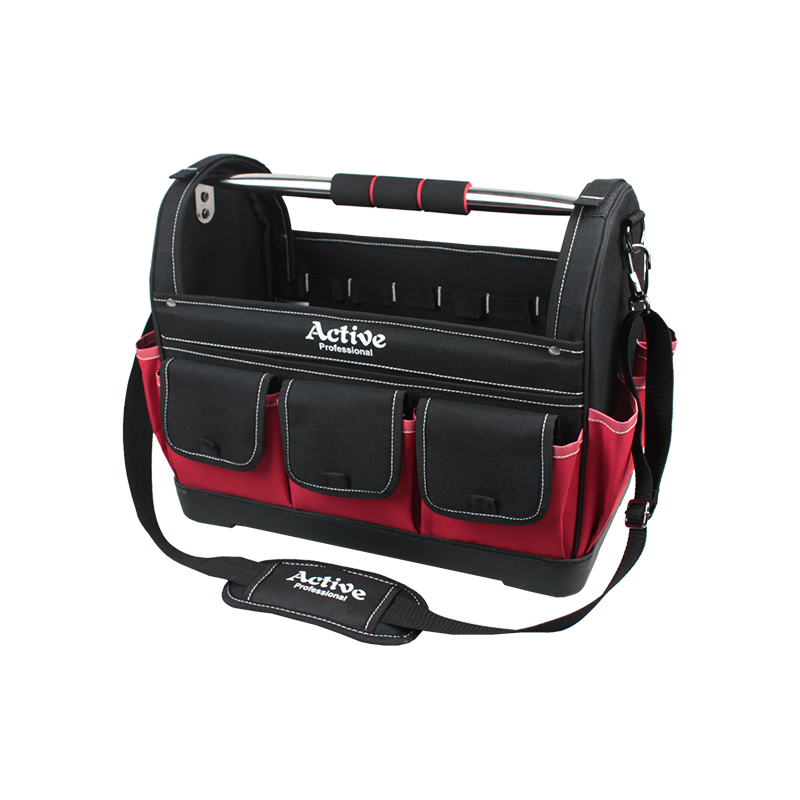
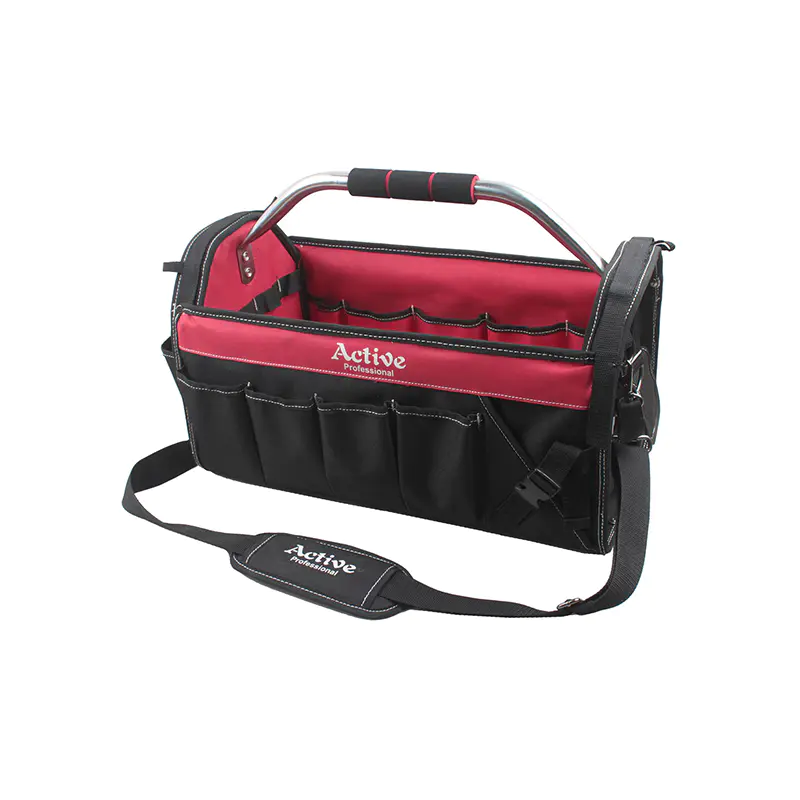
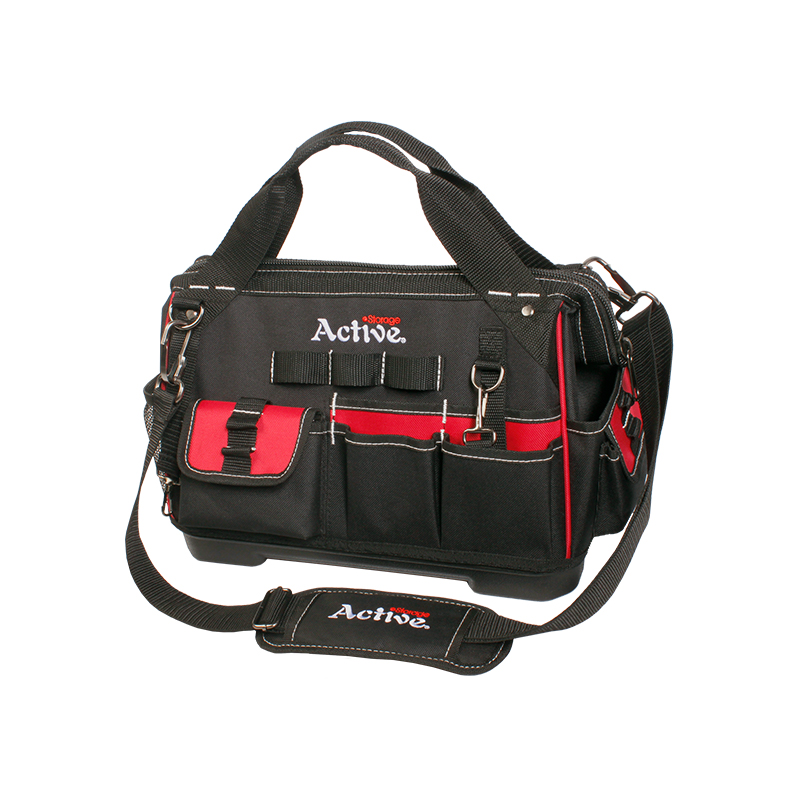
This zippered tool bag combines the portability of a compact tool case with the flexible organization of a soft-sided tool carrier. Its 40 x 22 x 33 cm extra-tall structure creates useful vertical storage for long-handled tools, while its 10 internal and 11 external pockets allow frequently used equipment to remain visible and accessible. The bag is rated for a load capacity of 44.09 pounds, making it suitable for a substantial working tool selection without requiring technicians to carry several separate containers.
Although many tool bags appear similar at first glance, differences in fabric density, base construction, handle design, pocket planning, and manufacturing consistency strongly influence their service life. This model is developed for buyers who value ruggedness and practical efficiency rather than decorative features alone. Its design reflects the needs of users who repeatedly load, transport, set down, open, close, and reload their tool bag in workshops, vehicles, construction areas, utility facilities, and maintenance locations.
Manufactured by Zhangjiagang Seaark Tools Industrial Co., Ltd., a Chinese supplier with more than two decades of experience in professional tool bag production, the product also benefits from an established manufacturing and customization system. The company operates multiple production bases, maintains an independent research and development team, and provides both standard products and tailor-made solutions for international customers. These capabilities are important for distributors, importers, private-label brands, and industrial buyers seeking dependable product development and supply support.
Content
- 1 Designed for Demanding Professional Use
- 2 600D Polyester for Strength and Durability
- 3 Reinforced High-Polymer Rubber Base
- 4 Impact-Resistant Plastic Handle for Heavy Loads
- 5 Extra-Tall Profile for Long-Handled Tools
- 6 Balanced Interior and Exterior Organization
- 7 Secure Zipper Closure
- 8 Load Capacity and Practical Weight Management
- 9 Advantages Over Basic Tool Bags
- 10 Manufacturing Experience and Product Development Capability
- 11 Advanced Production Process for Soft Tool Bags
- 12 Quality Management and Compliance Orientation
- 13 Customization Opportunities for Global Buyers
- 14 Applications Across Professional Trades
- 15 How to Load and Maintain the Tool Bag
- 16 Procurement Considerations for Importers and Distributors
- 17 Why Manufacturing Expertise Matters
- 18 Product Specification Summary
- 19 Frequently Asked Questions
- 19.1 What type of tool bag is this product?
- 19.2 How much weight can the bag carry?
- 19.3 What are the product dimensions?
- 19.4 How many pockets does the tool bag have?
- 19.5 What material is used for the main body?
- 19.6 What makes the bottom different from a basic fabric tool bag?
- 19.7 Why does the bag use a plastic handle instead of a webbing handle?
- 19.8 Is the bag waterproof?
- 19.9 Can the color be customized?
- 19.10 Can the pocket layout be customized?
- 19.11 Who is the bag suitable for?
- 19.12 What manufacturing strengths support this product?
- 19.13 Where is the product manufactured?
- 19.14 How should the bag be maintained?
- 20 Conclusion
- 21 References
- 22 Product: 600D High-Strength Rubber-Based Plastic Handle Tool Bag
Designed for Demanding Professional Use
A professional tool bag is exposed to repeated mechanical stress. It may be placed on rough concrete, loaded into a service vehicle, carried up stairs, squeezed into a crowded work area, or used in environments where dust and contact with hard surfaces are unavoidable. A product intended for this type of use must be designed as a complete system. The fabric, base, handle, zipper, seams, pockets, and overall proportions must work together instead of functioning as isolated parts.
The S009 model addresses these requirements through a combination of strong 600D polyester fiber and reinforced structural components. The fabric provides a substantial outer shell with high tensile strength and puncture resistance. The reinforced base helps protect the lower portion of the bag, where abrasion and impact are often most severe. The rigid plastic handle creates a stable carrying point for heavy loads, and the tall body provides additional room for tools that would be difficult to store in a shallow bag.
This combination gives the bag an advantage over lightweight fabric carriers that may be easy to transport when empty but lose their shape when filled. It also offers a more flexible alternative to completely rigid tool cases, which can provide excellent protection but may consume more storage space and offer less convenient access. The soft-sided body can accommodate irregularly shaped tools while the base and handle add structure where it is most needed.
The product is particularly suitable for professional electricians, HVAC technicians, plumbers, carpenters, installation teams, machinery service personnel, telecommunications workers, general maintenance staff, and field repair specialists. It can also serve as a practical storage product for serious do-it-yourself users who want a durable bag with greater capacity and organization than a basic household tool tote.
600D Polyester for Strength and Durability
The principal body material is polyester, specified at 600D. The “D” designation refers to denier, a measurement associated with the linear density of fibers used in textile construction. In practical product terms, 600D polyester is widely selected for bags because it offers a useful balance between strength, weight, flexibility, and cost. It is substantially more robust than many thin promotional fabrics and is suitable for products expected to carry heavy contents repeatedly.
High tensile strength is valuable because a tool bag experiences pulling forces from several directions. The fabric is stressed when a loaded bag is lifted, when tools push against the side walls, and when the bag is inserted into or removed from a vehicle compartment. A stronger woven material helps the bag maintain its basic structure under these conditions.
Puncture resistance is equally important. Tool edges, fasteners, screwdrivers, pliers, and other sharp or angular objects can place concentrated pressure against the fabric. A durable polyester shell reduces the likelihood that routine contact will quickly develop into a tear. While no soft-sided bag should be treated as completely puncture-proof, the 600D construction is appropriate for the rough handling associated with professional tool transport.
The fabric also supports customization. Polyester can be manufactured in customized colors and can accommodate various branding, labeling, and trim requirements depending on the buyer’s project specifications. This is useful for distributors and private-label customers that need the same core product in a selected color range or with an identifiable corporate appearance.
Material strength alone does not determine service life. Thread quality, seam construction, reinforcement points, zipper installation, binding, and load distribution all influence performance. A well-designed 600D bag is therefore more than a piece of thick fabric. It is a coordinated product in which the material specification supports a broader construction process.
Reinforced High-Polymer Rubber Base
The bottom of a tool bag receives some of the hardest treatment during daily use. Users set the bag down on floors, vehicle beds, workshop benches, gravel, concrete, and other uneven surfaces. The base can also be exposed to moisture, dirt, impact, and repeated dragging. A weak bottom may become scuffed, misshapen, or detached even when the upper fabric remains in good condition.
This model uses a high-polymer rubber base with an anti-slip texture. The rubber-based structure provides a protective barrier between the contents and the surface below. It also helps absorb some shock when the bag is placed down, which can reduce the direct impact transferred to the tools and the bag’s seams.
The anti-slip texture improves stability. A smooth fabric bottom can allow a bag to slide when placed on a sloped vehicle floor or a polished workshop surface. A textured rubber base creates more friction, helping the bag remain in position during transport and use. This is a practical safety and convenience feature because a stable bag is easier to access and less likely to tip over.
The reinforced base also helps the tool bag stand more confidently. Soft tool bags can collapse or lean when they are only partially filled. A structured bottom gives the body a more reliable foundation, allowing users to place the bag down while keeping tools organized inside. This is especially useful when a technician needs to remove or replace tools repeatedly during a job.
Compared with bags that use only a single layer of textile at the bottom, the rubber-based base offers a clear durability advantage. It is better suited to frequent contact with rough surfaces and provides an additional level of protection from ordinary workshop wear. The base is not merely decorative reinforcement; it directly supports the bag’s role as a field-use storage product.
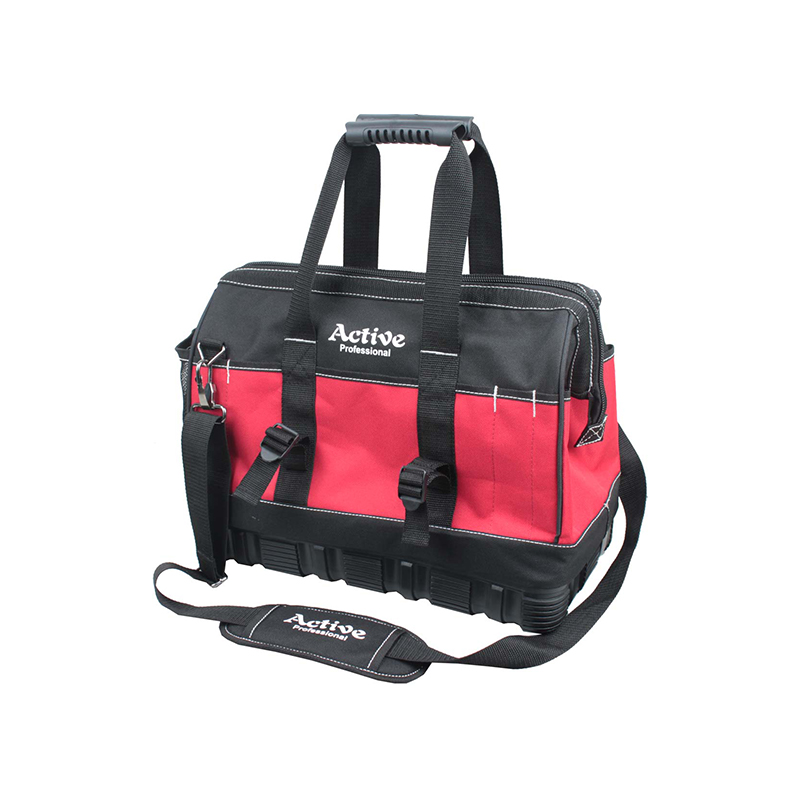
600D High-Strength Rubber-Based Plastic Handle Tool Bag
Impact-Resistant Plastic Handle for Heavy Loads
Many traditional tool bags use webbing handles. Webbing is flexible and lightweight, but it can allow the load to press against the hand in a narrow area. When a bag is carrying a large assortment of metal tools, this concentrated pressure may make the bag uncomfortable to carry. Flexible straps can also cause the bag to swing, bend, or fold when lifted.
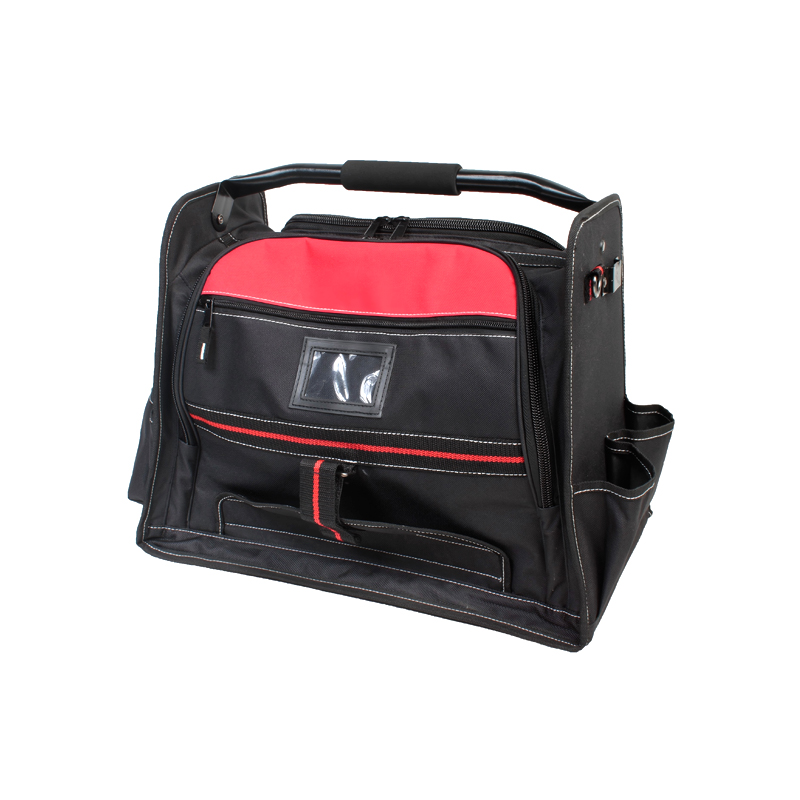
The S009 model uses an impact-resistant plastic handle instead of a conventional webbing-only carrying handle. The rigid handle creates a more stable lifting point and distributes the load more evenly across the hand. This design is particularly valuable when the bag is filled close to its 44.09-pound rated load capacity.
A solid handle also improves control. Technicians can lift the bag with less deformation, place it down more accurately, and move through narrow spaces with a more predictable carrying profile. The handle can make the bag feel more like a structured tool case while preserving the storage flexibility of a textile body.
Handle design should always be evaluated together with the attachment method and the bag’s load rating. A strong grip must be supported by suitable reinforcement where it connects to the body. The manufacturing process therefore needs to control alignment, stitching, reinforcement, and assembly consistency. An experienced tool bag manufacturer can use established production methods to maintain these details across repeated orders.
The plastic handle also contributes to product differentiation. Buyers comparing multiple tool bags may find similar fabrics and pocket counts, but the carrying system often determines whether a bag feels genuinely professional. A stable impact-resistant handle is a visible and functional upgrade over basic soft handles, particularly for users who transport heavy tools over longer distances.
Extra-Tall Profile for Long-Handled Tools
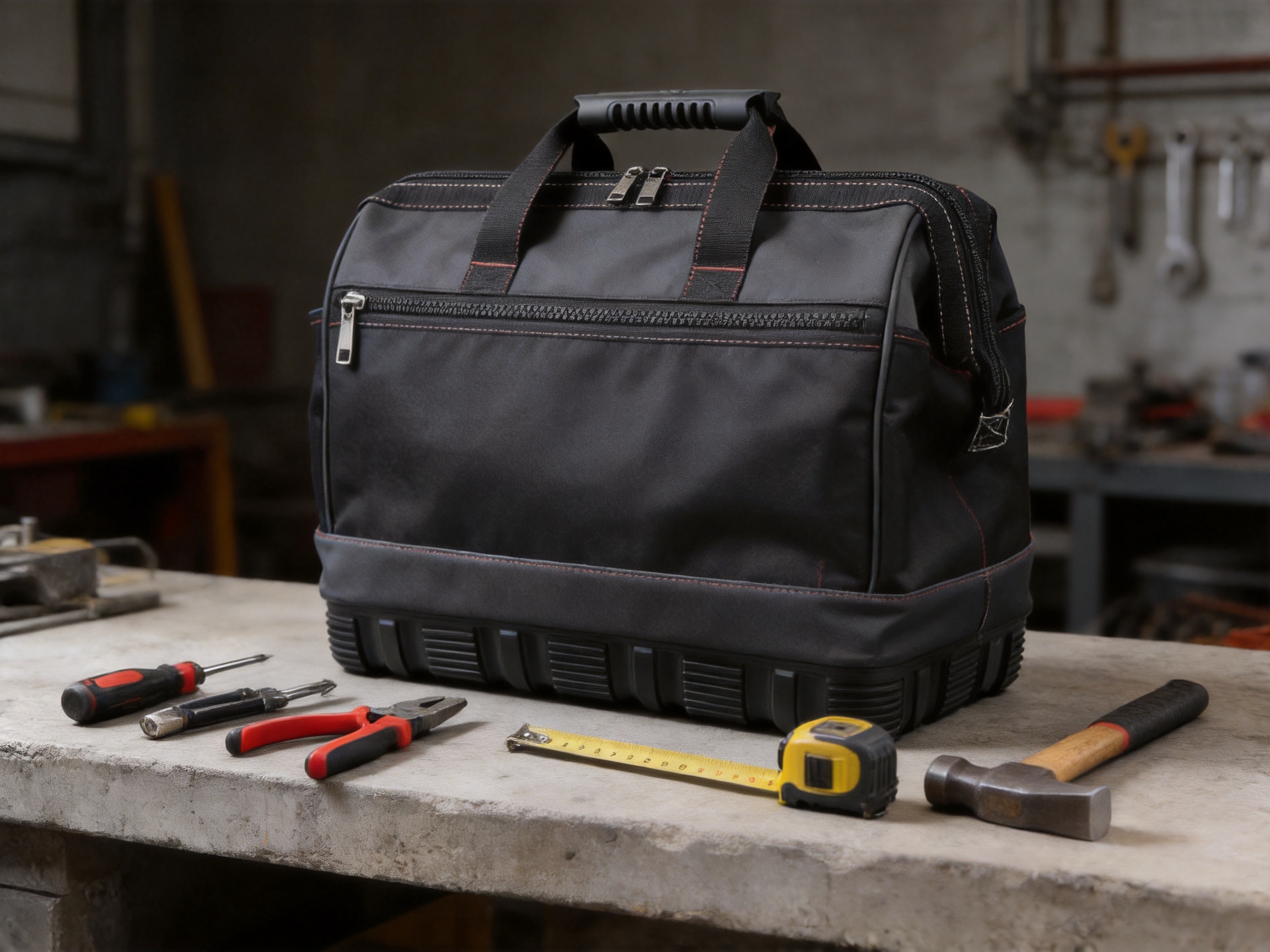
The dimensions of the product are 40 x 22 x 33 cm. Its extra-tall profile is one of its most useful design characteristics. Many tool bags are relatively shallow, which can make it difficult to store long screwdrivers, hammers, pliers, cutters, measuring equipment, and other elongated tools without forcing them to lie horizontally.
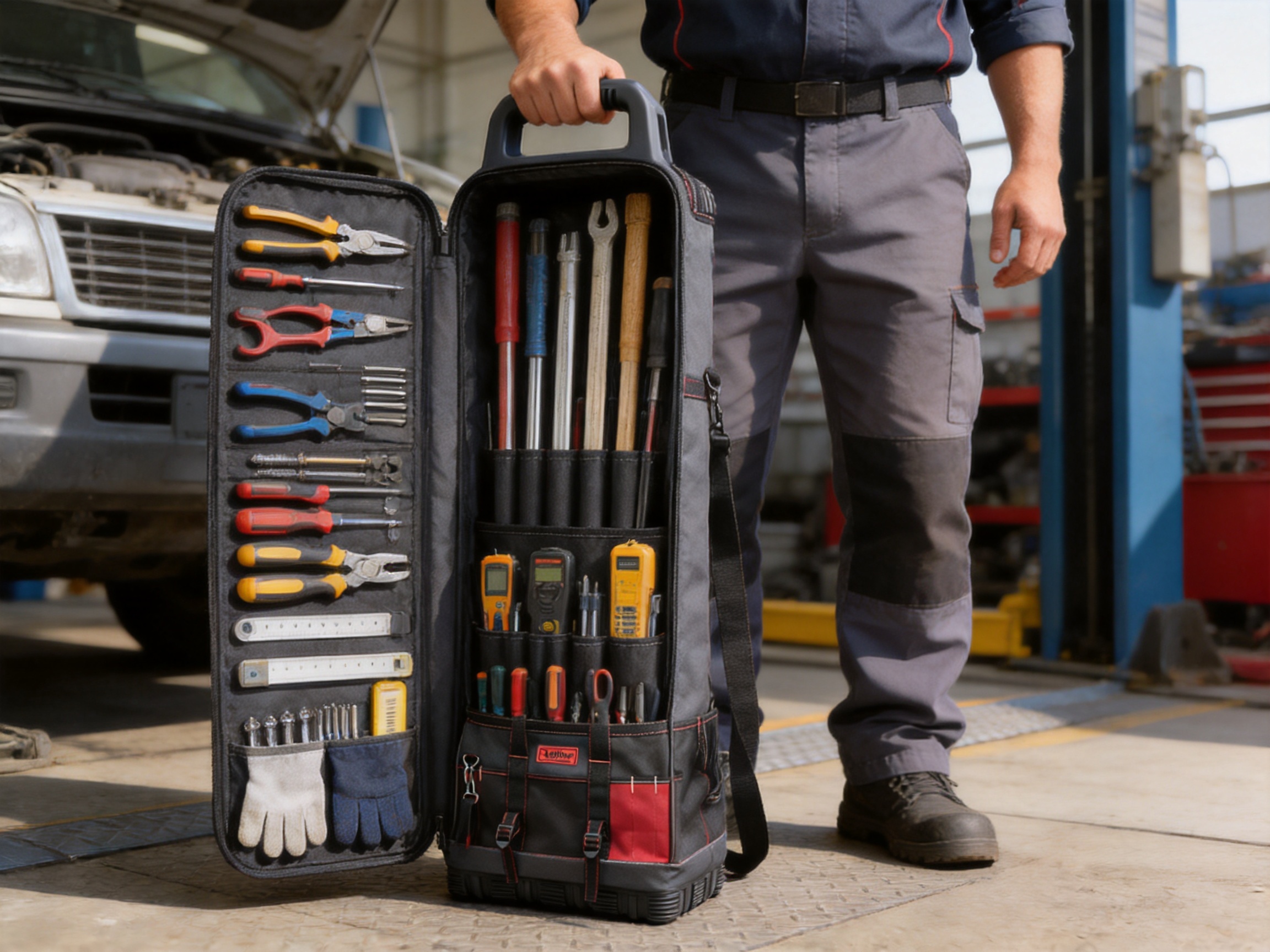
The taller body creates vertical room for tools that benefit from upright storage. When long-handled tools are stored vertically, their grips can remain visible above or near the opening, making selection faster. This can reduce the time spent searching through a crowded main compartment and may help prevent small tools from becoming buried beneath heavier equipment.
Vertical storage can also improve space utilization. A tall bag makes better use of height inside a service vehicle, workshop shelf, or equipment cabinet. Instead of spreading tools across several shallow containers, users can place a larger selection into one organized carrier. This supports the product’s role as a multi-purpose tool luggage solution for mobile professionals.
The dimensions offer a balance between capacity and portability. At 40 cm in length and 22 cm in width, the bag remains compact enough for vehicle storage and job-site movement, while the 33 cm height provides additional usable volume. Its proportions are appropriate for users who need more capacity than a small tool pouch but do not want the bulk of a large rolling tool case.
The extra-tall format should not be interpreted as a substitute for specialized storage of exceptionally long equipment. However, for common hand tools and many portable service tools, it provides a useful advantage over low-profile bags. The design is particularly attractive to electricians, installers, maintenance workers, and technicians who carry numerous narrow or elongated tools.
Balanced Interior and Exterior Organization
Tool organization is one of the main factors that distinguishes a professional bag from a general-purpose carryall. A single large compartment may hold many objects, but it does not prevent tools from mixing together. Users then spend additional time searching, and delicate equipment may become damaged by contact with heavier or sharper tools.
This model includes 10 internal pockets and 11 external pockets, for a total of 21 designated storage areas. The interior pockets can be used for tools and accessories that benefit from additional protection or separation. The external pockets are suitable for items that need to be reached frequently without opening the main zipper.
External organization is particularly helpful for routine service work. Tape measures, markers, small screwdrivers, utility knives, pliers, electrical testers, fasteners, gloves, and other frequently used accessories can remain within immediate reach. Keeping these items outside the main compartment reduces unnecessary opening and closing during a job.
The internal pockets help create a more controlled arrangement for heavier or less frequently used tools. Users can separate measuring instruments from metal hand tools, keep accessories grouped by task, or allocate pockets according to a personal workflow. Since technicians often develop specialized tool combinations, a flexible pocket layout is more useful than a highly restrictive arrangement designed for only one occupation.
The number of pockets also helps distribute weight. Instead of allowing all tools to accumulate in one area, users can spread contents through the interior and exterior compartments. More balanced loading can improve carrying comfort and help the bag maintain its shape. It may also make the zipper easier to operate by reducing pressure on the opening.
Compared with a basic open tote, the zippered and pocketed configuration provides better containment and organization. Compared with a rigid case with molded tool recesses, it offers more flexibility for irregular tool shapes and changing tool selections. This balance makes the bag practical for multi-trade users and industrial buyers who need one adaptable product rather than a single-purpose container.
Secure Zipper Closure
The main closure type is a zipper. A zippered opening helps keep tools contained during transport and reduces the risk of smaller accessories falling out when the bag is tilted or carried through a vehicle. It also provides a more enclosed storage space than an open-top tote.
A zipper closure can be opened widely for convenient access while still offering protection when the bag is not in use. This is useful for technicians who work in mobile conditions and need to move the bag between a storage area and a job location. When closed, the bag presents a more controlled profile and helps prevent contents from shifting excessively.
Proper zipper installation is essential. The zipper must be aligned with the opening, securely attached to the fabric, and finished with suitable stitching and reinforcement. Quality control during assembly helps reduce issues such as uneven movement, separation, or stress at the corners.
The zipper is not described as waterproof, so the bag should not be treated as a waterproof container. Nevertheless, an enclosed zippered design can help limit casual exposure to dust and debris compared with an entirely open bag. Users working in wet conditions should apply suitable protective practices and avoid leaving the product in standing water.
Load Capacity and Practical Weight Management
The stated load capacity is 44.09 pounds. This rating indicates that the bag is designed to carry a substantial selection of professional tools. Such capacity is valuable for field technicians who need to reduce the number of trips between a service vehicle and a work area.
Load capacity should always be considered alongside the way contents are arranged. Heavy tools should be positioned close to the bottom and distributed as evenly as practical. Sharp objects should be placed so that they do not press directly against the outer fabric. Smaller accessories can be assigned to pockets to reduce movement inside the main compartment.
Users should also inspect the bag periodically. The handle, seams, zipper, base, and pocket attachments should be checked for signs of unusual wear. A capacity rating is not a recommendation to exceed safe handling limits or to carry an unbalanced load. Proper loading supports comfort and helps preserve the product’s construction over time.
The rigid handle and reinforced base work together to support heavy carrying. The handle gives the user a stable lifting point, while the base helps the loaded bag remain upright after it is placed down. This coordinated design is more useful than a high capacity claim by itself because it addresses the actual handling stages of a heavy tool bag.
For procurement teams, the 44.09-pound rating can help determine whether the product is suitable for a particular tool program. It may serve as a primary daily bag for hand tools, a supplementary bag for specialized equipment, or a standardized carrier for field service kits. The final selection should be based on the weight and shape of the intended contents.
Advantages Over Basic Tool Bags
The first major advantage over basic tool bags is material strength. Thin fabric carriers may be adequate for occasional household tasks, but they are less suitable for repeated industrial handling. The 600D polyester body provides a more robust shell for professional use and offers improved resistance to tensile stress and puncture from ordinary tool contact.
The second advantage is the high-polymer rubber base. A basic bag may have only fabric at the bottom, leaving it vulnerable to abrasion and moisture from surfaces. The textured rubber base adds protection, stability, and shock absorption. This makes the product better adapted to workshops, construction environments, service vehicles, and other locations where the bag is frequently set down.
The third advantage is the impact-resistant plastic handle. A webbing handle can be functional, but a rigid handle generally provides better carrying control and a more even hand feel under heavy loads. The plastic grip also gives the product a more structured character, helping bridge the gap between a flexible tote and a rigid tool case.
The fourth advantage is the extra-tall shape. Many low-profile bags provide limited vertical storage and force long tools to lie across the main compartment. The 33 cm height gives users more room to carry long-handled equipment upright, improving visibility and access.
The fifth advantage is the 21-pocket organization system. A simple open compartment may hold many tools but does not support efficient sorting. The combination of 10 interior and 11 exterior pockets allows users to separate tools by size, frequency of use, or task type.
The sixth advantage is the product’s adaptability. It is not restricted to one profession or one fixed tool set. Electricians, maintenance teams, installers, repair technicians, and general contractors can configure the bag according to their own requirements. This versatility is valuable for distributors that serve multiple professional sectors.
These advantages are most meaningful when they work together. A strong fabric without organization would still be inconvenient. A large pocket count without a stable base would still be difficult to use. A rigid handle without suitable body reinforcement would not support heavy loads effectively. The product’s value comes from the combination of material, structure, capacity, and usability.
Manufacturing Experience and Product Development Capability
The product is manufactured by Zhangjiagang Seaark Tools Industrial Co., Ltd., which was founded in 2004 and specializes in exporting professional tool bags and supplying customization solutions. More than 20 years of experience in the category gives the company a practical understanding of the materials, construction details, and commercial requirements involved in tool bag production.
In 2012, the company established Zhangjiagang Haiyi Tool Bags Co., Ltd. as a core manufacturing base in China. It also operates a production facility in Cambodia. Maintaining production resources in more than one location can provide greater supply flexibility and help customers manage sourcing requirements. For international buyers, a broader manufacturing footprint may also support continuity planning and regional supply strategies.
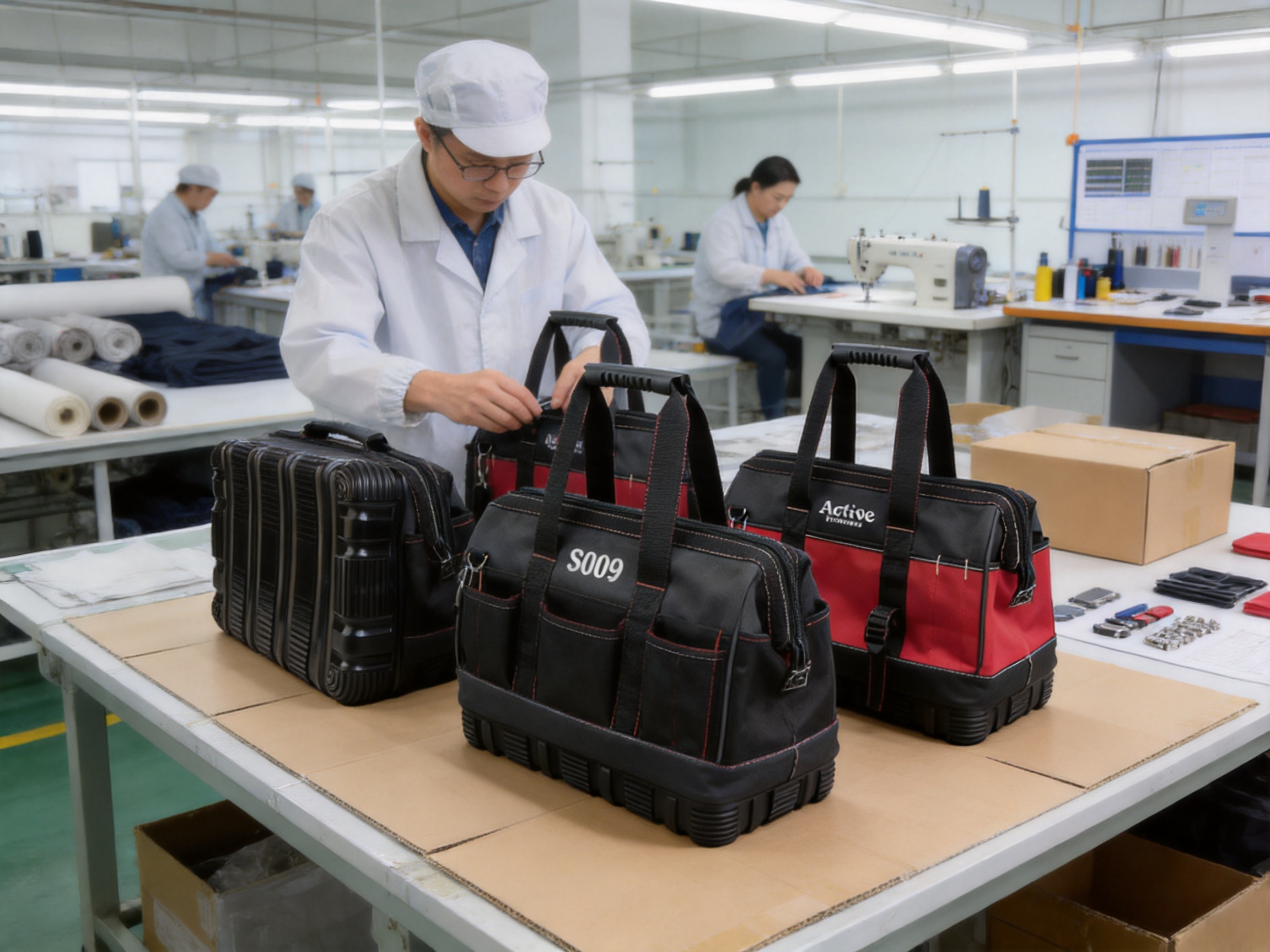
The company has more than 200 employees and manages approximately 11,000 square meters of floor space. These resources support the activities required to produce professional soft goods, including material preparation, cutting, sewing, assembly, inspection, packing, and shipment coordination. A suitable facility size and an experienced workforce are important for maintaining consistency when products are ordered in commercial quantities.
Seaark also maintains an independent research and development team. The team develops more than 10 new designs each year, demonstrating a continuing focus on product improvement and market response. For tool bag buyers, an active R&D function can be valuable because professional users often request changes to pocket placement, capacity, carrying systems, materials, colors, and branding.
The company’s registered brand is Active Storage, and it holds multiple design patents. These elements indicate an emphasis on original product development rather than relying exclusively on generic forms. Design ownership can help customers seeking differentiated products for their own catalogs or private-label programs.
The manufacturing system supports both standard products and tailor-made solutions. Standard products are useful for buyers who need a proven design with relatively straightforward procurement. Customized solutions are appropriate for customers that require specific dimensions, colors, logo treatments, pocket configurations, materials, packaging, or other project features.
Advanced Production Process for Soft Tool Bags
Professional tool bag manufacturing begins with material selection. The fabric must match the intended load, use environment, appearance, and cost target. For this model, the 600D polyester body is selected to provide a balance of strength and practical flexibility. Other components, including the rubber-based base, plastic handle, zipper, thread, binding, and reinforcement materials, must be compatible with the overall design.
The next stage is pattern development. A tool bag pattern determines the dimensions of the body panels, pocket shapes, opening geometry, base size, handle position, and seam allowances. Accurate patterns are essential because small dimensional errors can affect symmetry, zipper operation, pocket capacity, and the bag’s ability to stand upright.
Material cutting must be controlled carefully. Consistent panel sizes help ensure that the completed bag has the correct dimensions and that the zipper and handle align properly. Efficient cutting also helps reduce material waste, which is important for commercial production and responsible resource management.
Pocket assembly is typically completed before the main body is closed. This allows workers and production equipment to attach internal and external pockets with better access to the relevant fabric panels. Pocket positioning must remain consistent so that the finished product matches approved samples and performs as intended.
The handle assembly requires particular attention because it is a primary load-bearing component. The plastic handle must be positioned at the correct centerline and attached with suitable reinforcement. Consistent sewing and reinforcement help transfer lifting forces into the body rather than concentrating stress at a small section of fabric.
The base assembly is another important operation. The high-polymer rubber base must be integrated with the body in a way that supports stability and durability. The joining area should be checked for alignment, secure attachment, and clean finishing. A properly installed base improves the product’s ability to stand and helps protect the lower body from abrasive contact.
Zipper installation requires accuracy along the full opening. A zipper that is not aligned correctly may operate unevenly or place unnecessary stress on the surrounding fabric. Inspection should include opening and closing movement, corner transitions, attachment security, and the final appearance of the zipper tape and stitching.
After assembly, finished bags can be inspected for dimensions, material appearance, stitching, pocket placement, handle attachment, zipper operation, base condition, and general workmanship. Production consistency is especially important for exporters and private-label customers because every unit in a shipment should meet the approved specification.
Quality Management and Compliance Orientation
Seaark’s facilities undergo annual third-party audits, including BSCI, SEDEX, FCCA, and SCS. These audit frameworks are associated with areas such as social responsibility, ethical supply chain practices, factory management, and operational compliance. Auditing does not replace product inspection, but it can provide customers with additional visibility into manufacturing standards and supplier practices.
For international buyers, a responsible supply chain is increasingly important. Procurement teams may evaluate labor practices, workplace conditions, documentation, environmental procedures, traceability, and business integrity in addition to price and product quality. A supplier with established audit experience is better positioned to support these requirements than an unverified source.
Quality management should cover both incoming materials and finished products. Material checks can confirm fabric specifications, color consistency, base components, hardware, zippers, and handle parts. In-process checks can monitor cutting, sewing, reinforcement, and assembly. Final inspections can verify appearance, dimensions, function, and packing condition.
The product specification provides clear reference points for inspection. Buyers can verify that the bag uses the approved polyester material, measures approximately 40 x 22 x 33 cm, includes the specified pocket count, uses a zipper closure, incorporates the rubber-based base and plastic handle, and meets the agreed load capacity requirements.
Color is listed as customized. This provides flexibility for customer projects, but final color requirements should be confirmed through approved samples or color references before mass production. Custom color control is especially important for retailers, branded programs, and corporate tool systems where visual consistency matters.
Customization Opportunities for Global Buyers
Customization allows the basic product platform to serve different markets and user groups. A distributor may request a particular exterior color, logo treatment, label format, or packaging style. An industrial customer may require a pocket arrangement suited to a specific maintenance kit. A private-label brand may need a coordinated series of tool bags with consistent materials and visual identity.
Potential customization areas may include fabric color, printed or woven labels, logo placement, zipper pulls, interior lining, pocket dimensions, handle details, packaging, carton markings, and product documentation. Exact feasibility depends on the buyer’s requirements, order quantity, tooling needs, and production schedule.
The 600D polyester body is well suited to a range of color options. The product can therefore be adapted for professional brand identities, trade-specific color coding, or retail collections. For example, a buyer may use different colors to distinguish electrical, plumbing, mechanical, and general maintenance tool kits.
Pocket customization can improve workflow efficiency. An electrician may need dedicated locations for testers, insulated screwdrivers, cable tools, and connectors. A service technician may prioritize measuring instruments, replacement parts, and diagnostic accessories. A contractor may require larger exterior pockets for gloves, fasteners, and personal protective equipment.
When considering customization, buyers should preserve the structural logic of the product. Changes that increase pocket weight, reduce seam allowance, obstruct zipper travel, or move the handle away from the balance point may affect performance. An experienced manufacturer can help evaluate these trade-offs before a design is approved.
Applications Across Professional Trades
Electrical Service and Installation
Electricians often carry a diverse selection of hand tools, testing devices, fasteners, tape, connectors, and protective equipment. The external pockets provide practical locations for frequently used accessories, while the tall main compartment can accommodate screwdrivers, pliers, cutters, and other long-handled tools. The zippered top helps keep smaller components contained between work locations.
HVAC and Mechanical Maintenance
HVAC and mechanical technicians may need to carry hand tools, measuring devices, adjustment tools, replacement parts, and consumables. The strong body and reinforced base are suitable for frequent movement between service vehicles and equipment rooms. The 44.09-pound capacity can support a substantial daily kit when the load is distributed properly.
Plumbing and Installation Work
Plumbing and installation work often involves irregularly shaped hand tools and accessories. A flexible textile body can adapt more easily to these contents than a molded case with fixed recesses. The tall profile can be useful for storing longer tools, while the rubber base helps protect the bag when it is placed on workshop or job-site floors.
Construction and General Contracting
General contractors and construction teams need bags that can tolerate repeated handling and changing tool combinations. The combination of durable fabric, a protective base, and multiple pockets makes this model suitable for general hand-tool transport. Its customized color capability can also support team identification or project-specific organization.
Industrial Repair and Facility Maintenance
Facility maintenance personnel may work across production areas, storage rooms, offices, utility spaces, and outdoor locations. They benefit from a mobile tool carrier that is easy to identify, stable when set down, and large enough for a broad selection of repair tools. The professional construction of this model supports such varied service conditions.
Retail and Private-Label Programs
Retailers and private-label brands can use the product as part of a broader tool storage collection. The design provides a clear feature story: 600D polyester, rubber-based anti-slip base, impact-resistant plastic handle, 21 pockets, zippered closure, extra-tall profile, and 44.09-pound load capacity. Custom colors and branding can help differentiate the product in a competitive marketplace.
How to Load and Maintain the Tool Bag
Correct loading helps maximize both comfort and service life. Heavy items should be placed near the bottom and toward the center of the bag. Lighter accessories can be placed in upper areas or external pockets. This arrangement lowers the center of gravity and helps the bag remain stable when placed on the floor.
Sharp tools should be positioned carefully. Blades, pointed objects, and rough edges should not press directly against the outer wall. Where appropriate, users can employ protective sleeves or place sharp tools in separate pockets. This simple practice helps protect both the bag and nearby equipment.
The zipper should not be forced over an overfilled opening. If the top is difficult to close, the contents should be rearranged or reduced. Excessive pressure on the zipper can affect its movement and place unnecessary stress on adjacent seams.
The rubber base should be cleaned when dirt or grit accumulates. A soft brush or cloth can remove ordinary debris. The polyester body can generally be wiped or spot-cleaned according to the care instructions provided for the final production version. Harsh chemicals, prolonged soaking, and high heat should be avoided unless specifically approved for the materials.
After use in dusty or damp conditions, the bag should be allowed to dry before long-term storage. Tools should not be left inside if they are wet, oily, or contaminated with substances that may damage the fabric or hardware. Periodic inspection of the handle, seams, zipper, pockets, and base can identify wear before it affects the entire product.
Proper maintenance does not eliminate normal wear, but it can help preserve the bag’s appearance and functionality. For fleet users, a simple inspection and cleaning routine can be included in regular equipment management procedures.
Procurement Considerations for Importers and Distributors
Importers should begin by defining the intended user and tool load. A professional electrician’s kit may require a different pocket arrangement from a general construction kit. Understanding the application helps determine whether the standard S009 configuration is suitable or whether a customized version would provide greater value.
Buyers should confirm the approved dimensions, material specification, color, closure type, pocket count, handle design, base construction, packaging, and labeling before placing a production order. Written specifications reduce uncertainty and help align product expectations between the buyer and manufacturer.
Sample evaluation is recommended. A buyer can inspect the fabric hand feel, handle comfort, zipper movement, pocket accessibility, base stability, interior capacity, and general workmanship. A loaded sample can also help evaluate how the bag behaves under the intended tool weight and arrangement.
For larger orders, buyers may request quality inspection procedures, production schedules, carton specifications, and documentation related to factory audits. These details help integrate the tool bag into a broader sourcing and compliance program.
Seaark’s production resources in China and Cambodia may be relevant to customers seeking flexible sourcing options. Manufacturing location, shipping plan, tariff considerations, lead time, and order volume should be discussed according to the buyer’s destination and commercial requirements. The company’s experience in export-oriented tool bag production can support these conversations.
Commercial success also depends on after-sales support. A professional supplier should be able to communicate clearly about samples, revisions, production status, packaging, shipment preparation, and future reorder requirements. Long-term cooperation is easier when product specifications and communication procedures are established from the beginning.
Why Manufacturing Expertise Matters
A tool bag can be copied visually without being equivalent in performance. Two products may both appear to use thick fabric, multiple pockets, and a carrying handle, yet differ significantly in stitching density, reinforcement, zipper quality, base attachment, dimensional accuracy, and load behavior.
Manufacturing expertise helps convert a design concept into a consistent product. Experienced production teams understand how fabric layers interact, where stress concentrates, how to reinforce carrying points, and how pocket placement affects balance. They can also identify potential construction problems before mass production.
Research and development expertise is equally important. Professional tool users often identify practical improvements that are not obvious from a purely visual design review. A pocket that looks attractive may be too narrow for actual tools. A handle may be centered aesthetically but not mechanically. A bag may have a large stated capacity but become unstable when fully loaded. Product development should consider real use rather than appearance alone.
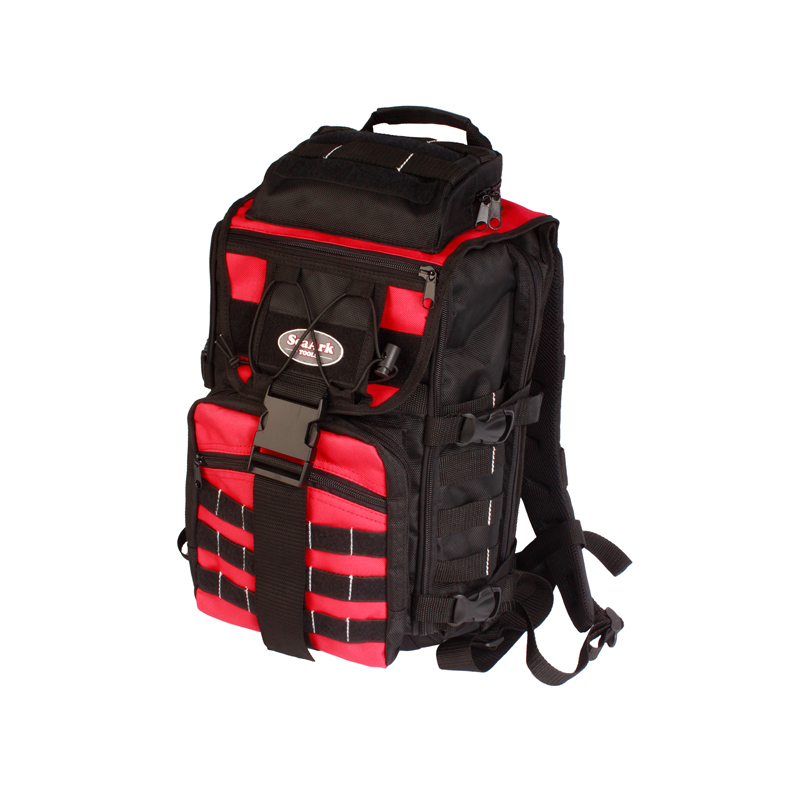
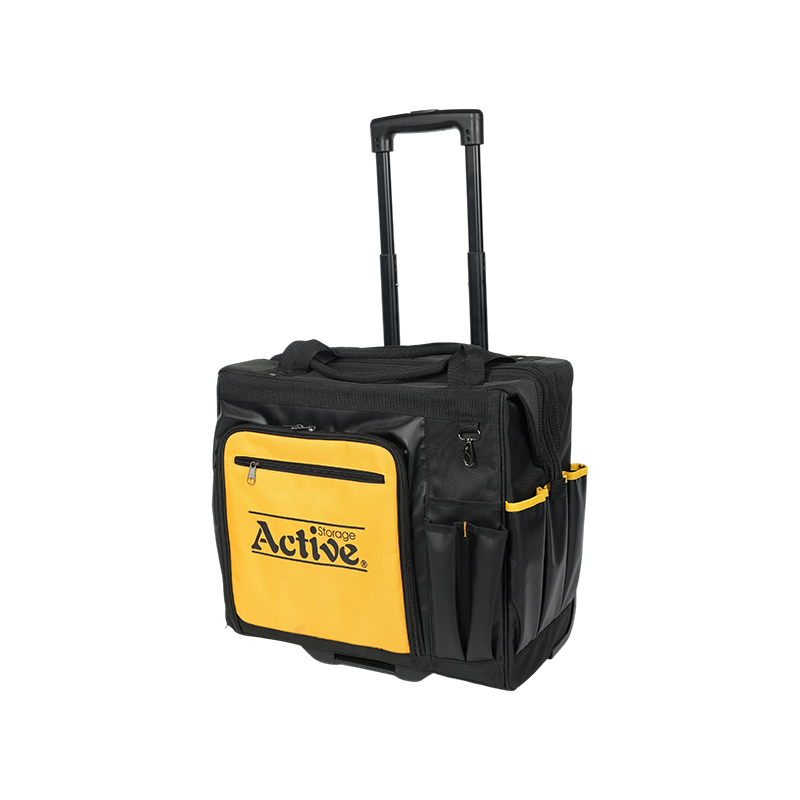
Seaark’s independent R&D team and annual development of more than 10 new designs support ongoing product improvement. Its experience with tool backpacks, trolley tool bags, tool pouches, waist tool bags, tool vests, tool bucket bags, folding-seat tool bags, garden bags, and other multifunctional carriers gives the company a broad understanding of tool storage categories.
This category knowledge can benefit customers who want to develop a coordinated product family. A distributor may source a large zippered bag, a compact pouch, a backpack, and a trolley model from one experienced supplier. Consistent materials, colors, labels, and design language can then be applied across the collection.
Product Specification Summary
| Specification | Details |
|---|---|
| Product type | Zippered tool bag |
| Model description | S009 |
| Primary material | 600D polyester |
| Base construction | High-polymer rubber base with anti-slip texture |
| Handle | Impact-resistant plastic handle |
| Dimensions | 40 x 22 x 33 cm |
| Closure | Zipper |
| Load capacity | 44.09 pounds |
| Exterior pockets | 11 |
| Interior pockets | 10 |
| Total designated pockets | 21 |
| Color | Customized |
| Country of origin | China |
Frequently Asked Questions
What type of tool bag is this product?
It is a zippered professional tool bag with a soft-sided 600D polyester body, an extra-tall profile, multiple interior and exterior pockets, a reinforced rubber-based bottom, and an impact-resistant plastic carrying handle.
How much weight can the bag carry?
The stated load capacity is 44.09 pounds. Users should distribute tools evenly, place heavy items near the bottom, and avoid exceeding the specified capacity.
What are the product dimensions?
The dimensions are 40 x 22 x 33 cm. The 33 cm height gives the bag an extra-tall profile that is useful for long-handled tools and upright storage.
How many pockets does the tool bag have?
The bag has 10 internal pockets and 11 external pockets, providing 21 designated storage areas in total. The external pockets can be used for frequently accessed tools and accessories, while the internal pockets support more organized main-compartment storage.
What material is used for the main body?
The main body uses thickened 600D polyester fiber. This material is selected for its high tensile strength, puncture resistance, durability, and practical flexibility.
What makes the bottom different from a basic fabric tool bag?
The bottom uses a high-polymer rubber base with an anti-slip texture. It helps protect the lower section from abrasion, improves stability on surfaces, and provides shock absorption when the bag is set down.
Why does the bag use a plastic handle instead of a webbing handle?
The impact-resistant plastic handle provides a more stable carrying point and can distribute hand pressure more evenly when the bag is heavily loaded. It also helps the bag maintain a more controlled shape while being carried.
Is the bag waterproof?
The provided specifications do not identify the bag as waterproof. The zippered closure and durable materials can help with ordinary handling and limited exposure, but the product should be protected from prolonged rain, standing water, and complete immersion.
Can the color be customized?
Yes. Color is listed as customized. Exact color options, minimum order quantities, samples, and production requirements should be confirmed with the manufacturer before ordering.
Can the pocket layout be customized?
The manufacturer provides tailor-made solutions, so customized pocket layouts may be possible depending on the project. Buyers should discuss dimensions, tool types, quantities, order volume, and structural requirements during product development.
Who is the bag suitable for?
It is suitable for electricians, HVAC technicians, plumbers, installers, contractors, maintenance personnel, industrial repair teams, and other professionals who need organized and durable tool transport.
What manufacturing strengths support this product?
The manufacturer has more than 20 years of tool bag experience, multiple production bases, more than 200 employees, approximately 11,000 square meters of floor space, an independent R&D team, and experience with third-party factory audits. These resources support standard production and customized development.
Where is the product manufactured?
The product is manufactured in China. The company also operates a production facility in Cambodia, providing additional supply flexibility for international customers.
How should the bag be maintained?
Users should remove dirt regularly, keep the bag dry before storage, avoid overloading, protect the fabric from sharp edges, and inspect the handle, zipper, base, pockets, and seams periodically.
Conclusion
The 600D high-strength rubber-based plastic handle tool bag is designed to meet the everyday demands of professional tool transport. Its strongest advantages come from the way its features work together: durable 600D polyester provides a robust body, the high-polymer rubber base improves protection and stability, the impact-resistant plastic handle supports comfortable carrying, and the extra-tall profile creates room for long-handled tools.
The 21-pocket configuration supports an organized workflow, while the zipper closure helps contain tools during transport. A 44.09-pound load capacity gives professionals the freedom to carry a substantial working selection without immediately dividing equipment among several bags. These features make the product a practical alternative to basic fabric totes and a flexible option compared with rigid molded cases.
For global buyers, the product is supported by an established manufacturing organization with more than two decades of industry experience. Zhangjiagang Seaark Tools Industrial Co., Ltd. combines production resources in China and Cambodia with independent product development, design patent experience, third-party audit participation, and customization capabilities. This combination can support retailers, distributors, contractors, industrial procurement teams, and private-label brands seeking dependable tool bag solutions.
Whether used as a daily service bag, a specialized trade carrier, a maintenance kit container, or part of a larger branded tool storage range, the S009 model offers a balanced combination of strength, organization, portability, and customization potential. Its construction is focused on practical professional use, making it a strong candidate for customers who want more durability and functionality from a zippered tool bag.
References
1. Product specification sheet for the S009 600D high-strength rubber-based plastic handle tool bag.
2. Internal product description covering material construction, pocket configuration, dimensions, handle design, base structure, and load capacity.
3. Textile industry reference materials concerning polyester denier classifications and durable woven bag fabrics.
4. General soft-goods manufacturing references concerning pattern development, cutting, sewing, reinforcement, zipper installation, and final inspection.
5. Supplier information concerning company history, manufacturing bases, research and development activity, customization services, and third-party audit participation.
6. Professional tool storage and field-service equipment planning references concerning load distribution, compartment organization, and routine product maintenance.
Product: 600D High-Strength Rubber-Based Plastic Handle Tool Bag




We are a professional enterprise engaged in exporting various types of toolkits.
We firmly believe that 'quality is everything, service enhances value'.
-
+86-15298800699

-
+86-512-58670375

-
karen@kun-bag.com

-
Building 11, No. 93 Chengang Road, Zhangjiagang City, Jiangsu Province, China

Copyright © Zhangjiagang Seaark Tools Industrial Co., Ltd. All Rights Reserved.
Custom Electrician Tool Backpack Manufacturers