
 en
 русский
 Español
 Deutsch

All-Weather Tool Backpack with Folding Chair: A Mobile Workstation for Professional Field Operations
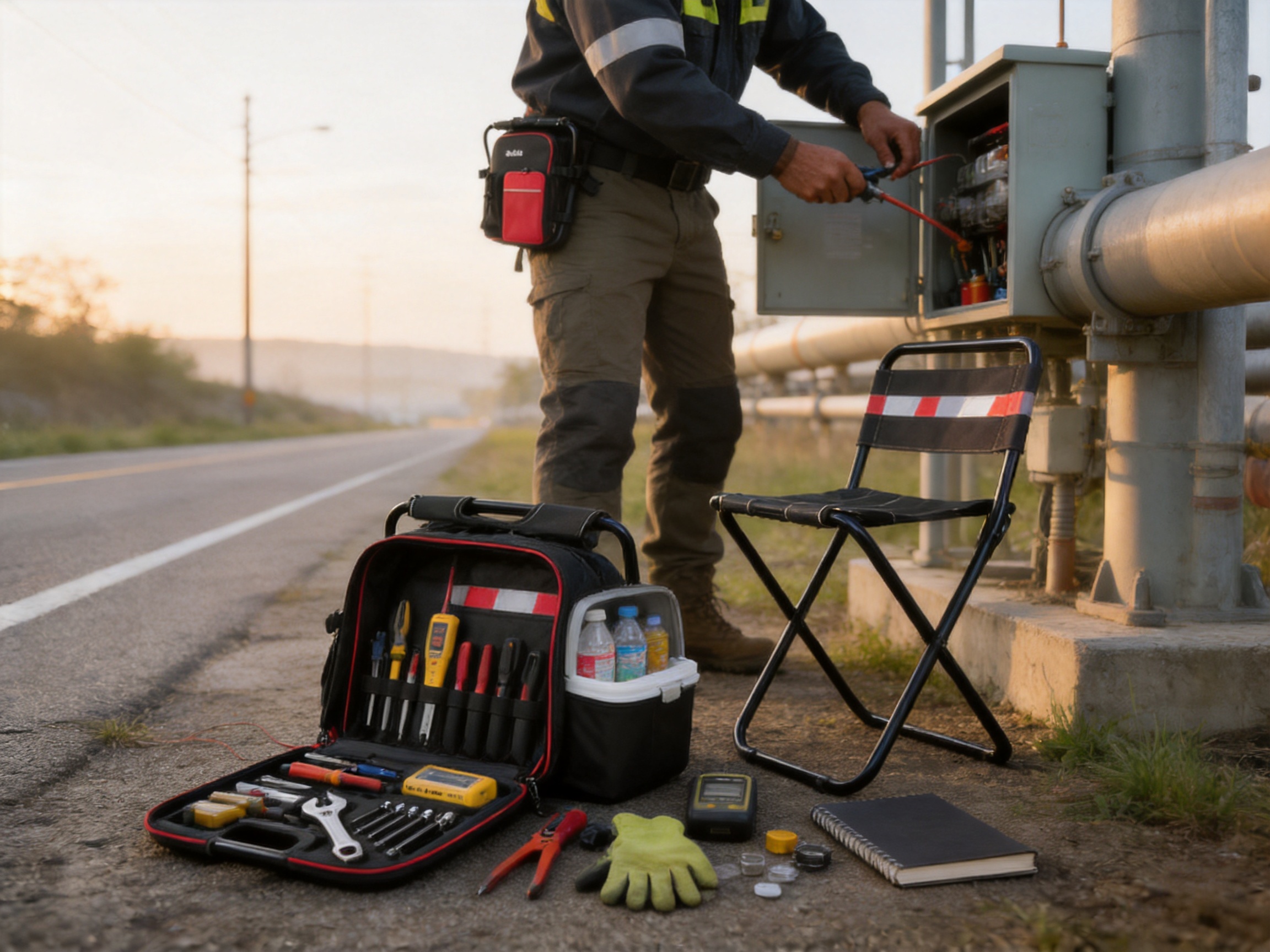
Professional technicians, repair crews, maintenance workers, inspectors, anglers, and outdoor service teams often need to carry more than a basic tool bag can provide. They may need hand tools, precision instruments, personal supplies, refreshments, protective equipment, and a reliable place to sit during long working sessions. Carrying each item separately creates unnecessary bulk, slows movement, and increases the risk of losing or damaging essential equipment.
The multi-functional all-weather tool backpack with folding chair addresses this challenge by combining tool transportation, organized storage, outdoor protection, insulated supply storage, and portable seating in one integrated product. Designed for mobile work and outdoor use, this backpack is built around the practical needs of professionals who frequently operate away from workshops, service vehicles, or permanent workstations.
With its polyester construction, zipper closure, reflective safety details, water-resistant exterior, eight-compartment storage system, built-in insulated cooler bag, and sturdy steel tube chair, the product offers a more complete field solution than a conventional backpack or standard tool tote. Its compact dimensions of 38 × 33 × 41 cm make it suitable for transportation while still providing useful capacity for daily tools and equipment.
Content
- 1 A New Approach to Portable Tool Storage
- 2 Key Product Specifications
- 3 All-Weather Protection for Outdoor Work
- 4 Eight-Compartment Organization for Faster Access
- 5 Built-In Insulated Cooler Bag
- 6 Integrated Folding Chair for Work and Rest
- 7 Advantages Over Conventional Tool Bags
- 8 Suitable Applications
- 9 Material Selection and Structural Considerations
- 10 Manufacturing Strengths and Customization Capabilities
- 11 How the Manufacturing Process Supports Product Performance
- 12 Quality Considerations for Buyers
- 13 Private-Label and Custom Development Potential
- 14 Ergonomic and Operational Benefits
- 15 Care, Storage, and Maintenance
- 16 Responsible Selection for Different Work Environments
- 17 Frequently Asked Questions
- 17.1 What is the main purpose of this product?
- 17.2 How many storage compartments does it have?
- 17.3 Is the backpack waterproof?
- 17.4 Does the product include a chair?
- 17.5 Can the chair support the same weight as the bag’s load capacity?
- 17.6 What can be stored in the cooler compartment?
- 17.7 Is the backpack suitable for electricians?
- 17.8 Can the product be used for fishing?
- 17.9 Can the color be customized?
- 17.10 Where is the product manufactured?
- 17.11 Can the backpack be customized for a private-label brand?
- 17.12 What industries can use this product?
- 17.13 How should the backpack be maintained?
- 18 Conclusion
- 19 References
- 20 Product: Multi-functional All-Weather Tool Backpack with Folding Chair
A New Approach to Portable Tool Storage
Traditional tool bags generally focus on one function: carrying tools. A conventional backpack may provide shoulder straps and several pockets, but it does not necessarily include dedicated tool organization, weather protection, safety visibility, or seating. A tool bucket may offer an open layout, yet it can expose contents to rain, dust, and accidental impact. A trolley case can reduce lifting, but it may be inconvenient on stairs, rough ground, narrow passages, or outdoor work areas.
This product takes a broader approach. It is designed as a mobile work platform that combines the mobility of a backpack, the organization of a tool case, the convenience of a cooler compartment, and the practical value of a folding seat. Instead of purchasing and transporting separate accessories, users can carry several field necessities in one coordinated structure.
The integrated design is especially useful for work environments where the operator must move repeatedly between locations. Pipe repair, electrical service, telecommunications maintenance, building inspection, installation work, fishing, outdoor repair, and emergency response can all require tools and supplies to be transported over uneven or extended routes. A backpack format distributes weight across the shoulders and leaves the hands available for additional equipment, support, or safe movement.
The folding chair adds another important advantage. Field technicians may need to sit while inspecting components, sorting small parts, taking measurements, completing documentation, or waiting for access to a work area. The built-in steel tube chair can provide a practical resting surface without requiring a separate folding stool. This helps reduce the amount of equipment carried by the worker and supports more efficient preparation at the job site.
Key Product Specifications
| Specification | Product Detail |
| Product Type | Multi-functional tool backpack with folding chair |
| Category | Tool bag with folding seat |
| Model Description | M007 |
| Dimensions | 38 × 33 × 41 cm |
| Material | Polyester |
| Closure | Zipper |
| Load Capacity | 33.07 lbs |
| Storage Layout | Two exterior pockets and six interior compartments |
| Color | Customized |
| Country of Origin | China |
| Primary Uses | Outdoor repair, pipe service, fishing, maintenance, and mobile technical work |
The dimensions provide a balance between usable storage and portability. Measuring 38 × 33 × 41 cm, the backpack has enough structural volume for common tools and field accessories while remaining more manageable than a large rolling case or a separate tool chest. Its stated load capacity of 33.07 lbs supports the transportation of a practical working assortment, although users should distribute heavy items carefully and avoid exceeding the recommended capacity.
The zipper closure helps secure the contents during transportation. Unlike an open-top tool bucket, a fully closed design can help limit the entry of rain, dust, and debris. It also reduces the likelihood of smaller items falling out when the bag is lifted, placed down, or carried across uneven ground.
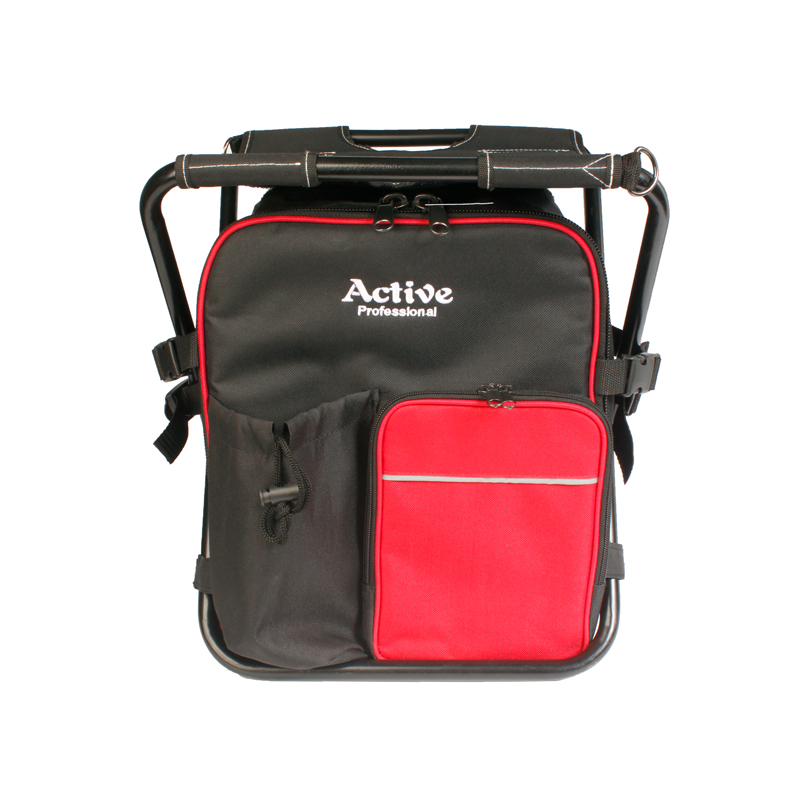
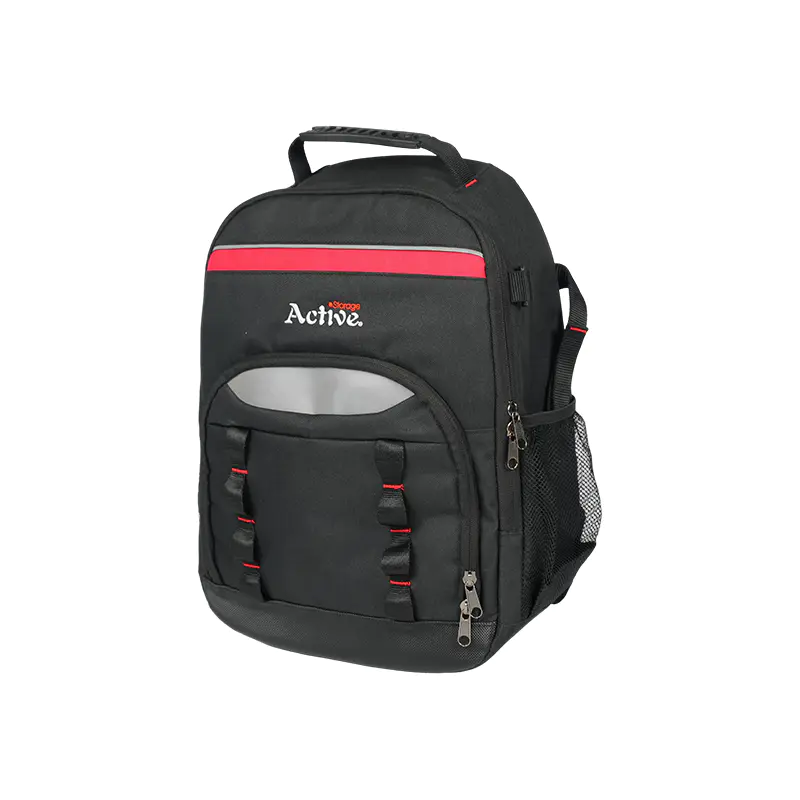
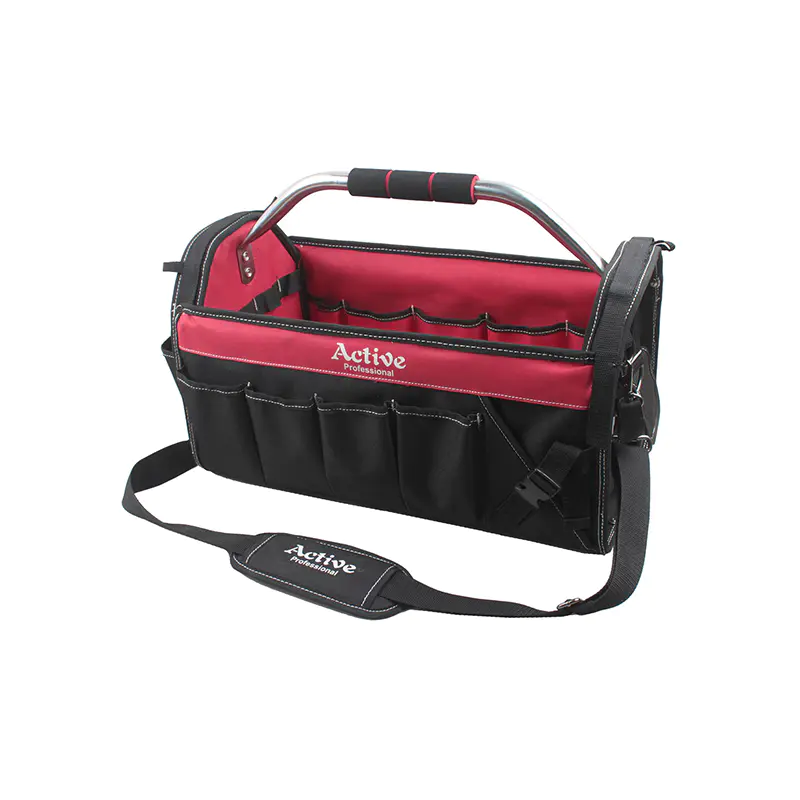
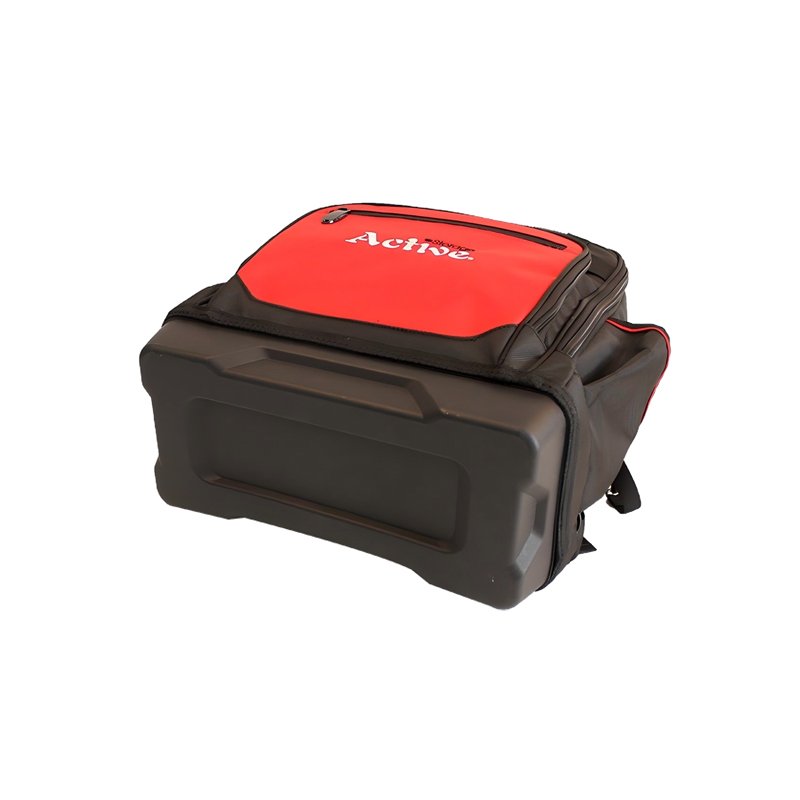
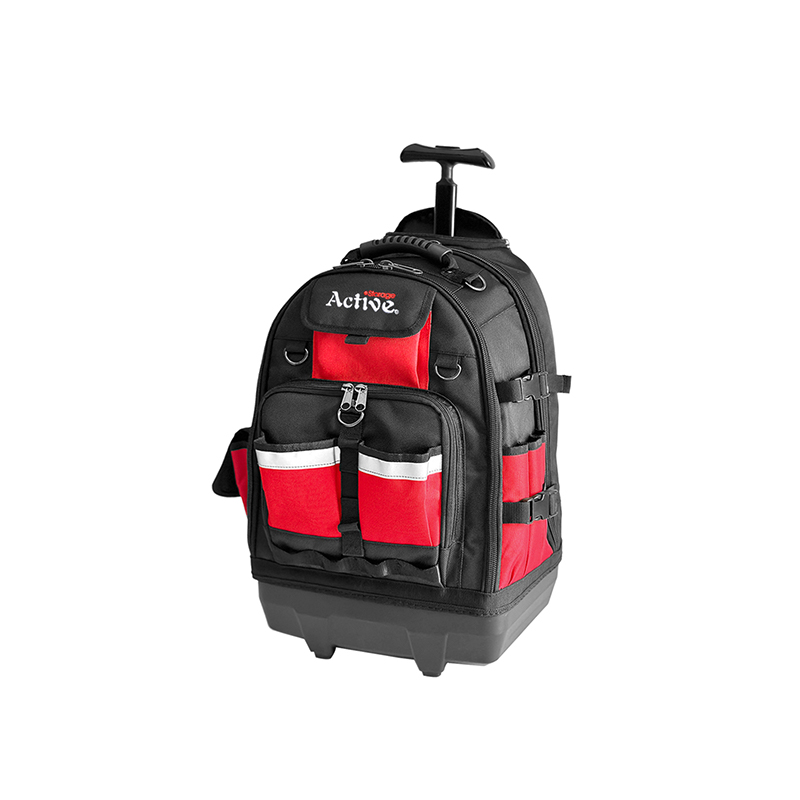
Multi-functional All-Weather Tool Backpack with Folding Chair
All-Weather Protection for Outdoor Work
Outdoor technicians often work in conditions that are less predictable than indoor workshop environments. Rain may begin during a repair, the ground may be wet, and equipment may be exposed to dust, splashes, or changing weather. A tool bag that performs well only in dry indoor conditions may not offer sufficient protection for field operations.
The backpack uses a water-resistant polyester exterior intended to improve protection against everyday outdoor moisture. Water resistance is particularly valuable during short periods of light rain, accidental splashing, damp transportation areas, or temporary exposure while the user moves between work points. It helps keep the bag surface more manageable and supports the protection of tools and supplies inside.
Water-resistant construction should not be confused with complete waterproofing or submersion protection. Professional users should still close all zippers properly, avoid leaving the bag exposed to heavy rain for extended periods, and dry the product after use. These simple practices can help preserve the fabric, hardware, tools, and stored materials over the long term.
The all-weather concept also relates to the overall design rather than the fabric alone. A secure zipper closure, enclosed storage, reinforced structure, reflective safety details, and a stable seat work together to create a product intended for variable field conditions. The result is a more dependable platform for outdoor work than an unstructured fabric tote or an ordinary daypack.
High-Visibility Reflective Details
Low-light conditions create additional hazards for field workers. Roadside maintenance, early morning service calls, evening inspections, tunnel work, parking-area repairs, and outdoor utility tasks may require personnel to work where visibility is limited. Reflective strips on the backpack can help make the user and the carried equipment more noticeable when illuminated by vehicle headlights or work lights.
Reflective details are not a replacement for certified high-visibility workwear, warning signs, lighting, or established safety procedures. However, they are a useful supplementary feature. When integrated into a tool backpack, reflective strips can improve the visual presence of the worker without adding a separate safety accessory.
This combination of storage and visibility is one area where the product differs from many ordinary tool bags. A standard canvas tote may carry tools effectively but offer little assistance in low-light recognition. By including reflective elements as part of the product design, the backpack is better aligned with mobile outdoor service requirements.
Eight-Compartment Organization for Faster Access
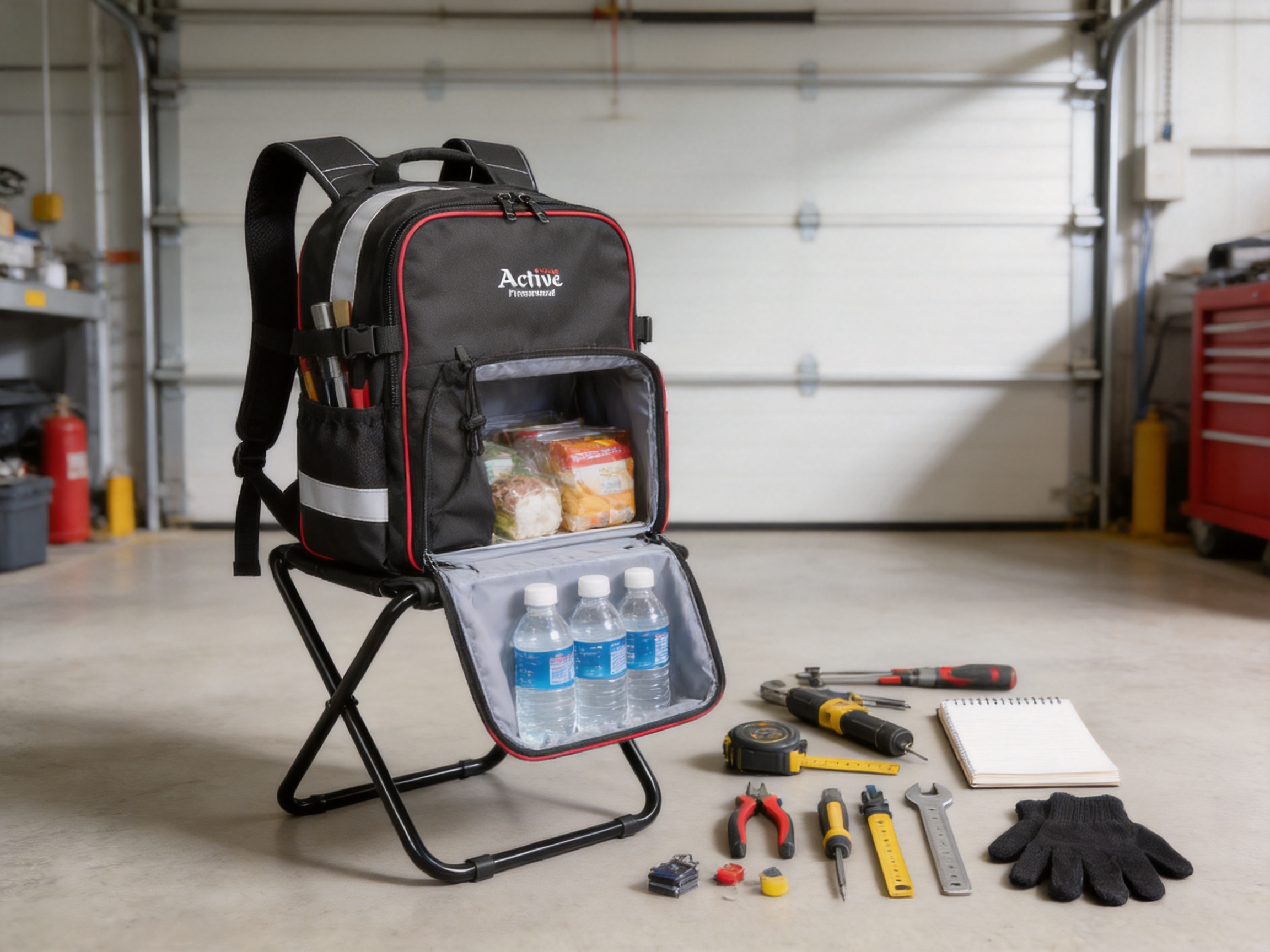
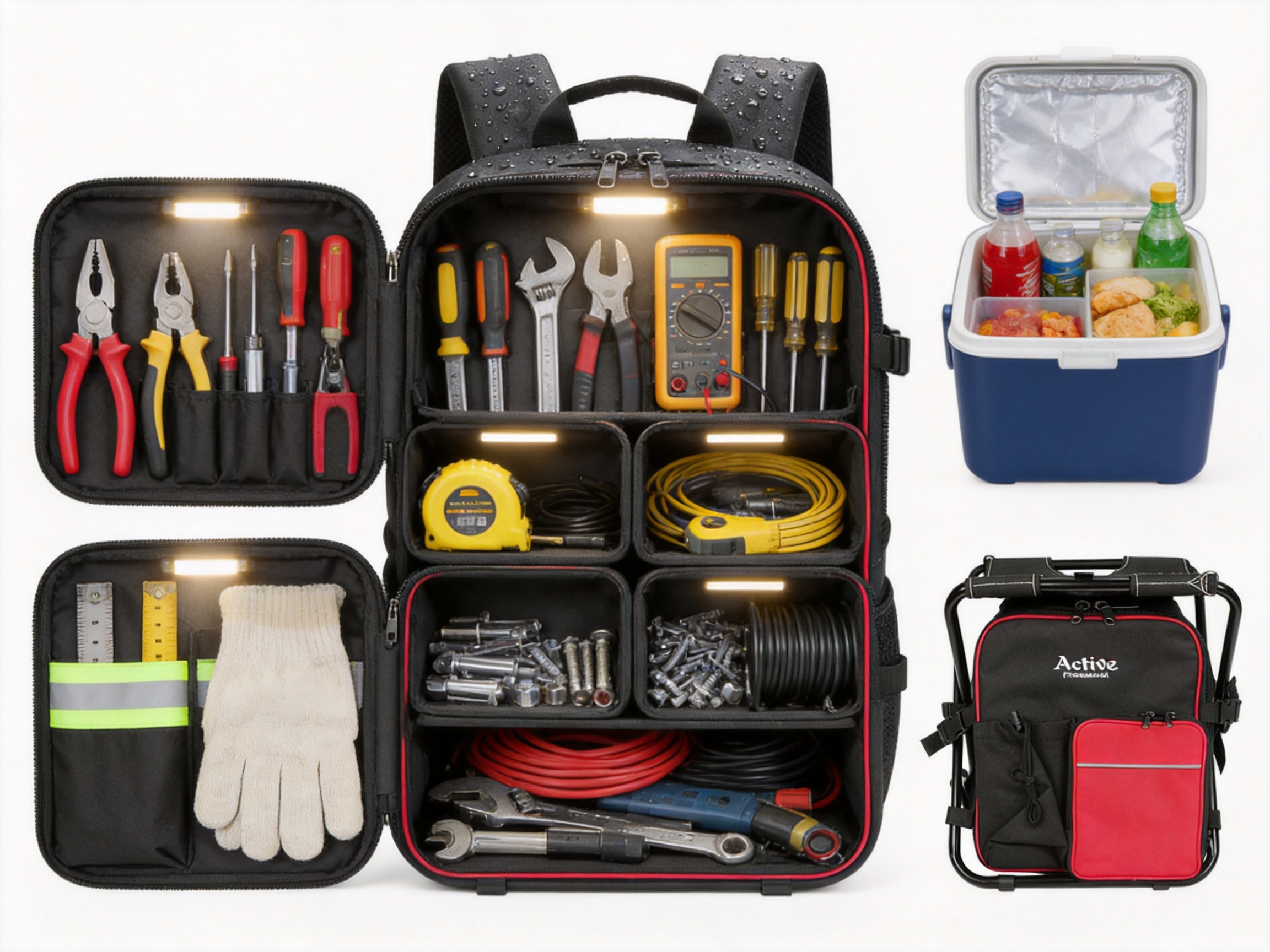
Efficient tool organization is essential when technicians need to work quickly. Searching through a deep, mixed compartment can waste time, damage delicate instruments, and cause small parts to disappear beneath heavier equipment. The backpack uses an eight-compartment storage layout consisting of two exterior functional pockets and six interior slots.
The two exterior pockets provide convenient access to items that may be needed frequently. Depending on the user’s work, these spaces can hold measuring tapes, pencils, gloves, notebooks, fasteners, small diagnostic accessories, cable ties, or personal protective items. Keeping frequently used supplies outside the main compartment can reduce the need to open the entire bag repeatedly.
The six internal compartments offer a more controlled arrangement for tools and instruments. Users can assign different compartments to different categories, such as hand tools, electrical accessories, inspection devices, repair parts, cleaning materials, and personal supplies. A consistent organization system helps workers know where each item belongs and makes it easier to identify missing equipment before leaving a job site.
Compartmental storage is also valuable for protecting precision instruments. Measuring devices, testing equipment, and small technical components may be vulnerable to scratches or impact when mixed with heavy metal tools. Separating these items within the interior can reduce unnecessary contact and help the user manage the available space more deliberately.
Organization Benefits for Different Professions
An electrician may use the external pockets for a voltage tester, marker, and insulated gloves while reserving interior compartments for pliers, screwdrivers, cable accessories, and testing instruments. A pipe repair worker may store fittings, wrenches, sealing materials, inspection tools, and replacement components according to task sequence. A telecommunications technician can separate connectors, hand tools, meters, and cable-management accessories.
For fishing or outdoor recreation, the compartments can accommodate line, hooks, tools, bait accessories, small electronics, snacks, and personal items. The built-in insulated compartment can be used for refreshments or temperature-sensitive supplies, subject to the user’s specific storage requirements.
The compartment design does not eliminate the need for careful packing. Heavy objects should be positioned to maintain balance, sharp tools should be secured, and delicate equipment should be protected with suitable sleeves or cases when necessary. Even so, the eight-compartment layout provides a practical starting point for a disciplined storage system.
Built-In Insulated Cooler Bag
One of the product’s most distinctive features is its integrated insulated cooler bag. Outdoor workers may spend several hours away from a vehicle or facility, and access to drinking water, food, or temperature-sensitive supplies can be inconvenient. A separate cooler adds weight and consumes valuable carrying space. Integrating insulation into the backpack gives users another way to manage field supplies without carrying an additional container.
The cooler compartment can support the storage of drinks, snacks, packed meals, and other suitable supplies. It may also be useful for outdoor teams that need to keep certain materials separate from tools. Keeping refreshments in a dedicated insulated area can improve hygiene and reduce the chance that food or beverages will come into contact with dirty work equipment.
This feature makes the backpack particularly suitable for long-distance travel and extended outdoor operations. A technician can transport tools, personal supplies, and a drink in one coordinated unit. For fishing, field inspection, construction support, and remote repair tasks, the cooler compartment can contribute to greater self-sufficiency.
The cooler section should be used according to the capabilities of the insulation and should not be treated as a powered refrigeration system. Ice packs or other appropriate cooling materials may be used when suitable. Users should clean and dry the compartment regularly, especially after storing food or liquids, to maintain the condition of the interior.
Integrated Folding Chair for Work and Rest
The built-in folding chair is a central reason this product stands apart from a conventional tool backpack. A technician’s work may involve long periods of standing, kneeling, crouching, or waiting. These positions can create fatigue and reduce concentration, especially during outdoor work in difficult terrain. A portable seat gives the user an opportunity to rest, organize tools, or perform seated tasks more comfortably.
The chair uses a sturdy steel tube structure and is integrated into the backpack format. When folded, it contributes to the product’s compact transport profile. When deployed, it provides a practical seat for appropriate applications. The chair can be helpful during inspection, assembly, repair preparation, fishing, outdoor demonstrations, or breaks between work stages.
Combining a chair with a tool bag can reduce the amount of equipment that needs to be loaded into a service vehicle or carried to a remote location. Instead of taking a separate stool and a tool backpack, users can transport one multi-purpose unit. This can be especially beneficial for individual contractors, mobile technicians, and teams that need to keep their equipment footprint small.
Using the Folding Chair Safely
The chair should be placed on stable, reasonably level ground before use. Users should ensure that the folding structure is fully opened and properly positioned. The stated load capacity of 33.07 lbs applies to the product’s carrying specification and should not automatically be interpreted as a seating capacity. Seating use should follow the manufacturer’s applicable instructions and safety guidance.
Heavy tools should be removed or balanced appropriately before the chair is deployed. The backpack should not be used as a seat if the structure is not fully extended, if the ground is unstable, or if any frame component shows signs of damage. Regular inspection of the steel tubes, joints, fabric connections, and stitching can help identify wear before it becomes a safety issue.
These precautions are important because the chair is designed to add convenience, not to replace specialized industrial seating or certified load-bearing equipment. Used responsibly, however, it can provide valuable support for routine field work and rest periods.
Advantages Over Conventional Tool Bags
The main competitive advantage of this product is integration. Many tool bags perform one or two tasks well, but they may not address the complete needs of a mobile worker. This backpack brings multiple functions together without requiring separate bags for tools, food, seating, and personal supplies.
| Feature | Conventional Tool Tote | Ordinary Backpack | All-Weather Tool Backpack with Folding Chair |
| Tool Organization | Usually open or basic compartments | General-purpose storage | Two exterior pockets and six interior slots |
| Outdoor Moisture Protection | Varies by material | Varies by material | Water-resistant polyester design |
| Low-Light Visibility | Often limited | Usually limited | Reflective safety strips |
| Portable Seating | Not included | Not included | Integrated steel tube folding chair |
| Insulated Storage | Usually unavailable | Usually unavailable | Built-in insulated cooler bag |
| Hands-Free Carrying | Limited | Yes | Yes |
| Customization Potential | Depends on supplier | Depends on supplier | Customized color and tailored solutions available |
Compared with an open tool tote, the backpack offers more secure closure and better portability. Compared with an ordinary backpack, it provides a purpose-built storage layout and stronger alignment with technical work. Compared with a trolley tool bag, it can be more practical in locations where wheels are inconvenient, including stairs, rough surfaces, muddy paths, narrow corridors, and crowded work zones.
The folding chair is another clear differentiator. A conventional bag requires the user to carry or purchase a separate seat. The integrated design reduces equipment duplication and helps users prepare for longer work sessions. The cooler compartment further increases the product’s usefulness by supporting hydration and food storage during extended outdoor activities.
These advantages do not mean that the backpack is the best choice for every application. A large workshop may require a rolling cabinet, while a heavy-duty construction crew may need a high-capacity open tote. The strength of this product lies in mobility, versatility, and the combination of several practical functions in a compact format.
Suitable Applications
Pipe Repair and Utility Maintenance
Pipe repair workers frequently operate outdoors and may travel across service areas, roadside locations, building sites, or utility corridors. They need tools, fittings, protective equipment, and small replacement components. A water-resistant bag with reflective details can be useful when work continues in changing weather or low-light areas.
The compartment system supports separation between tools and small parts, while the folding seat can provide a place to sit during inspection or repair preparation. The backpack format also allows workers to keep both hands available while walking between service points.
Electrical and Electronic Service
Electricians and electronics technicians often carry a combination of hand tools, testing instruments, connectors, wire accessories, and protective equipment. The internal slots can help keep these categories separate. External pockets can hold frequently used items such as markers, measuring tapes, or gloves.
Delicate instruments should still be placed in suitable protective cases or padded areas when necessary. The backpack’s organized layout is intended to improve management, but it does not replace specialized protection for highly sensitive equipment.
Telecommunications and Installation Work
Telecommunications installers may move between buildings, towers, service cabinets, and outdoor access points. Their work can involve cable tools, connectors, test devices, labels, fasteners, and personal supplies. A backpack can be convenient where rolling luggage is difficult to use, while reflective elements may provide additional visibility near roads or service vehicles.
Inspection and Field Research
Inspectors, survey teams, and field researchers often need to carry notebooks, measurement devices, sampling accessories, cameras, and personal supplies. The folding chair can support seated documentation or short breaks, and the cooler compartment may be useful for refreshments during long site visits.
Fishing and Outdoor Recreation
The product is also suited to fishing and other outdoor activities that require organized equipment, refreshments, and a portable seat. The compartment layout can be adapted for tackle, lines, tools, and accessories. Water resistance offers practical support in damp environments, although the backpack should not be submerged or exposed to prolonged heavy water without additional protection.
Mobile Demonstration and Service Teams
Sales representatives, product demonstrators, repair instructors, and mobile service teams can benefit from a product that carries equipment and provides a temporary seat. The customized color option may help organizations align the product with internal identification systems, uniforms, or customer-facing presentation requirements.
Material Selection and Structural Considerations
The primary bag material is polyester, a widely used textile for backpacks and equipment bags because it offers a practical combination of strength, flexibility, weight, and resistance to routine abrasion. Polyester can also accept coatings and treatments that improve its resistance to moisture and environmental exposure.
Material selection for a technical bag must consider more than appearance. The fabric needs to tolerate repeated loading, contact with tools, transportation, and outdoor handling. Stitching, zipper installation, reinforcement points, edge binding, pocket construction, and attachment areas all influence the product’s practical service life.
The steel tube chair adds a rigid structural element to the soft bag body. Steel tubing is commonly selected for portable frames because it provides useful rigidity and can be formed into a folding support structure. The connection between the frame and the textile components is important, as stress may be concentrated around attachment points during carrying and seating use.
A well-designed multi-functional bag requires coordination between soft-goods manufacturing and frame assembly. Fabric panels must be cut accurately, stitched consistently, and aligned with the chair structure. Hardware must be installed securely, while the folding mechanism must remain compact enough for transportation and stable enough for appropriate use.
Manufacturing Strengths and Customization Capabilities
The manufacturer behind this product has specialized in professional tool bags since 2004. Its experience includes the development and export of trolley tool bags, tool backpacks, zippered tool bags, tool bags with tubular handles, waist tool bags, tool pouches, tool vests, tool bucket bags, folding-seat tool bags, pocket handy tool bags, garden bags, and other multifunctional bags.
This product range indicates a manufacturing focus on purpose-built storage solutions rather than general fashion bags. Tool bags require different construction priorities, including compartment planning, abrasion resistance, load handling, secure closures, reinforced seams, and compatibility with professional workflows.
The company established a core manufacturing base in China in 2012 and also operates a production facility in Cambodia. Multiple production bases can support flexible sourcing and production planning for international customers. This arrangement may also help customers manage supply requirements, delivery planning, and the effect of additional tariffs in certain markets.
With more than 20 years of tool bag manufacturing experience, the company operates multiple production bases, employs more than 200 people, and manages approximately 11,000 square meters of floor space. These resources provide a foundation for handling product development, sampling, material preparation, sewing, assembly, quality control, packaging, and export coordination.
Independent Product Development
An independent research and development team develops more than 10 new designs each year. Continuous product development is important in the tool bag industry because professional users increasingly expect lighter organization, better mobility, improved safety visibility, and multifunctional construction.
Research and development for a product such as the folding-chair tool backpack may involve evaluating the relationship between capacity, weight, seating integration, frame stability, pocket placement, fabric performance, zipper access, and carrying comfort. Every additional function must be incorporated without making the product unnecessarily complicated or difficult to use.
The company’s registered Active Storage brand and multiple design patents reflect an emphasis on proprietary product development. Design protection can help distinguish original structural concepts and support long-term investment in new bag configurations. For buyers seeking private-label or customized solutions, a supplier with internal development capability may be better positioned to modify existing products or create new designs.
Production and Quality Management
Manufacturing consistency is especially important for tool bags because the products are used repeatedly under practical working conditions. Variations in stitching, zipper alignment, pocket dimensions, frame connections, or fabric quality can affect the user experience and service life.
The company’s facilities undergo annual third-party audits, including BSCI, SEDEX, FCCA, and SCS audits. Such audits are associated with the evaluation of factory practices, social responsibility, ethical sourcing, compliance, and operational standards. Audit programs do not eliminate the need for product-specific quality inspection, but they provide an additional framework for standardized manufacturing and responsible production management.
For international customers, factory auditing can also improve confidence in supplier organization. Buyers may still request current certificates, audit reports, product inspection procedures, material specifications, and sample approval processes before placing an order. Clear documentation helps ensure that the delivered product matches the agreed design and quality expectations.
How the Manufacturing Process Supports Product Performance
The performance of a tool backpack is created through a series of connected manufacturing steps. The process generally begins with design confirmation and material selection. At this stage, the product team establishes dimensions, compartment locations, fabric requirements, reflective components, zipper specifications, cooler construction, and chair integration.
Pattern development follows. Accurate patterns help ensure that the front, back, side, base, pocket, and support panels fit together correctly. For a bag with a folding chair, the pattern must also account for the frame’s location, movement, and attachment points. Poor alignment can cause stress, uneven loading, or difficulty during folding.
Fabric cutting must be controlled to maintain consistent panel dimensions. Reflective strips, reinforcement patches, insulation layers, lining materials, and zipper components need to be prepared according to the approved design. Consistency at the cutting stage supports more uniform sewing and assembly later in the process.
Sewing and reinforcement are crucial for tool bags. High-load areas may require additional stitching, binding, or reinforcement layers. Pocket openings and zipper ends need careful construction because these areas are frequently handled. The bottom and side panels also require attention because they may experience abrasion when the backpack is placed on the ground.
The cooler bag requires its own assembly sequence, including insulation and lining installation. The insulated section must be positioned so that it remains practical to access without interfering with tool storage. Its seams and closure should be checked for cleanliness and integrity, especially when the compartment is intended for food or beverages.
Reflective strips must be securely attached and accurately positioned. Their purpose is to improve visibility, so uneven placement or poor adhesion could reduce their practical value. The zipper installation process should be inspected to ensure smooth movement and reliable closure.
The steel tube chair requires forming, joining, finishing, and attachment to the bag structure. The frame should be checked for alignment, folding action, sharp edges, and secure connection points. Before shipment, the completed product should undergo visual inspection, dimensional checks, zipper operation checks, and appropriate load or stability testing according to the customer’s requirements.
Quality Considerations for Buyers
Customers purchasing this type of product for professional use or private-label programs should evaluate both the standard design and the supplier’s quality system. A pre-production sample should be reviewed for dimensions, pocket layout, fabric hand feel, reflective strip position, zipper operation, cooler capacity, chair folding action, and overall balance.
Buyers should also confirm the intended load specification and clarify how the stated 33.07 lb load capacity is measured. If a customer plans to use specialized instruments, the internal compartment dimensions should be checked against the equipment. The chair’s intended use and any separate seating limitations should also be confirmed before commercial distribution.
Color customization is available, but color approval should be based on physical samples or an agreed color standard whenever possible. Screen images may not represent the final textile color accurately. Customers may also request customized labels, packaging, logos, hangtags, reflective layouts, or compartment configurations, depending on the project scope.
For large orders, buyers should establish inspection criteria in advance. These may include acceptable fabric defects, sewing tolerances, zipper performance, reflective strip adhesion, frame alignment, packaging condition, and carton marking. A written specification reduces misunderstanding between the customer and the manufacturer.
Private-Label and Custom Development Potential
Professional distributors and international brands may require more than a standard product. They may need a particular color combination, logo placement, packaging style, or storage arrangement. A supplier with an independent R&D team and multiple manufacturing bases can offer greater flexibility than a trading company that only resells finished products.
Customization can begin with relatively simple changes such as color, labels, branding, and packaging. More advanced projects may involve revising pocket sizes, changing the cooler compartment, modifying reflective details, adjusting the chair frame, or creating a product for a particular trade.
Customization should be managed through a structured process. The customer should provide target users, intended applications, expected load, market requirements, visual references, and packaging needs. The manufacturer can then prepare a design proposal, prototype, sample, and production quotation. Testing and approval should be completed before mass production.
A customized tool backpack can help distributors create a differentiated product line rather than competing only on price. Features such as integrated seating, insulated storage, reflective safety elements, and organized tool compartments provide clear points of communication for professional users.
Ergonomic and Operational Benefits
A backpack design can make it easier to transport equipment over distances because the weight is carried close to the body rather than held in one hand. This may reduce the need to switch hands or set the bag down repeatedly. However, users should adjust the load carefully and avoid placing dense, sharp, or excessively heavy objects against the back area without suitable organization.
Tool organization can also improve operational efficiency. When every tool has an assigned position, workers spend less time searching and can identify missing equipment more easily. The external pockets support rapid access, while the internal compartments help separate categories and reduce clutter.
The folding chair contributes to work rhythm. A user can arrive at a site, place the bag on stable ground, access the needed tools, and use the chair for suitable seated tasks or rest. This can be more efficient than carrying a separate stool and setting up multiple pieces of equipment.
The cooler bag supports hydration, which is particularly relevant during warm-weather field operations. Keeping water or suitable refreshments available may help workers remain comfortable during extended tasks. The product therefore combines equipment management with basic field convenience.
Care, Storage, and Maintenance
Routine care can extend the useful life of the backpack. After use in wet conditions, the bag should be opened and allowed to dry thoroughly in a ventilated area. Storing it while damp can encourage odors, staining, or deterioration of interior materials.
Tools should be removed before cleaning. Loose dirt can generally be brushed away, while surface cleaning should follow the manufacturer’s recommendations. Harsh chemicals, abrasive brushes, and excessive heat may affect polyester, reflective materials, coatings, insulation, or printed branding.
The zippers should be kept free from sand and debris. If a zipper becomes difficult to operate, forcing it may cause damage. Users should inspect the stitching around pocket openings, handles, shoulder straps, chair connections, and the base of the bag.
The steel tube chair should be checked for bent sections, loose joints, corrosion, or unusual movement. The folding mechanism should operate smoothly and should not be forced. If any structural part is damaged, the chair should not be used until it has been assessed or repaired appropriately.
When storing the backpack for an extended period, it should be emptied, cleaned, dried, and kept in a dry location away from direct sunlight and excessive heat. The chair should be folded only after ensuring that no fabric, tools, or accessories are trapped in the mechanism.
Responsible Selection for Different Work Environments
Before choosing the backpack, organizations should consider the actual working conditions. Users who carry very large power tools, heavy machinery, or extensive quantities of fittings may require a larger rolling solution. Users who work mainly indoors may not need reflective strips or water-resistant construction. The folding-chair backpack is most valuable when mobility, organization, outdoor use, and seating are all relevant.
For individual contractors, the product can reduce the number of separate items taken to a job. For service companies, it can provide a standardized field kit for employees. For distributors, it offers a distinctive product category that combines several marketable functions.
The customized color option may also support team identification. Different colors could potentially be assigned to departments, applications, or customer groups, subject to production requirements. Branding and packaging can help transform the standard design into a coordinated professional equipment solution.
Frequently Asked Questions
What is the main purpose of this product?
The product is designed to combine tool transportation, organized storage, outdoor protection, insulated supply storage, and portable seating in one backpack-style unit. It is intended for professional technicians, outdoor workers, repair personnel, inspectors, anglers, and other mobile users.
How many storage compartments does it have?
The backpack has eight storage compartments in total: two exterior functional pockets and six internal slots. The layout is intended to support organized storage of hand tools, precision instruments, accessories, and personal supplies.
Is the backpack waterproof?
The polyester fabric is described as water-resistant, which can help protect against light rain, splashes, and damp outdoor conditions. It should not be considered fully waterproof or suitable for submersion. Users should close the zippers and dry the bag after exposure to moisture.
Does the product include a chair?
Yes. The backpack includes an integrated folding chair made with a sturdy steel tube structure. It is designed to provide portable seating for suitable field tasks and rest periods.
Can the chair support the same weight as the bag’s load capacity?
Not necessarily. The stated 33.07 lb figure is the product’s listed load capacity and should not automatically be interpreted as a seating capacity. Users should follow the manufacturer’s instructions and use the chair only on stable ground and in its fully opened position.
What can be stored in the cooler compartment?
The insulated cooler bag can be used for suitable refreshments, drinks, packed meals, or other supplies that benefit from separation and insulation. It is not a powered refrigerator, so temperature-sensitive goods should be handled according to their storage requirements.
Is the backpack suitable for electricians?
Yes. The compartments can be used for electrical hand tools, testers, connectors, gloves, measuring equipment, and small accessories. Sensitive devices should be placed in suitable protective cases when necessary.
Can the product be used for fishing?
Yes. The organized pockets, water-resistant exterior, cooler compartment, and folding chair make it suitable for many fishing and outdoor recreation applications. It should still be protected from prolonged heavy rain or immersion.
Can the color be customized?
Yes. The product information lists customized color as an available option. Exact customization requirements, minimum order quantities, sampling procedures, and production lead times should be confirmed with the manufacturer.
Where is the product manufactured?
The product is associated with manufacturing operations in China, and the company also operates a production facility in Cambodia. The country of origin listed for this product is China.
Can the backpack be customized for a private-label brand?
The manufacturer provides comprehensive customization solutions and has an independent R&D team. Potential customization may include colors, branding, packaging, and selected structural or storage details, depending on design feasibility and order requirements.
What industries can use this product?
Potential applications include pipe repair, utility maintenance, electrical service, telecommunications, inspection, field research, fishing, outdoor repair, construction support, installation work, and mobile demonstrations.
How should the backpack be maintained?
Empty the bag before cleaning, remove dirt promptly, dry it thoroughly after moisture exposure, keep zippers free from debris, and inspect the stitching, straps, reflective details, and chair frame regularly. Store the product in a dry, ventilated place.
Conclusion
The multi-functional all-weather tool backpack with folding chair is designed for workers who need more than basic tool transportation. Its value comes from the combination of features: a water-resistant polyester body, reflective safety strips, zipper closure, eight-compartment organization, built-in insulated cooler bag, hands-free backpack mobility, and integrated steel tube seating.
These functions create a compact mobile workstation for outdoor and long-distance operations. Compared with a conventional tool tote, it provides more mobility and additional field features. Compared with an ordinary backpack, it offers more specialized organization and professional utility. Compared with carrying a separate stool and cooler, it reduces equipment duplication and simplifies transportation.
The manufacturer’s long experience in tool bag production, multiple manufacturing bases, independent product development team, design patents, employee resources, production space, and third-party audit experience provide a strong foundation for professional supply and customization programs. Its product range and tailored development capability make it suitable for distributors, global brands, contractors, and organizations seeking practical field equipment.
For users whose work combines tools, outdoor exposure, travel, and the need for occasional seating, this product offers a balanced alternative to carrying several separate items. With appropriate loading, safe chair use, regular maintenance, and clear customization specifications, it can serve as a dependable addition to professional mobile work equipment.
References
1. Product specification sheet for the multi-functional all-weather tool backpack with folding chair, model M007.
2. Manufacturer-provided product information covering dimensions, materials, storage configuration, closure type, load capacity, and application scenarios.
3. Manufacturer company profile covering tool bag production experience, product categories, manufacturing bases, research and development, customization services, and quality audit practices.
4. General textile product care principles for polyester bags, reflective components, zippers, insulated compartments, and steel frame assemblies.
5. General occupational safety guidance concerning outdoor visibility, tool organization, load management, stable seating surfaces, and equipment inspection.
Product: Multi-functional All-Weather Tool Backpack with Folding Chair




We are a professional enterprise engaged in exporting various types of toolkits.
We firmly believe that 'quality is everything, service enhances value'.
-
+86-15298800699

-
+86-512-58670375

-
karen@kun-bag.com

-
Building 11, No. 93 Chengang Road, Zhangjiagang City, Jiangsu Province, China

Copyright © Zhangjiagang Seaark Tools Industrial Co., Ltd. All Rights Reserved.
Custom Electrician Tool Backpack Manufacturers