
 en
 русский
 Español
 Deutsch

Heavy Duty Tool Tote with 21 Pockets: A Practical Guide to Organized, Durable Garden Tool Storage
Content
- 1 Introduction
- 2 Product Overview
- 3 Designed for Efficient Tool Organization
- 4 Durability and Protection in Demanding Environments
- 5 Advantages over Common Tool Storage Alternatives
- 6 Applications Across Multiple Work Environments
- 7 Manufacturing Expertise and Product Development Strengths
- 8 Manufacturing Process Considerations
- 9 Customization Opportunities for Global Buyers
- 10 How to Use the Tote Effectively
- 11 Value for Retailers and Distributors
- 12 Recommended Purchasing Checklist
- 13 Frequently Asked Questions
- 13.1 What is the Heavy Duty Tool Tote primarily used for?
- 13.2 How many pockets does the tote have?
- 13.3 Is the tote waterproof?
- 13.4 What is the stated load capacity?
- 13.5 Why is the molded bottom important?
- 13.6 Can the color be customized?
- 13.7 Can the tote replace a rigid toolbox?
- 13.8 Is the tote suitable for professional users?
- 13.9 Where is the product manufactured?
- 13.10 Does the company provide custom tool bag development?
- 13.11 How should the tote be maintained?
- 14 Conclusion
- 15 References
- 16 Product: Heavy Duty Tool Tote with 21 Pockets Garden Tool Bag Molded Bottom Gardening Tools Storage
Introduction
Gardening, landscaping, maintenance, and outdoor repair work often require a surprisingly large collection of tools. Pruning shears, trowels, screwdrivers, gloves, spray bottles, hand rakes, measuring tools, fasteners, and personal protective equipment may all be needed during a single work session. Without a suitable carrying solution, these items can become disorganized, difficult to find, or exposed to dirt and moisture. The Heavy Duty Tool Tote with 21 Pockets is designed to solve these everyday challenges by combining structured storage, durable construction, and convenient portability in one practical garden tool bag.
With a 28 × 28 × 38 cm body, a stated load capacity of up to 44 lbs, multiple exterior and interior pockets, and a reinforced molded bottom, this tool tote is suitable for both professional and household users. It is intended for gardeners, landscapers, maintenance workers, farm operators, contractors, and do-it-yourself users who need fast access to essential tools while moving between work areas.
The product is manufactured by Zhangjiagang Seaark Tools Industrial Co., Ltd., an experienced Chinese supplier specializing in tool bags and customized storage solutions. Since its establishment in 2004, the company has developed a broad manufacturing capability covering trolley tool bags, tool backpacks, zippered tool bags, tubular-handle tool bags, waist tool bags, tool pouches, tool vests, tool bucket bags, folding-seat tool bags, garden bags, and multifunctional storage products.
This article examines the design, practical advantages, construction, manufacturing strengths, customization potential, and appropriate applications of the Heavy Duty Tool Tote with 21 Pockets. It also compares the product’s value against common alternatives and answers frequently asked questions for distributors, professional users, retailers, and purchasing teams.
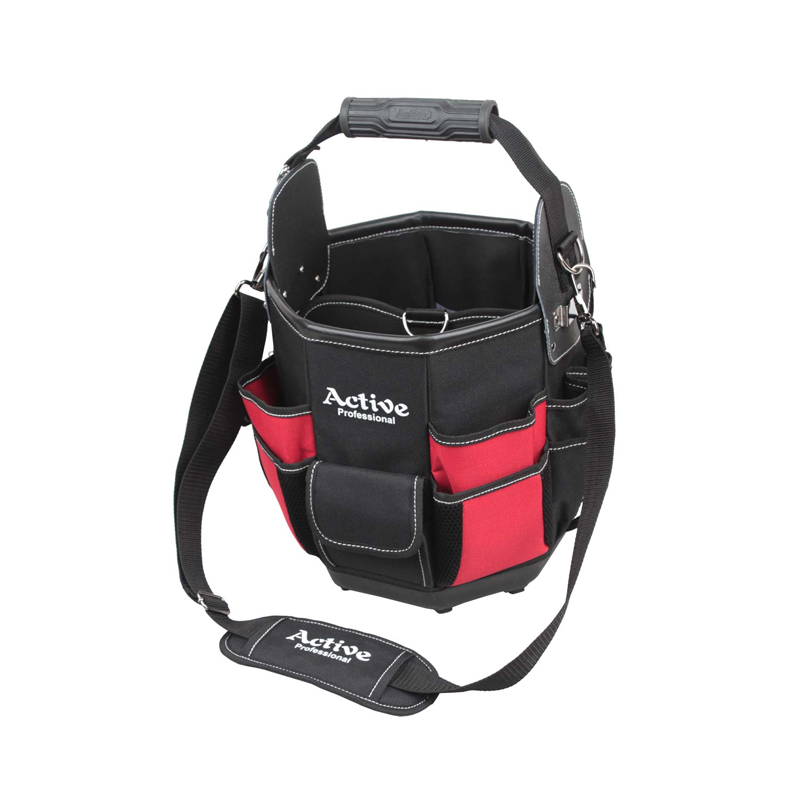
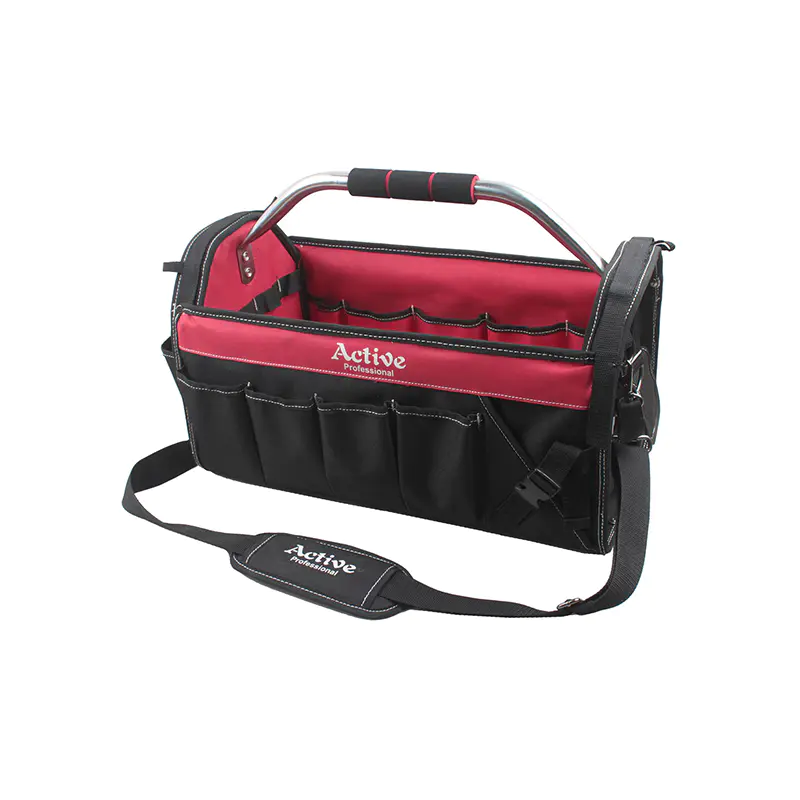
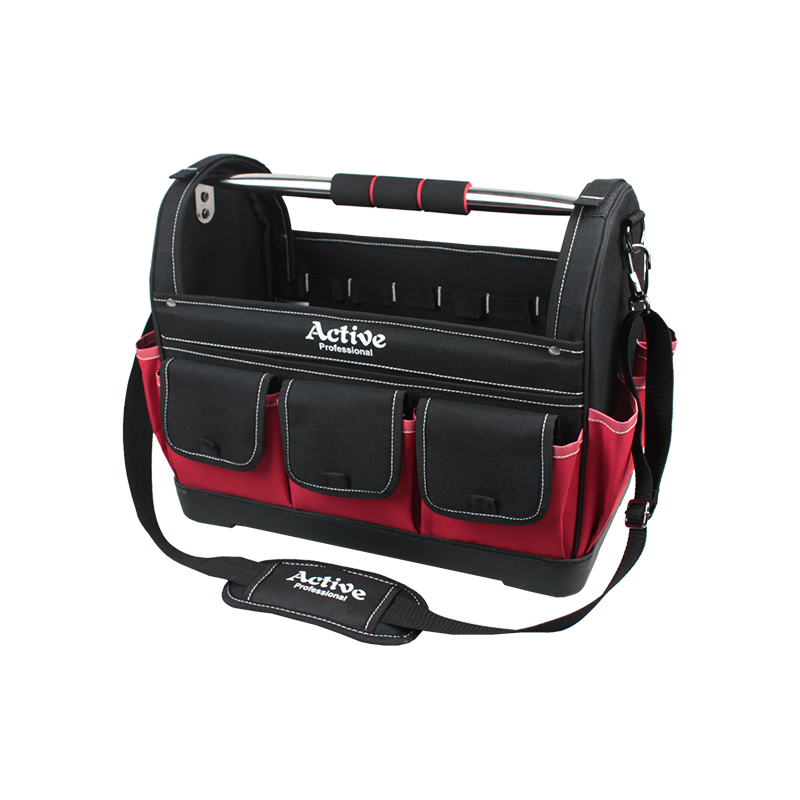
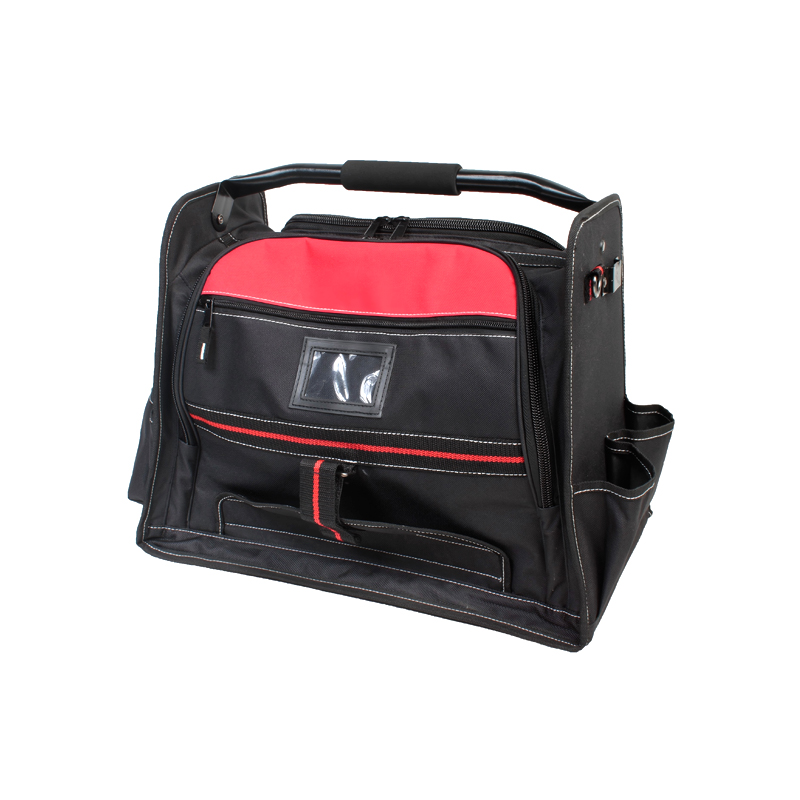
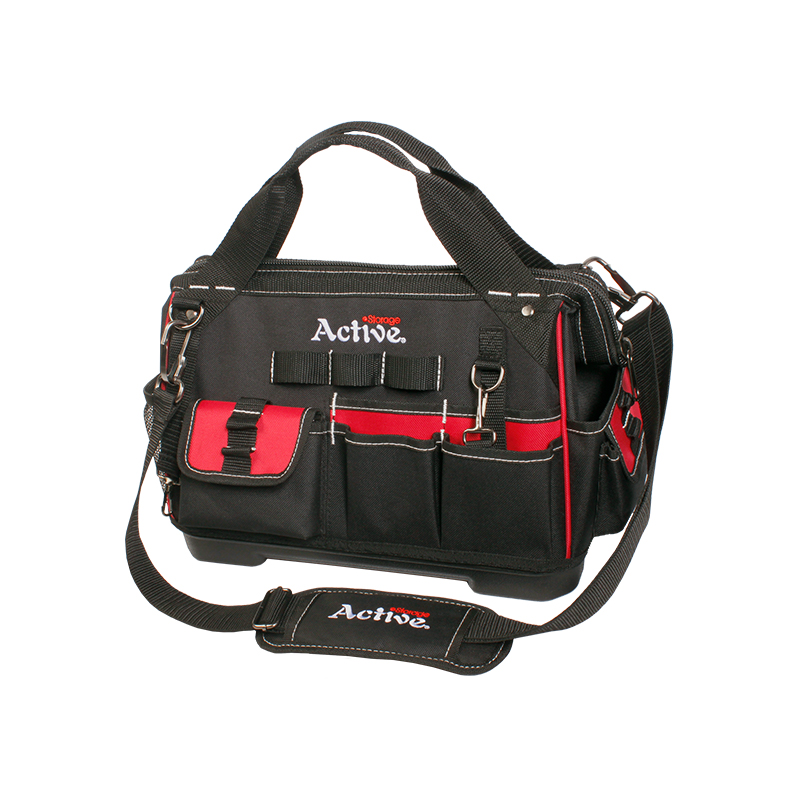
Heavy Duty Tool Tote with 21 Pockets Garden Tool Bag Molded Bottom Gardening Tools Storage
Product Overview
The Heavy Duty Tool Tote is an open-top garden tool bag created for users who want organized storage without the delay of opening and closing a large case. Its open design allows tools to be placed into or removed from the bag quickly. This is especially useful when a gardener or technician is repeatedly switching between several hand tools during a task.
The body is made from polyester, a material widely used in professional carrying products because it offers a useful balance of strength, weight, flexibility, and resistance to everyday abrasion. The heavy-duty wear-resistant fabric is intended to withstand repeated handling, contact with work surfaces, and regular transportation in vehicles, workshops, garden sheds, farms, and outdoor job sites.
A key feature is the molded bottom. Unlike a soft-bottom tote that may collapse when placed on the ground, the molded base helps the bag remain upright and stable. It also creates a protective barrier between stored tools and wet or dirty surfaces. This feature is particularly valuable in gardening environments, where grass, soil, gravel, damp pavement, and muddy ground are common.
The storage system includes 21 pockets according to the product design. The available specification identifies 15 exterior pockets and 5 interior pockets, while the main compartment provides additional open storage for larger tools and equipment. Buyers requiring a precise pocket count for packaging or retail descriptions should confirm the final configuration with the manufacturer before production, because pocket layouts may vary according to a specific production version or customization request.
| Product Parameter | Details |
| Product Type | Heavy-duty garden tool tote |
| Product Category | Garden bag |
| Material | Polyester |
| Dimensions | 28 × 28 × 38 cm |
| Closure Type | Open top |
| Stated Load Capacity | Up to 44 lbs |
| Pocket Configuration | 21-pocket design; specification lists 15 exterior and 5 interior pockets |
| Color | Customized |
| Country of Origin | China |
Designed for Efficient Tool Organization
Multiple pockets for faster access
The main advantage of a multi-pocket tool tote is that it minimizes searching. Instead of placing every item into one deep compartment, users can separate tools according to size, frequency of use, or work function. Frequently used hand tools can be placed in exterior pockets, while smaller accessories and less frequently used items can be kept in the interior or central compartment.
For gardening applications, a user may place pruning shears in one pocket, a trowel in another, plant ties or labels in a smaller pocket, and gloves or protective glasses in the central compartment. A landscaper may organize screwdrivers, pliers, wire cutters, measuring tools, and fasteners in a similar way. This structured arrangement reduces interruptions and helps workers maintain a consistent workflow.
The pocket arrangement also supports visual inventory control. When tools have designated positions, it becomes easier to notice when an item is missing. This can reduce the risk of leaving tools behind in a garden bed, workshop, vehicle, or job site. For professional teams, organized storage can contribute to better accountability and simpler end-of-day tool checks.
Open-top convenience
An open-top design is especially appropriate for tools that are used continuously throughout a task. A zipper or flap can provide security, but it also takes additional time to open, close, and access. The open top of this tote allows users to reach directly into the main compartment while the surrounding pockets keep smaller tools accessible.
This design is useful when the bag is placed beside a workbench, carried from one planting area to another, or positioned on a vehicle floor during a service call. It is also convenient for users who prefer a clear view of the contents rather than searching inside an enclosed bag.
Because the product is open at the top, it should be selected with the work environment in mind. Users working in heavy rain, dusty transport conditions, or situations requiring secure closure may wish to combine the tote with internal pouches, tool sleeves, or a protective cover. For ordinary garden, workshop, and maintenance use, however, the open-top structure provides an efficient balance between accessibility and capacity.
Large central compartment
Small pockets are valuable, but a tool carrier also needs enough open space for larger objects. The central compartment accommodates items that do not fit comfortably into narrow pockets. Depending on the task, this space may be used for gloves, plant ties, safety glasses, notebooks, small containers, replacement parts, or larger hand tools.
The central storage area also makes the tote more versatile than a highly specialized pouch. A user can change the contents according to the season or assignment. In spring, it may carry planting accessories and pruning tools. During summer maintenance, it may hold spray bottles, gloves, and irrigation accessories. For household repairs, the same tote can be converted into a general-purpose tool carrier.
Durability and Protection in Demanding Environments
Heavy-duty polyester fabric
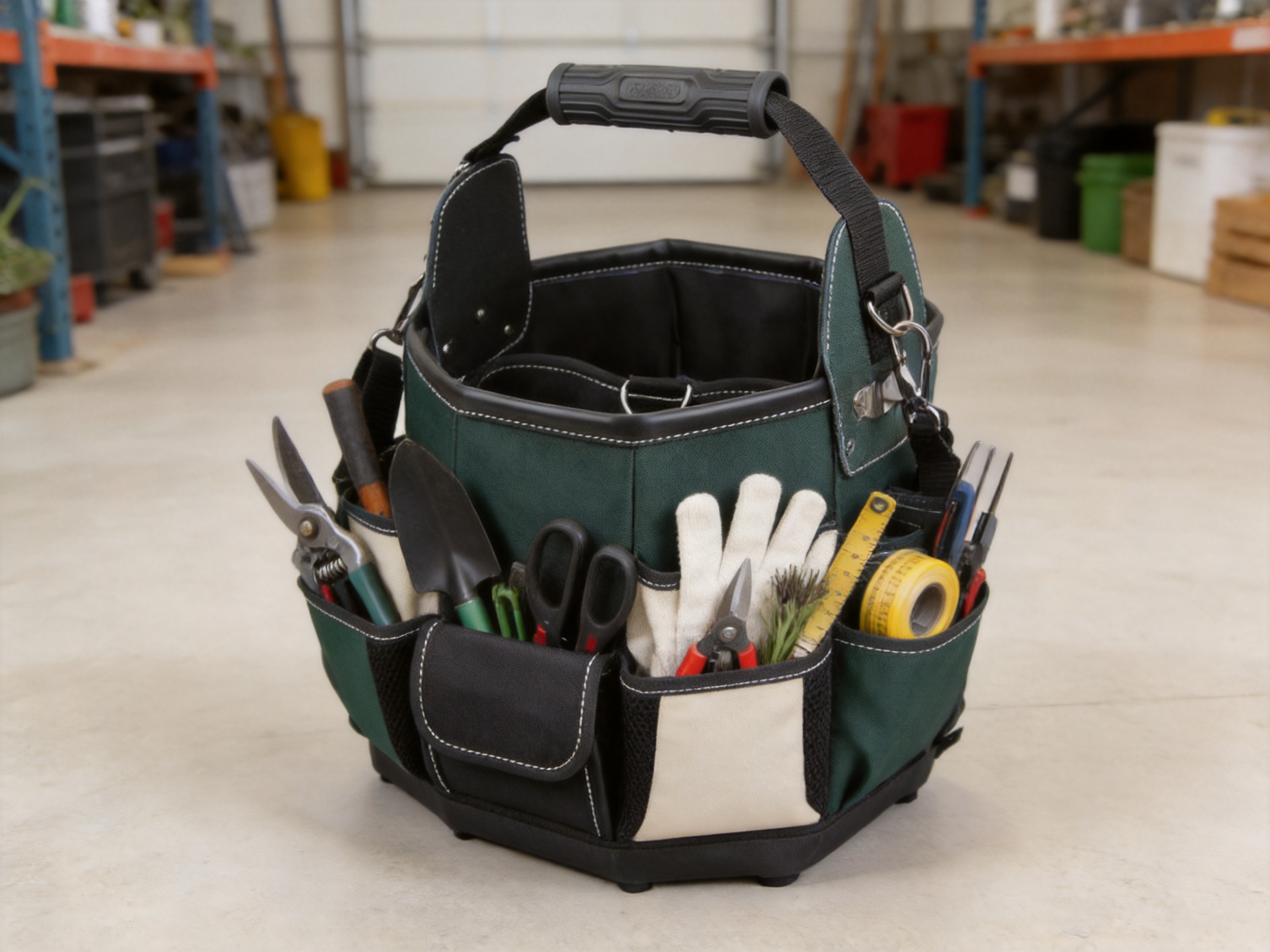
Tool bags are exposed to more stress than ordinary shopping or storage bags. They may be dragged short distances, placed on rough ground, loaded with metal tools, transported in vehicles, or handled with dirty and wet hands. The use of heavy-duty polyester fabric helps the tote withstand these repeated conditions while remaining lighter than many rigid toolboxes.
Polyester is also suitable for product customization. It can support different colors, printed graphics, woven labels, identification marks, and branding treatments. This makes the material practical not only for end users but also for distributors and private-label buyers who need a consistent appearance across a product range.
The fabric construction provides flexibility around the main compartment, allowing the bag to accommodate tools with different shapes. Unlike a molded hard case with fixed internal dimensions, a fabric tote can adapt to irregular equipment and bulky accessories. This flexibility is beneficial for gardening tools, which may include long handles, curved blades, soft gloves, and accessories of varied sizes.
Reinforced molded bottom
The reinforced molded bottom is one of the product’s most important competitive features. Many low-cost fabric totes use a thin textile base that can sag, absorb moisture, or become heavily soiled after repeated contact with the ground. A molded base gives the product a more stable foundation and helps the tote maintain its shape when loaded.
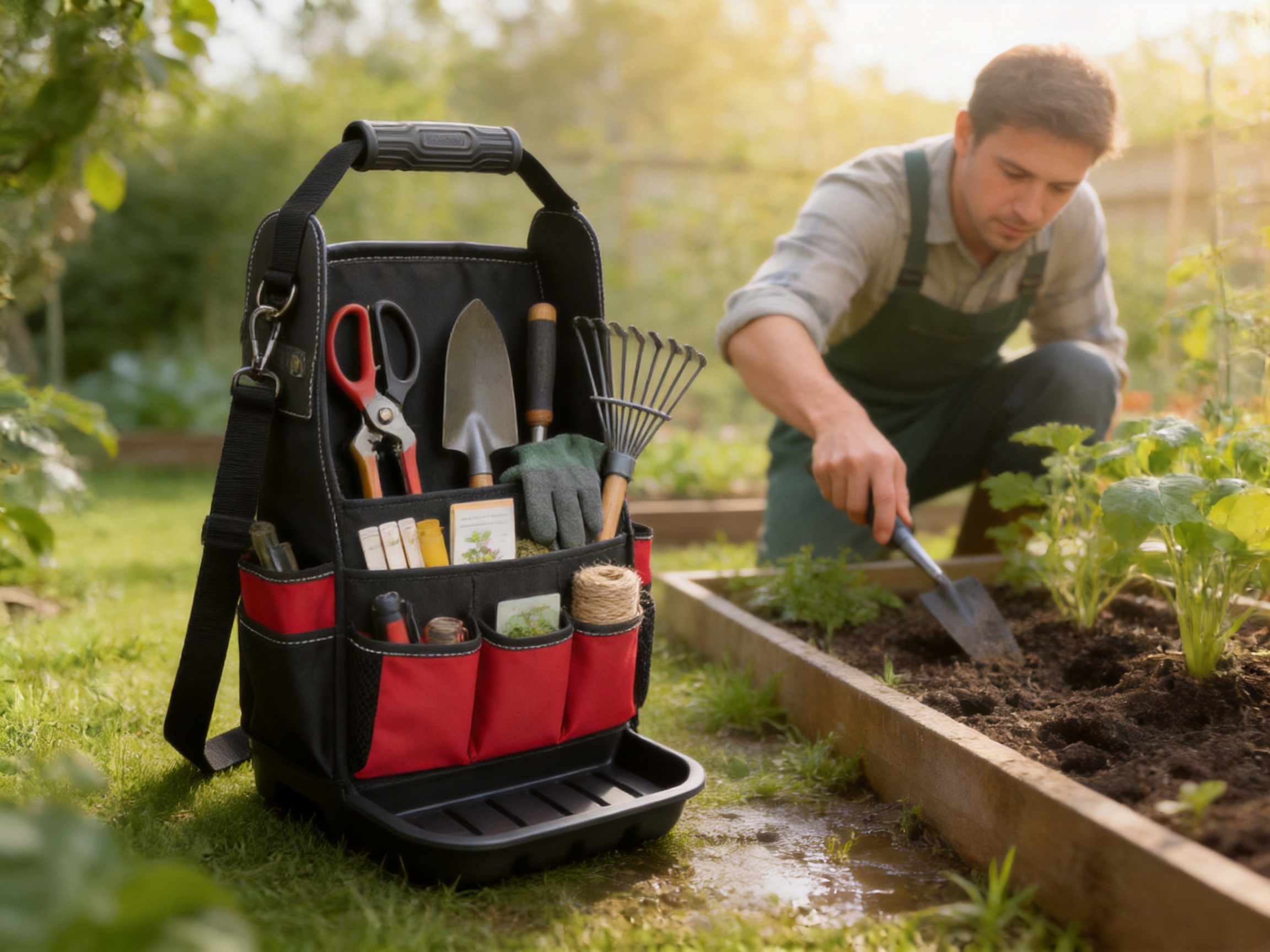
When placed on a damp lawn, soil, concrete floor, or workshop surface, the raised and reinforced bottom helps reduce direct contact between the stored contents and the ground. It also makes the tote easier to set down without tipping. This contributes to a cleaner and more professional working experience.
A stable base is particularly important when the bag contains long or unevenly distributed tools. Without sufficient support, tools may pull the tote sideways or cause it to collapse. The molded bottom helps distribute the load across the base, improving balance and making the tote more dependable during ordinary use.
Protection against everyday wear
The product is intended for daily use rather than occasional decorative storage. Its wear-resistant fabric, structured pocket system, and molded bottom work together to provide protection against common forms of damage. These include abrasion from tools, friction against vehicle surfaces, repeated lifting, and contact with rough outdoor ground.
As with most textile tool bags, the tote should not be treated as fully waterproof unless a specific waterproof rating has been confirmed. Users should avoid leaving it exposed to prolonged heavy rain or storing soaked tools inside for extended periods. Proper drying and routine cleaning can help preserve the fabric, seams, pocket openings, and base over a longer service life.
Advantages over Common Tool Storage Alternatives
Compared with ordinary fabric bags
A basic fabric shopping bag or unstructured tote may be inexpensive, but it generally provides little organization and limited protection. Tools placed in a single compartment tend to overlap, making it difficult to find small items. The bag may also collapse when set down and may not protect contents from contact with wet ground.
The Heavy Duty Tool Tote offers a more professional alternative through dedicated pockets, a reinforced shape, and a molded bottom. It is designed around tool-carrying requirements rather than general-purpose shopping. The difference is especially noticeable when users carry multiple metal tools or need to work efficiently across several locations.
Compared with rigid toolboxes
Rigid toolboxes protect contents with a hard shell, but they can be bulky and less adaptable. Their internal trays and compartments may be useful for standardized tools, yet they often provide limited flexibility for gardening equipment and irregularly shaped items. A rigid box may also be uncomfortable to carry over grass, soil, stairs, or uneven ground.
The fabric tote is lighter and easier to handle in mobile work situations. Its exterior pockets keep frequently used tools visible and accessible, while the soft construction can accommodate different combinations of equipment. The molded bottom provides some of the stability associated with rigid storage without making the entire product hard and cumbersome.
Compared with waist tool bags
Waist tool bags are useful when a worker needs both hands free while climbing, installing, or performing close-range repairs. However, their capacity is limited, and carrying many tools around the waist may become uncomfortable. They are not always suitable for gloves, bottles, larger hand tools, or a complete gardening kit.
The Heavy Duty Tool Tote is better suited to carrying a larger collection of tools between work areas. It can be placed beside the user during work and can accommodate items that would be too large or heavy for a waist bag. In some situations, the two products can complement each other: a user may keep the most frequently used tools in a waist pouch and transport the remaining equipment in the tote.
Compared with tool backpacks
Tool backpacks distribute weight across the shoulders and are valuable for mobile technicians or users who must walk long distances. They typically offer enclosed storage and hands-free transportation. However, they can take longer to access and may be less convenient when the user is repeatedly taking tools in and out.
The open-top tote provides faster access and easier visibility. It is particularly practical for gardening, bench work, vehicle maintenance, and tasks where the bag is frequently set down. A backpack may be preferable for long-distance carrying, while the tote is often more efficient as a portable workstation beside the job.
Compared with low-cost multipurpose totes
Low-cost multipurpose totes may have a lower initial purchase price, but their service life and performance can be inconsistent. Weak handles, thin fabric, poor pocket stitching, and flexible bases may limit their usefulness for heavy tools. A professional-grade tote focuses on the complete carrying system rather than only the outer appearance.
The Heavy Duty Tool Tote’s combination of wear-resistant polyester, multi-pocket organization, load-bearing structure, and molded bottom gives it a stronger value proposition for repeated use. For retailers and distributors, this combination can also support a clearer product position in the garden, hardware, home improvement, and professional tool storage markets.
Applications Across Multiple Work Environments
Gardening and horticulture
The most direct application is gardening. The tote can hold pruning shears, hand trowels, cultivators, gloves, plant labels, twine, small bottles, and other planting accessories. Its exterior pockets make it easier to separate sharp tools from soft items, while the main compartment can carry supplies that do not have a dedicated pocket.
Horticultural workers often move between greenhouses, planting beds, nurseries, and storage areas. A portable tote reduces the need to return repeatedly to a central tool shed. The molded bottom is also helpful in environments where the bag is placed on soil, gravel, concrete, or damp greenhouse flooring.
Landscaping and grounds maintenance
Landscaping teams can use the tote for smaller hand tools required during planting, edging, pruning, and maintenance work. It is not a replacement for large equipment such as powered trimmers or shovels, but it can serve as a compact support bag for the accessories and hand tools that accompany larger machines.
For groundskeepers, the organized design can improve efficiency when moving between parks, commercial properties, residential gardens, and institutional grounds. The open top allows rapid access, while the external pockets make frequently used tools easy to identify.
Farm and agricultural tasks
Farm operators and agricultural workers often need to carry tools, gloves, ties, labels, and maintenance accessories across large working areas. A durable tote can function as a mobile storage station for routine crop care, greenhouse work, animal-area maintenance, and equipment adjustments.
Because agricultural conditions can be dusty and wet, the molded bottom and wear-resistant material provide meaningful practical benefits. Users should still clean the tote regularly and avoid storing wet or contaminated materials inside for long periods.
Household repair and DIY work
The product is not limited to gardening. Homeowners can use it to organize screwdrivers, pliers, tape measures, fasteners, utility knives, gloves, and basic repair supplies. The tote can be stored in a garage, utility room, basement, workshop, or vehicle.
Its adaptable storage layout makes it useful for seasonal projects. During one project it may carry painting accessories; during another, it may hold plumbing tools or furniture assembly supplies. This versatility is an advantage over storage products designed for only one narrow application.
Professional service and maintenance
Maintenance workers can use the bag for hand tools and replacement accessories needed during inspections or minor repairs. It is suitable for facilities, warehouses, retail locations, workshops, and property maintenance teams. The organized pocket layout can help workers prepare a standard kit for recurring tasks.
For electrical or mechanical work, users should select pockets according to tool weight and follow workplace safety procedures. The tote is a carrying and organization solution; it should not be assumed to provide electrical insulation, fire resistance, chemical protection, or specialized impact protection unless those properties have been separately verified.
Manufacturing Expertise and Product Development Strengths
More than two decades of industry experience
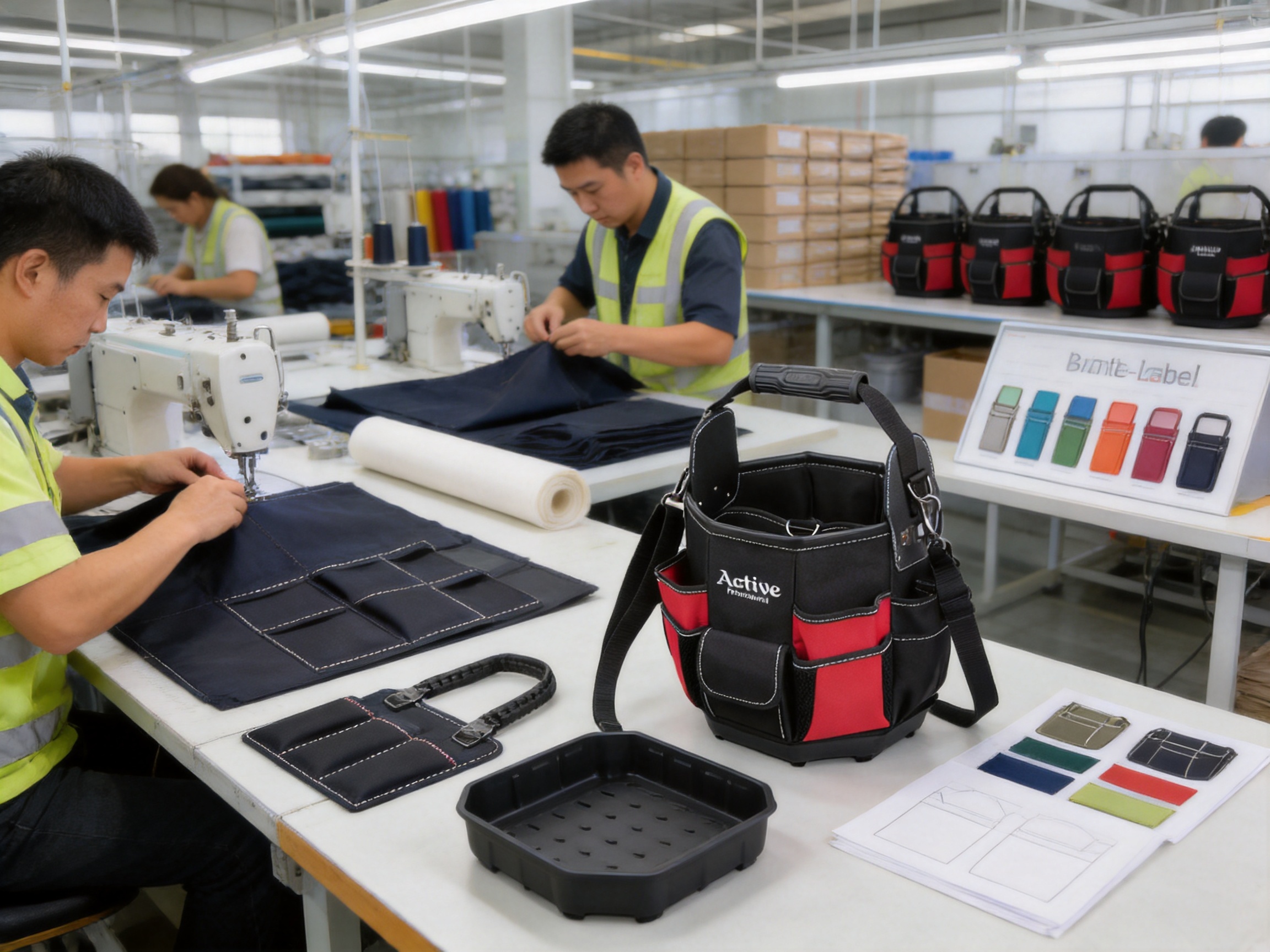
Zhangjiagang Seaark Tools Industrial Co., Ltd. was founded in 2004 and specializes in exporting professional tool bags and delivering customization solutions. More than 20 years of manufacturing experience gives the company a substantial understanding of textile construction, tool storage requirements, export packaging, product development, and customer-specific production.
Long-term experience is valuable because tool bags require attention to many details that are not always visible in product photographs. These include fabric selection, seam placement, reinforcement, handle attachment, pocket dimensions, base construction, load distribution, trim quality, and consistency between production batches. An established manufacturer is better positioned to coordinate these details across development and mass production.
Multiple production bases
The company established Zhangjiagang Haiyi Tool Bags Co., Ltd. in 2012 as a core manufacturing base in China. It also operates a production facility in Cambodia. This multi-location production structure can provide greater supply flexibility for international customers and may help reduce the impact of additional United States tariffs in applicable purchasing arrangements.
Multiple production bases can also support capacity planning. When customers need recurring orders, seasonal production, or different delivery arrangements, a broader manufacturing network may provide more options than a single-site supplier. Buyers should discuss production location, compliance requirements, lead times, minimum order quantities, and shipping terms directly with the manufacturer for each project.
Independent research and development
The company maintains an independent research and development team that develops more than 10 new designs each year. This ongoing design activity supports product improvement and enables the development of new silhouettes, pocket layouts, materials, carrying systems, and functional features.
For a product such as the Heavy Duty Tool Tote, research and development may involve evaluating how users carry tools, how pockets are positioned, how the base behaves under load, and how the bag remains stable when placed on different surfaces. Continuous product development also helps the manufacturer respond to changing market preferences in gardening, hardware, professional tools, and home improvement.
Design patents and proprietary development
The company’s registered brand is Active Storage, and it holds multiple design patents. Design protection can indicate that the manufacturer invests in original product structures and appearance rather than relying only on generic market patterns. For brand owners and distributors, access to original designs can support product differentiation in competitive retail channels.
Customers seeking exclusive products should discuss the scope of available design protection, customization rights, artwork ownership, mold ownership, and market exclusivity before placing an order. Clear documentation helps protect both the supplier’s intellectual property and the customer’s commercial interests.
Audited production facilities
The company’s facilities undergo annual third-party audits, including BSCI, SEDEX, FCCA, and SCS audits. These programs and assessments are associated with areas such as social responsibility, ethical sourcing, factory management, workplace conditions, and supply-chain expectations. Audit status and applicability should always be confirmed for the specific facility and production period, but third-party evaluation can give international buyers an additional basis for supplier assessment.
For importers and global brands, manufacturing compliance is increasingly important. Product quality is only one part of a successful supply relationship. Buyers may also need to evaluate labor practices, documentation, production traceability, corrective action procedures, environmental management, and consistency between approved samples and shipped goods.
Production scale and workforce
The company operates multiple production bases, employs more than 200 people, and manages approximately 11,000 square meters of floor space. This scale supports the production of different product families while maintaining a specialization in tool bags and related storage products.
A broader workforce and dedicated production space can help separate development, cutting, sewing, assembly, quality control, packing, and warehouse functions. Efficient coordination among these stages is important for maintaining consistent dimensions and appearance, especially when a product includes numerous pockets and reinforced structural features.
Manufacturing Process Considerations
Material selection and cutting
Production begins with the selection of polyester fabric and supporting materials appropriate for the intended use. Factors may include fabric weight, weave, color, abrasion resistance, coating requirements, lining options, binding materials, webbing, thread, reinforcement panels, and base components.
After material approval, fabric panels are cut according to product patterns. Accurate cutting is essential because even small variations can affect pocket alignment, bag dimensions, handle positioning, and the final appearance. For customized orders, approved artwork and color references should be reviewed before bulk cutting begins.
Pocket assembly
Multi-pocket products require careful assembly because each pocket must be positioned consistently and sewn securely. The production team may prepare exterior pocket panels, interior pocket panels, dividers, binding, and reinforcement patches before attaching them to the main body.
Proper pocket construction is important for both usability and durability. A pocket opening that is too narrow may limit access, while one that is too loose may fail to retain smaller items. Reinforced stitching at stress points helps reduce the risk of tearing when a pocket is repeatedly loaded and unloaded.
Body and handle construction
The body panels are joined to form the main compartment, followed by the attachment of handles and structural reinforcements. Handle attachment is a critical area because the handles transfer the weight of the entire loaded bag to the seams and surrounding fabric.
Depending on the final configuration, manufacturers may use webbing, reinforced stitching, bartacks, binding, and additional fabric layers at load-bearing points. Buyers with high-load requirements should request sample testing and confirm how the stated 44-lb capacity is evaluated. Actual safe carrying weight may depend on tool shape, distribution, handling frequency, and environmental conditions.
Molded-bottom integration
The molded bottom is integrated with the textile body to improve stability and ground protection. The fit between the base and the bag must be controlled so that the bottom supports the body without creating excessive strain at the seams. A well-integrated base should help the tote stand upright while maintaining a practical balance between rigidity and portability.
Manufacturers may inspect the base for dimensional accuracy, edge finish, attachment quality, and compatibility with the body panels. These checks are particularly important because the base is exposed to abrasion and impact during daily use.
Quality inspection and packaging
Final inspection may include checking dimensions, pocket count, color, stitching, handle attachment, base fit, logo placement, fabric defects, and overall shape. Customized orders may require additional inspection against approved samples, artwork, packaging instructions, barcode requirements, and carton specifications.
Packaging should protect the tote from dust, moisture, compression, and deformation during transportation. Buyers should provide detailed packing requirements where products are intended for retail shelves, e-commerce fulfillment, warehouse distribution, or mixed-container shipping.
Customization Opportunities for Global Buyers
The product is available with customized colors, making it suitable for private-label programs, promotional campaigns, gardening brands, hardware retailers, and professional tool suppliers. Color customization can help align the tote with a brand identity or distinguish product lines according to application and price level.
Additional customization may be discussed with the manufacturer, including logo printing, woven labels, rubber badges, hangtags, packaging, pocket layouts, handle details, fabric selection, internal dividers, and accessory combinations. The feasibility of each modification depends on order quantity, development requirements, tooling, testing, and production scheduling.
For distributors, a customized pocket layout may create a product specifically suited to pruning tools, maintenance tools, electrical accessories, or home repair kits. A retailer may also request packaging that explains the product’s capacity, material, dimensions, and intended applications to end consumers.
Before approving bulk production, buyers should request a pre-production sample. The sample should be evaluated for appearance, dimensions, pocket accessibility, balance, base stability, handle comfort, sewing quality, and compatibility with the intended tools. If the product will be sold under a private label, artwork, color references, and packaging text should be approved in writing.
How to Use the Tote Effectively
Arrange tools by frequency of use
Place the tools used most often in exterior pockets or near the top of the main compartment. Less frequently used accessories can be positioned deeper inside. This arrangement reduces the need to unload the entire bag during routine work.
Distribute weight evenly
Heavy tools should be distributed around the central area rather than concentrated in one pocket. Balanced loading helps the tote remain upright and reduces unnecessary strain on individual seams and handles. Sharp tools should be positioned carefully so blades do not damage adjacent fabric or injure the user.
Keep wet and dirty items separate
Wet gloves, muddy tools, and damp plant materials should be cleaned or dried before long-term storage. If temporary storage is necessary, use a separate liner or washable pouch. This practice helps reduce odor, staining, corrosion, and fabric deterioration.
Inspect the bag regularly
Users should periodically check the handles, seams, pocket openings, base, and fabric for signs of wear. Early identification of loose stitching or damage allows repairs or replacement before the problem affects the entire bag. Professional teams can include this inspection in their regular equipment maintenance routine.
Clean according to material requirements
Routine cleaning can usually be performed with a soft brush, mild soap, and water, provided the manufacturer’s care instructions permit it. Avoid harsh chemicals, excessive heat, and aggressive scrubbing unless specifically approved. Allow the tote to dry completely before placing it into enclosed storage.
Value for Retailers and Distributors
The product fits several commercially attractive categories, including garden tools, outdoor work accessories, hardware storage, professional tool organization, home improvement, and general-purpose utility bags. Its practical features are easy to communicate: multiple pockets, durable polyester construction, molded bottom, open-top access, customized colors, and a substantial load capacity.
Its broad application range can reduce dependence on a single seasonal market. The same basic design may be promoted for spring gardening, summer landscaping, workshop organization, autumn property maintenance, and year-round household repair. Retailers can also offer it as a complementary item alongside hand tools, pruning equipment, gloves, and gardening kits.
For business customers, the product can be used as part of an employee equipment program, maintenance kit, promotional bundle, or branded service package. A customized tote may help improve brand visibility while providing a useful product with continuing practical value.
Professional buyers should assess total ownership value rather than only the initial unit price. A durable and well-organized tote may reduce tool loss, improve worker efficiency, simplify equipment transport, and provide a longer useful life than low-cost unstructured alternatives. Product testing, packaging review, and supplier communication remain important parts of the purchasing decision.
Recommended Purchasing Checklist
Buyers should confirm the final pocket configuration, especially when product descriptions refer to 21 pockets while the detailed specification lists 15 exterior and 5 interior pockets. Clarifying whether the main compartment or an additional utility section is included in the advertised count will prevent inconsistencies in catalogs and packaging.
Buyers should also verify the final dimensions, loaded capacity, material weight, base construction, handle length, color standard, logo method, sample approval procedure, minimum order quantity, production lead time, inspection process, and packaging method.
For international orders, purchasing teams should discuss the production facility, country of origin marking, export documents, carton dimensions, shipping terms, customs requirements, and any applicable compliance documentation. If the product is intended for a specific retail market, labels and packaging should be reviewed for local requirements before production.
| Purchasing Area | Questions to Confirm |
| Product structure | What is the final pocket count and layout? |
| Dimensions | Are the stated dimensions measured externally or internally? |
| Capacity | How is the 44-lb load capacity tested? |
| Materials | What polyester weight, lining, webbing, and base materials are used? |
| Customization | What colors, logos, labels, and packaging options are available? |
| Quality control | What inspections are performed before shipment? |
| Production | Which facility will manufacture the order? |
| Compliance | Which audit and product documents are available for the target market? |
| Shipping | What are the lead time, carton details, and delivery terms? |
Frequently Asked Questions
What is the Heavy Duty Tool Tote primarily used for?
It is primarily designed for carrying and organizing gardening tools, landscaping accessories, maintenance equipment, workshop hand tools, and household repair items. The multiple pockets and central compartment make it suitable for users who need fast access to a varied tool collection.
How many pockets does the tote have?
The product is presented as a 21-pocket tool tote. The detailed specification identifies 15 exterior pockets and 5 interior pockets, while the central compartment provides additional open storage. Because pocket counting conventions can vary, buyers should confirm the exact production layout before finalizing catalogs, packaging, or purchase orders.
Is the tote waterproof?
The available product information identifies heavy-duty polyester fabric and a reinforced molded bottom, but it does not provide a waterproof rating. The tote should therefore be considered resistant to ordinary outdoor handling rather than fully waterproof unless a specific test result or coating specification is confirmed.
What is the stated load capacity?
The listed load capacity is 44 lbs. Actual performance depends on how the weight is distributed, the type of tools carried, handling conditions, and the condition of the bag. Users should distribute heavy tools evenly and follow the manufacturer’s confirmed loading guidance.
Why is the molded bottom important?
The molded bottom helps the tote stand upright, supports the loaded structure, and reduces direct contact between the fabric body and damp, dirty, or rough surfaces. It also helps protect the contents and improves convenience when the bag is placed beside a work area.
Can the color be customized?
Yes. The listed color is customized. Buyers can discuss available fabric colors, color matching, logo treatments, labels, and packaging options with the manufacturer. Customization requirements may affect minimum order quantities and production schedules.
Can the tote replace a rigid toolbox?
It can replace a rigid toolbox for many gardening, maintenance, workshop, and household applications, particularly when lightweight portability and quick access are priorities. A rigid toolbox may still be preferable when hard-shell impact protection, lockable closure, or sealed storage is required.
Is the tote suitable for professional users?
Yes. Its durable polyester construction, multi-pocket organization, open-top access, molded bottom, and stated load capacity make it suitable for professional gardeners, landscapers, maintenance workers, agricultural users, and service personnel. Professional buyers should test the product with their actual tools before large-scale deployment.
Where is the product manufactured?
The product is manufactured by Zhangjiagang Seaark Tools Industrial Co., Ltd., a Chinese tool bag manufacturer. The company operates production facilities in China and Cambodia. The manufacturing location for a specific order should be confirmed during the purchasing process.
Does the company provide custom tool bag development?
Yes. The company specializes in professional tool bags and comprehensive customization solutions. Customers may discuss custom colors, pocket layouts, branding, materials, labels, packaging, and other product requirements depending on order quantity and development feasibility.
How should the tote be maintained?
Remove dirt regularly, clean the fabric with suitable mild cleaning materials, dry the tote thoroughly, and inspect the seams, handles, pockets, and molded bottom. Avoid prolonged exposure to heavy rain, harsh chemicals, or excessive heat unless the product’s care instructions specifically permit those conditions.
Conclusion
The Heavy Duty Tool Tote with 21 Pockets is a versatile storage solution for users who need a practical balance of organization, accessibility, durability, and portability. Its multi-pocket layout reduces tool searching, the open top supports rapid access, and the large central compartment accommodates larger or irregularly shaped items. The heavy-duty polyester body is designed for regular use, while the molded bottom improves stability and protects the bag from common outdoor surfaces.
Compared with ordinary fabric totes, the product offers better structure and tool organization. Compared with rigid toolboxes, it provides greater flexibility and easier portability. Compared with waist bags and backpacks, it offers more accessible storage for a larger collection of tools. These advantages make it appropriate for gardening, landscaping, farming, maintenance, DIY repair, and professional service work.
The manufacturer strengthens the product proposition through more than 20 years of industry experience, multiple production bases, an independent research and development team, ongoing new product development, design patents, third-party facility audits, and a workforce of more than 200 employees. Its experience across a wide range of tool bag categories also supports customized development for international brands, distributors, and retailers.
For end users, the tote can make daily work more organized and efficient. For business buyers, it offers a flexible platform for branded garden bags, professional tool storage programs, retail products, and customized promotional kits. Before ordering, purchasers should confirm the precise pocket count, load testing method, dimensions, customization details, production facility, compliance documentation, and packaging requirements. With these points clearly established, the Heavy Duty Tool Tote can provide a reliable and commercially adaptable solution for organized tool transportation.
References
1. Product specification supplied for the Heavy Duty Tool Tote with 21 Pockets, including dimensions, material, pocket configuration, closure type, color, and load capacity.
2. Manufacturer-provided company information concerning tool bag manufacturing experience, production bases, workforce, facility area, research and development, design patents, and customization services.
3. General textile product development practices concerning polyester fabric selection, reinforced stitching, load-bearing construction, pocket assembly, and molded-base integration.
4. General guidance for garden tool organization, outdoor equipment handling, product maintenance, and storage efficiency.
5. General supplier evaluation considerations covering product sampling, quality inspection, private-label customization, factory audits, packaging, and international purchasing.
Product: Heavy Duty Tool Tote with 21 Pockets Garden Tool Bag Molded Bottom Gardening Tools Storage




We are a professional enterprise engaged in exporting various types of toolkits.
We firmly believe that 'quality is everything, service enhances value'.
-
+86-15298800699

-
+86-512-58670375

-
karen@kun-bag.com

-
Building 11, No. 93 Chengang Road, Zhangjiagang City, Jiangsu Province, China

Copyright © Zhangjiagang Seaark Tools Industrial Co., Ltd. All Rights Reserved.
Custom Electrician Tool Backpack Manufacturers